
MULTI-LOCATION BUSINESS TELEPHONY
Yeastar Multi-Site Configuration in Dubai, UAE
A multi-site Yeastar environment should make branch communication predictable without turning every office into an isolated telephone system. FourTeck helps businesses assess existing Yeastar PBXs, design non-conflicting extension plans, review inter-site connectivity, configure approved call routes, validate inbound and outbound behaviour, and document the finished setup. The exact method depends on the Yeastar edition, firmware, network design, SIP services, security policy, and business call flow.
What must be clear before configuration?
A safe multi-site change begins with a map of every PBX, extension range, internet connection, firewall, SIP provider, branch dialing requirement, and business-critical number. If two sites use conflicting extension numbers or if routing rules are designed without considering existing trunks, calls can fail or reach the wrong destination.
FourTeck confirms the intended call flow first, reviews access and rollback options, then defines the configuration work that belongs in the quotation.
Configuration follows approved call requirements.
Method depends on access and physical checks.
Extension, routing and failover logic are reviewed together.
Scheduling is confirmed against site requirements.
Direct answer: what is Yeastar multi-site configuration?
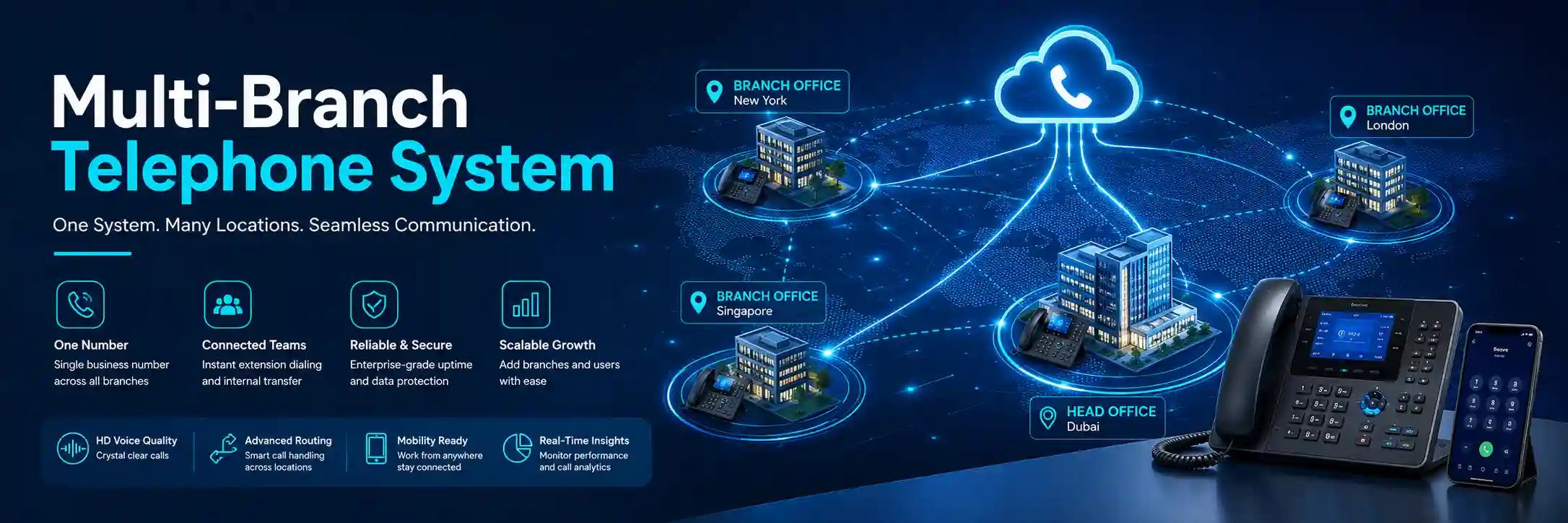
Yeastar multi-site configuration is the planned connection and call-routing setup that allows separate offices or operational locations to work as a coordinated voice environment. Depending on the Yeastar platform and the current network, the design may involve interconnecting PBXs, building controlled SIP routes, defining unique extension ranges, setting dialing patterns, assigning trunks, reviewing remote access, and testing how calls move between branches and external telephone services. Businesses should consider it when opening branches, consolidating disconnected phone systems, improving internal dialing, or standardising telephony rules across locations. Before work starts, prepare the Yeastar model or edition at each site, firmware details where available, extension lists, SIP-provider information, firewall and internet details, desired call flows, office hours, emergency or reception requirements, and an authorised administrator contact. The final approach remains configuration, access, license, network, and provider dependent.
What the service can cover
Multi-site voice projects are rarely limited to one menu inside the PBX. The service starts by understanding how people communicate between locations, how customers reach each branch, which telephone numbers are tied to which SIP trunks, and what should happen when a user transfers a call to another site. Depending on the confirmed scope, FourTeck assistance may include an inventory of Yeastar systems, extension and department review, call-flow mapping, inter-PBX connectivity planning, SIP trunk review, route configuration, inbound destination checks, outbound route checks, ring-group or queue dependencies, receptionist and operator workflows, voicemail behaviour, office-hour rules, remote extension requirements, user endpoint registration, firewall and NAT review, network quality checks, configuration backup, change scheduling, functional tests, documentation, and post-change observations.
The precise method is not assumed from the phrase “multi-site.” Yeastar P-Series systems can be interconnected using supported inter-PBX methods, and official Yeastar documentation describes P-Series interconnection scenarios where separate PBXs use distinct extension ranges. Other Yeastar editions, older systems, cloud deployments, mixed PBX environments, or third-party gateways can require a different design. FourTeck therefore identifies the platform and current firmware before confirming configuration steps.
The service can also address existing multi-site deployments that work only partially. A branch may be able to dial head office but not receive return calls; external calls may use the wrong trunk; transferred calls may lose caller information; remote phones may register intermittently; or a firewall change may have disrupted established routes. These symptoms do not prove a single cause. They can involve PBX routes, trunk authentication, number formatting, firewall policy, DNS, NAT, WAN stability, codec negotiation, endpoint configuration, or provider restrictions. Assessment is used to isolate the relevant layer before changes are made.
Who may need this service?
The service suits organisations with two or more offices that want a controlled calling relationship between locations. It can be relevant to professional firms with a main office and satellite branches, retail groups with separate stores, clinics with reception teams at different sites, warehouses that need direct internal dialing to administration, property-management businesses with distributed teams, hospitality groups, training centres, and companies adding a new UAE location.
It is also useful when a business has inherited inconsistent telephone settings after several years of expansion. Different branches may have been installed at different times, use overlapping extension numbers, depend on separate telecom providers, or follow different dialing habits. A structured review can reduce that inconsistency before further growth.
What business outcome should be defined?
The required outcome might be simple internal extension dialing between branches, centralised reception, controlled use of local trunks, shared departmental calling, remote-user access, or a standard numbering plan. Some businesses also want selected sites to continue local calling if an inter-site link is unavailable, while others need specific calls to be routed through head office.
These are design decisions rather than default settings. FourTeck records the desired behaviour first so routing changes can be tested against a clear acceptance plan.
Common planning triggers and symptoms
New branch opening
A new office needs extensions, phones, inbound numbers, outbound calling and a clear way to reach colleagues at existing sites without creating an unrelated phone island.
Repeated inter-site call failures
Calls between branches may fail in one direction, drop during transfer, reach an unexpected destination, or behave differently after a network or firewall change.
Overlapping extension numbers
Two offices may have grown independently and use the same extension ranges, creating ambiguity when systems are interconnected. Renumbering or routing changes may be needed.
Unclear trunk ownership
Staff may not know which site or provider should originate external calls, which numbers should be displayed, or where inbound calls should land after business hours.
Why an unmanaged multi-site change can affect daily operations
Telephone routing sits close to customer communication. A change that looks small can alter how reception receives calls, how users dial a branch, which SIP trunk is selected, or whether outbound caller identification is accepted by a provider. If routes overlap, a call can be rejected or sent to the wrong destination. If firewall or NAT behaviour changes, a trunk or remote endpoint may register but media can still fail. If extension numbering is duplicated, internal dialing can become ambiguous. If the rollout is made during busy hours without a rollback plan, troubleshooting pressure increases because the business cannot easily separate the old behaviour from the new one.
Controlled configuration does not remove every dependency, but it reduces avoidable uncertainty. FourTeck uses the approved call map, existing configuration backups where appropriate, change sequencing, and scenario-based testing to make the work understandable. Provider restrictions, internet faults, unsupported firmware, hardware failure, licensing conditions, or third-party network policies can still require separate action.
Service-fit matrix for multi-site Yeastar environments
| Business situation | Relevant assistance | What must be confirmed |
|---|---|---|
| Two Yeastar PBXs need internal calling | Inter-PBX route planning, dialing rules and validation | Models, editions, firmware, extension ranges, WAN path and security policy |
| A new Dubai branch is being added | Numbering plan, local trunk use, branch dialing, endpoint and network checks | User count, telephone numbers, provider readiness, cabling, firewall and cutover schedule |
| Existing sites use duplicate extensions | Renumbering options or route redesign | User impact, endpoint reprovisioning, directory changes and business acceptance |
| Inter-site calls are unstable | PBX, trunk, firewall, WAN and media-path diagnosis | Logs, timestamps, affected call examples, recent changes and access |
| Remote users need coordinated access | Remote access and endpoint registration review where supported | Yeastar edition, licensing or service dependencies, user security requirements and network conditions |
Buyer-focused service information
| Service topic | Yeastar multi-site PBX configuration and inter-location call planning |
|---|---|
| Main purpose | Create or improve controlled voice communication between business locations |
| Typical systems involved | Yeastar PBXs, IP phones, SIP trunks, gateways where present, routers, firewalls, switches, internet links and remote access services |
| Assessment method | Configuration review, call-flow discovery, network checks, log or call-example review and stakeholder confirmation |
| Remote support suitability | Often suitable for authorised PBX, route, trunk and log review when stable secure access is available |
| On-site suitability | May be required for phones, gateways, cabling, switches, local network testing, rack access or site coordination |
| Customer access required | Authorised administrative and network access, shared through an approved secure method |
| Testing and validation | Scope dependent; may include internal dialing, transfers, inbound calls, outbound calls, caller identity, voicemail, queue behaviour and branch-to-branch scenarios |
| Scheduling dependency | Maintenance window, user availability, building access, engineer schedule and provider dependencies |
| Quotation requirement | Final commercial scope is confirmed after assessment |
When remote configuration may be practical
Remote work can be efficient when the PBX management interface is reachable through an approved secure method, the internet connection is stable, an authorised contact is available, and the task mainly concerns extension plans, trunks, call routes, logs, account settings, or other software-level configuration. It can also support discovery before an on-site visit by allowing FourTeck to document the current environment and identify which physical checks are actually necessary.
Remote access should not be improvised by exposing management interfaces to the public internet. The customer’s security policy and the Yeastar platform’s supported remote-access method should guide how access is provided.
When an on-site visit may be needed
Physical attendance can be appropriate when branch phones are not registering and the issue may involve cabling, switch ports, PoE power, gateways, local VLANs, firewall appliances, patch panels, or a device that cannot be reached remotely. It may also be useful during a new-site deployment where phones must be installed, labels checked, reception workflows demonstrated, and local call tests completed with users.
On-site timing depends on the confirmed location, site access, work scope, engineer availability, required parts, and any third-party coordination. The quotation should make clear which physical activities are included.
How the assessment and configuration journey is handled
1. Define the business call map
FourTeck identifies who needs to call whom, which numbers customers dial, where reception sits, how transfers should work, which locations require local outbound calling, and what behaviour is expected outside office hours. This creates an acceptance reference for the technical work.
2. Inventory each site
The PBX model or edition, firmware, extension ranges, trunks, gateways, phone types, WAN connections, firewalls, VLANs and existing inter-site paths are recorded. Unknown elements are flagged instead of being assumed.
3. Review risk and rollback
Existing configuration backups are considered where the platform and access allow. The change window, affected users, provider dependencies and rollback approach are discussed before live routing is modified.
4. Build or correct routing
Approved settings are implemented at a useful level, which may include inter-PBX connectivity, route patterns, trunk selection, extension mapping or related branch rules. The exact settings depend on the identified Yeastar environment.
5. Test defined scenarios
Testing can cover branch-to-branch calls, both directions of transfer, selected inbound numbers, outbound calling, expected caller identity, queue or ring-group destinations, voicemail and failure conditions that can be reproduced safely.
6. Document and hand over
The finished state can be recorded with extension ranges, route purpose, trunk ownership, important dependencies, known limitations and follow-up actions so future support does not begin from guesswork.
Capability 1: create a numbering plan that can grow with the business
Extension numbering is one of the most important foundations of a multi-site design because it affects how users dial one another and how routes distinguish local extensions from remote ones. If two existing offices both use the same numbers, simply linking the systems can create collisions. Yeastar’s published P-Series interconnection guidance specifically notes that interconnected PBXs should not share the same extension numbers in the documented scenario. That principle is useful during planning even when the customer’s exact platform or architecture differs.
FourTeck reviews current ranges before recommending any change. A company may choose site-based ranges, department-based ranges, or another structure that matches how staff work. The decision should consider future branches, temporary users, service extensions, reception, meeting rooms, queues and shared devices. If renumbering is required, user communication and endpoint reprovisioning can become part of the project. Some businesses can avoid a large renumbering exercise through careful route design, while others benefit from standardising before further expansion. The suitable choice depends on the present system and long-term plan.
A good numbering plan is not simply memorable. It should be unambiguous, documented, compatible with the chosen PBX routing approach, and understood by administrators. FourTeck can record the final ranges and branch ownership so later changes can be checked against a known plan.
Capability 2: treat inter-site calling as a network and security dependency
PBX interconnection depends on more than telephone settings. Voice signalling and media must traverse networks that may include routers, firewalls, NAT, VPNs, public internet paths, DNS and provider-managed services. A system can appear registered while users still experience one-way audio or failed calls because the media path is not behaving as expected. Conversely, opening broad firewall access just to make a test work can create unnecessary exposure.
FourTeck reviews the intended interconnection method, existing security policy and supported Yeastar options before changes are approved. Current P-Series documentation describes supported methods for interconnecting remote Yeastar PBXs, including methods based on public addressing or Yeastar FQDN depending on the edition and scenario. The exact choice must be matched to the installed platform, firmware and customer network rather than copied from a generic example.
Network quality also matters. Branch-to-branch voice traffic needs stable latency, low packet loss and sufficient usable bandwidth, but a service page should not pretend that one universal threshold guarantees quality. Business internet links can be affected by contention, failover behaviour, WAN shaping and local switching. During diagnosis, FourTeck can compare problem call times with network events, review voice VLANs or QoS where relevant, and identify whether the PBX configuration or the wider network needs attention.
Security changes remain authorised and controlled. Credentials should be shared only through an approved secure method after identity and access rights are confirmed. Firewall changes, remote management exposure and SIP access should be limited to the actual design requirement.
Capability 3: make call routing understandable to operations teams
A multi-site deployment is easier to support when managers can explain the intended call path in business language. For example, a Dubai head office may receive a main number, route sales calls to a group that includes branch users, allow direct extension dialing to a warehouse, and permit the branch to make local outbound calls using its own trunk. That description should then be reflected in the PBX routes, permissions and destination rules.
Problems often arise when the technical configuration has accumulated over time without a matching business map. Old routes remain enabled, destination rules overlap, unused trunks are still selected, or staff use undocumented prefixes. FourTeck can trace active behaviour, identify redundant or conflicting logic, and propose a simpler structure. Changes are not made merely for tidiness; they should solve a confirmed operational problem or reduce a known support risk.
Documentation can include branch names, extension ranges, trunk purpose, inbound number ownership, outbound routing principles, major groups or queues, office-hour behaviour, remote access dependencies, and provider contacts. It should avoid exposing passwords or sensitive credentials. This information gives future administrators a starting point for support and helps the business explain requirements during an office move, new branch project or provider change.
The outcome is not a claim that the telephone system will never fail. It is a more maintainable configuration with clear intent, known dependencies and a repeatable way to validate future changes.
Dependencies, access and customer inputs
The final configuration cannot be confirmed without understanding the surrounding environment. Yeastar settings may depend on SIP-provider rules, licensed features, edition-specific capabilities, internet addressing, firewall policies, DNS, remote-access services, gateway behaviour, endpoint provisioning and local network design. A branch may also use analog lines through a gateway, third-party SIP endpoints, or a different Yeastar generation that changes the available options. These details influence both the technical method and the time required.
FourTeck may need authorised access to the PBX administration interface and, when the issue crosses the network boundary, read or change access to relevant firewall, router or switch settings. The customer should identify who can approve changes and who can coordinate with the telecom or internet provider if provider-side action becomes necessary. Passwords should not be entered into public enquiry forms or displayed in emails without an agreed secure method.
Operational inputs are equally important. The service team needs to know which calls are business critical, which departments must remain reachable, whether branches have different working hours, whether a central receptionist transfers calls across sites, whether any numbers are used for emergency or regulated purposes, and whether a maintenance window is available. Without this context, a technically valid route can still be wrong for the business.
Where changes may interrupt live calling, backup and rollback planning should be discussed. The exact backup options depend on the installed platform and access. A rollback plan is not a guarantee of instant restoration, but it provides an agreed response if the new behaviour fails acceptance tests.
Risks, limitations and exclusions to understand
Multi-site telephony depends on systems that FourTeck may not control directly. A SIP provider can reject caller identity or number formats, an ISP can have routing or quality problems, a firewall can be managed by another vendor, and a legacy PBX can have compatibility limits. Hardware faults in phones, gateways, switches or PBXs can also require replacement parts outside configuration labour. These dependencies should be identified rather than hidden inside a broad promise of resolution.
Configuration changes can require a maintenance window, especially when active trunks, extension ranges or call routes are modified. Some user devices may need reprovisioning after renumbering. Remote users may depend on a specific Yeastar remote-access service or license. Older firmware may need review before new features are considered. Mixed-platform interconnection can require additional testing and may not preserve every feature across systems.
FourTeck does not assume zero downtime, universal compatibility, or guaranteed provider behaviour. A successful set of test calls confirms the scenarios tested at that time; it does not eliminate the need for monitoring, maintenance and future review when networks or providers change. Final commercial terms, included tasks, travel, parts, licensing, third-party fees and aftercare depend on the approved quotation or service agreement.
If assessment shows that the requested design is unsafe, unsupported, or likely to create unacceptable operational risk, the practical next step may be to revise the architecture, stage the work, upgrade a component, or coordinate with the relevant vendor before continuing.
Business environments and practical use cases
Professional offices
A consulting or legal firm with a head office and smaller branches may want direct extension dialing, consistent reception transfers and controlled outbound calling while keeping local numbers associated with each office.
Retail and showrooms
Stores can need easy calls to a central accounts or operations team, while customer-facing numbers continue to ring the relevant location. The design must reflect staffing and opening hours rather than only branch geography.
Warehouses and logistics
Warehouse teams may require direct extensions to dispatch, administration and gate staff. Physical network reliability, phone placement and local power can be as important as PBX routing in these environments.
Clinics and service locations
Multiple reception desks may need predictable transfers and local calling rules. Any business-specific privacy, recording or workflow requirements should be confirmed rather than assumed from the industry name.
Operational, security and maintenance considerations after configuration
A multi-site design remains maintainable only if future changes are controlled. Adding an extension, changing a SIP provider, replacing a firewall, moving a branch, changing public IP addressing, or upgrading firmware can affect inter-site routes. The business should therefore keep a simple change record and update the call-flow documentation when significant settings change.
Administrative accounts should be limited to authorised personnel and reviewed when staff or support providers change. Remote access should follow supported platform methods and the company’s security policy. Exposing PBX management or SIP services broadly to the public internet without a defined requirement is not a substitute for proper remote-access planning. Logs and alerts can be useful for troubleshooting, but retention and monitoring expectations should be defined according to the actual platform and service scope.
Firmware and software updates should be planned rather than applied blindly to every site at once. A staged approach can make sense for businesses with several PBXs, especially if the sites have different hardware, integrations or business hours. Compatibility, backup, release changes and rollback options should be reviewed before a production upgrade. FourTeck can help plan the sequence, but vendor support status and platform requirements remain relevant.
Periodic health reviews can include inter-site call tests, trunk status, certificate or remote-access dependencies where applicable, extension records, provider information, firewall rules, endpoint registration and documentation accuracy. The frequency and included tasks depend on the agreed maintenance plan rather than a fixed universal schedule.
Before you contact FourTeck
Preparing a few practical details can shorten the discovery stage and help determine whether the first session should be remote or on-site.
- List every office or site that must participate in the call design.
- Identify the main contact who can approve telephone-system changes.
- Record the Yeastar model, edition or deployment type at each location where known.
- Provide current extension ranges and note any duplicated numbers.
- Explain which users or departments must call between sites.
- List important inbound telephone numbers and their expected destinations.
- Note which SIP or telecom provider serves each branch.
- Describe any recent firewall, ISP, PBX, number or office changes.
- Provide examples and approximate times for failed or poor-quality calls.
- Confirm whether authorised PBX and network administrator access is available.
- State whether a site contact can assist with local phone or cabling tests.
- Share the preferred maintenance window and any periods that must be avoided.
- Confirm whether configuration backups or diagrams already exist.
- Explain the expected result in business language, not only technical terms.
Do not send passwords through public website fields. FourTeck can confirm an approved secure method for credentials after the engagement and authorisation are established.
Service evaluation checklist for quotation scope
How FourTeck can assist and prepare the quotation
FourTeck’s role is to turn a multi-location calling requirement into a defined technical scope. The process can start with a remote discussion about the current sites and business problem, followed by configuration discovery where authorised access is available. If the issue may involve physical phones, gateways, switching, cabling or local network conditions, an on-site assessment can be considered. The team can then distinguish PBX configuration work from provider, network or hardware tasks that need separate coordination.
For a planned rollout, FourTeck can map extension ranges, trunk ownership, branch dialing rules and call destinations, then sequence the configuration around an approved maintenance window. For a fault, the service can focus first on affected calls, logs, route behaviour and network evidence before recommending changes. In both cases, the objective is to avoid changing live settings without a clear reason and test plan.
A quotation can specify assessment work, remote configuration, on-site tasks, testing, documentation, endpoint changes, vendor coordination, travel where applicable, and any known exclusions. Licenses, third-party subscriptions, replacement equipment or provider charges should be separated where they are not part of the service labour. Contact FourTeck to confirm the actual scope and scheduling options for your environment.
For broader company and support context, visit FourTeck IT Services UAE or review the FourTeck IT services approach.
Dubai and UAE service coordination
For Dubai businesses, the first service decision is often whether the problem can be assessed remotely or whether a local visit is needed. A configuration review, call-flow discussion, route check or log analysis may be practical remotely when secure access and a working connection are available. Physical endpoint installation, gateway work, switch or VLAN testing, rack access, cabling checks and branch cutovers can require site attendance.
Scheduling depends on engineer availability, the approved scope, customer access, building rules, maintenance windows, required parts and third-party providers. A project involving a live company reception number may need a more controlled change window than a new branch that has not opened. A site inside a managed building may require access permits or facilities coordination. If an ISP or SIP carrier must make a change, their schedule can affect the overall plan.
FourTeck can help define these dependencies before work is confirmed so the quotation separates configuration, on-site activity, provider coordination and optional follow-up support. No fixed project duration or attendance time should be assumed until the environment and access requirements are known.
Coordinating Dubai, Abu Dhabi, Sharjah and Ajman sites
A UAE multi-site telephone project can include offices in Dubai, Abu Dhabi, Sharjah and Ajman without requiring identical work at every location. One site may need only a remote PBX route change, another may require new phones and switch-port checks, and a third may depend on a telecom provider to activate or change a SIP service. FourTeck can organise discovery across the locations and identify which tasks are suitable for remote work and which need planned attendance.
The service plan should account for travel, building access, branch working hours, local contacts, internet availability, equipment delivery, maintenance windows and provider dependencies. Where several branches are being changed, a staged rollout can reduce operational risk because the business can validate the design at one or a small number of sites before extending it further. Whether staging is suitable depends on the architecture and business priorities.
Customers should provide a contact for each site and identify which location is most critical to call handling. FourTeck can then prepare a practical sequence rather than treating every branch as a duplicate installation. Remote or on-site support remains subject to confirmed scope and scheduling.
Related FourTeck IT services
Review wider business calling, endpoint, trunk and user issues around a Yeastar environment.Network support
Investigate WAN, firewall, switching, VLAN and connectivity dependencies that can affect IP telephony.Business IT services
Plan branch infrastructure, coordinated changes and wider technology projects around office expansion.IT consultation
Discuss a multi-site requirement before defining configuration, migration or support tasks.
Why businesses contact FourTeck for multi-site telephony work
The value of a service provider is not simply the ability to enter settings into a PBX. Multi-site problems often cross telephone, network and provider boundaries. FourTeck can look at the user experience, call route, Yeastar configuration, SIP service, firewall, branch network and endpoint together, then explain which layer appears relevant and what evidence supports the next action.
This joined view is useful when several vendors are involved. A telecom provider may need a call example, the firewall administrator may need source and destination details, and the PBX administrator may need to verify how a trunk or route is configured. FourTeck can help organise those technical details so escalation is based on evidence rather than repeated guesswork. Vendor response and final resolution remain outside FourTeck’s direct control where the fault belongs to a third party.
Businesses also contact FourTeck when they want a cleaner change process. A branch opening can involve new extensions, phones, network ports, numbers, users and training. A central record of those dependencies makes the project easier to approve and hand over. The completed configuration can then be documented in a way that helps future support staff understand why routes exist and which business process they serve.
For a specific Yeastar requirement, the next practical step is to describe the sites, current platform and desired call behaviour through the FourTeck contact page. The assessment can then determine whether remote discovery, an on-site visit, or a combination is appropriate.
Questions businesses often ask before a Yeastar multi-site project
Can two Yeastar office phone systems call each other directly?
Yes, Yeastar documents interconnection options for supported P-Series deployments, allowing separate PBXs at remote locations to communicate. The practical design still depends on the exact edition, firmware, network path, extension ranges and security policy. If the two offices use overlapping extensions, the numbering conflict must be addressed because the PBXs need an unambiguous way to decide whether a dialled number is local or remote. FourTeck can review the installed systems and define the applicable interconnection method instead of assuming that a guide for one edition applies to every Yeastar environment.
Do we need a VPN between branches?
Not necessarily in every design. The connection method can vary with the Yeastar platform, network security policy, public addressing, supported FQDN or remote-access options, firewall controls and the customer’s wider network architecture. Some environments already have a site-to-site VPN that may be suitable for voice traffic; others use a supported PBX interconnection method without extending the full LAN between offices. The correct answer requires a review of the installed systems. A VPN should not be added only because “multi-site” was requested, and public SIP exposure should not be opened broadly simply to avoid planning.
Can this be configured remotely?
Many PBX-level tasks can be assessed or completed remotely when secure authorised access, stable internet and a local contact are available. Remote work can cover extension and route review, trunk configuration, logs, call-flow settings and testing that does not require physical inspection. However, a branch with unstable phones, damaged cabling, incorrect switch ports, gateway faults, or local firewall issues may need on-site work. The most efficient approach is often to complete discovery remotely first, then schedule a visit only for the physical layers that cannot be verified from the PBX.
How should extension numbers be planned across branches?
Use a structure that avoids ambiguity and leaves room for growth. A company might reserve one range for head office and separate ranges for each branch, or use another scheme that matches departments and operational needs. The important point is that routes can distinguish destinations consistently. Existing businesses sometimes discover that every branch already uses the same 100-series extensions. In that situation, FourTeck can assess whether renumbering, translation or another supported routing approach is the safer option. The user impact, phone reprovisioning and directory changes should be included in the decision.
Can branches keep their own SIP trunks and telephone numbers?
They often can, but the desired behaviour must be mapped first. A branch may keep a local trunk for inbound and outbound calls while still allowing internal calls to head office. Another business may want centralised outbound calling for selected users. The SIP provider’s number-format and caller-identity rules can affect what is possible. FourTeck can document which trunk belongs to each site, review route priorities and test the expected caller identity, but provider acceptance remains a third-party dependency.
What if inter-site calls connect but there is no audio?
A connected call with missing or one-way audio often points to the media path rather than only the dial plan, but it does not prove one specific fault. NAT, firewall rules, SIP application handling, incorrect addresses, WAN routing, codecs, VPN policy or provider behaviour can all contribute. Useful evidence includes the direction of the failed audio, sites involved, exact time, extensions, whether external calls are affected, and any recent network changes. FourTeck can use that information to separate PBX routing from network-media issues before recommending changes.
Should we centralise reception for all branches?
Central reception can simplify customer handling for some businesses, but it is not automatically the best choice. It depends on staffing, local opening hours, language, call volume, department ownership, fallback requirements and how sites operate when the inter-site link is unavailable. A design may use a central receptionist during core hours while keeping local fallback destinations, or it may keep each branch independent with simple transfer routes between sites. FourTeck can translate the preferred operational model into a testable call flow.
Can remote employees be included in the same call plan?
Potentially, yes, where the installed Yeastar platform and licensed services support the required remote-client or remote-endpoint method. Yeastar provides Linkus and remote-access capabilities across supported product editions, but the features and setup differ by platform. FourTeck first confirms the edition, user requirement, security policy and connectivity conditions. Remote access should be designed around authorised accounts and supported methods rather than broad internet exposure.
What information helps diagnose dropped calls between offices?
Provide call examples with date and approximate time, originating and destination extensions, whether the call was internal or transferred, how long it remained connected, whether the issue affects one direction or both, and whether audio degraded before the drop. Also note changes to firewalls, ISPs, firmware, VPNs or SIP services. This evidence helps correlate PBX logs and network events. A statement such as “branch calls are bad” is understandable operationally, but it is not specific enough to isolate a technical layer.
Is a multi-site project the same as moving every branch to one cloud PBX?
No. Interconnecting separate PBXs and consolidating users onto one central or cloud platform are different architectural decisions. Interconnection can preserve local systems while creating controlled routes between them. Consolidation may simplify some administration but introduces migration, licensing, endpoint, internet, feature and cutover considerations. FourTeck can compare the current environment and business objective before recommending whether configuration, staged migration or a broader redesign deserves further assessment.
When should we repair the existing setup instead of redesigning it?
Repair is sensible when the architecture still matches the business and the problem is a specific route, trunk, firewall or endpoint fault that can be isolated. Redesign becomes worth considering when the environment has repeated conflicts, duplicate numbering, undocumented routes, unsupported systems, inconsistent branch policies or growth requirements that the current structure cannot handle cleanly. FourTeck can separate immediate corrective work from longer-term improvements so the business does not have to treat every fault as a full replacement project.
What should be tested before the change is accepted?
Testing should reflect real business calls. Typical scenarios can include branch-to-branch dialing in both directions, transfers from reception, selected inbound numbers, local and remote outbound calls, caller identity, ring-group or queue behaviour, voicemail routing, after-hours rules and selected remote users. The exact list should be agreed before the change. Testing only one extension is not enough when the project modifies several call routes. A completed test record also gives support staff evidence of what worked at handover.
What can change the final service quotation?
The main factors are the number of sites, number and type of Yeastar systems, current documentation, extension conflicts, trunk count, network complexity, firewall ownership, remote-access availability, need for on-site work, endpoint reprovisioning, provider coordination, maintenance-window constraints, testing depth and documentation requirements. Unknown legacy settings can also expand discovery time. FourTeck can prepare a clearer quotation after the initial environment and desired outcome are understood.
Can the work be completed without interrupting calls?
Some discovery and preparatory tasks can happen without affecting live calls, but changes to active routes, trunks, extension numbering or network paths may require a controlled maintenance window. Zero downtime should not be guaranteed before the design is known. A staged change, pilot branch or after-hours window may reduce disruption where suitable. The plan should state which actions are read-only, which modify production behaviour, and how the team will respond if acceptance testing fails.
What happens if the issue belongs to the SIP provider or ISP?
FourTeck can help gather evidence, verify the customer-side configuration and communicate relevant technical details, but the third party remains responsible for its own service. A provider may need call samples, timestamps, called numbers, public IP details or traces. An ISP may need to investigate packet loss or routing. The service scope should clarify how much vendor coordination is included and whether separate provider charges or lead times apply.
How do we prepare a branch before the engineer visits?
Confirm building access, local contact availability, PBX and network cabinet location, phone and gateway access, switch and firewall ownership, internet service details, available administrator access, and the time window in which test calls can be made. If new phones or equipment are part of the project, confirm that they are physically on site and that cabling and power prerequisites are ready. These simple checks reduce the chance that an on-site visit is blocked by access rather than technical work.
Frequently asked questions
Does FourTeck need administrator access?
Authorised administrative access is usually needed for configuration work. The exact accounts depend on whether the scope includes only the PBX or also firewalls, switches and other network components. Credentials should be shared through an approved secure method, not public forms.
Can FourTeck work with an existing telecom provider?
Yes, provider coordination can be included when the confirmed scope requires it. FourTeck can verify customer-side configuration and provide technical evidence, while carrier-side changes, timing and charges remain controlled by the provider.
Will every Yeastar model use the same settings?
No. P-Series, S-Series, cloud and appliance environments can differ in capabilities, menus, licensing and supported remote-access or interconnection methods. The installed platform and firmware must be verified before applying a configuration approach.
Can an existing numbering plan be preserved?
Sometimes, but overlapping extension ranges or ambiguous dialing can require changes. FourTeck can review whether the current plan is workable and explain the user impact of any renumbering or routing alternative.
Is call-quality testing part of multi-site setup?
It can be included when relevant. Voice quality depends on network conditions as well as PBX configuration. Testing may involve selected calls, route validation and network observations, with deeper network troubleshooting quoted where required.
Can one branch be added before the others?
A staged rollout may be appropriate and can reduce change risk, but it depends on how the existing routes, extension ranges and providers are structured. The pilot should have clear acceptance tests before expansion continues.
What documentation can be handed over?
Depending on the agreed scope, documentation may cover branch extension ranges, route purpose, trunk ownership, key call flows, major dependencies, test results and recommended next actions without exposing sensitive passwords.
Do we need an on-site visit for every location?
Not always. Some branches can be assessed or configured remotely when access and connectivity are sufficient. Sites needing physical phone, network, gateway, cabling or rack work may require planned attendance.
Can FourTeck guarantee no disruption?
No fixed zero-downtime promise should be made before the environment is assessed. The project can be planned to reduce disruption through backups, change windows, staged work and rollback preparation where appropriate.
What is the next step for a Dubai business?
Share the number of locations, Yeastar platform details, current extension plan, main call-flow requirement and any known faults. FourTeck can then confirm the assessment method and prepare a scope-dependent quotation.
Discuss your Yeastar multi-site requirement with FourTeck
Whether you are connecting two existing PBXs, adding a new branch, correcting unreliable inter-office calling, or reviewing a fragmented extension plan, begin with the current environment and the business outcome you want. FourTeck can assess the Yeastar platform, identify network and provider dependencies, define remote and on-site tasks, plan controlled configuration, test approved call scenarios, and document the completed work. The final scope depends on access, platform compatibility, licensing, third-party services, site conditions and the approved quotation.
Contact FourTeck with your site list, Yeastar model or edition, extension ranges, SIP-provider details and a short description of the desired call flow. Do not include passwords in the enquiry. Scheduling and attendance can be confirmed after the requirement is reviewed.
FourTeck service information is provided for planning purposes. Configuration, compatibility, scheduling, third-party coordination, replacement equipment, licensing and commercial terms remain subject to assessment and the approved service scope.