
SURVEILLANCE ACROSS BRANCHES, OFFICES AND OPERATIONAL SITES
Multi-Site CCTV Integration in Dubai, UAE
A business with several locations should not have to treat every CCTV system as a separate technical island. Multi-site CCTV integration is the structured work of connecting surveillance viewing, recording, user access, network dependencies, device information, and support procedures across branches so authorised teams can understand what is happening without losing control of security or local site requirements.
FourTeck can assess existing cameras, NVRs or DVRs, IP networks, remote-access methods, user roles, storage arrangements, site connectivity, and operational priorities before recommending an integration path. The final design is environment dependent: camera and recorder compatibility, available bandwidth, firewall policy, internet reliability, licensing, site access, and business rules can all affect what is practical.
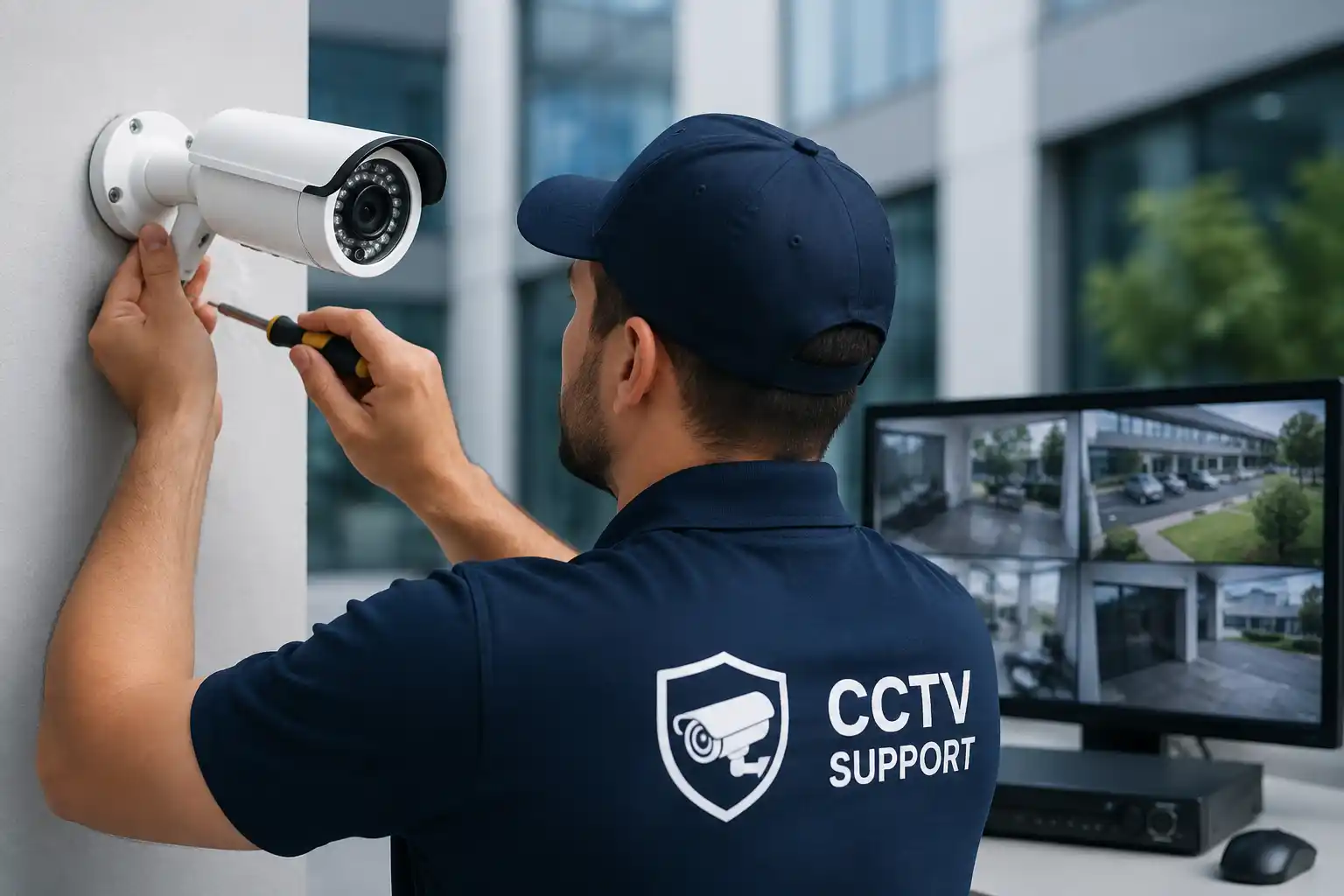
Physical cameras are only one layer of a multi-site surveillance environment. Recording, network transport, permissions, storage, time settings and remote access must also be considered.
Branches may use different camera counts, layouts, recorders and local network conditions.
Access should follow authorised roles rather than shared credentials or unnecessary exposure.
Video availability depends on local LANs, internet links, addressing, firewall policy and bandwidth.
Compatibility, access, storage, licensing and site work should be confirmed before implementation.
What does multi-site CCTV integration actually mean?
Multi-site CCTV integration is the process of making surveillance from more than one business location easier to view, administer, troubleshoot and maintain under a controlled operating model. It can involve IP cameras, NVRs or DVRs, local monitors, storage, PoE switching, branch networks, internet connections, firewalls, remote-viewing applications and user permissions. Businesses should consider it when branch systems have grown independently, authorised managers need visibility across sites, camera faults are difficult to track, or a new location must be added to an existing surveillance environment. Before the scope can be confirmed, the customer should provide a site list, recorder and camera information, approximate device counts, network and internet details, available administrative access, authorised user roles, existing remote-viewing method, current problems and the required business outcome. Compatibility and security should be assessed before changing live systems.
What the integration service may cover
The work begins with understanding how each location currently records and exposes video. Depending on the confirmed scope, assistance may include camera and recorder inventory, account and permission review, local network checks, IP addressing, VLAN or segmentation considerations, PoE and switch-port review, recorder connectivity, time synchronisation, storage status, remote viewing, firewall rules, VPN or approved secure connectivity, branch naming conventions, monitoring of offline devices, user testing and documentation.
An integration project does not automatically mean replacing the surveillance equipment. Existing systems may remain useful when they are compatible with the intended management method and can be secured and supported. In other environments, different generations of hardware, unsupported firmware, proprietary access methods, damaged cabling, insufficient storage or limited network capacity may create constraints that need to be addressed separately.
Who may need a multi-location CCTV plan
The service can suit retail groups, warehouse operators, professional offices, clinics, education and training facilities, hospitality sites, restaurants, property-management teams, showrooms, logistics operations, construction offices and organisations with branches that are managed by a central operations or security team. The important factor is not industry alone. It is the need to manage surveillance consistently across more than one physical location.
A company may also need integration after an acquisition, office relocation, branch opening, network redesign, recorder replacement or change in the people responsible for security. When each site was installed at a different time, system names, time settings, passwords, retention policies, network ranges and user roles can become inconsistent. A structured review creates a better foundation for future support and expansion.
Common business signals that the current CCTV setup is becoming difficult to manage
A multi-site requirement often appears as a management problem before it appears as a camera problem. Several symptoms can point to the need for assessment, but no single symptom proves the underlying cause. The same failure can come from cameras, power, cabling, switching, recorder configuration, storage, network addressing, internet service, firewall policy, user permissions or the viewing application.
Branch cameras disappear from central viewing
One or more sites may intermittently show offline cameras even though local viewing still works. The cause can sit anywhere between the camera and the remote user, so the path should be tested methodically before settings are changed.
Different sites use different login practices
Shared administrator accounts, former-employee access or inconsistent user roles make accountability difficult. Integration planning should identify who needs to view which locations and who is authorised to administer systems.
Evidence retrieval takes too long
Managers may know a recording exists but not which recorder contains it, how the camera is named, whether the time is accurate or who can export it. Naming, time settings, permissions and documentation can materially improve retrieval.
A new branch cannot be added cleanly
Expansion can expose differences in recorder platforms, network ranges, firewall policies, bandwidth, storage and licensing. A repeatable branch standard is easier to extend than a collection of unrelated site configurations.
Remote viewing is unreliable or insecure
Users may rely on undocumented port forwarding, unknown cloud accounts or legacy applications. The correct alternative depends on device capabilities, network design, security requirements and authorised access methods.
Support teams lack a complete inventory
If the business cannot quickly identify which recorder, switch, camera group, storage device or internet circuit supports a site, incident handling becomes slower and vendor coordination becomes more difficult.
Business impact when separate CCTV systems remain unmanaged
Fragmented surveillance does not always cause an immediate outage, but it can create repeated operational friction. A security or operations manager may spend time switching between unrelated applications, chasing site staff for access, or discovering during an incident that a camera was offline or a recorder clock was incorrect. Branch staff may not know who owns a fault, while IT teams may see a network problem and CCTV vendors may see a camera problem without a shared technical picture.
The larger issue is confidence in the evidence path. A camera can display live video while recording is failing. A recorder can be healthy while remote access is unavailable. A connection can be fast enough for normal office traffic yet unstable for continuous or multi-camera viewing. Storage can be present but insufficient for the required retention period. Integration work aims to make these relationships more visible so the business can support them deliberately instead of depending on assumptions.
Possible service scope for a multi-site CCTV environment
The exact scope depends on assessment, available access, equipment condition, network design, business requirements and the approved quotation. The following activities describe what may be relevant rather than a promise that every item is included in every engagement.
Discovery and inventory
Identify locations, camera groups, recorder types, storage, network connections, remote-viewing methods, user roles and known faults. Existing diagrams, exports and vendor information can reduce discovery time.
Connectivity review
Check how cameras reach recorders, how branch systems reach authorised viewers and whether addressing, routing, DNS, firewall policy, VPN, internet service or third-party relay services affect availability.
Recorder and storage checks
Review recording status, channel use, storage health indicators, retention objectives, time settings, export workflow and whether existing recorders can participate in the intended management approach.
User and access design
Map viewers and administrators to locations and duties. Where supported, separate routine viewing from administrative privileges and remove access that is no longer required after customer approval.
Configuration and integration
Apply approved changes to naming, time, network settings, recorder registration, client applications, secure connectivity or related controls only after dependencies, backup options and rollback considerations are understood.
Testing and handover
Validate live viewing, recording, playback, export, user access and selected failure scenarios. Record the agreed configuration, remaining limitations, escalation contacts and recommendations for maintenance.
Service-fit matrix: what situation are you trying to solve?
| Business situation | Relevant assistance | What must be confirmed |
|---|---|---|
| Head office needs authorised visibility of several branches. | Review remote-viewing architecture, user roles, site connectivity and recorder access. | Recorder compatibility, internet quality, security policy, licensing and user requirements. |
| A branch shows intermittent offline cameras. | Test camera power, cabling, PoE, addressing, switching, recorder status and remote network path. | Whether the fault is local, network-related, recorder-related or dependent on a third party. |
| Different branches use unrelated CCTV applications. | Assess whether systems can be consolidated, federated, standardised or documented for controlled parallel operation. | Vendor interoperability, software support, licenses, firmware and security implications. |
| A new location is opening. | Plan camera naming, network segmentation, recorder placement, storage, access roles and integration with the existing operating model. | Site survey, cabling, power, camera coverage, network capacity, retention objectives and project schedule. |
| Recording exists but evidence retrieval is inconsistent. | Review time synchronisation, camera naming, playback, export permissions, storage and operating procedures. | Recorder health, date and time accuracy, export formats and authorised evidence-handling process. |
| Management wants ongoing support after integration. | Define covered locations, devices, incident channels, preventive checks, documentation and vendor coordination. | Agreed service plan, exclusions, visit requirements, escalation responsibilities and quotation terms. |
Service information to define before a quotation
| Main purpose | Create a supportable way to view, administer, test and document CCTV across multiple business sites. |
|---|---|
| Typical systems involved | IP cameras or analogue cameras through recorders, NVRs, DVRs, storage, PoE switches, local networks, firewalls, internet links, viewing clients and mobile applications. |
| Assessment method | Remote discovery where authorised access is available, combined with on-site inspection where physical equipment, cabling, coverage, power or local network testing is required. |
| Customer access required | Authorised administrative access may be required for recorders, network devices, relevant applications and approved remote-access methods. Credentials should be shared only through an approved secure method after authorisation is confirmed. |
| Network dependency | Environment dependent. Local switching, IP addressing, VLANs, routing, firewall rules, VPN, DNS, internet capacity and service stability may affect the solution. |
| Compatibility | Device and software dependent. Mixed brands, legacy firmware, proprietary protocols or licensing may limit centralisation options. |
| Remote support suitability | Suitable for many configuration, access, log, connectivity and application checks when the site remains reachable and secure remote access is authorised. |
| On-site support suitability | Often required for cabling, camera position, PoE, recorder hardware, storage replacement, rack work, local switch testing or inaccessible systems. |
| Testing and validation | Scope may include live view, playback, export, user permissions, recorder status, time accuracy, selected remote-access paths and restoration of normal branch operations. |
| Documentation | May include site inventory, device naming, recorder mapping, access roles, network dependencies, completed changes, outstanding risks and maintenance recommendations. |
| Service location | Dubai and UAE coordination, subject to confirmed location, access, scheduling, engineer availability and approved scope. |
| Quotation requirement | Required to confirm included sites, tasks, assumptions, exclusions, installation work, third-party dependencies and commercial terms. |
Remote assessment versus on-site CCTV integration work
When remote work may be practical
Remote assistance can be effective when the branch has a working internet connection, the relevant system is reachable through an approved secure method, and an authorised user or administrator is available. It may be possible to review recorder status, user permissions, device lists, client applications, network settings, logs, remote-viewing behaviour, time settings and selected firewall or routing details without travelling to the site.
Remote access does not remove the need for change control. Before altering a live recorder or network path, the current configuration should be understood, important settings should be backed up where the platform allows it, and a rollback path should be considered. If the fault involves a cable, failed disk, PoE delivery, physical camera angle or inaccessible device, remote diagnosis may only narrow the problem.
When an on-site visit is usually more useful
On-site work may be needed when the project includes camera installation, physical inspection, cabling, rack access, storage drives, power supplies, PoE switches, recorder replacement, local display issues, camera positioning, lighting assessment or faults that cannot be reproduced remotely. Multi-site projects may require different levels of physical work at each branch, especially when older locations have undocumented wiring or equipment.
A site visit also helps when local coordination is essential. Building access, ceiling access, working-at-height requirements, restricted rooms, business operating hours and permission to interrupt a recorder or switch can affect the plan. Attendance time and project duration should therefore be agreed only after the site conditions and work scope are known.
How a multi-site CCTV assessment and discovery process can work
A successful integration starts with evidence rather than assumptions. The first objective is to understand the business requirement: who needs to see which cameras, for what purpose, from which locations, and how the current process is failing. The technical design comes after the operational need is clear.
Identify whether the issue affects live monitoring, incident review, evidence export, management visibility, branch support, compliance procedures or expansion. A central viewer that is inconvenient is different from a recorder that is failing to capture video.
List all participating sites and identify the local contact, business owner for surveillance, IT contact and authorised decision-maker. This prevents technical changes from being approved informally by someone who does not own the risk.
Record the approximate number of cameras, recorder model or platform where known, channel use, storage arrangement, camera naming, firmware status, local viewing method and any expansion plans. Exact inventory may require remote login or site inspection.
Identify local IP ranges, camera VLANs if used, switching, PoE, router or firewall role, internet connection, VPN or approved remote access, and whether external services are involved. A diagram is helpful but can be created during discovery if none exists.
Check how accounts are created, whether administrators are shared, how remote users connect, which people need access to which sites, and whether former users remain present. Changes should follow customer approval and the capabilities of the installed platform.
Confirm whether the concern is live viewing, recording, playback, export, image clarity, time accuracy or retention. A camera that looks acceptable on a small monitor may not provide the required detail for the business purpose.
Legacy recorders, unsupported applications, limited uplink speed, storage capacity, licensing, ISP policies, third-party cloud services or building restrictions can change the integration approach. These points should be visible before a quotation is finalised.
Decide whether the business needs central viewing only, central administration, standardised naming, remote fault visibility, unified user roles, common evidence procedures, new-site standards or a broader maintenance plan.
Planning and implementing the integration without creating unnecessary risk
Once the current state and target outcome are understood, changes should be planned as a controlled project rather than a collection of ad-hoc logins. CCTV environments often support security operations while sharing network infrastructure with normal business systems. A change to addressing, firewall policy, recorder software or a switch can therefore have consequences beyond the immediate camera view.
The implementation sequence may begin with a pilot branch or a small group of cameras when the environment is complex. A pilot can confirm whether the proposed client software, network path, account model and naming convention work as expected before the same approach is applied to more locations. This is particularly useful when the organisation has mixed recorder generations or acquired branches that were installed by different suppliers.
Configuration backups should be taken where supported and where the customer has authorised access. Important data or evidence should not be put at unnecessary risk during a change. If recorder upgrades, storage changes or network reconfiguration are required, the maintenance window should account for any expected interruption, and the customer should know what will and will not be recorded during that period.
The implementation may include creating consistent site and camera names, configuring approved remote-viewing endpoints, adjusting authorised user roles, documenting which recorder belongs to which location, aligning time settings, verifying storage operation, checking branch connectivity, and setting up monitoring or health indicators where the installed platform supports them. It may also include network changes such as VLAN adjustments, routing, firewall rules or VPN configuration, but only when those tasks are explicitly within the approved scope.
Where equipment is incompatible with the target method, the decision should be practical rather than automatic. The business may keep a site on a separate supported workflow, schedule a later recorder replacement, or standardise new branches first. Integration is successful when the resulting environment is understandable and maintainable, not merely when every camera appears in one screen.
Testing, validation and handover across multiple locations
Testing should reflect how the business will actually use the surveillance environment. A technical login is not enough. The agreed validation plan may include live viewing from approved locations, playback of recent recordings, search by date and camera, evidence export, user-role restrictions, time accuracy, branch naming, camera status, recorder status and remote access. Where bandwidth is limited, tests should consider whether the number of simultaneous streams is realistic for the branch internet connection.
The handover should record what changed and what remains outside the project. Useful documentation may include a location-to-recorder map, camera naming convention, authorised user-role summary, relevant network dependencies, backup or export notes, vendor or ISP escalation points, known legacy limitations and recommendations for future upgrades. Sensitive credentials should not be placed in general documentation; they should be handled through the customer-approved secure method.
A completed test confirms the state at that time. It does not remove the need for routine checks of recordings, storage, network availability, time settings, firmware support, user access and physical camera condition. The maintenance plan should reflect the number of sites and how important surveillance is to daily operations.
Capability focus 1: make branch visibility easier to understand
The strongest outcome of a multi-site project is not simply a larger camera grid. It is a clearer operational picture. A central user should be able to understand which site is being viewed, which recorder owns the camera, whether the time is correct, whether a recording can be retrieved and who is responsible when a device is offline. Consistent naming and documented ownership can reduce the time spent translating between local branch terminology and technical device lists.
This clarity is especially important when managers change or branches are added. Without a standard, the organisation may inherit names such as “Camera 1,” “Back,” or “NVR2” that mean little outside the original installer’s context. A naming method based on site, area and function can make the environment easier to support. The exact format should fit the business and the installed software’s limits rather than forcing an artificial template.
Visibility also includes fault awareness. If the platform supports device or recording health information, those indicators can be incorporated into the operating process. Where central health monitoring is not available, a scheduled verification procedure may be more realistic. The aim is to know what must be checked and who will act, not to claim that every fault can be automatically detected.
Capability focus 2: control access without making support impossible
Surveillance access should be useful to authorised people and difficult for everyone else. Multi-site integration can expose weak practices that developed when each branch was managed independently, such as shared administrator passwords, generic accounts, unnecessary external exposure, or former staff retaining access to viewing applications. A project is an opportunity to clarify roles, but the specific controls depend on the capabilities of each recorder or management platform.
A sensible model separates routine viewing from system administration where possible. A branch manager may need live and playback access for one location, while a regional manager may need several sites, and an IT administrator may need configuration rights. The customer remains responsible for authorising who should have those permissions. FourTeck can help translate the business roles into the available technical controls and document the resulting arrangement.
Remote connectivity should also be reviewed. Direct internet exposure, vendor cloud relay services, VPNs and application-specific methods have different operational and security dependencies. There is no single correct answer for every site. The installed equipment, firewall capabilities, mobile-user needs, corporate security policy, available licenses and ease of ongoing support should all be considered before changing the access method.
Capability focus 3: create a repeatable standard for new branches
Businesses often discover the value of integration when a new branch is being planned. Instead of allowing each site to develop different device names, recorder settings, remote-access paths and documentation, the organisation can define a baseline that future locations follow. This can reduce avoidable variation while still allowing each site to meet its physical coverage and operational needs.
A branch standard may describe camera naming, network separation, IP addressing approach, recorder location, storage objectives, time synchronisation, user roles, remote-access method, testing steps, documentation and support handover. It should not prescribe a specific hardware model unless that choice has been assessed for the project. Camera type and placement depend on scene, distance, lighting, mounting conditions, weather exposure, required detail and local operational policies.
Standardisation also improves vendor coordination. If an installer works on a new location, the business can provide technical expectations rather than asking the installer to invent a configuration in isolation. FourTeck can help define and review those expectations, then test whether the finished site integrates with the wider business environment as intended.
Dependencies, access and customer inputs that can affect the project
Multi-site CCTV integration crosses several technical and organisational boundaries. The cameras may belong to a security function, the network to IT, the internet circuit to a telecom provider, the building access to facilities, and the recorder software to a specialist vendor. The project becomes easier when these dependencies are identified early.
Customer inputs may include the site list, approximate camera count, recorder make and model if known, existing diagrams, IP ranges, ISP details, firewall or VPN information, authorised viewing roles, current remote-viewing application, retention objective, existing faults, maintenance windows, building-access restrictions and the name of a local contact at each location. If a branch is managed by a landlord or third party, permission may also be required before cabling or network changes can be made.
Administrative access is often necessary, but passwords should not be placed in a public form or general email simply because a project is being discussed. Credentials should be shared through an approved secure method after identity, authorisation and the intended use are confirmed. Where access is missing, FourTeck can still help inventory the environment and identify what information must be recovered from the existing vendor or administrator before implementation can continue.
Licensing can also affect scope. Some viewing, central-management or multi-site features depend on the recorder or software platform. FourTeck should verify the installed capabilities before assuming that a feature is available. Likewise, internet bandwidth should be measured in the context of actual video use rather than treated as an abstract speed number. Resolution, frame rate, codec, number of simultaneous streams, branch uplink capacity and other business traffic all affect remote viewing.
Risks, limitations and exclusions to understand before work begins
Diagnosis depends on available evidence and access. A recorder may appear offline because of the local network, internet service, firewall policy, application account, hardware failure or a third-party platform. The project should not assume a cause until the relevant layers have been tested.
Legacy or unsupported equipment may limit integration choices. Some cameras and recorders use proprietary protocols, discontinued applications or firmware that cannot safely support the intended method. Hardware failure may require parts or replacement that is outside the integration labour scope. Storage changes may require planned interruption, and any work affecting active recording should be coordinated with the customer.
Remote access depends on the security policy, network design and platform capabilities. Improving one configuration does not guarantee complete security. Third-party cloud services, ISPs, telecom providers, landlords or specialist vendors may need to act on issues outside FourTeck’s control. On-site work depends on location, building access, scheduling, safe working conditions and the confirmed quotation.
A successful test confirms that the agreed functions worked during validation. It cannot guarantee that future hardware, internet, power or third-party services will never fail. Ongoing checks and maintenance remain part of responsible surveillance operations.
Where multi-site CCTV integration can be useful
Retail and showroom groups
A regional manager may need authorised access to entrances, sales areas, stock rooms or loading zones across several shops. Integration can simplify how sites are named and accessed while preserving local permissions and recorder independence where appropriate.
Warehouses and logistics locations
Distribution operations may have cameras around loading bays, yards, storage aisles and offices. Network and storage requirements can be substantial, so remote viewing should be planned around uplink capacity and operational traffic rather than assuming every stream can be viewed continuously.
Professional offices with branches
Offices may need central visibility of entrances, reception areas, corridors or server rooms while limiting who can access recordings. A standard user-role model can make access changes easier when managers or staff move between locations.
Hospitality and restaurant operations
Multiple venues may have different layouts and operating hours. Integration can focus on consistent recorder administration, time settings, authorised management access and a repeatable incident-review process while respecting site-specific camera placement and policies.
Property and facilities management
Teams responsible for several buildings may need a documented way to identify which cameras, recorders, network links and local contacts belong to each property. Vendor coordination becomes easier when ownership and dependencies are recorded.
Growing companies opening new sites
A company that expects regular branch expansion can benefit from a baseline CCTV design that defines naming, access, network integration, testing and handover requirements. The physical camera plan still needs a site-specific assessment.
Operational, security and maintenance considerations after integration
A multi-site system becomes more valuable when it remains understandable after the project team leaves. The business should know who owns user access, who checks recording health, how a failed camera is reported, how evidence is exported, where device information is stored and which vendor or provider should be contacted when a fault belongs to another service.
User access should be reviewed when employees change roles or leave the organisation. Shared accounts should be avoided where the platform supports individual users and business policy requires accountability. Remote-access methods should be maintained as network and security policies evolve. Firmware and software updates should be planned rather than applied blindly to every recorder; compatibility with cameras, clients, integrations and vendor support should be checked first.
Storage deserves routine attention because a system can show live video while historical recording is incomplete. Retention depends on capacity, recording mode, resolution, frame rate, codec, scene activity and the number of cameras. A maintenance review can compare actual retention with the business objective and identify disks or recorders that show warning signs.
Physical checks remain important. Cameras can move, lenses can become dirty, housings can be damaged, views can be obstructed and lighting conditions can change as a site evolves. Network cables, PoE switches and power supplies can also develop faults. Integration does not eliminate local maintenance; it gives the business a clearer structure for finding and managing those issues.
Before you contact FourTeck about a multi-site CCTV requirement
The initial conversation is more useful when the business can describe the current environment and the outcome it wants. Exact information is not required for every item, but the following checklist helps define what should be assessed.
- List the Dubai or UAE locations that should be included.
- Identify the main business contact and a local contact for each site where possible.
- Estimate the number of cameras and recorders at each location.
- Provide recorder brand, model or platform details if already known.
- Describe how users currently view cameras locally and remotely.
- Explain the main problem: visibility, recording, access, reliability, expansion, evidence retrieval or standardisation.
- Note recent changes such as a new ISP, firewall, switch, recorder, branch move or staff change.
- Confirm whether administrative access is available to the CCTV and relevant network systems.
- Share any existing network diagrams or device inventories through an approved channel.
- Identify internet providers and any known bandwidth or stability concerns at branch sites.
- Describe who should be allowed to view or administer each location.
- State the required recording-retention objective if the business has one.
- Mention building-access, working-hour or maintenance-window restrictions.
- Identify any existing CCTV vendor, ISP or managed-service provider that may need to coordinate.
- Explain the desired end state, such as central viewing, consistent access, easier support or a standard for new branches.
- Indicate whether you expect remote assessment, on-site inspection, implementation, documentation, maintenance planning or a combination.
Service evaluation checklist for defining the engagement
- Exact integration objective and success criteria.
- Number of sites in the first project phase.
- Approximate cameras and recorders per site.
- Current platforms and known compatibility issues.
- Remote access and security requirements.
- Required on-site inspection or physical installation work.
- Network, firewall, VPN or ISP tasks that are in scope.
- Storage, retention and recorder health requirements.
- User-role design and access changes.
- Testing, evidence export and acceptance requirements.
- Documentation and administrator handover expectations.
- Third-party vendor coordination that may be needed.
- Preferred change window and site-access conditions.
- Ongoing maintenance or support expectations after the project.
Each item should be confirmed in the quotation where it affects labour, travel, configuration responsibility, third-party work, hardware, licenses, testing or ongoing support. Inclusion should never be assumed from the page alone.
How FourTeck can assist with the project and quotation process
FourTeck can begin by clarifying the reported business requirement and separating it into technical layers: cameras, recorders, storage, local network, site-to-site or internet connectivity, remote viewing, user access and operational procedures. This creates a practical discovery scope instead of assuming that the solution is a single software installation.
Where remote access is authorised, the initial review may identify recorder versions, device status, current user accounts, network settings and known faults before an on-site visit. Where physical checks are required, the visit can focus on the specific cameras, switches, cabling, recorders, racks or site conditions that cannot be validated remotely. The balance between remote and on-site work depends on the environment.
After discovery, FourTeck can define the proposed work, dependencies, customer responsibilities, exclusions, testing and handover requirements. If an ISP, landlord, original CCTV installer, software vendor or another technology provider must participate, the quotation or project plan can identify that dependency so responsibility is not hidden.
For broader company context, visit the FourTeck IT Services home page or read how FourTeck approaches connected business technology support. To define an assessment or request a quotation, use the FourTeck contact page.
Dubai and UAE service coordination for multi-site surveillance
A multi-site project may combine remote discovery with planned on-site work. A Dubai head office may be able to provide central administrative access, while branch locations may still require local inspection for camera faults, cabling, PoE, recorder hardware or coverage issues. The service plan should therefore identify which tasks can be performed centrally and which require site attendance.
Service timing depends on engineer availability, customer access, site conditions, building permissions, required parts, third-party providers and the confirmed work scope. Installation, configuration, migration and maintenance tasks should be clearly included in the approved quotation rather than assumed. If the project affects live recording or remote access, the maintenance window should be agreed with the business owner responsible for surveillance.
Contact FourTeck to confirm the service scope and scheduling options. A staged approach may be appropriate when the business has many branches or when the sites use different generations of CCTV equipment.
Coordinating Dubai, Abu Dhabi, Sharjah and Ajman locations together
Businesses with operations across Dubai, Abu Dhabi, Sharjah and Ajman may need one technical plan even when each location has different site conditions. Coordination can include remote troubleshooting, planned on-site assessment, camera or recorder installation work, network integration, access review, documentation, maintenance planning and project support, depending on the confirmed requirement.
Travel, scheduling, building access, restricted working periods, equipment availability, internet-provider involvement and local site contacts can all affect the sequence of work. FourTeck can help organise the project around those dependencies without assuming that every location requires the same tasks or the same amount of on-site effort. The quotation should identify the sites included in each phase and any third-party actions required before engineers can complete their work.
Related FourTeck IT services that may support CCTV integration
Multi-site surveillance often depends on other business technology services. Review the FourTeck services overview when the project also involves network support, office WiFi, internet troubleshooting, firewall review, server or storage support, general IT assistance, CCTV maintenance or IP camera support. The correct combination depends on the environment rather than on a fixed service bundle.
For recording checks, camera faults, storage review, image-quality issues and ongoing surveillance maintenance.
For PoE, addressing, camera-to-recorder connectivity, stream configuration and authorised remote viewing.
For switching, VLANs, routing, IP conflicts, branch connectivity and the data path behind network-connected cameras.
For approved remote-access paths, VPN considerations, network segmentation and controlled service exposure.
For multi-site infrastructure planning where CCTV must coexist with servers, users, WiFi, internet and other operational systems.
For recurring checks, incident handling, documentation, change management and vendor coordination after integration.
Why businesses contact FourTeck for a connected CCTV requirement
A CCTV problem is frequently connected to more than the camera. IP surveillance depends on power, cabling, PoE switches, network addressing, routing, storage, recorder settings, user permissions and remote connectivity. A multi-site project adds internet circuits, firewalls, branch naming, different vendors and local site access to that dependency chain. FourTeck’s role is to look across these relationships and help the customer define the correct technical boundary for the work.
The engagement can include a clear initial assessment, coordination between remote and on-site tasks, business-focused troubleshooting, controlled change planning, testing, documentation and communication with vendors or service providers. The objective is not to make unsupported claims about instant resolution. It is to give decision-makers a clearer picture of what is installed, what is failing, what can be integrated, what needs separate action and what should be included in the quotation.
Questions businesses ask before choosing a multi-site CCTV integration approach
The following decision guidance addresses practical questions that often arise before a business requests an assessment. The answers are deliberately dependent on the real environment, because the safest and most supportable design cannot be confirmed from a camera count alone.
Can our existing CCTV systems be connected without replacing every camera?
Possibly. Integration depends on the compatibility of cameras, recorders, software, network protocols, firmware and any licensing used by the installed systems. Some businesses can keep existing cameras and standardise the viewing or support process around them. Others may have older recorders that cannot participate in a modern central-management method, even though the cameras still record locally. The first step is to inventory each site and confirm what the current devices can support. Replacement should be recommended only where compatibility, reliability, security, capacity or maintainability makes it necessary.
Do all branches need the same CCTV brand for central viewing?
Not always, but mixed platforms usually require more careful assessment. Some systems can interoperate through supported standards or compatible management software, while others rely on proprietary features. Even when live video can be displayed together, functions such as playback, alarms, user administration, analytics or health monitoring may differ. A business should decide which functions genuinely need to be common across sites. If central live viewing is enough, the technical path may be simpler than a requirement for complete central administration and identical features.
Can multi-site CCTV be checked remotely before an engineer visits?
Yes, many discovery tasks can be completed remotely when secure access is authorised and the affected systems remain reachable. FourTeck may be able to review recorder status, application behaviour, camera lists, user roles, network settings and remote-viewing paths. Remote discovery can narrow the on-site scope and identify what equipment or access is required. However, it cannot verify every physical issue. Cabling, PoE delivery, damaged cameras, storage drives, rack conditions, local displays, camera angles and inaccessible devices may still require an on-site visit.
Why does CCTV integration involve the network team?
IP cameras are network devices, and multi-site viewing depends on data moving from the camera to the recorder and then to authorised users. Switches, VLANs, IP addresses, gateways, routing, firewalls, VPNs, DNS and internet links can all affect that path. A CCTV installer may correctly configure a camera but still be unable to solve a branch routing or firewall problem. Integration works better when CCTV and network dependencies are reviewed together, especially if the business wants remote access across several offices.
Will central viewing use a lot of internet bandwidth?
It can, depending on how many streams are viewed at once and how those streams are configured. Resolution, frame rate, codec, scene activity and the branch’s available upload capacity affect the demand. A branch may have fast download speed for normal internet use but limited upload capacity for sending multiple camera streams. The design should therefore test realistic viewing patterns. Sub-streams or selective viewing may be appropriate where supported, but the correct configuration must be validated against image-quality needs and the installed platform.
Is VPN always required for remote CCTV access?
No single remote-access method is correct for every environment. A VPN may be suitable in many business networks, but some CCTV platforms use vendor-managed relay or cloud services, and some organisations have existing secure-access architectures. The choice depends on device capability, firewall design, security policy, user location, management overhead and licensing. Direct exposure of recorder services to the internet should not be assumed as the default simply because it is easy to configure. The remote-access method should be selected deliberately and documented.
What information should we prepare if several sites are already showing offline cameras?
Prepare the affected site names, camera names if known, the time the failures were first noticed, whether local viewing works, whether other network services at the branch are affected, recent ISP or firewall changes, recorder screenshots or error messages, and whether the problem is continuous or intermittent. This evidence helps separate a local camera or PoE fault from a recorder, network or remote-access issue. Avoid factory resets or broad network changes before important settings are backed up and the likely technical layer is understood.
Should we centralise recordings or keep recording at each branch?
That decision depends on business requirements, network design, storage capacity, resilience expectations, existing hardware and the platform in use. Local recording can reduce dependence on WAN bandwidth and may allow a site to continue recording during an internet outage. Central storage can simplify some management tasks but can introduce substantial bandwidth and infrastructure requirements. Hybrid models are also possible on some platforms. FourTeck should first understand the required retention, incident workflow, branch connectivity and recovery expectations before recommending an architecture.
How do we know whether a recorder has enough storage for the required retention?
Storage planning needs more than a disk-capacity number. Camera count, resolution, frame rate, codec, motion or continuous recording mode, scene activity and the health of the installed drives all affect retention. The business should also define how many days of recording it actually needs for operational purposes and any applicable internal policy. During assessment, actual retention can be compared with that objective. If retention is short, the solution may involve configuration changes, additional capacity, recorder upgrades or a more realistic recording policy, depending on the platform and risk.
What is the difference between one-time integration and ongoing CCTV maintenance?
Integration is usually a project with a defined target state: connect or standardise selected locations, configure approved access, test functions and document the result. Maintenance is recurring care after that point. It may include recording checks, storage review, camera health, physical inspections, access changes, firmware planning, incident support and documentation updates, depending on the service agreement. A business with many branches may benefit from ongoing maintenance because the environment continues to change as users, networks, cameras and sites are added.
Can a new Dubai branch be added to the same standard as our existing locations?
Yes, if the standard is clearly defined and suitable for the new site. The new branch still needs a physical coverage plan, network capacity check, power and cabling assessment, storage design and review of local access requirements. A branch template should guide naming, network integration, user roles, recorder configuration, remote viewing, testing and documentation, not replace the site survey. FourTeck can help compare the new location against the existing operating model and identify where the design should remain consistent or adapt.
What can affect the final quotation for a multi-site CCTV project?
The number of sites is only one factor. The scope also depends on camera and recorder counts, platform compatibility, quality of existing documentation, administrative access, network complexity, firewall or VPN work, physical installation, cabling, storage changes, building access, testing requirements, user training, documentation, travel and third-party coordination. A simple remote-viewing consolidation is different from a project that includes replacing recorders, redesigning branch networks and testing hundreds of cameras. The quotation should state assumptions and exclusions so the business can evaluate the work accurately.
How should we prepare for an integration change window?
Identify which sites and functions may be interrupted, who approves the change, which users need advance notice, whether important evidence should be exported beforehand, and how the current configuration will be backed up where possible. Confirm local contacts for branches that may need physical checks. The implementation team should know the rollback path if a network or recorder change does not behave as expected. After the work, validate live view, recording, playback, time, user access and remote connectivity rather than assuming that a successful login proves the full system is working.
When should we contact FourTeck instead of continuing to troubleshoot internally?
Contact FourTeck when the problem crosses several layers or locations, when the internal team does not have safe access to the recorder or network settings, when changes could interrupt recording, when vendor responsibility is unclear, or when the business needs a documented plan rather than another temporary fix. Provide the site list, current symptoms, platform information and desired outcome. FourTeck can then advise whether a remote assessment, on-site inspection, project discovery phase or quotation is the appropriate next step.
Frequently asked questions about multi-site CCTV integration
What does FourTeck check first?
The first step is to confirm the business requirement and the affected locations. From there, FourTeck can review cameras, recorders, storage, network paths, user access and current remote-viewing methods. The initial focus is on evidence and dependencies rather than assuming that the cameras themselves need replacement.
Can FourTeck work with an existing CCTV installer?
Yes, vendor coordination can be part of the agreed scope. This can be useful when the existing installer controls device-specific information while FourTeck is reviewing network, firewall, remote-access or multi-site integration requirements. Responsibilities should be clarified so each party knows which layer it owns.
Does multi-site integration guarantee every camera will always be online?
No. Integration can improve visibility, standardisation and supportability, but cameras still depend on power, cabling, PoE, networks, recorders, storage, internet links and other components. Ongoing maintenance and incident response remain necessary.
Can user permissions be different for each branch?
Often yes, but the exact permission model is platform dependent. The customer should define which people need live view, playback, export or administration rights for each location. FourTeck can help map those roles to the available technical controls.
Will the project include camera repositioning or new cabling?
Only if those tasks are included in the confirmed scope. Physical camera changes, structured cabling, ceiling access, rack work and installation can require a site survey and may need separate planning from remote configuration work.
What if a branch uses an old recorder?
The recorder should be assessed for compatibility, support status, storage health, remote-access method and security. It may remain in service, require a workaround, operate separately, or need replacement. The appropriate action depends on the target outcome and the device condition.
Can FourTeck document the final CCTV environment?
Documentation can be included in the project scope. It may cover site and recorder mapping, camera naming, access roles, relevant network dependencies, completed changes, known limitations, support contacts and recommended maintenance actions. Sensitive credentials should be stored separately using the customer’s approved method.
Does FourTeck provide remote and on-site assistance?
The support method depends on the issue, access, location, urgency and approved quotation. Remote work is useful for many configuration and diagnostic tasks, while physical installation, cabling, hardware faults and inaccessible systems normally require on-site assistance.
Can the integration be completed site by site?
Yes. A staged rollout can be useful when the business has many branches, mixed equipment or limited change windows. One pilot site can confirm the design before broader rollout. The sequence and timing remain dependent on access, compatibility and the confirmed project plan.
What happens after implementation?
The agreed functions should be tested and documented, users or administrators can receive handover guidance, and any remaining risks or unsupported equipment should be recorded. The business can then decide whether it needs one-time follow-up support or an ongoing maintenance plan.
Do you cover Dubai and other UAE locations?
FourTeck can coordinate Dubai and UAE requirements subject to the confirmed location, work type, engineer availability, site access and approved quotation. Multi-emirate projects should identify each site and the remote or on-site tasks required there.
How do we request a quotation?
Provide the site list, approximate camera and recorder counts, current platform information, main problems, network or remote-access details that are available, authorised contact and desired outcome. FourTeck can then confirm the discovery or assessment needed to define the quotation.
Plan the next step around your actual sites and systems
A useful multi-site CCTV project starts by establishing what is installed, who needs access, how each branch connects, which recordings matter to the business and what should become consistent across locations. FourTeck can help assess those details, separate physical CCTV work from network and access dependencies, define a controlled implementation path, test the agreed functions and document what remains for future support.
Contact FourTeck with the site list, current CCTV platforms, known problems and desired end state. The service scope, remote and on-site balance, scheduling, third-party coordination and quotation can then be based on the real environment rather than assumptions.