
BUSINESS IP TELEPHONY • REMOTE USERS • CONTROLLED CONFIGURATION
IP PBX Remote Extension Configuration in Dubai, UAE
Remote extensions can keep employees connected to the company telephone system when they work away from the main office, but the result depends on much more than an extension number. The PBX, endpoint, firewall, internet path, security controls, addressing, remote-access method and voice traffic all need to work together. FourTeck helps businesses assess these dependencies, plan approved changes, configure the agreed remote-extension path, test calling and registration, and document what has been implemented.
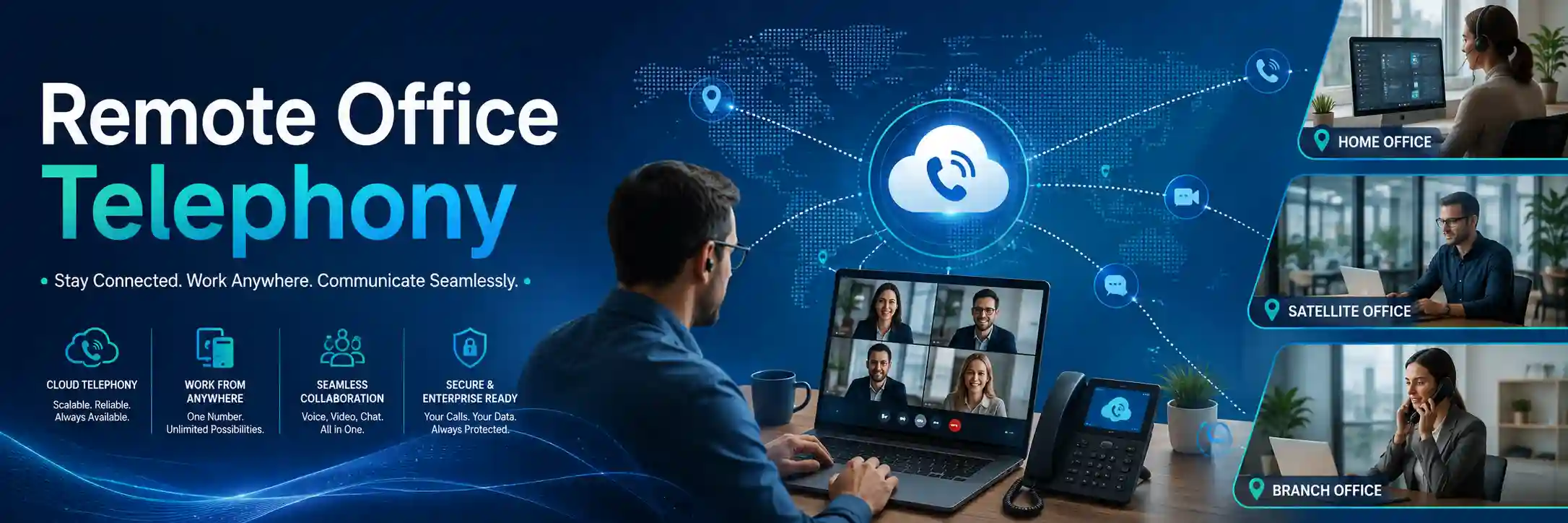
Existing PBX, users, network and call flow are reviewed before change.
Remote access method and exposure must match platform capability and policy.
Internet quality, firewall behaviour and voice traffic affect the user experience.
Registration, calling, audio paths and agreed business functions should be validated.
What is IP PBX remote extension configuration?
IP PBX remote extension configuration is the controlled setup that allows an authorised user outside the main office network to register or connect to the company telephone platform and use an assigned extension according to the organisation’s calling rules. It is commonly used for home workers, managers travelling between sites, branch employees, temporary project teams, reception overflow, sales staff and support personnel who need business calling without sitting beside the PBX.
The correct method depends on the telephone platform and the customer’s security design. A remote endpoint may use a vendor-supported remote connection, a session border controller, a secure tunnel, a virtual private network, or another supported architecture. Before work is confirmed, the customer should provide the PBX platform and version where known, the number and location of users, endpoint type, current firewall and internet arrangement, required inbound and outbound call behaviour, licensing information where relevant, and authorised administrative access. The exact scope is configuration dependent, access dependent and may also depend on a telecom or SIP service provider.
What the service can cover
Depending on the confirmed environment and quotation, assistance may include review of the existing extension plan, PBX remote-access capability, endpoint provisioning, firewall or security-policy requirements, DNS or addressing dependencies, remote-user permissions, call routing, caller identity rules, voicemail access, office-hours behaviour, registration status, media paths, and user guidance. The work can also include testing from one or more approved remote locations so that configuration is checked under realistic network conditions rather than only from inside the office.
The aim is to create a supportable remote-calling path that matches the business workflow. It is not appropriate to assume that every PBX can be safely exposed to the public internet or that every phone can register remotely in the same way. Platform support, firmware, licensing, firewall capability and security policy must be considered first.
Who may need remote extensions
A business may need remote extensions when employees are expected to answer company calls away from the office, when a new branch should use the same extension plan, when a receptionist or support user needs to work temporarily from another site, or when managers want a business identity on calls without relying on personal mobile numbers. It can also be useful when an organisation is relocating, operating a hybrid-work model, providing temporary project offices, or standardising voice communication across several small locations.
The service is relevant to offices, professional firms, logistics teams, property operations, clinics, training businesses, retail management, hospitality administration and other organisations that already use or plan to use an IP-based PBX. Suitability depends on the operational requirement, user environment and technical controls rather than the industry name alone.
Why a remote extension is a multi-system configuration
A remote extension depends on a chain of systems. The user’s phone, softphone or mobile application first needs a usable local internet connection. That connection then crosses the user’s router or mobile network, travels through one or more internet providers, reaches the business edge or a cloud-hosted service, passes the controls used for remote voice access, and finally communicates with the PBX. Signalling establishes the call while separate media flows may carry the actual audio. If one part of that path blocks, rewrites, delays or misroutes traffic, the user may see registration failures, one-way audio, dropped calls, delayed ringing or poor voice quality.
The PBX may also depend on a SIP trunk or telecom provider for external calls. That means a remote extension can be registered correctly while outbound or inbound calling still fails because of a separate provider route, number mapping, caller identification rule or account restriction. For that reason, configuration should be tested from the user through the PBX and onward to the required call destination rather than judged only by a green registration indicator.
Security is another dependency. Remote access should use methods supported by the PBX and aligned with the customer’s network policy. Unnecessary public exposure, weak account protection and undocumented forwarding rules can increase risk. FourTeck’s service approach is therefore to understand the full call path, confirm authorisation, prepare for controlled change, keep a rollback route where practical, and verify the result after implementation.
Common business situations that trigger the request
A user can no longer register from home
The fault may relate to the remote network, changed public addressing, firewall rules, an expired certificate, endpoint settings, PBX policy, credentials or a wider service change. Diagnosis should start with evidence rather than assuming the PBX is faulty.
A new branch needs office extension access
The branch may require several phones, shared reception behaviour, internal dialling and external calls through the central telephone system. Internet quality, local network design, security and failure behaviour should be understood before rollout.
Calls connect but audio is one way
One-way audio can be associated with media-path, NAT, firewall, routing or endpoint conditions. The same symptom can have several causes, so both signalling and audio flow need to be checked.
Hybrid staff need business calling
The organisation may want users to present a company number, transfer calls, use voicemail and remain part of internal extension routing while working remotely. The practical design depends on the PBX and supported endpoint applications.
Remote calls sound unstable
Voice quality can be affected by congestion, WiFi conditions, upstream bandwidth, packet loss, jitter, VPN overhead, ISP routing or device performance. Call-quality evidence is needed before changing PBX settings.
The current remote setup is undocumented
Businesses sometimes inherit remote phones, forwarded ports or VPN rules without clear ownership. A review can map the current path, identify what still serves a purpose and define safer or more maintainable next actions.
Business impact when remote telephony is unreliable
Remote extension problems are often noticed first as a user complaint, but the business effect can spread beyond one handset. Staff may miss customer calls, return calls from personal numbers, lose access to internal transfers, rely on manual call forwarding, or stop using the company extension because audio quality is inconsistent. Reception teams may not know whether a remote colleague is reachable. Supervisors may find that normal call-routing behaviour changes when remote staff cannot register. In branch environments, a telephone issue can become a coordination issue because employees lose their normal internal extension plan.
Repeated faults also create support cost. If remote users are regularly told to restart phones or change local network settings without finding the actual dependency, the incident returns and confidence in the system falls. A more useful approach is to identify whether the problem is user-specific, location-specific, endpoint-specific, PBX-wide or provider-related. This distinction narrows the work and prevents unnecessary changes to equipment that is operating correctly.
Security and maintainability matter as well. A remote extension that works through an undocumented rule may appear successful until the firewall is replaced, the public IP address changes, an administrator leaves, or the PBX is upgraded. Clear documentation of remote access, authorised users, dependencies and testing makes later maintenance more predictable and reduces the chance that a future change unexpectedly disconnects staff.
Possible service scope
The final scope should be confirmed after reviewing the existing environment. Depending on that assessment, FourTeck assistance may include the following activities. Not every item is required for every PBX or user.
- Clarifying the business purpose for remote extensions, including user roles, locations, extension numbers and expected call behaviour.
- Reviewing the IP PBX platform, software or firmware level, current extension design, supported remote-access methods and relevant licensing.
- Checking endpoint options such as compatible IP phones, softphones or mobile applications already approved by the customer.
- Reviewing the office internet connection, public addressing, firewall policy, NAT behaviour, DNS requirements and any existing VPN or session border controller.
- Checking remote-user internet conditions where evidence suggests that local connectivity contributes to registration or audio problems.
- Backing up relevant configuration where the platform supports it and where change risk warrants a rollback point.
- Creating or adjusting approved extension settings, permissions, authentication, remote registration policy and call routing within the agreed scope.
- Configuring supported remote-access components or coordinating required firewall changes without broadly weakening network security.
- Testing registration, internal calls, inbound calls, outbound calls, transfers, voicemail access, caller identity and audio in both directions where these functions are part of the requirement.
- Recording the completed configuration, user allocation, known dependencies, remaining limitations and recommended follow-up actions.
- Providing user or administrator guidance for normal connection, approved remote working and basic fault reporting.
- Coordinating with the PBX vendor, SIP provider, ISP or another responsible party when the issue or required change sits outside FourTeck’s direct control.
Service-fit matrix
| Business situation | Relevant assistance | What must be confirmed |
|---|---|---|
| One remote employee needs the office extension from home. | Endpoint provisioning, remote registration path, call-flow testing and user guidance. | PBX support, endpoint compatibility, secure access method, user internet quality and licensing. |
| Several branch phones must use the central PBX. | Branch connectivity review, extension design, security architecture, rollout and validation. | Number of phones, local LAN, bandwidth, firewall, addressing, resilience expectations and call volume. |
| Remote extension registers but has one-way audio. | Media-path troubleshooting, NAT and firewall review, call testing and evidence collection. | Whether the issue follows the user, network, endpoint or destination and whether packet evidence or provider input is available. |
| A remote setup exists but security and ownership are unclear. | Configuration review, exposure assessment, account review, documentation and change plan. | Authorised access, current rules, business dependencies, upgrade constraints and rollback needs. |
| Remote users experience poor call quality at busy times. | Traffic-path review, bandwidth and quality checks, endpoint and network comparison, QoS assessment where relevant. | Call examples, time pattern, affected locations, WiFi or wired connection, ISP conditions and concurrent traffic. |
Service information to define before work begins
| Main purpose | Enable or troubleshoot authorised remote access to an existing IP PBX extension environment. |
|---|---|
| Typical systems involved | IP PBX, endpoint or softphone, office and remote internet, firewall or remote-access gateway, LAN, DNS, SIP service and user accounts. |
| Remote support suitability | Often suitable when secure administrative access, working internet connectivity and an available local contact are in place. |
| On-site suitability | May be recommended for PBX hardware, cabling, rack work, local firewall access, phone installation or faults that cannot be validated remotely. |
| Customer access required | Authorised administrative access or a responsible administrator who can approve and support changes. Credentials should be shared only through an approved secure method after authorisation is confirmed. |
| Testing and validation | Scope dependent. May include registration, two-way audio, internal and external calling, transfers, voicemail, caller ID and selected user workflows. |
| Security considerations | Supported secure connection methods, account protection, exposure minimisation, access control, certificates, logging and change authorisation where relevant. |
| Scheduling dependency | Depends on engineer availability, customer access, maintenance-window requirements, site conditions and third-party coordination. |
| Quotation requirement | The commercial scope should be confirmed after the environment, user count, locations, platform and required work are understood. |
Can the work be handled remotely or is an on-site visit needed?
Remote assistance can be practical when
The office and remote user have working internet connections, a secure administrative method is authorised, the PBX and firewall can be reached without unsafe workarounds, and a user or administrator is available to test. Configuration review, log inspection, extension provisioning, call-flow checks, endpoint settings and many registration problems can often be investigated remotely. This method is especially useful when the issue is reproducible and the affected endpoint remains accessible.
Remote support is still environment dependent. If the user’s home or branch connection is unstable, if the office internet is down, or if the PBX cannot be reached safely, the diagnosis may stop at the point where physical access or provider action becomes necessary.
On-site assistance may be appropriate when
The PBX is a physical appliance requiring local console access, the firewall or switch needs hands-on inspection, phones must be installed or moved, cabling or power should be checked, several office systems are affected, or the remote path cannot be tested because the office side is inaccessible. An on-site visit can also be useful when the organisation is rolling out many branch or remote devices and wants configuration, labelling and handover coordinated locally.
Attendance timing depends on the confirmed scope, location, engineer availability, building access and customer approval. A visit should be planned around the actual task rather than assumed to be necessary for every remote-extension request.
A practical assessment and configuration journey
- Define the business outcome. Confirm who needs remote extension access, from which locations, using which devices, and what calls or functions they must use. This avoids configuring technical features that do not match the actual workflow.
- Identify affected systems. Record the PBX, remote endpoints, firewall, router, switches, internet services, SIP trunk, DNS records and any existing VPN, tunnel or session border controller involved in the path.
- Collect evidence. For a fault, gather registration status, error messages, affected times, call examples, whether audio fails in one or both directions, which destinations are affected, and whether the same user works from another network.
- Confirm authorisation and access. Determine who can approve PBX and firewall changes and how administrative access will be provided securely. Public pages should never be used to exchange passwords.
- Review platform capability and dependencies. Check which remote-access methods are supported, whether licenses or certificates are required, whether firmware or software levels matter, and whether the telecom provider imposes a separate dependency.
- Prepare rollback and change boundaries. Back up relevant settings where supported, record the current state, decide which rules may change, and identify a maintenance window if the work could affect active calls or multiple users.
- Implement the approved configuration. Provision the remote extension, endpoint and connection method at a level appropriate to the agreed design. Security controls should not be disabled broadly merely to make a phone register.
- Test from the real user path. Confirm registration and place representative calls from the remote location. Check two-way audio, expected caller identity, transfers, voicemail and other agreed functions.
- Observe and correct. If testing exposes intermittent quality, blocked media or routing differences, use evidence from the affected layer to refine the configuration rather than changing several unrelated settings at once.
- Document and hand over. Record the user allocation, access method, key dependencies, test results, customer responsibilities, known limitations and recommended maintenance actions so future support does not start from zero.
Capability focus: making remote registration maintainable
A remote extension is useful only if the connection method can be understood and maintained after the initial setup. That begins with choosing a path supported by the PBX rather than relying on a collection of improvised network rules. Some platforms provide their own secure remote connectivity, some use a session border controller, some are deployed behind a VPN, and some have other supported mechanisms. The right option depends on the current platform, architecture and customer policy, so the service should not assume that one design applies to every telephone system.
Maintainability also means knowing what happens when public addressing changes, a firewall is replaced, a certificate expires, the PBX is upgraded or a user moves to a new device. If the environment depends on a DNS name, certificate, forwarding rule or tunnel, that dependency should be recorded. If a user can connect only from a particular network, that limitation should be documented rather than treated as a mystery later. If the remote connection relies on a third-party service or license, renewal responsibility should be clear.
FourTeck can help map these relationships and convert an undocumented setup into a configuration that is easier to support. The outcome is not a promise that connectivity will never fail. Internet paths and third-party services remain outside a PBX administrator’s full control. The practical goal is to know which layer to check, which evidence to collect and which party to involve when a problem returns.
Capability focus: protecting the remote voice path
Remote access expands the boundary of the telephone environment because users are no longer connecting only from the internal office network. That does not mean remote extensions are inherently unsafe, but it does mean that the access method, authentication, network exposure and administrative process need deliberate review. The safest configuration depends on what the PBX supports. Where supported, encrypted signalling or media, controlled VPN access, a vendor remote-access gateway or a session border controller may form part of the design. These options are not interchangeable and should not be enabled without confirming compatibility.
Account protection is also important. Extension credentials, administrator accounts and provider credentials should be restricted to authorised people and should not be sent through a public webpage. Default or reused credentials should not be treated as acceptable merely because a phone can register. Administrative interfaces should not be exposed more widely than necessary. Call permissions should match user roles so that a remote extension has the access required for work without receiving unrelated privileges.
Security changes should be tested alongside business calling. A rule that blocks unauthorised traffic but also breaks legitimate audio is not a complete solution, while a rule that restores audio by opening broad access can create a different problem. Controlled changes, logging, testing and documentation help balance availability and protection. Security improvement reduces risk; it does not guarantee that the telephone system or internet path will be immune to attack or outage.
Capability focus: improving remote call quality without guessing
Poor call quality is often blamed on the PBX because the user experiences the problem while speaking through an extension. In practice, voice packets cross several networks and can be affected by conditions that have nothing to do with extension credentials. High latency can make conversation feel delayed. Packet loss can create missing audio. Jitter can make delivery irregular. Congestion can appear only during busy periods. WiFi interference at the remote location can affect one user while everyone in the office remains normal. A VPN can add overhead or alter routing. An ISP path can change over time.
A useful assessment compares conditions. Does the same endpoint work when connected by cable instead of WiFi? Does the user have the same issue from a different internet connection? Do all destinations sound poor, or only calls through a specific trunk? Does quality degrade at a predictable time? Are other applications saturating the upstream connection? Is the problem only on one side of the audio? These observations help isolate the layer before configuration is changed.
Quality of Service can help prioritise voice on networks where the business controls the relevant routers and switches, but it cannot guarantee priority across the public internet. Likewise, adding bandwidth does not automatically fix packet loss caused by a faulty connection. FourTeck can review the evidence, the controlled portions of the network and the PBX configuration, then recommend the next technical action based on the area actually contributing to the problem.
Dependencies, access and customer inputs
Remote extension work can depend on several people and systems. The customer should identify an authorised contact who understands the business requirement and can approve changes. Administrative access to the PBX, firewall or remote-access platform may be required, but credentials should be exchanged only through an approved secure process after identity and authorisation are confirmed. If a telecom or SIP provider manages external numbers, trunks or hosted services, their account details and escalation channel may be needed without exposing confidential information publicly.
The technical environment may also depend on licensing, certificates, DNS control, a static or changing public address, VPN permissions, endpoint firmware, supported applications, router behaviour and available internet capacity. A remote user’s local network is part of the path even though it may not be managed by the business. If the problem exists only from one home connection or one branch, the assessment may need information from that local router or ISP.
Before a change window is agreed, it is useful to confirm whether existing PBX configuration can be backed up, whether other users could be affected, whether an administrator can perform a local recovery if remote access is lost, and whether the business has a preferred maintenance period. These inputs allow the quotation and technical plan to reflect the real risk instead of assuming a simple one-user change.
Risks, limitations and exclusions to understand
Remote extension configuration is environment dependent. A successfully configured PBX does not control the quality or availability of every internet connection used by remote staff. A user can experience poor calls because of a local WiFi issue, an ISP fault, mobile-network conditions or upstream routing even when the PBX is healthy. Testing should therefore show what was validated at the time, not create an unrealistic guarantee about future public-network performance.
Legacy or unsupported PBX software can limit secure remote-access options. Some endpoints may not support the method preferred by the business. A vendor license, certificate or subscription may be required for a function and may sit outside the configuration labour scope. A provider may need to modify trunk restrictions or number routing. Hardware faults may require replacement parts or a separate supplier. Building access, rack access or local hands-on work can create an on-site dependency.
Configuration changes can affect active users if they involve firewall rules, PBX services, interface settings or routing. A maintenance window may therefore be appropriate. Backups and rollback planning should be used where relevant, but the ability to restore depends on platform support and the quality of the existing configuration backup. Security improvements reduce exposure but cannot guarantee complete protection against fraud, attack or account compromise.
The final commercial terms depend on the approved quotation or service agreement. Work not included in the confirmed scope, such as major network redesign, replacement hardware, new licensing, provider charges, structured cabling or extensive user rollout, may require separate approval. FourTeck can identify these dependencies during assessment so the customer knows what is included before implementation begins.
Business environments where remote extensions may be useful
Professional and consulting offices
Managers, consultants and administrators may work between customer sites, home and the main office. Remote extensions can preserve the normal business calling identity and internal dialling workflow, subject to the PBX and security design.
Multi-branch operations
Small branches may need selected extensions connected to a central PBX. The design should consider branch internet quality, local firewall behaviour, extension quantity, failover expectations and the effect of a central outage.
Logistics and field coordination
Supervisors and coordinators may need a consistent office extension while moving between a warehouse, temporary location and head office. The endpoint choice should match how mobile the user is and which call functions are actually needed.
Hybrid reception and support teams
A receptionist or support user may work remotely for part of the week. Queue participation, transfer behaviour, presence, voicemail and business-hours routing need to be tested according to the actual PBX features and company workflow.
Temporary project offices
Project teams may require access to established office extensions for a defined period. Planning should include how endpoints are provisioned, how connectivity is secured, and how access is removed or reassigned when the project ends.
Growing UAE businesses
A business adding staff or locations may want to extend an existing telephone system rather than create separate islands. Capacity, licensing, numbering, management effort and future architecture should be reviewed before expansion.
Operational, security and maintenance considerations after deployment
Remote extensions should be treated as maintained business endpoints rather than one-time configurations. User ownership changes, staff departures, device replacements, password policy, application updates and PBX upgrades can all affect the service. An extension assigned to a former employee should be reviewed and disabled or reassigned according to the organisation’s process. A device that is lost or replaced should not leave an active remote credential unmanaged. If a remote-access certificate or subscription has a renewal date, responsibility for that dependency should be documented.
PBX and firewall changes should also be considered during network projects. Replacing the office firewall, changing the internet provider, moving the PBX, altering public DNS, redesigning VLANs or migrating the SIP trunk can change the remote call path. Including telephony in the project checklist prevents remote users from being discovered only after the main network change is complete. Likewise, a PBX upgrade should include validation of supported remote clients and endpoints before users are asked to reconnect.
Routine review can include active remote users, unusual registration attempts where logs are available, outdated endpoints, configuration backups, known dependencies, call-quality complaints and unresolved provider issues. The appropriate frequency depends on the size and importance of the environment. FourTeck can discuss one-time support, planned maintenance or a broader support arrangement based on the systems, locations and responsibilities the customer wants covered.
Before you contact FourTeck about remote extension configuration
Providing a clear starting picture can shorten discovery and help define whether the work is mainly PBX configuration, network troubleshooting, security review or a wider telephony project. Prepare what is available; do not delay the request merely because some details are unknown.
- Business location and the main technical contact.
- PBX make, platform and software or firmware version where known.
- Number of remote users and their working locations.
- Endpoint type: IP phone, desktop softphone, mobile application or a mixture.
- Required extension numbers, call groups, queues or reception behaviour.
- Current symptom, error message or failure pattern if the request is troubleshooting.
- When the issue began and any firewall, internet, PBX or provider changes made around that time.
- Office internet provider and public-address information if available to the authorised administrator.
- Firewall, router, VPN or session-border-controller details where relevant.
- SIP trunk or telecom provider contact if external calling is affected.
- License or subscription information related to remote connectivity where known.
- Whether a recent configuration backup exists.
- Authorised administrative access availability without sending credentials publicly.
- Preferred remote or on-site support method and any building-access restrictions.
- Business impact and the most important user workflow to restore or enable.
- Any preferred maintenance window if changes may affect active calls.
Service evaluation checklist for quotation and engagement
The quotation should describe the work the customer actually needs rather than using a generic remote-extension package. The following points help define that boundary.
- Confirm whether the objective is a new remote rollout, repair of an existing setup, security review, branch connection or post-migration reconfiguration.
- Confirm the number of users, number of devices and number of remote or branch locations.
- Identify the PBX, firewall and endpoint environments that fall within the requested work.
- Decide whether remote-only assistance is practical or whether physical installation and on-site checks are required.
- Confirm whether licenses, certificates, VPN changes, public DNS, provider changes or replacement devices are separate customer dependencies.
- Define which calling functions must be tested after configuration.
- Confirm who can authorise service-affecting firewall or PBX changes and the suitable maintenance period.
- Decide what documentation is required, including user allocation, high-level network path and administrator notes.
- Identify whether user guidance or administrator handover should be included.
- Clarify whether the work ends after validation or should lead into ongoing telephone-system maintenance or IT support.
- List any explicit exclusions so replacement hardware, ISP charges, telecom-provider fees or unrelated network work are not assumed to be included.
How FourTeck can assist with an IP PBX remote extension project
FourTeck can begin by clarifying whether the requirement is operational, technical or both. For example, a manager may say that a remote phone is not working, while the actual business need is to receive the same sales-group calls used in the office. Another customer may ask to create ten remote extensions when the wider requirement is to connect a new branch. Understanding the intended workflow helps define the right technical scope and avoids unnecessary configuration.
The next step can include reviewing the PBX, endpoint and network path, identifying access and licensing dependencies, collecting fault evidence or rollout requirements, and separating tasks that FourTeck can perform from tasks that need the customer’s ISP, telecom provider or PBX vendor. Where an approved change is required, FourTeck can plan the sequence, consider rollback, apply the agreed configuration, support endpoint provisioning and test the outcome.
Documentation can record the practical information needed for later support: which users have remote access, what connection method is used, what external dependencies exist, what functions were tested and what limitations remain. For larger rollouts, documentation can also support consistent onboarding and offboarding so remote voice access does not become a collection of one-off exceptions.
A quotation can then reflect the actual number of users, locations, systems and tasks. Contact FourTeck to confirm the service scope and scheduling options. Remote or on-site assistance depends on the issue, access, location, urgency and approved quotation.
Dubai and UAE service coordination
For a Dubai business, remote extension configuration may begin with a remote review when the PBX, firewall and endpoints can be accessed securely and an authorised contact is available. An on-site visit may be recommended when the work involves physical PBX hardware, local phone installation, firewall or rack access, cabling checks, branch equipment, or a fault that cannot be reproduced remotely. Installation, configuration, testing and documentation tasks should be clearly included in the approved quotation.
For organisations operating in Dubai, Abu Dhabi, Sharjah and Ajman, coordination can combine remote troubleshooting with planned site activity when the confirmed scope requires it. A central PBX may serve users in more than one emirate, or each location may have a different network and internet provider that affects remote calling. Discovery should therefore identify where each endpoint connects, which location hosts the telephone system, who manages each firewall, and whether any telecom or ISP dependency varies by site.
Scheduling and project planning can be affected by engineer availability, customer access, travel, building rules, maintenance windows, equipment availability and third-party response. FourTeck does not need to assume that every site requires a visit: the service plan can use remote work where practical and reserve on-site activity for tasks that genuinely require physical presence or local coordination.
Related FourTeck IT services
Useful when remote telephony issues overlap with user devices, access, internet or wider office systems.
IT service options
Review support areas for network, server, user, telephony and infrastructure needs connected to the project.
About FourTeck IT Services
Learn how FourTeck approaches connected business technology and support across the UAE.
Request a service assessment
Share the PBX, user locations, current symptoms or rollout requirement so the next step can be scoped.
Why businesses contact FourTeck for remote telephony assistance
Remote extension issues often sit between telephone administration and network administration. A PBX engineer may see a registration failure, while a network administrator sees firewall traffic, and the user simply knows that calls do not work. FourTeck’s role can be to connect those views and identify which technical layer needs attention. This is especially useful for small and medium organisations that do not want to coordinate every symptom between separate internal teams.
The service can also provide a structured change path. Rather than making a live firewall change without a record, the work can begin with current-state review, authorisation, backup where appropriate, defined test cases and documentation. For branch or hybrid-work projects, the same structure supports consistent rollout across more than one user or location.
FourTeck can explain findings in business terms as well as technical terms, identify third-party dependencies, and prepare a quotation based on the confirmed work. No unsupported claim is needed: the value comes from clear assessment, controlled configuration, realistic testing and practical next actions.
Questions businesses ask before arranging remote extension configuration
Can an existing office extension be used from home without replacing the PBX?
Often the first question is whether the current telephone system already supports remote users. The answer depends on the PBX platform, software or firmware level, licenses, endpoint options and security design. Some systems provide a supported remote connection for compatible applications or phones; others may depend on a VPN, session border controller or another architecture. The current PBX should therefore be reviewed before recommending replacement. If it can meet the business requirement safely and is within a supportable lifecycle, configuration may be the appropriate next step. If the platform is too old, lacks supported remote access or creates unacceptable security and maintenance constraints, the assessment should explain those limitations and the available options rather than forcing an unsupported workaround.
Why does a remote extension register but have no audio or only one-way audio?
Registration confirms that signalling reached the PBX, but the audio can follow a different network path. NAT behaviour, firewall rules, media addressing, routing, VPN design, endpoint settings or provider conditions may affect that path. One-way audio therefore should not be diagnosed from the registration screen alone. Useful evidence includes which direction has no sound, whether internal calls behave differently from external calls, whether the problem occurs from every remote network, and whether the same endpoint works when it returns to the office. FourTeck can use those comparisons to isolate the affected layer and then test the approved correction. The exact cause remains assessment dependent until the call path is observed.
Should remote phones connect through a VPN, an SBC or direct internet access?
There is no universal answer because the PBX platform and security architecture determine which methods are supported and appropriate. A VPN may extend controlled network access, a session border controller can mediate voice traffic in supported designs, and some PBX vendors provide their own remote tunnel or secure connection. Direct exposure of SIP services to the public internet should not be treated as a default merely because it is technically possible. The service should first identify what the PBX supports, what the firewall can enforce, how many users are involved, whether mobile applications are required, and who will maintain the connection. The selected method should then be documented so future firewall, PBX or internet changes do not unexpectedly break remote calling.
Can poor home internet make the office PBX look faulty?
Yes. A remote call depends on the user’s local connection as well as the office and PBX. Weak WiFi, packet loss, congestion, limited upstream capacity, mobile-network changes or unstable ISP service can create delays, broken audio or dropped calls while the PBX remains operational for office users. A practical diagnosis compares locations and connection types. If the same phone works well from another network, the remote site becomes a stronger area of investigation. If every remote user experiences the same problem at the same time, the office edge, PBX or provider may deserve more attention. The goal is to identify the layer with evidence rather than change PBX settings each time a user reports poor audio.
What information is most useful when requesting troubleshooting?
Start with the affected user, extension, endpoint, location and time pattern. Explain whether the phone cannot register, rings but cannot answer, connects with no audio, drops after a period, fails only on external calls or sounds poor. Note recent changes to the PBX, firewall, ISP, router, endpoint or SIP provider. If available, provide screenshots of error messages, call times and the destination used for testing. For security reasons, do not place passwords or private keys in the initial public request. An authorised contact can arrange secure access after the scope is discussed. These details help FourTeck decide whether remote diagnosis is likely to be useful or whether local inspection should be planned.
How many remote extensions can one IP PBX support?
The answer is platform and license dependent. Capacity can be influenced by the PBX model or host resources, software edition, concurrent-call licensing, endpoint registration limits, trunk capacity, internet bandwidth, call recording, transcoding, encryption and the wider network design. A business planning a few remote users may have a very different requirement from a branch office with dozens of active phones. Rather than using a generic number, FourTeck can review the current platform and expected call volume, then identify whether the existing environment has suitable capacity or whether an upgrade, network change or separate design should be considered. Capacity planning should include expected growth so the organisation does not repeat the same exercise after the next hiring cycle.
Is remote extension configuration the same as call forwarding to a mobile?
No. Call forwarding usually redirects a call from the PBX to another telephone number, while a remote extension allows a compatible endpoint outside the office to act as an extension of the PBX according to the supported feature set. Forwarding can be useful in some workflows, but it may involve telecom charges, caller-identification differences, transfer limitations or a different user experience. A remote extension may provide internal dialling, transfer, voicemail or queue behaviour more closely aligned with office users, depending on the platform. The right approach should follow the business need. If the user only needs calls redirected temporarily, forwarding may be enough. If the user needs to work as part of the office telephone environment, a remote extension may be more appropriate.
When should an on-site visit be included in a Dubai remote-extension project?
An on-site visit is usually most useful when physical work or local access is part of the problem. Examples include installing desk phones, checking PBX hardware, accessing a rack, tracing cabling, testing a local firewall that cannot be managed remotely, or confirming a wider office network fault. If the requirement is mainly software configuration and all relevant systems can be reached securely, remote assistance may be more efficient. For a larger rollout, the business may still prefer planned site coordination for device placement, user handover or branch deployment. FourTeck can decide with the customer after the initial scope is understood; on-site attendance should be driven by the task rather than used as an automatic first step.
What should be tested before remote users depend on the new configuration?
Testing should represent the actual user workflow. At minimum, the approved endpoint should register from the intended remote network and complete calls with clear audio in both directions. If the user needs internal calls, inbound external calls, outbound calls, transfer, hold, voicemail, queue participation or caller identification, those functions should be included in the test plan. It is also useful to verify behaviour after the endpoint reconnects and to confirm what happens if the remote internet connection changes. For branch deployments, test more than one device and a realistic level of concurrent use where practical. The results should be recorded with any known limitation so the business knows what was validated and what remains dependent on external networks or providers.
Frequently asked questions
Can FourTeck configure a remote extension on any IP PBX?
Compatibility must be confirmed first. The available remote-access method depends on the PBX platform, version, licensing, endpoint and network design. FourTeck can assess the environment and define a supportable scope rather than assume universal compatibility.
Do remote users need a static IP address at home?
Not necessarily. The answer depends on the connection architecture and platform. Some remote-access designs do not require a fixed home public address, while other policies or VPN arrangements may have different requirements. The design should be confirmed from the actual environment.
Can a softphone be used instead of a physical IP phone?
A compatible softphone or mobile application may be suitable if the PBX supports it and the customer approves the device and security model. The required features, licensing and user workflow should be checked before rollout.
Will configuration interrupt office calling?
Some changes can be isolated to one user, while others involving firewall rules, PBX services or network settings may affect multiple users. The likely impact should be assessed before work, and a maintenance window may be recommended where appropriate.
Can FourTeck troubleshoot a remote phone that worked before?
Yes, subject to access and scope. Useful evidence includes when it stopped working, recent network or PBX changes, registration status, error messages, call examples and whether other remote users are affected.
Is the SIP provider always involved?
No. Internal remote registration may be independent of the external SIP trunk, but provider involvement can become necessary when inbound numbers, outbound calling, caller identity, trunk restrictions or hosted services contribute to the issue.
What security information should we provide?
Provide platform and architecture details, authorisation contacts and information about existing VPN or firewall controls where relevant. Do not publish passwords, private keys or access tokens. Credentials should be shared only through an approved secure method.
Can remote extensions work for multiple UAE branches?
They may, depending on PBX capacity, licensing, internet connectivity, branch networks and the supported remote-access architecture. Each location should be included in discovery because one branch may have different firewall or ISP conditions from another.
What happens after configuration is completed?
The agreed functions should be tested, known limitations recorded, and user or administrator handover provided where included. The business can then decide whether it needs only the completed project documentation or ongoing telephone-system support and maintenance.
How is the service quotation prepared?
The quotation depends on the number of users and sites, PBX and firewall environment, access, current faults, required remote-access design, testing, documentation, on-site work and third-party dependencies. Contact FourTeck to confirm the final scope.
Plan a supportable remote extension configuration
Whether you are enabling one home worker, connecting a branch, repairing a failed remote phone or reviewing an inherited PBX setup, the first useful step is to define the user workflow and map the technical path. Share the PBX platform, number of users, locations, endpoint types, current symptoms or planned call flow, and any known firewall or provider dependencies. FourTeck can review the requirement, identify what can be handled remotely, determine whether an on-site activity is necessary, and prepare the work around the confirmed environment.
Configuration should be based on authorised access, supported platform capability, controlled network changes, representative testing and clear documentation. The final scope and timing depend on the current setup, access, engineer availability, customer approvals, site conditions, licensing and third-party services.