
IP PBX Health Check in Dubai, UAE
A business phone system can appear normal while configuration drift, incomplete backups, trunk instability, unclear routing rules or network weaknesses are building in the background. An IP PBX health check creates a current technical picture of the telephone environment, the services that depend on it and the areas that deserve attention before a routine change becomes an operational interruption.
FourTeck can review the PBX platform, extensions, call paths, SIP services, queues, voicemail, office-hour logic, connected phones, network dependencies, administrative access, backup readiness and available documentation. The exact checks depend on the platform, deployment model, access, business priorities and approved service scope.
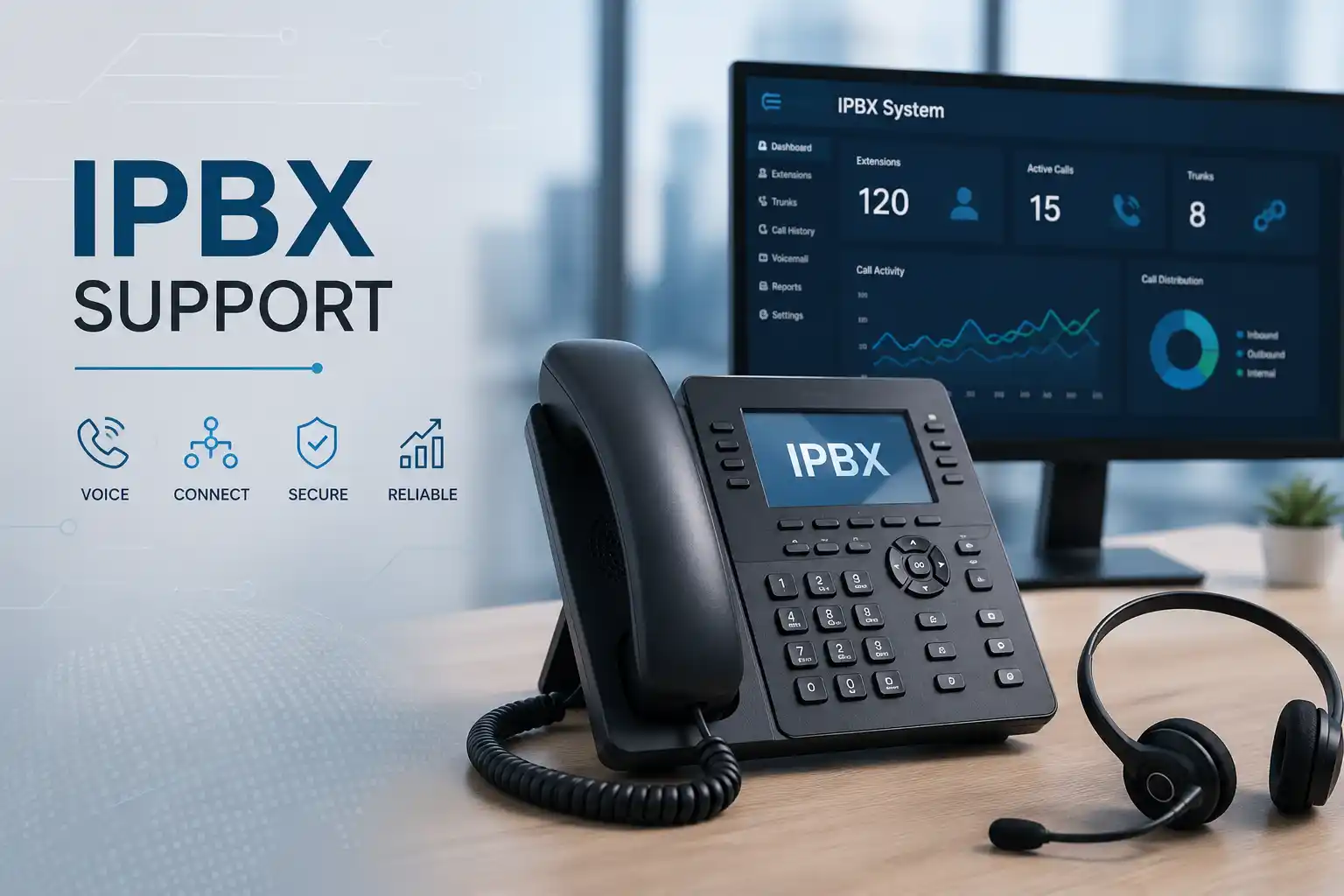
PBX, phones, trunks, call flows and network dependencies
Remote review or on-site checks according to the issue
Authorised, backed up and tested where configuration work is approved
Findings, priorities and next actions based on the confirmed scope
What is an IP PBX health check?
An IP PBX health check is a structured assessment of the telephone system and the supporting services that allow business calls to work. It is mainly used to identify configuration gaps, repeated faults, undocumented dependencies, backup concerns, capacity pressure, access risks and maintenance priorities before corrective work or an upgrade is planned. Businesses should consider it when phone behaviour is inconsistent, the system has changed hands, documentation is weak, a provider change is planned, the office is expanding, or management wants a clearer maintenance picture. Before the review, the customer should confirm the PBX platform, site, user and extension count, known call issues, recent changes, voice provider, available administrator access, maintenance restrictions and any existing backups or diagrams. Findings depend on available access and evidence, and any corrective configuration should be separately approved.
What the health check can cover
The purpose is not to run a single test and declare the telephone system healthy. Business telephony is a chain of connected functions. A desk phone may register correctly but still fail on external calls. A SIP trunk may show as active while a particular inbound number follows the wrong route. A queue may work during office hours but behave differently after a public-holiday or time-condition change. A backup may exist but its age, location or restoration process may be unclear. A useful health check therefore reviews the system as an operating environment rather than as one appliance.
Depending on the confirmed scope, the review may include extension inventory, registration state, inbound and outbound routes, ring groups, queues, auto-attendant menus, office-hour rules, voicemail behaviour, forwarding, caller identification, call recording settings, trunk configuration, number mapping, user permissions, remote extensions, connected phones, gateway functions, firmware or software status, configuration backup, administrative accounts and available logs. Network elements may also be relevant, including switching, PoE, voice VLANs, DNS, DHCP, firewall handling, internet stability and any branch connectivity used by phones or remote users.
The exact list is environment dependent. A small office with one local PBX and a single provider needs a different assessment from a multi-site operation using queues, remote users, several trunks and complex call routing. FourTeck can define the review around the business outcome rather than forcing every customer through the same checklist.
Who may benefit from the service
A health check is useful when management needs evidence before deciding whether to repair, reconfigure, maintain or replace part of the telephone environment. It can suit offices that inherited a PBX from a previous IT supplier, businesses with several years of undocumented extension changes, companies preparing to add staff or branches, organisations experiencing intermittent voice issues, or teams that want to verify backup and access arrangements before a planned upgrade.
It is also relevant when responsibility is shared between several parties. The PBX may be maintained by one provider, SIP trunks by another, internet by an ISP, networking by an IT company and handsets by an internal administrator. When calls fail, each supplier may see only its own component. A health check can create a clearer dependency map so that future troubleshooting starts with better information.
Businesses do not need to wait for a major outage. Preventive review is often most valuable while the system is still operational because settings, logs, routing behaviour and backups can be examined without the pressure of a complete communications failure. The service scope should still be based on current access, platform supportability and customer priorities.
Signals that a PBX review may be worthwhile
Calls behave differently by user or time
Some extensions ring correctly while others miss calls, office-hour routes do not follow the expected schedule, or calls reach a different destination after a change. These symptoms can involve routing logic, extension status, queue membership, forwarding, time conditions or provider mapping. The symptom alone does not prove the cause.
Audio is inconsistent
One-way audio, delay, choppy speech, dropped calls or poor sound can involve endpoints, codecs, packet loss, NAT, firewall behaviour, internet congestion, provider conditions or branch connectivity. A health check can help establish where evidence should be collected before changes are made.
System knowledge is concentrated in one person
If extension ranges, trunk details, passwords, backups, call flows and provider contacts are known only to one employee or former supplier, normal staff changes can create operational risk. Documentation and ownership review can become part of the health-check scope.
The business is changing
Office relocation, branch expansion, a new reception process, added departments, remote users, provider migration or a planned platform upgrade can expose hidden dependencies. Reviewing the current system first makes project planning more controlled.
Why unresolved PBX weaknesses can affect more than phones
Business telephony often supports sales enquiries, customer service, reception, supplier communication, appointment handling, internal coordination and emergency contact procedures. A routing error may cause calls to reach the wrong department. A queue problem may make callers wait without reaching available staff. A trunk issue may affect only external calling, leaving internal extensions apparently normal and delaying diagnosis. Weak documentation can make even a simple user change risky because nobody is certain which setting affects which route.
The impact can also spread into the network and security environment. IP phones may depend on switches, PoE power, VLAN configuration, DHCP or DNS. Remote phones and applications may depend on internet reachability, firewall rules, certificates or secure access methods. Call recordings may depend on storage, retention settings and permissions. If those relationships are not understood, a network change can unintentionally affect voice, while a telephony change can create unnecessary troubleshooting for the network team.
A health check is therefore useful as a visibility exercise. It does not guarantee that future faults will not occur, but it can reduce guesswork by identifying important dependencies, recording the current state and separating urgent concerns from improvements that can be planned. The final priorities should reflect business impact, technical evidence, supportability and the customer’s approved budget and change window.
Possible service scope after assessment
Depending on the agreed review, FourTeck assistance may include a combination of the following activities. Not every item applies to every PBX, and implementation work should be confirmed separately when it goes beyond inspection and reporting.
Identify the PBX platform, deployment type, connected phones, gateways, trunks, extension ranges, main numbers, branch links and relevant provider dependencies.
Trace selected inbound and outbound call paths, including office hours, reception handling, queues, ring groups, voicemail, forwarding and overflow behaviour.
Review whether representative phones or users register correctly and whether endpoint behaviour matches the intended extension and feature assignment.
Collect evidence around trunk registration, call failure patterns, number mapping or external service behaviour when provider involvement may be required.
Check relevant switching, PoE, addressing, VLAN, DNS, firewall or internet conditions where they affect registration, signalling or media paths.
Confirm whether a configuration backup exists, when it was created, where it is stored and what information is available for restoration or migration planning.
Identify administrator dependencies, provider portals and customer-authorised access required for future support without publishing or sharing credentials insecurely.
Record important findings, unresolved dependencies, corrective priorities, suggested maintenance actions and items that may need a separate quotation.
Service-fit matrix: what should happen next?
| Observed situation | Technical areas that may be relevant | Recommended next step |
|---|---|---|
| Only one extension has trouble | Phone, cable, PoE, account registration, user settings, local switch port | Start with endpoint and registration checks before changing global PBX settings. |
| All external calls fail | SIP trunk, provider, internet, firewall, routing rules, account status | Collect timestamps and failure examples, then review trunk and upstream dependencies. |
| Inbound calls reach the wrong destination | DID mapping, inbound route, time conditions, queue or ring-group logic, forwarding | Document the intended call path and compare it with the current route before changes. |
| Calls are audible in one direction only | Media path, NAT, firewall, provider, endpoint, network addressing | Review signalling and media evidence; avoid assuming the handset is defective. |
| The office is preparing to move or expand | Extension plan, phone inventory, number routing, switching, PoE, cabling, internet, provider coordination | Complete a current-state health check and dependency inventory before the migration plan. |
| Nobody knows whether a recent backup exists | PBX backup settings, storage location, administrator access, version and restoration prerequisites | Confirm backup status before a major configuration or upgrade window where practical. |
Service information at a glance
| Service topic | IP PBX health check for business telephone environments |
|---|---|
| Main purpose | Assess system condition, call-flow logic, voice dependencies, documentation, backup readiness and maintenance priorities. |
| Suitable for | Offices, branches and customer-facing businesses with existing IP PBX systems, especially where faults repeat or system knowledge is incomplete. |
| Typical systems involved | PBX platform, IP phones, soft clients, SIP trunks, gateways, switches, PoE, VLANs, firewall, internet service and branch connectivity where relevant. |
| Assessment method | Remote review, guided checks and/or on-site inspection depending on authorised access and physical dependencies. |
| Remote support suitability | Often suitable for configuration, logs, route review, account status, backup checks and provider evidence when secure access is available. |
| On-site suitability | Recommended when phones, gateways, racks, power, cabling, switch ports, PoE or local network conditions need physical verification. |
| Customer information required | Location, platform, user count, symptoms, recent changes, provider details, business-critical call flows, access availability and maintenance constraints. |
| Testing and validation | Representative inbound, outbound and internal call tests may be used where they are safe, authorised and relevant to the agreed scope. |
| Documentation | Findings, dependencies, selected configuration notes, open risks and recommended next steps may be documented according to scope. |
| Scheduling | Subject to engineer availability, customer access, change windows, site conditions and provider involvement. |
| Quotation | Required scope depends on system size, documentation quality, number of sites, access, urgency, testing needs and any corrective work requested. |
Can the health check be completed remotely?
Many PBX checks can begin remotely when the business has a working internet connection, secure authorised access and somebody available to confirm real-world call behaviour. Remote work can be efficient for reviewing extension status, call routes, queue membership, office-hour rules, voicemail settings, trunk status, selected logs, backup configuration, user permissions and platform information. It can also help determine whether the issue appears to sit inside the PBX or whether evidence points toward a provider, firewall or local network dependency.
Remote access should not be treated as permission to make broad changes. The purpose of a health check is first to understand the current state. If a configuration change is required, the business impact, backup position, maintenance window and rollback approach should be considered before implementation. Customers should never place administrator passwords on a public page or send credentials through an unapproved channel. Access details should be exchanged through an agreed secure method after the requester and authorisation have been confirmed.
When is an on-site visit more appropriate?
On-site assistance becomes more useful when the condition of physical equipment or the local network is part of the question. Examples include phones that lose power, unstable switch ports, gateway faults, cabling concerns, rack access, PoE limitations, analogue line interfaces, UPS or power issues, patching uncertainty, or voice quality that appears linked to a specific floor or network segment. A technician may also need to reproduce a symptom with local users when remote evidence is insufficient.
Some engagements use both methods. Remote discovery can establish the likely technical area, identify the information needed and reduce unnecessary disruption during a visit. The on-site component can then focus on physical checks that cannot be performed securely or reliably from outside the premises. The appropriate balance is confirmed from the issue, location, access, urgency and approved quotation.
How the assessment and diagnostic process can work
The first question is not simply whether the PBX is online. FourTeck can clarify what users are experiencing: missed inbound calls, external-call failures, one-way audio, queue behaviour, registration problems, routing errors, voicemail issues, slow changes, or a general concern about system condition. Priority depends on how the issue affects customer communication and internal operations.
A single handset, one department, one branch and every user point to different diagnostic paths. The review records which extensions, numbers, queues, sites, providers or call directions are affected and whether the behaviour is constant or intermittent.
Recent call examples, timestamps, screenshots, registration messages, provider references, recent configuration changes and user descriptions can be more useful than a general statement that the phone system is not working. Evidence helps narrow the layer that should be tested.
Before any corrective action, the available administrator access, configuration backup, support ownership and maintenance restrictions should be understood. If the system is business critical, even a small route change may need controlled timing and a clear way to reverse it.
Relevant checks may include extension registration, inbound and outbound routes, trunk status, queue membership, time conditions, forwarding, voicemail, permissions, recording settings, backup tasks and event information. The exact functions depend on the platform and authorised access.
When symptoms point outside the PBX, the next layer may be the phone, switching, PoE, addressing, DNS, firewall, internet path, branch connection or SIP carrier. Tests should isolate evidence rather than changing several systems at once.
A technically valid route can still be wrong for the business. The assessment compares selected call paths with the required reception, sales, support, after-hours and voicemail behaviour so that configuration findings are connected to operational requirements.
Results can be separated into immediate faults, operational risks, documentation gaps, maintenance items and longer-term improvement opportunities. This prevents a cosmetic preference from being treated with the same urgency as a failed trunk or missing backup.
Where the quotation or support approval includes configuration changes, the work can be planned with suitable backups, authorisation and a defined test. Hardware replacement, licensing, provider actions or project work may need separate approval.
Representative calls, user checks and system status can be used to confirm the agreed outcome. Remaining risks, dependencies and recommended next steps should be recorded so the health check improves future support rather than ending as a one-time inspection.
Planning corrective action without creating a new problem
A health check often discovers settings that could be improved, but discovery and implementation should remain distinct. For example, an inbound route may be overly complex, several old extensions may still exist, a queue may have outdated members, or an administrator account may no longer have a clear owner. It may be tempting to clean everything immediately. In a live telephone environment, however, several settings can interact. Removing an extension may affect a ring group. Changing an office-hours rule may alter after-hours behaviour. Updating a trunk parameter may affect all external calls. A controlled plan therefore starts with the business result and changes only what is necessary.
Where appropriate, FourTeck can prepare a corrective-action scope that identifies the affected configuration, expected outcome, backup requirement, testing method and timing. Changes with broader impact may be scheduled in a maintenance window. Where a third party controls the SIP service, hosted PBX, DNS, firewall or internet circuit, coordination may be needed before a final result can be confirmed. Where the platform is legacy or unsupported, the safest recommendation may be documentation and migration planning rather than repeated modification.
Not every finding needs immediate action. Some issues are operational rather than technical, such as an undocumented reception process or inconsistent extension naming. Others may be capacity concerns that matter only when staff numbers increase. A useful health report separates current incidents from future planning so that managers can decide what to approve now and what to budget later.
If corrective work is approved, configuration backups and rollback considerations should be included where the platform supports them and the risk justifies it. A successful change should be followed by representative testing and confirmation from users who understand the intended call flow. This reduces the chance of solving one symptom while creating another unnoticed route problem.
Testing, validation and handover
Health checks should end with evidence that is understandable to both technical staff and business users. Depending on scope, validation may include internal extension calls, selected inbound numbers, outbound destinations, transfer behaviour, queue delivery, voicemail, office-hour logic, caller identification, remote users or failover functions that can be tested safely. The aim is not to generate a large test sheet for its own sake. Tests should reflect the functions the business relies on most.
If the work identifies a network or provider dependency, the result may be documented as an open item rather than represented as resolved. For example, packet loss on an internet path may require ISP investigation, or number-routing changes may need carrier action. Clear ownership prevents the PBX administrator from repeatedly modifying a system that is not the source of the fault.
Handover may include a summary of what was checked, what changed, what remains to be addressed, where backups are stored, which external providers are involved, and what the business should monitor. The amount of documentation depends on the agreed scope. A concise, current record is more useful than a large document that is never maintained.
Capability focus: faster fault isolation through a dependency map
When a call fails, the visible symptom is often on a phone, but the cause can exist elsewhere. A handset needs power and network connectivity. The extension needs registration to the PBX. The PBX needs the correct route. External calls depend on a SIP provider or gateway. Voice media may cross a firewall and internet connection. Remote users may additionally depend on DNS, certificates, applications or branch connectivity. A health check can record these relationships so future troubleshooting starts with a map rather than assumptions.
This is especially valuable in mixed environments where different suppliers support different layers. The objective is not to replace every supplier with one company. It is to make escalation clearer. If the PBX shows a valid outbound attempt but the carrier rejects it, the provider can be contacted with useful evidence. If a phone loses registration when a particular switch port drops, the network layer can be investigated. Better isolation can reduce repeated changes and shorten the path to the party that actually controls the failing component.
Capability focus: safer changes to call routing and user settings
Telephone systems accumulate changes. Employees join and leave, teams move, reception arrangements evolve, direct numbers are reassigned, office hours change and temporary forwarding can become permanent without documentation. Over time, the PBX may still work but become difficult to understand. A health check can identify where settings no longer match the current organisation and where a simple request could have an unexpected side effect.
The practical outcome is a more controlled change process. Before editing a queue or route, the existing logic can be recorded. Before deleting an old extension, its memberships and forwarding can be reviewed. Before changing a trunk, current external-call behaviour can be tested. This does not eliminate risk, and some platforms or legacy environments may have limited backup or rollback options, but it helps the business make changes with better awareness and clearer acceptance criteria.
Capability focus: documentation that supports maintenance and growth
Documentation is often treated as a project deliverable and then forgotten. For PBX maintenance, the most valuable information is usually concise and operational: the main platform and version, location or hosting responsibility, administrator ownership, provider contacts, primary numbers, extension ranges, critical queues, major call routes, backup location, network dependencies and any known exceptions. The health-check scope can establish or update this baseline.
As the business grows, that baseline supports planning. A new branch can be assessed against existing number ranges and routing conventions. A provider migration can begin with a current list of trunks and direct numbers. A platform upgrade can start with a clearer inventory of phones, gateways, remote users and recordings. Documentation does not replace technical testing, but it reduces avoidable uncertainty when people, suppliers or premises change.
Dependencies, access and information the customer may need to provide
The quality of a PBX health check depends on the evidence and access available. FourTeck can still begin with partial information, but the limitations should be clear. A hosted platform may require a portal login controlled by another provider. An on-premises PBX may sit behind a firewall with no approved remote path. A business may know its main telephone number but not the SIP carrier account. Old systems may have lost administrator credentials or backups. These conditions affect what can be assessed and whether corrective work is possible.
Useful inputs include the business location, PBX make or platform name, approximate number of extensions, number of offices or branches, main inbound numbers, known trunk or telecom provider, examples of failed or unusual calls, when the issue started, whether the behaviour is intermittent, any recent network or provider changes, and which call flows are operationally critical. If the company has network diagrams, extension lists, previous support reports or backup files, they may reduce discovery time.
Authorised administrator access may be required for configuration review. Provider portal access may be needed when trunk or number mapping is involved. Local access may be needed to inspect phones, gateways, switches or cabling. A site contact should be available when user testing or physical access is required. Buildings with access permits, restricted comms rooms or fixed maintenance windows should mention those conditions before scheduling.
Customers should not send passwords in general website enquiries. Credentials should be exchanged only through an approved secure method after the service request and authorisation have been confirmed. Where the PBX contains call recordings, contact data or user information, access should be limited to the minimum required for the agreed work.
Third-party dependencies may include SIP carriers, internet service providers, cloud hosting, DNS, certificates, licensing, firewall administration, phone provisioning services or manufacturer support. FourTeck can help identify when these parties are relevant and coordinate technical evidence where included in the scope, but actions controlled by a third party remain dependent on that provider.
Risks, limitations and exclusions to understand before work begins
A health check is an assessment, not a guarantee that every hidden defect will be found or that future outages will be prevented. Some faults are intermittent and may not occur during the review. Logs may have limited retention. Legacy platforms may provide little diagnostic detail. Missing administrative access can prevent configuration review. Network or carrier behaviour may change outside the PBX. Findings should therefore be understood in the context of available evidence.
Corrective configuration can carry operational risk because call routes and user settings are interconnected. Significant changes may require a maintenance window, current backup and rollback planning. A configuration backup is useful only if it is compatible with the platform and can be restored in the expected environment. FourTeck can review backup readiness within scope, but restoration outcomes depend on platform condition, software version, licensing, hardware availability and the integrity of the backup.
Hardware faults may require replacement parts or new equipment that are outside an assessment labour scope. Provider faults may require carrier action. Licensing or subscription limitations may restrict features or updates. Unsupported PBX software, ageing gateways or obsolete handsets may have reduced repair options. In such cases, a phased replacement or migration plan may be more appropriate than repeated repair attempts.
Voice quality can be affected by bandwidth, latency, jitter, packet loss, firewall handling, internet paths or provider conditions. A successful test at one moment does not guarantee that an intermittent network problem has disappeared. Where recurring quality issues are suspected, longer observation or additional network diagnostics may be recommended.
Final commercial terms, included tasks, site attendance, documentation depth and implementation work depend on the approved quotation or service agreement. Customers should confirm what is included before assuming that all findings will be corrected within the health-check visit itself.
Business environments where a PBX health check can add clarity
Professional offices may rely on reception, direct numbers and department ring groups, so small routing changes can affect customer access. Clinics may need dependable appointment and reception calls across busy periods. Retail and hospitality environments may have front-desk phones, back-office extensions and multiple service numbers that must remain understandable when staff changes. Warehouses and logistics operations may depend on calling between offices, loading areas and branches where network conditions differ.
Multi-branch organisations may have centralised call handling, remote phones, VPN or internet-based connectivity, and different providers at different locations. Their health check should focus not only on the central PBX but also on branch dependencies and failure boundaries. A fault affecting one site may be a local internet issue rather than a system-wide PBX problem.
Growing small and medium businesses can benefit when a system has expanded gradually without a formal design review. New extensions may have been added one at a time, temporary forwarding may remain in place and phone templates may differ by user. The health check can establish a baseline for standardisation without assuming that a complete platform replacement is necessary.
Larger businesses may use the review as preparation for a provider tender, migration, office move or maintenance contract. In those cases, the value lies in producing accurate current-state information and highlighting dependencies that should be included in project planning. The final scope should reflect the organisation’s size, support model and the criticality of voice communication.
Operational, security and maintenance considerations
A PBX is not only a call-routing tool. It is also an administrative system with user accounts, external connectivity, provider credentials, recordings or voicemail data, remote-access functions and software that may require maintenance. A health check can review whether administrative ownership is clear, whether inactive users remain, whether remote access methods are still required, and whether the current version or firmware status needs further vendor-specific review. The goal is not to claim that one setting makes the system secure; it is to identify practical areas that should be managed deliberately.
Maintenance planning should include configuration backup, change documentation, extension lifecycle, provider contacts, capacity awareness and periodic testing of important call routes. Where call recording is used, storage capacity, access rights, time synchronisation and retention requirements may need review according to the organisation’s own policies and applicable obligations. FourTeck does not infer regulatory compliance from a technical health check; any compliance requirement should be confirmed separately with the customer’s responsible advisers.
Network changes should also consider voice. Replacing a switch, changing VLANs, updating a firewall, moving an internet circuit or readdressing a site can affect phone registration and media paths. Similarly, PBX changes can increase network load or introduce new remote connectivity requirements. Keeping telephony and network documentation aligned reduces repeated incidents caused by one team changing a dependency without visibility of the other.
Preventive maintenance frequency is scope dependent. Some businesses may need a health review before a major change; others may prefer recurring checks as part of an annual maintenance arrangement. The service plan should state what is reviewed, what is monitored, what requires separate approval, how provider escalations are handled and which customer contacts can authorise changes.
Before you contact FourTeck
Preparing a small amount of accurate information can make the initial discussion more useful. You do not need to know every technical answer. Share what is known and identify what is uncertain.
- The Dubai or UAE site where the PBX is used.
- The PBX platform, appliance, hosted service or brand if known.
- Approximate number of users, extensions and branches.
- Main business telephone numbers and important departments.
- Examples of current call problems, including date and approximate time.
- Whether the issue affects inbound, outbound, internal or all calls.
- Any recent PBX, network, firewall, ISP or provider changes.
- The SIP, telecom or voice provider if known.
- Whether authorised administrator access is available.
- Whether a recent configuration backup is known to exist.
- Any available extension lists, call-flow notes or network diagrams.
- The business impact and which call paths are most critical.
- Whether secure remote access is possible or an on-site visit is preferred.
- Building access restrictions or maintenance windows for physical work.
- Whether the health check is preventive, fault-related or preparation for an upgrade.
- The expected outcome, such as a findings report, corrective quotation, documentation update or migration readiness review.
Service evaluation and quotation checklist
Confirm whether the priority is fault isolation, preventive review, documentation, maintenance planning, upgrade preparation or a combination.
Confirm user, extension, phone, trunk and site counts so the assessment can be scaled appropriately.
Identify who can authorise PBX, provider, network and site access and how credentials will be shared securely.
Define whether the first phase is remote, on site or a combination based on the required checks.
Agree which business call flows should be tested and which tests require user or provider participation.
Confirm whether the customer needs a concise findings summary, extension inventory, dependency notes or a broader handover record.
Clarify whether changes are included, require separate approval or will be quoted after the health-check findings.
Identify SIP carriers, ISPs, hosting suppliers or other administrators that may need to participate.
Confirm when configuration or disruptive testing can be performed if required.
State whether hardware replacement, licensing, carrier charges, cabling, migration or ongoing monitoring are outside the initial health-check scope.
How FourTeck can assist after the review
FourTeck can begin by clarifying the reported concern and the business call flows that matter. The assessment can then identify which technical layers need review: PBX configuration, extensions, phones, trunks, network, firewall, internet path, branch connectivity or provider services. Where the issue can be assessed securely from the existing environment, remote support may be appropriate. When the task requires physical testing or equipment access, on-site assistance can be planned subject to location, scheduling and the approved scope.
After findings are available, FourTeck can help define the next action. That may be a small approved configuration correction, a documentation update, further network testing, provider escalation, backup improvement, maintenance planning, or a larger project such as an upgrade or migration. The recommendation should reflect what the evidence supports rather than assuming the PBX must be replaced.
When project work is required, the current-state health check can become the starting point for planning. Existing numbers, extensions, queues, users, phones, trunks and critical routes can be mapped before a new platform or provider is introduced. This makes it easier to define testing, user communication, cutover and fallback requirements.
A quotation can then be prepared around the confirmed scope, access, sites, dependencies, documentation needs and whether corrective work is remote, on-site or mixed. For wider background on FourTeck’s connected support approach, visit the FourTeck IT Services home page or read more about FourTeck IT service support.
Dubai and UAE service coordination
For a Dubai PBX health check, the first stage is to confirm whether the requirement is preventive, fault-related or part of a planned change. Remote assessment can be used when secure access and useful evidence are available. An on-site visit may be recommended when phones, gateways, cabling, racks, switches, power or local network conditions need inspection. Installation, reconfiguration, migration or hardware work should be clearly included in the quotation rather than assumed to be part of the assessment.
Service timing depends on engineer availability, customer access, site conditions, required approvals, third-party providers and the agreed work scope. Contact FourTeck to confirm the service method and scheduling options for the specific PBX environment. Businesses can use the FourTeck contact page to share the location, platform, symptoms, user impact and preferred support method.
Coordinating support across Dubai, Abu Dhabi, Sharjah and Ajman
Businesses with offices in Dubai, Abu Dhabi, Sharjah and Ajman may use one PBX across several sites or separate systems connected through providers and branch networks. A health check should therefore confirm where each call service is hosted, which offices depend on it and whether a problem is central or local. Remote troubleshooting may be suitable for configuration and evidence collection, while planned on-site visits may be needed for branch phones, gateways, racks, cabling, switch ports or physical installation work.
Scheduling can be affected by travel, building access, maintenance windows, local contacts, equipment availability and third-party participation. The service plan should identify which tasks can be completed centrally, which need site attendance and which provider actions are outside FourTeck’s direct control. This avoids repeating the same diagnostic work independently at each branch when the real dependency is shared.
Related FourTeck IT services
An IP PBX health check often overlaps with other infrastructure areas. FourTeck’s wider IT service portfolio can help when the assessment identifies dependencies beyond the telephone platform.
IP phone support
Useful when individual phones have registration, power, user-setting, headset, transfer or call-quality issues.
Office network support
Relevant when voice VLANs, PoE, switch ports, DHCP, DNS, cabling or branch connectivity contribute to telephone behaviour.
Firewall and internet support
May be required when signalling, remote phones, media paths or provider reachability depend on firewall and internet conditions.
Telephone system maintenance
A health check can provide the baseline for recurring backup review, documentation updates and planned maintenance activities.
Why businesses contact FourTeck for PBX assessment
The value of a PBX health check is practical clarity. FourTeck can look at the telephone platform in context with the phones, network, firewall, internet service and provider relationships that allow calls to work. That connected view is useful when the problem crosses supplier boundaries or when the business wants to prepare for a change without losing knowledge of the existing setup.
The engagement can begin with a clear initial assessment instead of an assumption that hardware must be replaced. Findings can be explained in business terms, separating user-facing symptoms from the technical layers that need attention. When a change is justified, it can be planned with authorisation, backups, testing and documentation appropriate to the risk.
FourTeck can also help coordinate technical information with providers, identify where further investigation is required, document important dependencies and prepare a quotation around the confirmed tasks. No fixed response time, unlimited support or guaranteed resolution is implied by the health check. The exact support route depends on the system, access, location, urgency and approved scope.
Questions Dubai businesses commonly ask before booking a PBX health check
Can a phone system look healthy even if there are hidden problems?
Yes. Users may be able to make and receive most calls while backup jobs are outdated, old extensions remain active, office-hour routes are inconsistent, trunk information is undocumented or remote access depends on one administrator. A health check is useful because it reviews the operating condition and maintenance readiness, not only whether the PBX is currently online. The significance of any finding depends on the platform and the role that function plays in the business.
Should we request a health check when calls are failing, or is that a troubleshooting job?
If there is an active fault, the first priority is usually troubleshooting the affected service. The same engagement can still include broader health checks once the urgent issue is understood, especially if the fault reveals weak documentation or recurring configuration problems. When the system is working but management wants preventive assurance, the review can focus more on inventory, routes, backups, access and maintenance planning. Tell FourTeck whether the request is incident driven or preventive so the scope can be shaped correctly.
How do we know whether the problem is the PBX, our network or the SIP provider?
The symptom alone usually cannot answer that. One-way audio, failed external calls, delayed ringing and dropped calls can involve several layers. Useful troubleshooting compares extension status, PBX logs, trunk behaviour, network reachability, firewall handling and provider evidence. A health check can establish the dependency path and show where additional testing is justified. Third-party provider action remains dependent on that provider’s systems and support process.
Is remote assessment enough for a small office?
It may be enough for a configuration-led review when secure administrative access is available and the phones and network are physically stable. Remote assessment can inspect many PBX functions and can guide local users through safe checks. If the concern involves cabling, PoE, gateways, rack equipment, power or a physical phone fault, an on-site visit may be more useful. Some small-office reviews begin remotely and move on site only if evidence points to a physical dependency.
What should we prepare if the PBX was installed by another company?
Provide whatever documentation and authorised access you have, even if it is incomplete. Useful items include the platform name, administrator portal, extension list, main numbers, provider invoices or account references, phone models, network diagram, previous backup files and known call-flow notes. If access is missing, state that early. FourTeck can assess what is possible without assuming that credentials can be recovered or bypassed. In some legacy cases, missing access may limit the review or require vendor-specific reset or migration options.
Can the health check tell us whether to upgrade or keep the current PBX?
It can provide evidence for that decision but should not force a replacement outcome. Factors may include support status, hardware condition, licensing, compatibility with current phones and trunks, administrative access, backup readiness, capacity, security requirements, user needs and recurring fault history. A serviceable system with good supportability may only need maintenance and documentation. An unsupported platform with failing hardware or major business limitations may justify migration planning. The recommendation remains environment dependent.
Do we need to test every telephone number?
Not necessarily. The test plan should reflect the risk and purpose of the review. A representative set of inbound numbers, outbound routes, departments, queues and after-hours paths may be enough for one environment, while a complex contact operation may need a broader acceptance plan. The important point is to agree what should be validated before the work starts. Testing can also involve provider charges or business interruption, so it should be controlled rather than performed indiscriminately.
What if we want a health check before moving offices?
That is a useful time to document the current telephone environment. The review can identify extension ranges, phone inventory, main numbers, trunks, queues, call flows, gateways, provider details, network dependencies and backup status. Migration planning can then assess what should be moved, recreated, replaced or coordinated with the provider. The new site may also need suitable cabling, switching, PoE, internet and firewall preparation before phones are transferred. Zero downtime should not be assumed; cutover expectations depend on the platform and providers.
Can a PBX health check help with recurring poor call quality?
It can help define the evidence and technical boundaries. Poor audio may come from the endpoint, local network, Wi-Fi, branch link, firewall, internet service, provider or destination network. PBX logs and call tests may show useful patterns, but intermittent network issues can require additional monitoring or packet-level diagnostics beyond a basic configuration review. The health-check report should state when the evidence is insufficient and what further testing is recommended.
What can affect the final quotation?
System size, number of sites, user and extension counts, platform type, quality of documentation, administrator access, whether remote access is possible, on-site requirements, urgency, maintenance windows, third-party coordination, testing depth and documentation expectations can all affect scope. Hardware, licences, carrier work, cabling, migration projects and replacement devices may be separate from the assessment. Sharing accurate information at the start helps FourTeck prepare a clearer quotation.
What should we do after the health check?
Use the findings to create an ordered action list. Immediate operational faults should be separated from configuration housekeeping, documentation updates, preventive maintenance and long-term upgrade planning. Assign ownership to each item, especially when a carrier, ISP or hosting provider must act. Keep the updated backup and system notes in a controlled location. If changes are approved, test the affected business call flows afterwards and record what changed so the next support request starts with better information.
Frequently asked questions
What does FourTeck check during an IP PBX health review?
The agreed review may cover the PBX platform, extension state, routing, queues, office hours, voicemail, trunks, backups, user access, phones and supporting network dependencies. The final checklist depends on the environment and quotation.
Can you check an existing PBX without changing its configuration?
Yes, an assessment can focus on read-only review and evidence collection where the platform and access allow it. Any configuration change should be separately authorised and planned according to risk.
Will a health check fix every issue it finds?
Not automatically. The health check identifies findings and priorities. Corrective work, hardware replacement, licensing, carrier action, cabling or migration may require separate approval or quotation.
Do you need administrator credentials?
Configuration review normally requires authorised administrative access. If access is unavailable, FourTeck can discuss what can be assessed from the information and system behaviour that remain available. Credentials should be shared only through an approved secure method.
Can the assessment include SIP trunks?
Yes, trunk status, routing and provider dependencies may be part of the scope. Actions that must be performed by the telecom or SIP provider remain subject to that provider’s access and process.
Can you review PBX backups?
Backup settings, age, location and available restoration information can be reviewed where the platform supports it. A backup does not guarantee recovery; restoration depends on compatibility, integrity, licensing and platform condition.
When would on-site PBX support be needed?
On-site work may be recommended for physical phones, gateways, cabling, racks, PoE, switches, power, analogue interfaces or local conditions that cannot be verified remotely.
Can the health check cover several UAE branches?
Yes, multi-site requirements can be reviewed, but scope depends on the PBX architecture, branch connectivity, number of locations, access and whether physical visits are required.
Can FourTeck help after a provider or network change?
Yes. The review can compare current call behaviour with the expected result and identify whether PBX, firewall, network or provider dependencies need further action.
How do we request a quotation?
Share the Dubai or UAE location, PBX platform, approximate user and extension count, symptoms or preventive objective, access availability, provider details and whether remote or on-site assessment is preferred. FourTeck can then confirm the next step.
Request an IP PBX health check scope
If your business needs a clearer view of its telephone system before troubleshooting, maintenance, expansion or migration, send FourTeck the current platform, site location, approximate extension count, known call problems, recent changes and available access information. The first objective is to understand what should be checked and whether the work is best handled remotely, on site or in stages.
The final quotation can define the assessment depth, testing, documentation, provider coordination and any corrective work that is approved. Scheduling remains dependent on access, location, engineer availability, site conditions and third-party participation.