
BUSINESS SURVEILLANCE INSTALLATION
DVR Installation in Dubai, UAE
A digital video recorder should do more than power on and display cameras. It needs to receive usable video from compatible cameras, record reliably to correctly prepared storage, present the right date and time, provide controlled user access and fit into the wider CCTV, network and power environment. FourTeck approaches DVR installation as a site-based surveillance project, with assessment before configuration and testing before handover.
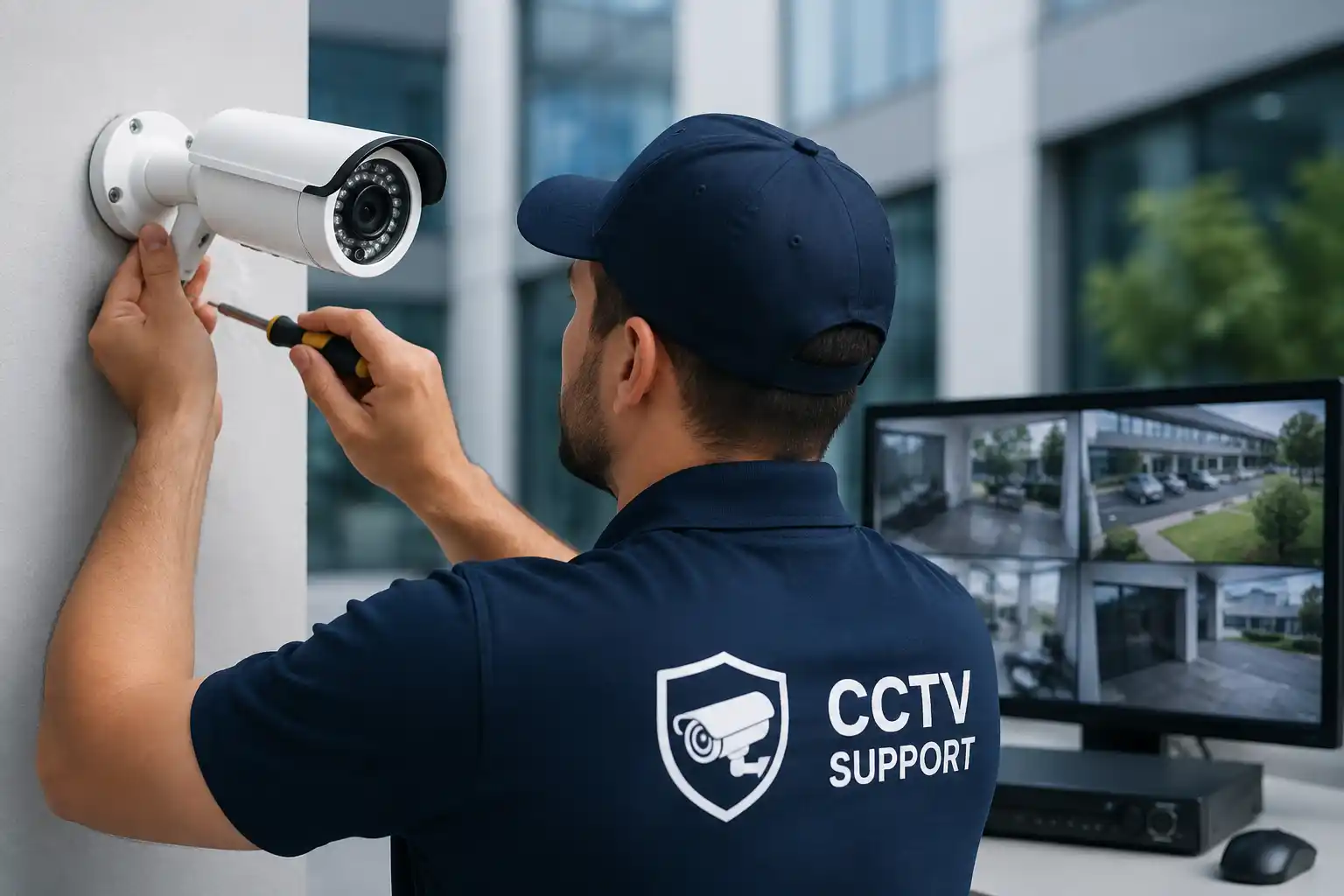
Camera, recorder, storage and site conditions are reviewed before scope is confirmed.
Recorder placement, connections, cable checks and hardware access generally require on-site coordination.
Recording schedules, time settings, users, display and network options are configured to the approved requirement.
Testing, practical user guidance and documentation can be included according to the agreed project scope.
What does DVR installation involve?
DVR installation is the planned connection and setup of a digital video recorder within a compatible CCTV system. The recorder receives camera video, writes it to local storage, presents live and recorded views, and may provide authorised network or mobile access. Businesses should consider the service when fitting a new analogue or compatible hybrid surveillance system, replacing a failed or outdated recorder, moving a system to another room or site, adding supported cameras, or correcting an installation that does not record consistently. Before work is confirmed, FourTeck needs enough information to understand the camera types and quantity, existing cabling, recorder model where available, storage expectations, viewing requirements, network availability, access restrictions and the business purpose of the system. The exact installation method remains environment dependent because recorder capability, camera signalling, connectors, hard-drive support, power, network design and third-party applications can vary.
A DVR is only one part of the recording path
A business CCTV recording path normally starts at the camera and ends with a person being able to find and review useful footage. Between those points are camera power, video cabling, connectors, the DVR inputs, encoding settings, system time, storage drives, recording schedules, monitor outputs, user accounts and sometimes a local network or remote-viewing service. A recorder can appear operational while one of these other layers is preventing useful evidence from being captured.
For that reason, a professional installation should not be limited to mounting the DVR and attaching cables. The project should establish what each camera is intended to monitor, whether the existing camera signal is supported by the selected recorder, how many channels are needed, whether spare capacity is required, what recording retention the business expects, and who should be permitted to view or export footage. Where an existing system is being replaced, the current cabling and cameras also need to be considered because age, connector condition, power issues or mixed camera technologies can influence the result.
FourTeck can review these relationships as part of the installation scope. The objective is to create a maintainable recording environment in which cameras are mapped clearly, time is accurate, recording status can be checked, authorised users understand basic operation and future support does not begin with guesswork.
What the service may cover
Depending on the confirmed scope, assistance may include recorder placement, channel planning, connection of compatible camera feeds, hard-drive installation or review, display connection, network configuration, recording schedule setup, time and date configuration, user creation, playback checks, export testing, remote-viewing preparation and basic administrator handover.
Existing systems may also require cable identification, channel labelling, camera feed testing or a review of why some inputs are unstable. Additional parts, camera replacement, major recabling, network changes or third-party work should be identified separately in the quotation when they are required.
Who may need this service
The service can suit offices, shops, clinics, restaurants, warehouses, showrooms, property-management locations, education facilities and other sites that rely on local CCTV recording. It is relevant both to new projects and to established systems where the recorder is being changed, relocated or expanded.
A customer with an unclear existing installation may first need assessment rather than immediate replacement. Camera count alone does not define the project; image requirements, retention, recording mode, installation location, power, available space, access control and network use all contribute to the final design.
Common reasons businesses request DVR installation
A new DVR project is often triggered by a practical operational change rather than by the recorder itself. A business may be opening a site and needs surveillance recording from the first day of operation. Another may have working cameras but an ageing recorder with failed storage, unreliable playback or insufficient channels. A property manager may need the recorder moved into a controlled communications room. A retailer may want clearer channel naming and more predictable playback. A warehouse may be expanding the monitored area and needs to understand whether the current platform can support additional feeds.
Other triggers include missing recordings, incorrect timestamps, repeated storage errors, unstable camera pictures, no access from the required monitor, forgotten or poorly controlled user accounts, and remote viewing that was never documented. These symptoms do not prove the DVR itself is faulty. Missing video may come from camera power, damaged cabling, loose connectors, an unsupported signal type, a failed hard drive, a recording schedule, time settings or configuration. Remote access can depend on the local network, firewall, internet service and application configuration.
The installation process therefore begins by separating the business need from the technical symptom. When FourTeck knows what the customer needs to see, how long recording is expected to be retained, where the recorder will sit and who needs access, it becomes easier to define a sensible installation and test plan.
What can happen when recording is poorly planned?
A surveillance system has business value only when the required footage can be captured and retrieved. Poorly planned recording can leave a site with cameras that show live video but do not retain the expected history, channels that are labelled incorrectly, a recorder clock that makes incident review confusing, or storage that fills differently from what the customer assumed. Weak physical placement can expose the DVR to accidental disconnection, heat, dust or unauthorised access. Uncontrolled user accounts can also make it difficult to understand who can change settings or export recordings.
These issues can increase the time needed to investigate an incident, make maintenance harder and cause repeated support calls. They can also create false confidence: seeing cameras on a monitor is not the same as confirming that all required channels are being recorded correctly. A structured installation uses playback checks, storage review, timestamp validation and clear handover so the customer understands what has been configured and what still depends on ongoing maintenance or third-party services.
DVR installation service-fit matrix
| Business situation | Relevant assistance | What must be confirmed |
|---|---|---|
| New premises with existing analogue camera cabling | Recorder planning, cable identification, channel connection, storage and recording setup | Camera signal compatibility, cable condition, power, camera count and viewing goals |
| Existing DVR has failed or is unreliable | Assessment, replacement planning, reconnection and validation | Whether cameras, storage or cabling also contribute to the fault and whether old footage must be preserved |
| More cameras are required | Channel-capacity review, expansion planning and new input testing | Available channels, supported camera formats, power and storage impact |
| Remote viewing is needed | Network readiness review and approved remote-access configuration | Internet service, router or firewall access, application support and authorised users |
| Recorder is being relocated | New placement review, cable path planning, reconnection and testing | Cable reach, power, ventilation, physical security, network point and site access |
Service information for quotation planning
| Service topic | DVR installation, replacement, relocation and configuration for compatible CCTV environments |
|---|---|
| Main purpose | Create a usable recording path from cameras to local storage, live display and approved playback access |
| Typical systems involved | Cameras, coaxial video cabling, BNC or suitable connectors, camera power, DVR, hard drives, monitor, local network and remote-viewing application where applicable |
| Assessment method | Remote information review plus on-site inspection where physical installation, cabling or camera testing is required |
| Remote support suitability | Suitable for selected settings, user guidance or viewing checks when secure remote access and a working network are available |
| On-site support suitability | Usually required for physical installation, rack or cabinet work, storage fitting, camera-feed testing, cable tracing and hardware replacement |
| Customer access required | Site access, authorised administrator access where available, network access when required and approval for configuration changes |
| Testing and validation | Channel status, recording, playback, time, storage, monitor output and approved remote viewing as relevant to scope |
| Documentation and handover | Scope dependent; may include channel labels, basic configuration records, user guidance and outstanding recommendations |
| Scheduling dependency | Engineer availability, site access, building rules, required parts, third-party coordination and approved work scope |
| Quotation requirement | Final commercial scope is subject to assessment and an approved quotation or service agreement |
Remote configuration or on-site DVR installation?
When remote assistance may help
Remote support can be useful after the physical recorder and cameras are already connected and the site has working internet access. With authorised secure access, selected configuration checks may include recording schedules, user settings, date and time, application connectivity, playback guidance or investigation of a software-side problem. A person on site may still need to confirm lights, connections or what appears on the local monitor.
Remote work depends on the recorder being accessible and on the customer approving the connection method. It cannot substitute for cable tracing, hard-drive fitting, physical connector repair, power testing or work inside cabinets.
When an on-site visit is usually needed
On-site work is appropriate when the DVR must be mounted or positioned, the hard drive must be installed, camera cables need identification, feeds are missing, connectors need attention, the recorder is being relocated, a display must be connected, or network and power points need physical verification. It also allows the engineer to compare what the recorder reports with the actual camera and cabling condition.
Attendance timing depends on location, access, engineer scheduling, required equipment and the confirmed quotation. A site contact should be available when building entry, security rooms or restricted technical areas require authorisation.
How a DVR installation assessment can begin
- Define the business outcome. FourTeck first needs to understand whether the project is a new installation, recorder replacement, relocation, system recovery or expansion, and what the customer expects to monitor and record.
- Identify the existing environment. The approximate camera count, camera technology, DVR model, hard drives, monitor, cable routes, network connection and power arrangement are recorded where information is available.
- Review physical and compatibility constraints. Existing cameras and cabling are checked for practical reuse, while recorder input capacity and supported formats need to match the intended camera feeds.
- Discuss recording expectations. Recording mode, operating hours, event review needs and retention goals affect storage planning. Exact retention depends on technical settings and available capacity.
- Confirm access and risk. The project may require administrator access, network information, a suitable maintenance window, authority to change settings and consideration of any footage that must be preserved before replacement work.
- Define a test and handover plan. The customer and engineer agree which channels, playback functions, users and remote-viewing paths must be validated before the work is considered complete.
Where the existing system is undocumented, the assessment may take longer because cable destinations, camera types or previous settings must be established. FourTeck can explain which unknowns affect the quotation instead of assuming that all existing components can be reused.
Installation and configuration journey
Once the project scope is approved, the implementation plan should preserve useful existing information and reduce unnecessary disruption. If an old DVR is being replaced, the first question is whether any existing recordings, configuration details or channel labels must be retained. Where relevant and technically possible, settings can be documented before disconnection. Recording interruption may be unavoidable during physical changeover, so the maintenance window should reflect the business importance of the surveillance system.
The new or replacement recorder is positioned where power, ventilation, cable access and physical control are suitable. Storage is installed or checked according to the equipment and approved scope. Camera feeds are connected methodically and labelled so that channel names correspond with their real locations. The recorder is then configured for system time, display, recording mode, user permissions and network functions required by the project. Where remote viewing is included, the supporting internet, router, firewall or vendor service may introduce additional dependencies.
Implementation should finish with real tests rather than configuration screenshots alone. Each required camera feed should be checked, recorded footage should be played back, timestamps should be compared, selected clips may be exported if export is part of the scope, and authorised users should be able to reach the agreed viewing interface. If faults remain in a camera, cable, power supply or third-party network service, those items should be recorded separately rather than hidden by the installation handover.
Capability 1: Make recording status easier to verify
A well-organised DVR installation gives administrators a practical way to answer a basic question: is the required camera actually recording? This sounds simple, but the answer depends on correct channel mapping, recording mode, storage health, date and time, camera signal and the user’s understanding of playback. FourTeck can structure the installation so channel labels correspond with the site, recording behaviour is reviewed against the agreed requirement and playback testing is part of handover.
This does not guarantee that recordings can never be interrupted. Drives can fail, cameras can lose power, cables can be damaged and settings can be changed later. The value of a structured installation is that the baseline is known and documented, making future checking and troubleshooting more focused.
Capability 2: Control how users reach live and recorded video
Surveillance access should be based on business roles rather than on one shared administrator login. Depending on recorder capability and project scope, user accounts can be prepared for appropriate viewing or administration functions. Where remote access is requested, the installation should also consider the local network and how external viewing is delivered, because simply exposing a recorder to the internet without understanding the method can create avoidable security risk.
FourTeck can review the required viewers, available recorder features and network dependencies, then configure the approved method within the supported environment. The customer remains responsible for authorising users and for sharing credentials only through an approved secure method. Vendor application availability, licensing or cloud dependencies may affect the final remote-viewing design.
Capability 3: Build a DVR setup that can be supported later
Future maintenance becomes easier when the recorder, channels and dependencies are understandable. Simple documentation such as channel names, recorder location, network details relevant to support, storage configuration notes and responsible contacts can reduce the time spent reconstructing the environment during a fault. Labelling and handover are especially useful in multi-site businesses, buildings with restricted technical rooms or systems managed by several vendors.
The exact documentation package should be agreed with the project because some customers need only basic handover while others require more structured records. Documentation also needs updating after later camera changes, storage replacements or network modifications. An installation record is a starting point for maintainability, not a substitute for ongoing system ownership.
Storage planning deserves its own conversation
Recording retention is one of the most frequently misunderstood parts of DVR installation. A customer may ask for a certain number of days, but actual retention is influenced by camera count, resolution, frame rate, compression, recording schedule, scene activity, supported encoding options and usable disk capacity. The same hard-drive size can therefore deliver different results in different systems. A quotation should not promise a retention period without understanding these variables.
FourTeck can discuss the target retention and review whether the proposed recorder and storage arrangement are suitable for that objective. After installation, actual storage behaviour should be observed because real scenes may differ from planning assumptions. Where the recorder supports status or health information, the handover can include guidance on how the customer identifies warnings. If a business has existing drives, their compatibility and condition need assessment before they are reused.
Storage is also part of incident readiness. Users who need to retrieve footage should know how to select the correct camera and time range and how to export evidence if that function is included. External export media, file format and playback requirements can vary, so any specific evidence-handling process should be confirmed with the customer’s operational or security procedures.
Camera and cable compatibility must be checked before changeover
The term DVR is often associated with analogue CCTV, but real installations can contain equipment from different generations and signal formats. A camera that physically connects through a familiar coaxial connector is not automatically compatible with every recorder. The supported video technology, resolution and channel capability need to be checked against the actual equipment. Hybrid recorders may support several input types, but capability remains model dependent.
Existing cable condition also matters. A new recorder cannot correct every intermittent picture caused by damaged cable, poor joints, unsuitable adapters or unstable camera power. During an on-site assessment, missing or noisy feeds can be traced through the relevant physical path. If the issue lies outside the DVR, FourTeck can separate the recorder installation from camera, power or recabling work so the customer understands what needs to be added to the project.
This compatibility review is particularly important when only the DVR is being replaced. Reuse can be cost-effective when the environment is suitable, but assuming reuse without inspection can create a project where the recorder is blamed for problems that already existed. The quotation should identify known reuse items, uncertain items that require testing and any optional corrective work.
Dependencies, customer access and project inputs
DVR installation may depend on more than access to the recorder. FourTeck may need permission to enter a security room, communications cabinet, ceiling or restricted area; access to existing camera power and cable termination points; details of the local network if remote viewing is requested; and an authorised administrator or business representative who can approve changes. Existing configuration information can speed the project, but it should not be assumed to be accurate until tested.
The customer should avoid sending passwords through public forms or ordinary page comments. Credentials, where necessary, should be shared only through a secure approved method after identity and authorisation are confirmed. If the existing system contains footage that must be preserved, that requirement should be raised before the recorder or storage is changed. A backup or export may not always be technically possible, particularly when old equipment has failed, so data preservation cannot be guaranteed.
Third-party dependencies can include internet service, router or firewall administration, a recorder vendor application, mobile operating-system support, building management approval, electrical work, specialist cabling or replacement parts. These dependencies should be identified during planning so responsibility is clear.
Risks, limits and exclusions to understand
A DVR installation can create a sound recording baseline, but it cannot guarantee uninterrupted footage under every future condition. Camera failure, loss of power, damaged cabling, storage failure, unauthorised configuration changes, network outages or vendor-service changes can affect operation after handover. Preventive checking and clear ownership remain important.
A new recorder may not be compatible with every legacy camera. A recorder replacement also does not automatically include camera replacement, major recabling, civil work, electrical alterations, network redesign, internet service changes, additional monitors or mobile devices unless those items are written into the quotation. Hardware and storage supplied by the customer may need compatibility and condition checks before use.
Remote viewing depends on the supported platform and network environment. Security improvements reduce risk but do not make a connected system immune to all threats. Existing footage may not be transferable from an old recorder to a new one. On-site work depends on access and scheduling. Final commercial terms, parts, exclusions and responsibilities are governed by the approved quotation or service agreement.
Business environments where DVR installation may be useful
Retail and customer-facing sites
Shops, showrooms and restaurants may need clearly named views of entrances, counters, public areas and service points. Recorder installation should support efficient playback and an access model suited to managers or authorised security staff.
Warehouses and operational spaces
Larger spaces may have longer cable runs, several camera zones and a stronger need for channel mapping. Equipment location, dust, heat, power and secure access can be as important as the recorder settings.
Professional offices and clinics
Office environments may prefer discreet surveillance with controlled access and a recorder placed away from general users. Network connectivity should be planned so surveillance does not create unnecessary exposure or unmanaged dependencies.
Buildings and managed properties
Shared facilities can involve restricted technical rooms, several stakeholders and handover between management teams. Clear channel names, documented access responsibilities and maintenance records become particularly useful.
Operational, security and maintenance considerations after installation
Handover is not the end of surveillance system ownership. The business should decide who is responsible for routine checks, who can change recorder settings, who can export footage and who contacts support when an alarm or recording issue appears. Shared administrator credentials should be avoided where the platform supports individual users because shared access makes accountability more difficult.
Physical protection also matters. A DVR placed where anyone can disconnect power or remove the unit undermines the purpose of recording. The location should have suitable ventilation and should not expose the equipment to avoidable heat, moisture or dust. Power conditions and any UPS arrangement should be considered as part of the site environment rather than assumed to be sufficient.
Periodic checks can include confirming that expected cameras are online, reviewing recording status, checking storage warnings, verifying time accuracy and testing playback. Remote access should be reviewed when staff leave or roles change. Firmware or software updates should be planned carefully and only after compatibility, backup or rollback considerations are understood. FourTeck can discuss maintenance assistance separately if the customer needs recurring reviews beyond the installation project.
Before you contact FourTeck about DVR installation
The more accurately the existing environment is described, the easier it is to decide whether a short assessment, a full on-site survey or a defined installation project is appropriate. Prepare the following where available:
- The Dubai or UAE site location and any building-access procedure.
- A contact person who can approve access to the CCTV equipment.
- Approximate number of cameras currently installed or planned.
- Camera brand, model or signal type if known.
- Current DVR brand and model if this is a replacement or upgrade.
- A description of missing, unstable or poor camera feeds.
- The reason for the project: new setup, failure, expansion, relocation or replacement.
- Target recording retention or business expectation for reviewing past footage.
- Whether existing footage must be preserved before equipment is changed.
- Whether a local monitor, remote computer or mobile viewing is required.
- Available network connection near the recorder if remote viewing is part of the requirement.
- Authorised administrator access availability, without sending passwords through a public form.
- Any known storage warnings, failed drives or recording gaps.
- Preferred change window and any business hours that must be protected.
- Any restrictions on drilling, cabling, cabinets, power work or access to ceilings and technical rooms.
Checklist for defining the quotation
How FourTeck can assist with the project
FourTeck can help turn an initial request such as “install a DVR” into a defined technical scope. That may begin with a discussion about the number and type of cameras, what is currently working, what needs to change and whether the business is trying to solve a fault or prepare a new surveillance environment. For an existing site, an assessment can distinguish recorder work from camera, cabling, power, network or storage issues.
Once the environment is understood, FourTeck can outline the tasks that belong in the installation quotation. These may include physical recorder setup, compatible camera connections, storage preparation, channel labels, recording and time configuration, user access, network functions, playback testing and handover. If another vendor or service provider controls a required network, application or building system, FourTeck can identify the information needed for coordination rather than treating that dependency as an included result.
The final scope should be specific enough that the customer knows what will be installed, what will be reused, what will be tested, what may require additional work and what information must be provided. To start, use the FourTeck contact page and describe the site, camera count, current recorder and expected outcome.
DVR installation coordination in Dubai and the UAE
DVR installation frequently includes physical work, so location and site access are part of planning. A Dubai project may require coordination with reception, facilities, security personnel, building management or a tenant’s authorised representative before the recorder room, ceiling spaces or communications cabinet can be reached. The engineer may also need a clear work area near the recorder and permission to interrupt recording during the approved change window.
Remote preparation can still be useful. Photographs of the existing DVR, camera connectors, rack or cabinet, monitor, network point and cable labels can help establish what needs inspection. However, images do not replace hands-on checks when cable condition, power, drive installation or signal stability must be verified. Contact FourTeck to confirm whether the first step should be remote information review or an on-site assessment.
Service timing depends on engineer availability, customer access, site conditions, equipment or parts, and any third-party provider required for network or remote-viewing work. Installation, configuration, additional cabling, camera replacement and maintenance should be listed separately where their scope differs.
Dubai, Abu Dhabi, Sharjah and Ajman service coordination
Businesses with sites in Dubai, Abu Dhabi, Sharjah and Ajman may require different combinations of remote planning and on-site DVR work. A single-site installation may be straightforward to coordinate, while a multi-branch project needs consistent channel naming, administrator ownership, recorder placement and acceptance testing across locations. FourTeck can discuss how the work should be divided by site and whether an initial survey is needed before a common installation standard is used.
Travel, building access, security permissions, loading or parking arrangements, restricted work hours, equipment availability and local site conditions can affect the schedule. Remote troubleshooting, planned site visits, installation, assessment, maintenance or migration of existing recording equipment can be considered according to the confirmed requirement. The presence of multiple sites does not imply identical hardware or identical work; each location should be checked for its own camera, cabling, power, network and recorder dependencies.
Related FourTeck IT services
CCTV service and maintenance
Camera faults, recording problems, storage issues and wider surveillance maintenance may require work beyond the DVR installation itself.
Business IT support
Network, user, server and infrastructure support can matter when remote viewing or other connected systems are part of the surveillance environment.
Project consultation
Businesses planning a larger site change can discuss dependencies, responsibilities and technical scope before installation begins.
Support request and quotation
Share your site details, current equipment and expected outcome so the appropriate assessment and quotation path can be discussed.
Why businesses contact FourTeck for recorder projects
Recorder projects often sit between several technical responsibilities. A CCTV contractor may focus on cameras and cable, an IT team may control the network, facilities may control the room and power, and a manager may be responsible for who can view recordings. FourTeck can help bring those dependencies into one technical discussion so the DVR is not configured without understanding what surrounds it.
The practical value is in clear assessment, controlled change, testing and handover. If a camera does not appear after changeover, the next step is to identify whether the problem is at the camera, cable, connector, power source, recorder input or compatibility layer. If remote viewing fails, the recorder cannot be evaluated separately from network access and the supported viewing method. If retention is shorter than expected, recording settings and storage behaviour need to be reviewed together.
FourTeck can also help separate immediate installation work from later improvements. The customer may approve the recorder installation now while planning camera replacement, recabling, network separation or maintenance as subsequent work. This makes the quotation easier to understand and avoids implying that every surveillance issue is included in one installation task.
Questions businesses ask before choosing DVR installation support
Can a DVR be installed without replacing our existing cameras? Sometimes, but reuse depends on compatibility and condition. Existing coaxial cameras may use different video formats or resolutions, and the recorder must support the signals being provided. The camera power supplies, connectors and cabling also need to be in usable condition. If the current system has intermittent pictures, noise or failed channels, those symptoms should be checked before assuming a new recorder will solve them. A useful next step is to provide the camera and current recorder models where known, along with photographs of the existing connections, then allow on-site testing if compatibility cannot be confirmed remotely.
How do we know how many DVR channels we need? The minimum channel count should cover the cameras that must be connected, but planning only for today can create an avoidable limitation when the site expands. The business should identify all current feeds, planned additions and any spare capacity it wants to retain. Channel capability can also depend on the supported input format and recorder model, so a channel number on its own is not enough. If a site currently has six cameras but expects to add entrances or warehouse areas later, expansion should be discussed before selecting the recorder.
Will a larger hard drive always give us a fixed number of recording days? No. Retention depends on the number of cameras and the way video is encoded and recorded. Resolution, frame rate, compression, continuous versus scheduled recording, scene activity and usable disk capacity all contribute. A planning estimate can be useful, but final retention should be treated as configuration and environment dependent. After installation, the customer should monitor actual retention and review settings if the real pattern differs from the target.
Can FourTeck install a DVR that we already purchased? Customer-supplied equipment may be considered, but compatibility, condition and completeness need assessment. The recorder must support the cameras and required storage, and the required accessories, power supply, drives and application access need to be available. Installation labour does not automatically guarantee that supplied hardware is suitable. Before booking work, share the exact recorder model, camera details and the intended use so FourTeck can identify likely dependencies and whether on-site verification is necessary.
Our cameras show live video, so why do we need playback testing? Live view confirms only part of the path. A system can display a camera while recording is disabled for that channel, the hard drive has a problem, time settings are wrong or the recording schedule does not match business hours. Playback testing verifies that footage is actually being written and can be retrieved for the required channel and time. It is one of the most useful acceptance checks after a new installation or recorder replacement.
Can the DVR be configured for mobile viewing during installation? It may be possible when the recorder supports an appropriate remote-viewing method and the site has a suitable network connection. The final method can depend on the recorder vendor, application support, internet connection, router or firewall configuration and the customer’s security requirements. Remote access should be limited to authorised users and should not be treated as an automatic feature of every installation. If mobile viewing matters to the project, state that requirement before the quotation is prepared.
Should the DVR be placed next to the main monitor? Not necessarily. Equipment placement should consider cable routes, physical security, ventilation, power, network access, maintenance access and the risk of accidental interference. The main viewing screen can sometimes be located separately, subject to the supported video connection and site layout. A secure technical cabinet or room may be more appropriate for the recorder than a public reception desk, but the final placement needs to match the building and equipment requirements.
What is the difference between fixing an old DVR and replacing it? Troubleshooting tries to identify the cause of a current fault and determine whether repair, configuration correction, storage replacement or another action is reasonable. Replacement introduces a change project: existing cameras, cabling, storage needs, remote viewing and user access must be mapped to the new recorder. An old DVR with a failed drive may not need full system replacement, while a recorder that no longer supports the required cameras or expansion may justify planned change. The assessment should separate the symptom from the decision.
Can installation be completed remotely if the DVR is already on site? Some settings may be configured remotely, but first-time physical installation generally needs a person at the site and often an engineer. Storage fitting, cable identification, camera-feed connection, placement, monitor connection and power checks cannot be completed solely through remote access. A customer with a recorder already physically connected may be able to use remote support for selected configuration or viewing checks, provided secure access is authorised and no physical fault needs investigation.
What information helps FourTeck estimate the work more accurately? Share the site location, camera count, current recorder model, camera types where known, whether cabling exists, whether all cameras are currently working, storage expectations, required viewing methods and the reason for the change. Explain any recent failures or alterations. If the recorder is being replaced, state whether old recordings must be preserved. These details help distinguish a simple recorder change from a larger CCTV remediation project.
How should a business compare one-time installation with ongoing CCTV maintenance? Installation establishes or changes the recording environment. Maintenance is the recurring work used to check that cameras, storage, time, recording, power, connectivity and access continue to operate as expected. A small site with internal staff who perform regular checks may only need project-based support. A multi-site business or a site where surveillance is operationally important may prefer planned reviews. The appropriate service depends on asset count, internal responsibilities, fault history and the desired support model.
What should we confirm before approving the quotation? Confirm which cameras are included, which equipment will be reused, who supplies the DVR and storage, whether cabling work is included, whether remote viewing is part of the scope, how recording and playback will be tested, what documentation or training is expected and what work is excluded. Ask how existing footage will be handled if the old recorder is being removed. Also confirm the maintenance window and any building-access requirements. Clear acceptance criteria reduce confusion at handover.
Testing, validation and handover
A DVR project should close with an agreed acceptance routine. At minimum, the required channels should show a stable image, the recorder should identify storage correctly, system time should be reviewed, recording status should be checked and selected historical footage should play back. If the customer needs footage export, that process should be demonstrated within the supported system. If remote viewing is included, the authorised viewing path should be tested from the agreed device or connection method.
Handover should also explain what was not resolved. A camera with a damaged cable, a failing power supply or an external network dependency should not be represented as a completed recorder issue. Remaining faults can be documented with recommended next actions. Where user accounts are configured, the customer should know which roles have administrative rights and who owns credential management after the project.
Depending on the quotation, FourTeck can provide practical guidance on checking live view, locating recordings and recognising common storage or camera-status warnings. More detailed documentation, administrator training or ongoing maintenance can be scoped separately. This keeps the installation deliverable clear while giving the business a path for continued support.
Frequently asked questions
Does DVR installation include cameras?
Not automatically. Camera supply, replacement, positioning or new cabling should be included explicitly if required. A recorder-only project can reuse compatible working cameras after assessment.
Can you replace an old recorder and keep the cables?
Existing cabling may be reusable when its type and condition are suitable. Cable faults, poor connectors or unsupported camera formats may require additional corrective work.
Is a site survey always required?
Not every project needs a separate survey, but physical installation usually benefits from on-site assessment when the existing environment, cable routes, camera types or equipment location are unclear.
Can existing recordings be moved to the new DVR?
Transfer depends on the old recorder, storage format, system condition and available export methods. Existing footage should not be assumed transferable; preservation needs must be discussed before changeover.
Will you configure recording schedules?
Recording schedule configuration can be included where supported and agreed. The schedule should reflect business needs, storage expectations and the recorder’s available functions.
Can the DVR connect to our office network?
It can when the recorder supports networking and the customer approves the required network configuration. Addressing, firewall rules, remote access and security controls remain environment dependent.
How long does DVR installation take?
There is no responsible fixed duration before the site and scope are known. Camera count, existing faults, cable condition, storage work, network configuration, access and testing can all affect the project schedule.
What if one camera does not work after replacement?
The camera path should be tested to determine whether the issue is compatibility, camera power, cabling, connector condition or recorder input. Additional repair may be outside the original recorder scope.
Do you provide user training?
Basic operational handover can be included in the project. More detailed training, documentation or multiple-user sessions should be confirmed in the quotation.
Can ongoing maintenance be arranged?
Maintenance can be discussed separately. Actual checks, visit frequency, remote support and exclusions depend on the agreed service plan rather than on the installation alone.
Plan the DVR installation around your real site
The most useful starting point is not a generic recorder specification. It is a clear picture of your cameras, cabling, recording need, equipment location, network access and handover expectations. FourTeck can review those details and help define whether the next step should be an assessment, replacement plan, new installation or corrective work on the existing surveillance environment.
Contact FourTeck with the site location, approximate camera count, current DVR model if available, known problems and the result you need. The final installation scope, scheduling, equipment, dependencies and commercial terms can then be confirmed in the approved quotation.