
CCTV System Upgrade in Dubai, UAE
Upgrading an existing CCTV environment is a controlled infrastructure project, not only a camera swap. FourTeck helps businesses assess what is already installed, identify practical limitations, map recorder, network, storage and viewing dependencies, and plan a staged change that can be tested and documented before handover.
The final scope depends on the current system, site conditions, user requirements, access, compatibility, recording objectives, maintenance window and any third-party equipment or services involved.
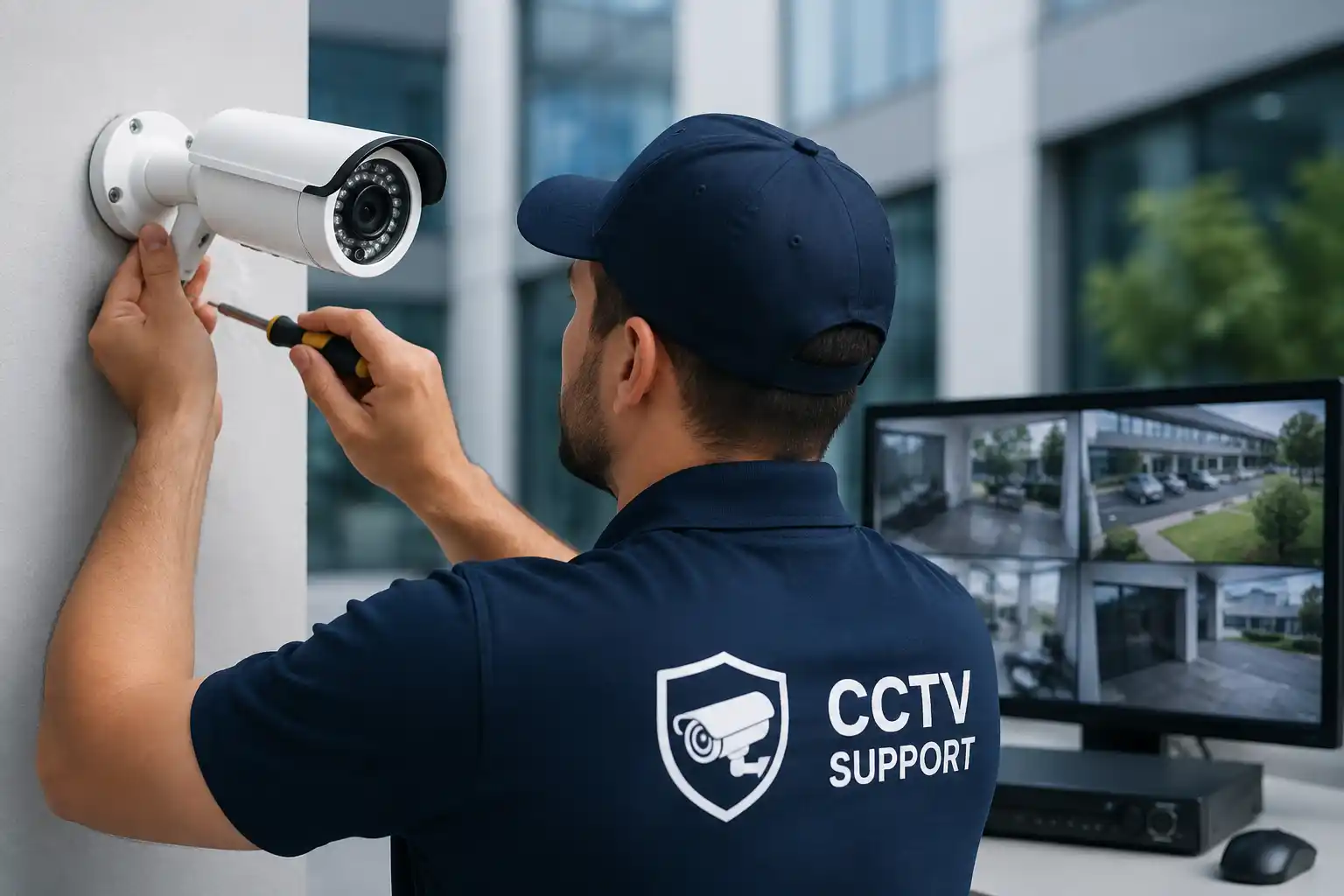
Existing cameras, recorder, storage, power, cabling and network should be understood before replacement decisions are made.
Legacy devices, protocols, codecs, recorder channels and management applications can affect what can be retained or migrated.
Backups, maintenance windows, staged work and rollback considerations reduce avoidable disruption during the upgrade.
Recording, playback, time settings, user access, remote viewing and key camera views should be validated after approved changes.
What does a CCTV system upgrade service involve?
A CCTV system upgrade is the assessment, planning and controlled improvement of an existing surveillance environment. It may involve cameras, DVR or NVR recording, storage, PoE switching, network addressing, cabling, power, remote viewing, user permissions, display stations and documentation. The main purpose is to decide what should be retained, corrected, expanded, reconfigured or replaced so the system better supports the organisation’s current operational needs.
Businesses should consider an upgrade when the existing environment no longer provides suitable coverage, image quality, recording capacity, reliable playback, maintainable equipment or practical access for authorised users. Before work is confirmed, the customer should provide the site location, approximate camera count, current recorder or management platform, known problems, required areas of coverage, recording expectations, access constraints and any recent changes. The exact scope remains subject to assessment, compatibility and the approved quotation.
Why businesses upgrade CCTV instead of changing isolated cameras
A surveillance system is a chain of dependent components. A camera can have a clear specification on paper yet still produce an unsatisfactory result if the cable is damaged, the PoE switch is overloaded, the recorder cannot support the required stream, the storage is undersized, the network is unstable, the viewing workstation is constrained or the system is poorly documented. For that reason, an upgrade should start with the environment rather than with a shopping list.
One common trigger is an ageing recorder that has limited channel capacity, inconsistent playback or insufficient storage for the business’s present retention requirement. Another is a mixed camera estate added over several years, where image quality, naming, time settings, passwords, mounting positions and maintenance history are inconsistent. Businesses may also be expanding into new floors, warehouses, entrances, loading areas or branches and need the surveillance design to grow without creating a second disconnected system.
Remote viewing can also drive an upgrade. Managers may need authorised access from approved devices, yet the existing method may be unreliable, dependent on old software, poorly documented or difficult to support. An upgrade can review how viewing is currently achieved and whether network, firewall, application, account or vendor dependencies must be considered. The objective is not to expose the CCTV environment unnecessarily; remote access should be designed around authorised users and suitable security controls.
Image quality complaints require the same careful approach. A dark image may relate to lighting, camera placement, lens condition, settings, power or hardware condition. A blurred image may relate to focus, movement, compression, low light, network throughput or recorder settings. Replacing the camera without checking the wider path can leave the original problem unresolved. FourTeck can help define the technical layers that should be checked before the business commits to a larger change.
Who may need this service?
Offices, warehouses, retail locations, clinics, schools, hospitality sites, property-management operations, construction offices and multi-branch businesses may need an upgrade when the current surveillance system no longer fits the way the site operates. The requirement can be small, such as replacing an unreliable recorder after assessment, or broader, such as standardising cameras, network connectivity, storage, viewing and documentation across a complete site.
What should be confirmed first?
The business objective should be clear before technical work begins. The project may be driven by failed hardware, poor coverage, recurring maintenance, inadequate storage, office expansion, a recorder limitation, inconsistent remote access or a need for better documentation. The preferred outcome, affected areas, required operational window and authorisation for system access should be confirmed so the assessment can focus on the right priorities.
Common signs that the current CCTV environment needs review
Recording and playback gaps
Recordings may be missing, incomplete, difficult to search or retained for less time than the business expects. Possible areas include storage health, recorder settings, camera connectivity, time configuration, schedule settings, disk condition and system capacity. The symptom alone does not prove the cause.
Poor or inconsistent images
Some views may be dark, blurred, obstructed, badly positioned or noticeably different from newer cameras. Lighting, lens condition, mounting, resolution, compression, stream settings, network throughput and recorder compatibility may all need consideration.
Frequent camera disconnections
Intermittent cameras can involve PoE power, cabling, connectors, switch ports, addressing, bandwidth, environmental conditions, hardware faults or recorder behaviour. A controlled assessment helps separate a single camera fault from a wider infrastructure issue.
Difficult remote viewing
Authorised users may have inconsistent access, outdated applications, undocumented accounts or device changes that were never fully integrated. Remote viewing should be reviewed together with network, firewall, account and security considerations.
Expansion without spare capacity
A site may need more cameras but have no recorder channels, switch ports, PoE budget, rack space, storage or cable routes available. Capacity planning helps avoid adding equipment that the existing infrastructure cannot support reliably.
Undocumented legacy equipment
Older systems are often maintained through technician memory rather than accurate records. Unknown passwords, unclear camera names, unlabelled cables, missing diagrams and uncertain storage configuration can make every future support request slower and riskier.
Business impact of leaving an unsuitable CCTV system unchanged
An unreliable surveillance environment can create operational uncertainty. Staff may discover only when they need footage that a camera has been offline, a disk was not recording as expected, the time was incorrect or the required view was obstructed. Management may spend unnecessary time asking several vendors whether the fault belongs to the camera, recorder, network, switch, internet connection or viewing software. Repeated emergency fixes can also make the environment more inconsistent if each change is applied without an overall plan.
An upgrade project can reduce these support difficulties by documenting the environment, defining ownership, checking capacity and creating a clearer baseline. It cannot guarantee that equipment will never fail or that every incident will be captured, but it can make the system easier to test, maintain and support. The right upgrade scope should be based on the business’s operational priorities and actual site conditions rather than on a generic replacement cycle.
Possible CCTV upgrade scope
Depending on the confirmed scope, FourTeck assistance may include a combination of the following activities. Not every item is required for every site, and hardware, licences, third-party services or specialist works should be clearly identified in the quotation where applicable.
Record camera locations, approximate device types, recorder channels, storage, network connections, switches, viewing stations and known dependencies.
Identify dead cameras, unstable links, damaged connectors, poor images, storage warnings, recorder issues and recurring user complaints that should influence the plan.
Review important entrances, exits, reception areas, stock zones, loading points, corridors or operational areas against the customer’s stated requirement and site permissions.
Review switch capacity, PoE availability, uplinks, addressing, VLAN design where used, bandwidth considerations and physical network paths relevant to IP cameras.
Assess channel capacity, disk condition, current retention behaviour, recording schedules and whether the proposed camera streams fit the recorder and storage plan.
Check what can reasonably be retained and where legacy cameras, proprietary features, protocols, software versions or recorder limits may require a different approach.
Where supported and accessible, preserve relevant settings before approved changes so the project has a reference point and an appropriate rollback consideration.
Plan the order of camera, recorder, storage, switch or viewing changes so important areas are considered during the maintenance window.
Assess authorised user access, application requirements, network dependencies and the security implications of the current or proposed viewing method.
Confirm camera visibility, image usefulness, recording, playback, date and time, user permissions and agreed remote-viewing functions after implementation.
Update camera names, recorder details, network notes, asset information, key configuration references and handover information appropriate to the scope.
Recommend practical recurring checks for camera condition, recording, storage, time, access, physical cleanliness and system health after the upgrade.
Service-fit matrix for common upgrade situations
| Business situation | Relevant assistance | What must be confirmed |
|---|---|---|
| Several cameras are offline or unstable. | Fault review across camera, cabling, PoE, switch, addressing, recorder and power layers before deciding what to replace. | Fault pattern, device access, site access and whether the issue is repeatable. |
| The recorder is old or has insufficient channels. | Recorder capacity, storage, camera compatibility and migration planning. | Existing camera types, required camera count, retention expectations and management method. |
| The business is adding a new floor or operational area. | Coverage planning, cable routes, PoE capacity, network ports, recorder channels and phased installation. | Site layout, access restrictions, approved camera locations and target completion window. |
| Remote viewing is difficult to maintain. | Account, application, recorder, network and firewall dependency review. | Authorised users, supported applications, customer security policy and available administrative access. |
| The system contains mixed generations of equipment. | Inventory, compatibility assessment and staged standardisation plan. | Model details where available, current working functions and which legacy features must be retained. |
| Management cannot confirm how long footage is retained. | Storage and recording review, practical retention testing and capacity planning. | Required retention objective, camera streams, recording mode and existing disk condition. |
CCTV upgrade service information
| Main purpose | Assess and improve an existing business CCTV environment through planned upgrade, migration, configuration, testing and documentation. |
|---|---|
| Typical systems involved | Cameras, DVR or NVR, recording disks, PoE switches, network infrastructure, cabling, power, viewing stations, mobile or desktop applications and approved remote-access components. |
| Assessment method | Remote information review where suitable, followed by on-site inspection when physical camera, cabling, rack, power, PoE, coverage or hardware checks are required. |
| Remote support suitability | Useful for reviewing available system information, authorised settings, logs, recording configuration and remote-viewing behaviour when secure access and connectivity are available. |
| On-site suitability | Recommended when physical inspection, camera alignment, cabling tests, PoE checks, rack work, recorder replacement, installation or site-specific testing is required. |
| Customer access required | Authorised system access, relevant network or recorder administration, site access and a customer representative who can approve changes. Credentials should be shared only through an approved secure method after authorisation is confirmed. |
| Backup considerations | Configuration backups or documented settings should be taken where supported and appropriate before major approved changes. Existing recordings may require separate retention or export planning based on the project requirement. |
| Testing and validation | Scope dependent. Typical checks include live image, recording, playback, date and time, camera names, storage status, authorised user access and agreed remote viewing. |
| Vendor coordination | May be required where proprietary platforms, licences, cloud services, warranty processes, specialist equipment or third-party installers affect the project. |
| Service location | Dubai and UAE service coordination, subject to location, site access, scheduling, confirmed scope and approved quotation. |
| Quotation requirement | The final commercial scope should define labour, any equipment, cabling or installation work, configuration, testing, documentation, travel where applicable and exclusions. |
When can upgrade planning start remotely?
Remote work can be useful at the discovery stage when the customer has a working internet connection, secure access is authorised and someone familiar with the site can provide system information. FourTeck may be able to review camera lists, recorder status, storage configuration, available logs, user access, settings or screenshots supplied by the customer. This can help identify obvious capacity or configuration questions before a visit.
Remote support cannot verify physical cable condition, camera mounting, lens cleanliness, viewing angles, PoE delivery, rack condition or exact site coverage. It should therefore be used where it genuinely reduces uncertainty, not as a substitute for physical inspection when the project depends on the building environment.
When is an on-site visit usually needed?
An on-site assessment is normally appropriate when camera positions, cable paths, rack equipment, switches, PoE capacity, recorder hardware, storage, power, image angles or physical faults must be checked. It is also useful when the business plans new coverage areas, a larger camera count, a new recorder location or changes that involve fit-out teams or other vendors.
Site access, permits, building rules, working hours, ladders or specialist access requirements, parking or loading arrangements and customer escort conditions can influence planning. The visit should have a clear purpose and agreed scope so the relevant evidence can be collected efficiently.
How FourTeck approaches CCTV upgrade assessment
- Understand the business reason for change. The assessment begins with the outcome the customer needs: resolve repeated faults, extend coverage, improve recording, replace unsupported equipment, expand capacity, standardise a mixed environment or make the system easier to maintain.
- Identify the affected site, users and operational areas. The project should record which entrances, exits, offices, stock areas, loading points, reception zones or other approved areas matter to the business and which teams need authorised viewing or playback access.
- Inventory the existing environment. Available information about cameras, recorder, storage, switches, cabling, power, network segments, displays, applications and remote access is collected. Unknown items are marked for verification rather than guessed.
- Review current faults and recent changes. Dead cameras, intermittent links, missing footage, incorrect time, poor images, application changes, network work, failed disks or previous modifications can help explain why the current system is difficult to support.
- Confirm access, authorisation and recovery considerations. Administrative access, secure credential handling, configuration backups where supported, existing recording requirements and the preferred maintenance window should be considered before intrusive changes.
- Check technical dependencies. The camera path may depend on cable quality, PoE power, switch ports, VLANs, addressing, recorder channels, storage throughput, user permissions, firewall rules, internet access or vendor applications. The relevant layers are tested according to the scope.
- Separate repair needs from upgrade needs. Some problems may be corrected without replacing equipment. Others may reveal a capacity, age, compatibility or maintainability limitation that makes a broader change more sensible.
- Prepare the change plan. The proposed work should identify what remains, what changes, what dependencies must be completed first, how downtime will be coordinated and what will be tested after each stage.
- Implement only approved work. Installation, replacement, configuration or migration proceeds according to the confirmed quotation and customer authorisation, with change control appropriate to the environment.
- Validate and document the result. Recording, playback, time, image, authorised viewing and agreed functional checks are completed, with remaining issues and maintenance recommendations recorded for follow-up.
Planning the upgrade without creating unnecessary disruption
CCTV is often expected to remain available while the business continues operating, which makes change planning important. The sequence may need to preserve coverage in priority areas while a recorder, switch, storage component or group of cameras is changed. The exact approach depends on the architecture. A small standalone recorder has different migration constraints from a distributed IP camera environment that shares network infrastructure with other business systems.
Before implementation, FourTeck can help define which devices are being retained, whether the proposed recorder can support them, how storage will be sized against the agreed recording objective, whether existing switches have enough ports and PoE budget, and whether cable routes are suitable. If the current system is poorly documented, extra discovery time may be required before a reliable plan is possible.
Downtime should be treated as scope dependent. A maintenance window can reduce operational conflict, but some activities may still require temporary loss of individual camera views or recorder access. The customer should identify any cameras or areas that have higher operational priority so the sequence can be planned accordingly. Where a rollback is technically practical, the conditions for using it should be considered before the change begins.
Testing, validation and handover after the upgrade
A CCTV upgrade is not complete merely because cameras appear on a screen. Testing should reflect how the business will actually use the system. That includes confirming that the agreed cameras display, that images are useful for their intended operational purpose, that recording is active according to the approved configuration, and that playback can be retrieved for a recent test period.
Date and time deserve particular attention because incorrect timestamps make footage difficult to correlate with events. Camera names should be understandable rather than generic channel numbers where the platform permits meaningful labels. Storage status should be reviewed so the business has a clear starting point after the change. Authorised user accounts or viewing stations should be checked according to the agreed access model, and remote viewing should be tested from an approved connection if it forms part of the scope.
Handover may include a camera list, recorder information, network references, administrator dependencies, user guidance, backup notes, unresolved items and maintenance recommendations. The exact documentation depends on the project size and quotation. Good records reduce future troubleshooting time because the next engineer can understand the installed environment without rediscovering every dependency.
Capability: improve fault visibility
An upgrade can make the surveillance environment easier to support when the project includes clearer naming, documented camera locations, known network paths and a more consistent configuration. This matters because repeated camera faults are difficult to diagnose when nobody knows which switch port, cable run, IP address or recorder channel belongs to a device. Better visibility does not prevent faults, but it can shorten the path from a user complaint to the correct technical layer.
The level of documentation available depends on access and scope. In a legacy environment, some cable paths or credentials may remain unknown until physical tracing or vendor support is completed. FourTeck can record verified information and flag uncertainties rather than presenting assumptions as facts.
Capability: plan capacity for growth
Adding cameras affects more than channel count. IP cameras can consume PoE power, switch ports, network bandwidth and storage. Higher image quality or frame rates can increase recording demand. A useful upgrade assessment therefore looks at current usage and expected expansion together. This is particularly important for warehouses, multi-floor offices and branch sites where new coverage may be added gradually.
Capacity recommendations remain environment dependent because recording mode, image settings, retention objective, camera behaviour, network design and platform capabilities vary. The objective is to identify likely constraints before installation rather than after the new devices are connected.
Capability: create a maintainable handover
A business should be able to understand the important elements of its surveillance environment after the upgrade. Handover information can cover camera names, recorder location, storage arrangement, network dependencies, authorised access method and known vendor or licensing requirements. Clear records are especially valuable when the company changes staff, moves premises, adds branches or uses more than one technical provider.
Documentation is not a substitute for secure credential management. Passwords and sensitive access information should not be published in general project documents. They should be handled through the customer’s approved secure process and only provided to authorised people.
Dependencies, access and information the customer may need to provide
A reliable upgrade plan depends on the information that can be verified. FourTeck may need the business location, site contact, approximate number of cameras, recorder or platform details, network information, known faults, desired coverage changes, required retention objective, remote-viewing requirement, available administrative access and any existing diagrams or equipment lists. Recent changes are also useful, particularly if problems began after network work, internet changes, recorder replacement, storage failure, a power incident or an application update.
Physical access may be required to the recorder, rack, switches, camera locations, risers, ceiling spaces or communication rooms. Some sites have building-management approvals, security escorts, access windows or work-at-height restrictions that must be planned in advance. These conditions can affect the number of visits and the practical installation sequence.
Third-party dependencies may include a building cabling contractor, internet provider, firewall administrator, CCTV manufacturer, cloud service, licence portal, specialist access contractor or existing maintenance company. FourTeck can coordinate technical information where included in the scope, but actions controlled by another provider remain dependent on that provider’s process and availability.
Risk, limitation and exclusion guidance
Diagnosis and upgrade planning depend on available evidence, access and the condition of the current environment. Legacy or proprietary equipment may have limited compatibility with newer platforms, and unsupported devices may not provide all functions after migration. A successful camera test does not guarantee continuous future operation, so routine monitoring and maintenance remain important.
Existing recordings may not automatically transfer from one recorder or platform to another. If historical footage must be preserved, exported or retained, that requirement should be raised before the project is approved so the available options can be assessed. Storage condition can also affect what is recoverable from an old system; data or footage recovery cannot be guaranteed.
Hardware failures can require parts or replacement outside the support labour scope. Cabling faults, damaged pathways, access equipment, civil work, electrical work or specialist mounting requirements may require separate quotation or another contractor. On-site work depends on location, customer access, scheduling and confirmed scope. Final commercial terms, included tasks and exclusions are governed by the approved quotation or service agreement.
Where CCTV system upgrade support may be useful
Professional offices may need to improve entrance, reception, corridor, parking or shared-area visibility while keeping the surveillance network separate from normal user traffic where the design permits. The project may also need to coordinate with office Wi-Fi, switches, firewall rules and rack capacity because these systems share infrastructure.
Warehouses and logistics operations often have long cable runs, high mounting points, loading areas, yards and storage zones. An upgrade may require careful planning for camera placement, network distance, PoE, environmental conditions, access equipment and installation windows that do not interfere with operations.
Retail and hospitality sites may need work coordinated around public opening hours, point-of-sale infrastructure, guest networks and restricted back-of-house areas. The upgrade plan should identify which views are operationally important and when temporary camera downtime can be accepted.
Clinics, schools and training centres may have stricter internal approval and access procedures. FourTeck’s role is to support the technical environment; the customer remains responsible for defining where cameras are permitted, who may view footage and which internal policies or legal requirements apply.
Multi-branch businesses may benefit from a standard naming, recorder, network and maintenance approach where compatible with the sites. Standardisation can simplify support, but each branch still requires local assessment because cabling, network design, available power, building access and existing equipment may differ.
Operational, security and maintenance considerations after an upgrade
A newly upgraded CCTV system still needs routine attention. Cameras can become dirty or obstructed, connectors can loosen, disks can develop faults, time settings can drift, applications can change and authorised staff can leave the organisation. A practical maintenance plan should match the size and importance of the environment rather than assuming that installation removes the need for future checks.
Access control is part of maintainability. Shared administrator accounts and undocumented remote access make future support harder and can increase risk. Businesses should know who is authorised to administer the recorder or management platform, how access is approved and how credentials are changed when staff or vendors change. FourTeck can help review the technical access model within the agreed scope, while the customer remains responsible for internal authorisation decisions.
Network-connected cameras should be considered part of the wider IT environment. Address planning, switching, VLANs where appropriate, firewall policy, time services and remote access can influence stability. Changes made by another IT provider can affect CCTV even when no camera settings were touched. Recording these dependencies at handover helps future technicians understand the relationship between surveillance and the office network.
Maintenance should also include practical playback checks. A live image alone does not prove that recording is available. The business can define an appropriate recurring process to confirm recent footage, storage health and time accuracy. The frequency and responsibility for those checks depend on the agreed maintenance scope and customer procedures.
Before you contact FourTeck about a CCTV upgrade
Preparing a few practical details helps the first discussion focus on the real project rather than assumptions. You do not need to know every technical answer, but the following information is useful where available:
- Dubai or UAE service location and the type of site.
- Primary contact person who can coordinate access and approvals.
- Approximate number of installed cameras and any known offline cameras.
- Recorder type, brand or model if known, without guessing if labels are unclear.
- Current storage arrangement and any known disk warnings or recording gaps.
- Main reason for the upgrade, such as expansion, poor quality, recorder limitation or recurring faults.
- Areas where new or improved camera coverage is being considered.
- Whether remote viewing is required and which authorised roles need it.
- Any recent network, internet, switch, firewall, power or cabling changes.
- Existing network or CCTV diagrams, device lists or previous handover documents if available.
- Availability of authorised administrator access for the recorder and relevant network equipment.
- Whether historical recordings have a special retention or export requirement before migration.
- Building access restrictions, working-hour limits or specialist access requirements.
- Preferred maintenance window or periods that should be avoided.
- Known third-party vendors, cloud services, licences or maintenance providers involved.
- The business outcome that would make the upgrade successful from an operational perspective.
CCTV upgrade scope and quotation checklist
Before approving the engagement, the customer and service provider should have a shared understanding of what is included. The following points help define a clearer quotation:
- Exact project objective and priority operational areas.
- Number of existing cameras, proposed new cameras and devices to be retained.
- Recorder, storage, switch, PoE and network work included in the scope.
- Cabling, containment, patching, mounting or access-equipment requirements.
- Configuration backup and rollback considerations where supported.
- Remote-viewing, user-account and viewing-station requirements.
- Whether existing recordings require export, preservation or separate planning.
- Maintenance window, temporary camera downtime and site coordination constraints.
- Testing criteria for live view, recording, playback, time and authorised access.
- Required documentation and administrator or user handover.
- Third-party coordination and which party is responsible for external actions.
- Post-upgrade maintenance or support requirements.
- Items excluded from the quotation or subject to separate assessment.
How FourTeck can support the CCTV upgrade journey
FourTeck can help clarify the reported problem, assess the connected technical layers, identify information gaps and define whether the next step should be remote review, an on-site survey, corrective support or a planned upgrade project. The work can include CCTV, recorder, storage and network dependencies so the business is not forced to treat every camera issue as an isolated device problem.
Where replacement or expansion is appropriate, FourTeck can help document the existing environment, review compatibility, plan the sequence, coordinate approved configuration changes, test the completed work and prepare handover information. If another vendor controls a required licence, cloud service, building system, cabling package or proprietary function, that dependency can be recorded and coordinated within the agreed service scope.
The quotation should reflect the confirmed environment. Contact FourTeck to discuss the current camera count, site location, recorder, known issues, required improvements and preferred work window. The assessment can then determine which activities should be remote, which require physical attendance and what additional information is needed before implementation.
Dubai and UAE service coordination
For a CCTV upgrade in Dubai, the practical service plan depends on whether the task begins with remote discovery, requires an on-site assessment, includes physical installation or needs coordination with building management and other contractors. Service timing depends on engineer availability, customer access, site conditions, required equipment, third-party providers and the confirmed work scope. Contact FourTeck to confirm scheduling options and the tasks included in the quotation.
Businesses with sites elsewhere in the UAE can also discuss planned assessment, upgrade and support requirements. Remote review may be useful for gathering information before travel, while physical camera, cabling, PoE, rack or coverage work requires appropriate on-site coordination.
Dubai, Abu Dhabi, Sharjah and Ajman coordination
FourTeck can discuss CCTV upgrade requirements for business locations in Dubai, Abu Dhabi, Sharjah and Ajman as part of wider UAE service coordination. Depending on the confirmed scope, the work may involve remote troubleshooting, planned site assessment, installation coordination, migration, configuration, testing or maintenance guidance. Scheduling and project structure can be affected by travel, building access, site operating hours, equipment availability and third-party dependencies. The customer should provide the exact site location and access requirements so the proposed service plan reflects the real environment.
Related FourTeck IT services
Useful when camera connectivity depends on switching, PoE, addressing, cabling or broader office-network changes.Firewall and remote-access support
Relevant when authorised remote viewing depends on firewall policy, internet connectivity or secure access design.Business IT support
Useful when CCTV forms part of a wider office environment with servers, users, networks, phones and shared infrastructure.About FourTeck IT Services
Review the broader company service approach for business technology support, infrastructure and maintenance.
Why businesses contact FourTeck for upgrade planning
CCTV often sits between several technical responsibilities. A camera may be mounted by one contractor, powered by a network switch managed by another provider, recorded by a third-party platform and viewed through an application that depends on the company firewall and internet connection. When the environment is fragmented, a simple user complaint can turn into several vendors each checking only their own component.
FourTeck’s service approach is to look at the relevant connected layers, document what can be verified and explain the next action in business terms. That may mean repairing a limited fault, planning a recorder change, reviewing storage, coordinating network adjustments, tracing a cabling issue or defining a broader upgrade. The aim is to create a scope that management can review and approve rather than applying changes without understanding the dependencies.
Customers can also use the FourTeck IT Services website to understand the broader support areas that may interact with surveillance infrastructure, including networks, servers, firewalls, Wi-Fi and office systems. This wider context is useful when the CCTV upgrade is part of an office relocation, branch opening, infrastructure refresh or managed-support requirement.
Questions businesses ask before upgrading CCTV
Can we upgrade the recorder and keep our existing cameras?
Possibly, but this should be confirmed rather than assumed. Existing cameras may use different connection types, supported protocols, codecs, resolutions, authentication methods or vendor-specific functions. A new recorder may display a camera but not support every feature that was available on the original platform. FourTeck can review the installed camera estate and proposed migration requirements so the business can understand which devices are suitable to retain, which need testing and which may be better replaced. Model details and current access make this assessment more reliable.
How do we know whether poor image quality means the camera must be replaced?
Poor image quality does not automatically mean hardware replacement. The issue may involve lighting, lens condition, focus, mounting position, environmental dirt, stream configuration, compression, network throughput, recorder settings or low-light performance. A useful assessment compares the image problem with the location and intended purpose of the view. If the camera is physically healthy but badly positioned, relocation or adjustment may solve more than replacement. If the environment requires detail that the existing camera cannot provide, replacement may be justified after the requirement is confirmed.
Should we replace every camera at once or upgrade in stages?
A staged upgrade can be sensible when the existing environment contains a mix of working and failing equipment, the business has budget or downtime constraints, or camera groups serve different operational priorities. Staging depends on compatibility between old and new components, recorder capacity and how long mixed operation can be supported. A complete replacement may be simpler in some legacy environments, while retaining serviceable equipment may be practical in others. The right decision follows inventory and testing rather than a fixed rule.
Can CCTV upgrade planning be completed remotely?
Remote review can answer some questions, especially when secure administrative access is available and the customer can provide current camera lists, recorder information, storage status, screenshots and network details. Physical decisions still require physical evidence. Cable condition, camera mounting, PoE delivery, rack space, viewing angles, obstructions and site coverage cannot be confirmed reliably from settings alone. Many projects therefore use remote discovery to prepare for a focused on-site assessment.
What affects CCTV recording retention after an upgrade?
Retention is influenced by several factors, including the number of cameras, image settings, frame rate, compression, recording mode, scene activity, storage capacity and platform behaviour. It should not be estimated only from the size of the hard disks. The business should state the required operational objective, and the proposed design should be checked against that objective using the available platform information. Actual retention should also be validated after commissioning because real camera streams can differ from planning assumptions.
What if our old CCTV network shares switches with office computers?
Shared infrastructure is common, but the upgrade should identify the current design before more cameras are added. IP cameras can use switch ports, PoE power and bandwidth that also support other office services. Depending on the environment, network segmentation may be appropriate, but changes should consider the existing switch capability, routing, firewall rules, management practices and business applications. FourTeck can include the relevant network review in the upgrade scope rather than treating cameras as separate from the infrastructure that carries their traffic.
Do we need new cabling for higher-quality cameras?
Not always. Existing cabling may be reusable if its type, condition, distance, termination and path are suitable for the proposed devices and network design. Damaged, poorly terminated or undocumented cable runs can create intermittent faults that are mistaken for camera problems. An on-site assessment can identify which routes appear serviceable and where testing or replacement is needed. Specialist access or containment work may require separate scope depending on the building.
Can we keep old recordings when replacing the recorder?
Historical footage does not necessarily transfer to a new recorder or platform. If the business has recordings that must be retained, that requirement should be discussed before any old recorder or storage is removed. Depending on the platform and condition of the existing system, specific footage may need to be exported using the original system before migration. The feasibility, format, time required and storage destination are environment dependent, and recovery of inaccessible data cannot be guaranteed.
What should we ask for in the CCTV upgrade quotation?
The quotation should make the boundary of work understandable. It should identify the assessed equipment or areas, installation tasks, configuration work, cabling or network changes if included, testing, documentation, remote-viewing work, required third-party actions and exclusions. It should also state whether equipment, licences, access equipment or specialist works are included or separate. A clear scope is more useful than a vague promise because it lets the business compare the planned outcome with its operational requirement.
How can we reduce the risk of finding missing footage later?
No upgrade can guarantee that every future recording will always be available, but the business can improve visibility through regular checks. After commissioning, define a practical process for reviewing recorder health, recent playback, storage status, camera connectivity and time accuracy. Where the platform supports alerts or monitoring, those functions can be considered as part of the maintenance approach. The key is not to assume that a live image proves continuous recording.
When is replacement more sensible than repeated repair?
Replacement becomes worth considering when recurring failures, limited capacity, unsupported software, unavailable parts, poor compatibility, inadequate storage or weak documentation make the current environment costly to maintain. However, an old system is not automatically unusable, and a new system is not automatically better if the underlying cabling, network or operational design remains unchanged. FourTeck can help separate correctable faults from structural limitations so the recommendation is linked to the real environment.
How should a multi-branch business plan CCTV upgrades?
Start with a consistent inventory and define what should be standard across branches and what must remain site specific. Camera naming, recorder administration, remote access, maintenance records and network documentation may benefit from standardisation. Physical layouts, cable routes, bandwidth, local operating hours and building rules will still vary. A staged branch plan can use lessons from one site to improve the next, while each location is validated independently.
What information helps FourTeck prepare the fastest useful assessment?
Provide the site address, camera count, recorder details if known, photographs of the rack or recorder area where permitted, a short description of current problems, required new coverage, retention objective, remote-viewing need and the availability of authorised administrator access. Mention any cameras in critical operational areas and any times when work cannot be performed. If the system is undocumented, say so; it is better to plan discovery than to build a quotation on guessed information.
Frequently asked questions
What is included in a CCTV system upgrade?
The scope can include assessment, inventory, compatibility review, camera or recorder planning, storage and network checks, approved configuration, installation coordination, testing and documentation. The exact inclusions depend on the current environment and approved quotation.
Can FourTeck upgrade only part of an existing CCTV system?
A partial upgrade may be possible when retained components are compatible and in suitable condition. The assessment should confirm whether the proposed change creates recorder, storage, PoE, network or management limitations.
Will an upgrade require CCTV downtime?
Some tasks may temporarily interrupt individual cameras, recorder access or recording. The expected impact is scope dependent and should be planned around a suitable maintenance window and the business’s priority areas.
Can the current storage be reused?
Possibly, but condition, capacity, interface compatibility and the requirements of the proposed recorder or platform must be reviewed. Reuse should not be assumed purely because the disks are physically present.
Do you check the network during a CCTV upgrade?
Network checks may be relevant for IP CCTV because cameras can depend on switching, PoE, addressing, VLANs, uplinks, firewall policy and remote access. The required level of network work should be defined in the scope.
Can remote viewing be configured as part of the project?
It can be assessed where the platform, network and approved security design support it. User authorisation, compatible applications, firewall or internet dependencies and licence requirements may affect the final method.
What if the existing CCTV system has no documentation?
Discovery can be included so verified camera, recorder, storage, network and access information is recorded before major changes. An undocumented system may require additional assessment time because important dependencies must be traced rather than assumed.
Can old analogue and newer IP cameras be considered in one upgrade?
Mixed environments can be assessed, but the feasible migration path depends on the recorder, encoders if any, camera interfaces, network capacity and required functions. Compatibility must be confirmed for the specific equipment.
Is maintenance recommended after the upgrade?
Yes, a practical maintenance approach can help detect failed cameras, storage warnings, time errors, obstructed views and access issues earlier. The frequency and included tasks depend on the agreed maintenance plan.
Do you provide CCTV upgrade support outside Dubai?
FourTeck can discuss UAE requirements, including Dubai, Abu Dhabi, Sharjah and Ajman. Remote or on-site coordination depends on location, access, scheduling, scope and the approved quotation.
What customer approvals are needed before work starts?
The customer should confirm authorised system access, physical site access, change approval, maintenance window and the people permitted to receive administrator or viewing access. Sensitive credentials should be handled securely.
How is the final upgrade price determined?
The commercial scope depends on the assessed environment, labour, equipment if required, cabling, access conditions, installation effort, configuration, testing, documentation, travel and third-party dependencies. A quotation should be based on the confirmed scope rather than a generic fixed assumption.
Discuss your CCTV system upgrade in Dubai
If the current CCTV environment has recurring faults, limited recording, poor image quality, expansion constraints or difficult administration, the next useful step is to document the current state and define the desired result. FourTeck can review the available information, recommend whether remote discovery or an on-site assessment is appropriate, and prepare a service scope based on the actual cameras, recorder, storage, network, cabling, access and operational requirements.
Contact FourTeck with the site location, approximate camera count, current recorder details, main problems and upgrade objectives. Service timing and implementation depend on engineer availability, customer access, site conditions, required equipment, third-party providers and the approved work scope.