
CONTROLLED SURVEILLANCE CHANGE PLANNING
CCTV System Migration in Dubai, UAE
A CCTV migration is not simply a recorder swap or a change of camera addresses. It is a controlled transition involving cameras, power, cabling, network paths, recording, storage, user access, remote viewing, time settings, evidence retrieval and the people who depend on the system. FourTeck helps businesses plan these dependencies before changes begin so the migration can be tested, documented and handed over with a clear understanding of what moved, what remained, and what still requires attention.
The final scope depends on the current system, the target design, compatibility, authorised access, site conditions, downtime tolerance, backup options and any third-party platform or building requirements.
Plan a CCTV Migration Assessment
Review FourTeck IT Services
What does CCTV system migration mean for a business?
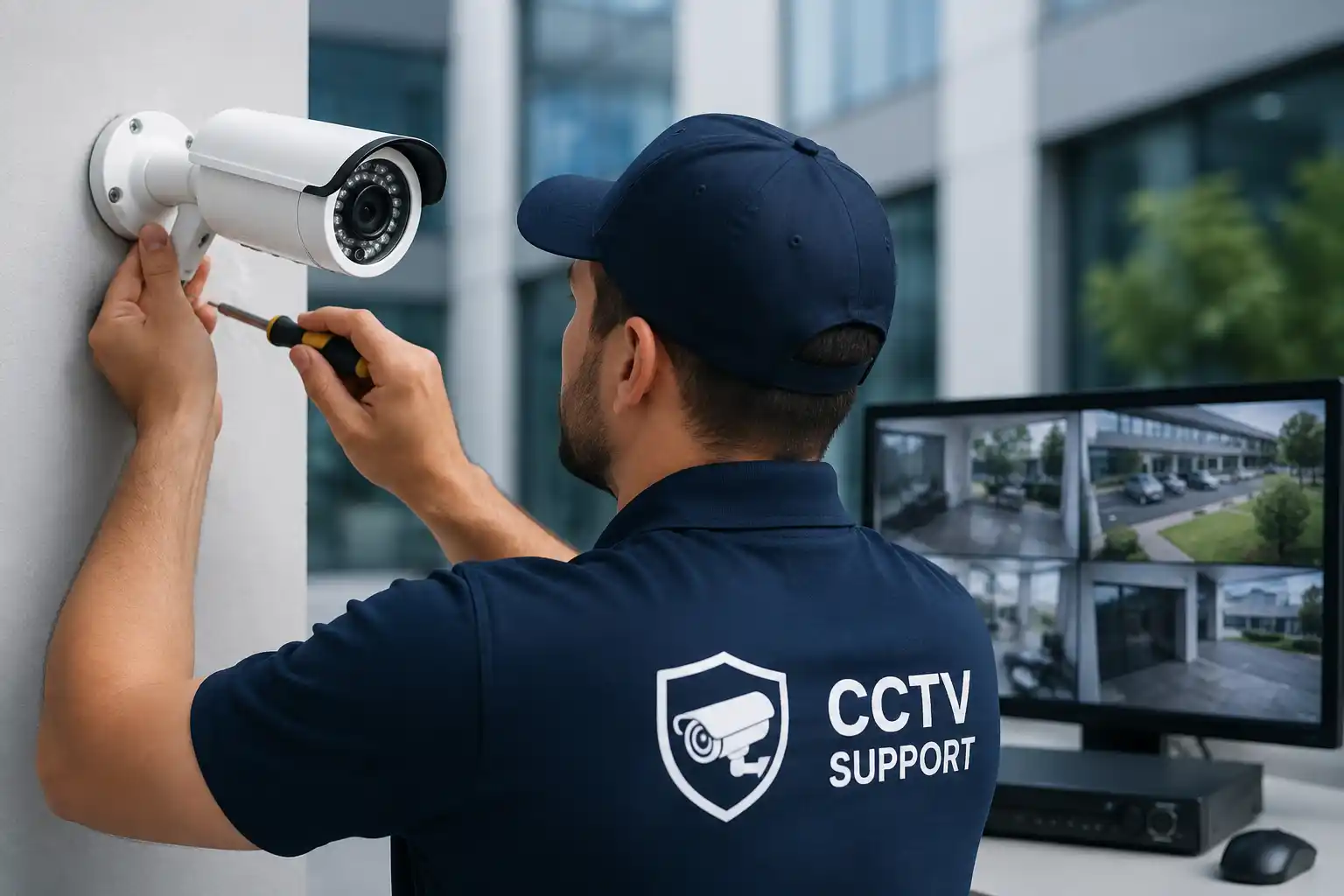
CCTV system migration is the planned movement of surveillance functions from an existing setup to a new technical or physical environment. It may involve changing a network video recorder, moving cameras to a different IP network, replacing a digital recorder with a network-based platform, relocating surveillance equipment to another office, reorganising recording storage, changing authorised viewing access, or separating CCTV traffic from the general business network. It is mainly used when a business needs to modernise, relocate, standardise or improve maintainability without losing control of recording and access. Organisations should consider a structured migration when the existing system is business-important, poorly documented, dependent on older equipment, shared across multiple networks or difficult to maintain. Before work is confirmed, the customer should prepare an inventory where possible, identify important cameras and retention expectations, confirm authorised administration access, state any acceptable maintenance window, and explain which users need live view, playback or remote access after migration. Final scope remains subject to assessment, compatibility and site access.
What the service can cover
Depending on the confirmed scope, migration assistance may cover camera and channel inventory, recorder review, existing configuration capture, network and PoE checks, storage review, user-access mapping, target addressing, new recorder preparation, camera reassignment, controlled cutover, remote-viewing reconfiguration, recording validation, playback testing, documentation and post-change fault isolation. Physical relocation, cabling, rack changes or camera replacement may require separate on-site work and must be included in the quotation.
Who may need migration support
The service may suit offices, retail locations, warehouses, clinics, schools, hospitality sites, property facilities, showrooms and multi-branch operations that are replacing an ageing recorder, moving premises, changing network architecture, consolidating surveillance management, adding capacity, reorganising access or dealing with a system that has become difficult to support. The useful starting point is not the number of cameras alone; it is understanding what the business expects to view, record, retrieve and maintain after the change.
Why businesses migrate CCTV systems instead of continuing with the current setup
A migration is usually triggered by a change in operational requirements rather than by one isolated fault. A recorder may have limited remaining capacity, a site may be moving to a new building, a camera network may need to be separated from user traffic, or existing remote-viewing access may no longer match the way managers work. Another common trigger is poor documentation. When nobody can confidently identify camera addresses, switch ports, storage layout, administrator ownership or the reason behind previous settings, routine support becomes slower and changes carry more uncertainty.
Expansion can also expose limitations in an older design. Adding cameras may increase recording bandwidth, PoE demand, storage consumption and switch-port usage. Replacing a recorder can create compatibility questions around camera streams, codecs, resolution, frame rate, authentication and how existing camera credentials are managed. A premises relocation introduces a different set of dependencies: which cameras will move, which will remain, whether new cable routes are ready, whether rack and power arrangements are suitable, and whether users require temporary viewing during the transition.
Migration planning gives the business a controlled method for answering these questions before changes are made. The objective is to avoid treating the surveillance environment as a collection of unrelated cameras. Each camera forms part of a chain that can include local power or PoE, structured cabling, network switches, VLANs, IP addressing, the recorder, storage drives, monitor output, user permissions, mobile or desktop viewing applications and firewall policies. A migration should consider that complete chain so that the final validation checks actual business use, not just whether a camera appears online.
Common planning triggers and the technical areas behind them
Recorder replacement
A new NVR or DVR may require a review of camera compatibility, channel count, recording profiles, user accounts, storage, monitor outputs, network addressing and remote access. Existing settings should be captured where practical before the cutover.
Office or site relocation
Moving CCTV can involve equipment inventory, removal planning, cable readiness, new mounting positions, rack location, power, network services, access permissions, testing and a clear decision about what equipment should not be reused.
Network redesign
Changing switches, subnets, VLANs or firewalls can interrupt camera discovery and viewing. The migration plan should map current addressing and target connectivity before devices are reassigned.
Capacity or retention change
Longer recording retention, higher resolution or more cameras can change storage and bandwidth requirements. Retention expectations should be defined before target storage is finalised.
A CCTV migration depends on more than the cameras
The most useful migration assessment maps relationships among the surveillance components. An IP camera may receive power from a PoE switch, obtain or use a fixed address on a defined subnet, send one or more streams to an NVR, synchronise its clock, and be viewed through local workstations or authorised remote applications. The recorder itself depends on storage health, user permissions, network reachability and sometimes external services or vendor infrastructure for remote viewing. An analogue or hybrid system may introduce different recorder and cabling dependencies. The exact architecture must therefore be discovered rather than assumed.
Power and physical infrastructure are part of that map. A camera that appears to be a network problem may actually have a weak power source, damaged termination or unstable switch port. During a relocation, cable routes and mounting locations may determine whether the previous camera positions can be recreated. At a warehouse or outdoor area, lighting, distance, environmental exposure and the intended field of view can affect whether reuse is sensible. A migration scope should distinguish equipment that can be carried forward from equipment that needs separate repair, replacement or redesign consideration.
Access is another dependency. The business should know who is authorised to administer the existing system, who needs access after migration and whether credentials can be transferred or must be reset through an approved process. Credentials should not be posted on a public request form or shared informally. FourTeck can confirm a suitable secure method after the customer’s identity and authority are established. If a third-party installer, manufacturer portal, building management company, internet provider or security platform is involved, their participation may affect the plan and schedule.
What can happen when migration is treated as an unplanned change?
The immediate risk is not always complete CCTV failure. Partial problems can be harder to notice. A camera may show live video but fail to record continuously. A recorder may accept some cameras but not others. Remote viewing may work for one administrator while other authorised users lose access. Time settings may be inconsistent, making incident review confusing. Storage may fill more quickly than expected because the target recording profiles were not calculated from actual camera settings. A network change may place cameras on addresses that conflict with other devices or isolate them from the recorder.
Business impact varies with the site. A retail operation may find that footage for a disputed transaction is difficult to retrieve. A warehouse may lose visibility over loading areas. A property manager may discover that newly migrated cameras cannot be viewed from the agreed control point. An office may keep recording but lose remote incident review for authorised managers. These outcomes do not prove that migration has failed completely, but they show why success criteria should be defined before cutover. The project should specify which cameras must be visible, what playback period will be sampled, which users need which access level, what remote connections must be tested and what documentation must be updated.
A structured approach reduces avoidable uncertainty, but it cannot remove every dependency. Ageing cameras can fail independently of the migration, legacy equipment may have limited compatibility, hidden cabling faults can emerge during physical work, and third-party services can affect remote connectivity. The migration plan should therefore include realistic contingency options rather than promise zero downtime or universal compatibility.
Possible CCTV migration service scope
Depending on the confirmed environment and quotation, FourTeck assistance may include current-state discovery, camera and channel inventory, NVR or DVR review, IP addressing assessment, PoE and switch checks, storage and retention review, authorised user mapping, configuration capture, backup planning, target design review, compatibility checks, staged migration planning, equipment relocation coordination, recorder configuration, camera reassignment, user-access changes, remote-viewing setup, testing, documentation and handover. Where a physical fault, cabling alteration, new mounting requirement, failed storage device or incompatible component is found, separate corrective or replacement work may be recommended.
Not every migration requires every activity. A recorder-only change in a well-documented environment is different from moving a mixed-camera estate between buildings. A network-only migration may have little physical work but more addressing, firewall and switch configuration. A multi-site consolidation can involve user roles, naming standards and operational decisions that are not relevant to a single small site. The assessment is used to establish which tasks apply and to define what is included before work begins.
Service-fit matrix: when migration assistance may be appropriate
| Business situation | Relevant assistance | What must be confirmed |
|---|---|---|
| Existing recorder is being replaced | Inventory, configuration capture, compatibility review, new recorder setup and validation | Camera types, credentials, channel count, storage needs, remote access and target platform |
| Office is relocating | Asset review, removal and reinstallation planning, new-site readiness and cutover testing | Building access, cable routes, mounting positions, network readiness, power and move window |
| CCTV is moving to a new subnet or VLAN | Address plan, switch and routing review, camera reassignment and recorder path testing | Current addresses, switch access, firewall rules, management method and maintenance window |
| Storage or retention requirements have changed | Recording profile and storage review, migration planning and post-change retention checks | Target retention, resolution, frame rate, camera count and available storage options |
| Remote viewing needs to be reorganised | User-role review, connectivity assessment, authorised access setup and external viewing tests | Approved users, access method, internet/firewall dependency and vendor service requirements |
CCTV migration service information
| Main purpose | Move or reorganise surveillance functions through a controlled, tested change rather than an unplanned equipment swap. |
|---|---|
| Typical systems involved | IP or analogue cameras, NVR/DVR, storage, PoE switches, cabling, network addressing, firewall paths, monitors and authorised viewing applications. |
| Assessment method | Remote discovery may be possible for accessible configuration and logs; on-site inspection may be required for physical infrastructure, cabling and equipment condition. |
| Customer access required | Authorised administrative access, site access where necessary and availability of a responsible customer contact. Access dependent. |
| Backup considerations | Configuration exports, screenshots, device inventories and any supported backup method should be considered before approved changes. Backup capability is platform dependent. |
| Testing and validation | Camera availability, recording, playback, time alignment, authorised user access, remote viewing and required display paths can be tested according to the agreed scope. |
| Documentation | May include updated camera identifiers, addressing, recorder details, access roles, switch information, change notes and outstanding recommendations. |
| Service location | Dubai and UAE coordination, with remote or on-site work subject to issue type, location, access, schedule and approved quotation. |
| Quotation requirement | Scope dependent. Contact FourTeck to confirm tasks, exclusions, dependencies and scheduling before implementation. |
Can CCTV migration work be handled remotely?
Remote assistance
Remote work may be useful for reviewing an accessible recorder, checking existing addresses, documenting configuration, preparing a target plan, validating user permissions, checking recording settings or supporting post-change verification. It depends on working internet access, authorised remote connectivity and a customer representative who can assist where local confirmation is needed.
Remote access cannot replace a physical inspection when the task depends on cable quality, camera mounting, equipment condition, rack layout, power, PoE behaviour or building access. If the current system is unreachable, the first practical step may be an on-site assessment.
On-site assistance
An on-site visit may be recommended for device inventory, cable tracing, recorder replacement, camera relocation, rack work, switch-port checks, power investigation, physical labelling, coverage verification or faults that cannot be reproduced remotely. Site coordination is particularly important when CCTV shares building infrastructure or when work requires access to ceilings, risers, locked rooms or security-controlled areas.
Attendance timing depends on location, engineer availability, site access, approved scope, required equipment and any third-party coordination. A migration plan should state which tasks require physical presence so expectations are clear before the change window.
How the CCTV migration assessment usually begins
The first stage is discovery. FourTeck needs to understand why the business is migrating, which areas are operationally important, how the current system is used and what the target state should achieve. A recorder replacement has a different risk profile from a full office move, and a network re-addressing project differs from a platform change. The migration objective therefore needs to be stated in business terms as well as technical terms.
- Define the business impact and migration objective. Identify why the change is required, who depends on the surveillance system, what must remain available, and whether there is a preferred maintenance window.
- Build a current-state inventory. Record camera identifiers, locations, recording channels, recorder model information where available, storage, switch connections, network ranges, monitors, viewing stations and authorised users.
- Review evidence and documentation. Existing diagrams, configuration exports, screenshots, support notes, camera schedules and previous installation records can reduce guesswork. Missing documents should be treated as a discovery task, not silently assumed.
- Check access and authority. Confirm who can authorise changes, which administrator access is available and whether any third-party accounts or vendor portals are required. Credentials should be exchanged only through an approved secure method.
- Map dependencies. Identify PoE, cabling, switching, subnets, VLANs, routing, firewalls, storage, internet services, remote access and any platform-specific services that affect normal CCTV operation.
- Assess compatibility. The target recorder or platform must be reviewed against the existing camera environment, stream requirements, authentication method, storage approach and required user functions. Compatibility is environment dependent and should not be presumed from a model name alone.
- Review backup and rollback options. Capture supported configuration information and establish what can be restored if a planned change does not validate. Rollback may be limited by hardware changes or unsupported legacy equipment, so the actual option must be stated clearly.
- Define acceptance checks. Agree which cameras, recording periods, playback actions, users, monitors and remote connections will be tested after migration. These checks turn “the system is working” into something measurable.
Planning the change before equipment is moved or reconfigured
Once the current state is understood, the migration can be divided into stages. For some environments, a pilot or limited change may be appropriate before the full cutover. For example, one camera or a small group can be validated against a target recorder or network path to expose addressing, authentication, stream or recording issues before every device is changed. A pilot is not necessary for every project, but it can reduce uncertainty where the source estate is mixed, old or poorly documented.
The target configuration should define naming, addressing, recording profiles, user roles, storage allocation and connectivity at a level appropriate to the project. If cameras are moving to a dedicated network segment, switch configuration, routing and approved firewall paths should be prepared before camera addresses are changed. If equipment is relocating, the new rack, switch capacity, power, mounting points, cable routes and monitor position should be ready before the old site is dismantled. These dependencies affect whether the migration can be performed in one window or needs staged work.
Downtime should be discussed explicitly. FourTeck should not promise zero interruption when the environment has not been assessed. Some migrations can preserve partial recording while equipment is transitioned; others may require an agreed period when certain cameras are unavailable. The business should identify cameras or zones where interruption has a higher operational impact so sequencing can be planned accordingly. User communication may be appropriate when security staff, managers or reception teams need to know when live viewing or playback functions will change.
The plan should also define decision points. If a camera is found to be incompatible, will it remain on the old system temporarily, be replaced under a separate approved scope, or be excluded from the migration? If a cable test fails, is remediation included or quoted separately? If storage health is questionable, does the target platform need new storage before cutover? These questions are easier to manage when agreed before the maintenance window than when discovered in the middle of the change.
Security controls should be part of the target design rather than an afterthought. Shared administrator accounts, default credentials, unnecessary external exposure and unmanaged remote-viewing methods should not simply be carried forward because they existed previously. Access should be based on authorised business need, and any network or remote-access change should be implemented with suitable controls, testing and documentation. Security improvement reduces risk but does not guarantee complete protection, so ongoing maintenance and review remain necessary.
Migration cutover: moving from the old state to the new state
The cutover is the stage when approved changes are applied. The exact sequence depends on the migration type. A recorder replacement may begin with the target recorder prepared on the network, followed by camera registration, recording profile configuration, storage validation, user setup and remote viewing. A network migration may involve re-addressing cameras, moving switch ports into the correct VLAN, updating the recorder path and validating connectivity one group at a time. A premises move may include equipment shutdown, labelling, physical transfer, new-site installation, cable connection, network configuration and systematic testing.
Change control is important because several components can appear to fail at the same time when one dependency is wrong. If a camera is offline after re-addressing, the investigation may need to check the camera address, subnet, gateway, switch VLAN, PoE state, recorder reachability and credentials rather than immediately declaring the camera defective. Working through a defined sequence makes the cause easier to isolate and reduces the risk of multiple uncontrolled changes being made in response to one symptom.
Where practical, the migration should preserve evidence about the pre-change environment. This may include configuration exports, screenshots, camera lists and photos of rack connections or labels. It can help with rollback or troubleshooting, but backup capability depends on the specific platform. Recorded video history may not always be portable between systems, so the business should identify any important footage that requires separate authorised preservation before old storage is removed or repurposed. Data retention and handling requirements are customer-specific and should be confirmed before work.
If the cutover reveals a condition outside the approved scope, such as failed hardware, unknown credentials, unsupported devices, damaged cabling or a third-party service issue, it may be safer to pause the affected part of the migration, explain the finding and agree the next action. Continuing with unplanned work can create additional risk and makes later support harder to understand.
Testing, validation and handover after migration
A migration is not complete when the cameras simply appear on screen. Validation should follow the functions the business actually depends on. Camera live view can be checked across agreed viewing stations; recording can be confirmed for representative cameras; playback can be tested across selected time periods; time and date alignment can be reviewed; user accounts can be checked against intended permissions; and approved remote viewing can be tested from the expected access method where practical. Alarm, analytics or integration functions should only be treated as included when they are part of the confirmed scope and supported by the target environment.
Documentation should describe the new state clearly enough for future support. Useful records may include a camera schedule, recorder and storage details, network addresses, switch relationships, authorised user roles, remote-access method, configuration notes, outstanding limitations and recommendations. Passwords should not be published in general documentation; credential ownership and secure storage should follow the customer’s approved access process.
Handover should also identify what was not changed. A legacy camera may remain temporarily, a damaged cable may require later remediation, or an unsupported feature may not have migrated. Clear exceptions prevent a successful main cutover from being confused with unresolved secondary work. Post-migration support can then focus on genuine new incidents, user questions and remaining recommendations rather than reconstructing what happened during the project.
Capability focus 1: preserve visibility while changing the technical foundation
The practical value of a structured migration is continuity of operational understanding. Managers and security users need to know which cameras matter, what they are expected to record and how footage will be retrieved after the change. This is especially important when a technical upgrade introduces new device names, addresses or viewing software. Without a documented mapping between old and new identifiers, users can spend time searching for the right feed even when the system is technically healthy.
FourTeck can help map camera purpose and location into the target setup so validation follows business use. The limitation is that system function still depends on compatible devices, healthy infrastructure and correct access. Where older cameras or proprietary functions cannot be carried forward, the migration plan should identify the gap and present practical options rather than implying that every feature will migrate unchanged.
Capability focus 2: make network and recording dependencies easier to support
Many modern CCTV environments are also network environments. Cameras can depend on PoE switches, IP addressing, VLANs, routing, DNS or time services, firewall rules and available bandwidth. A migration creates an opportunity to document those relationships and separate surveillance traffic more deliberately where appropriate. The benefit is not a promise of fault-free operation; it is clearer fault isolation when something does go wrong. A future support engineer can see whether a problem sits at the camera, power, switch, network, recorder, storage or access layer instead of changing settings blindly.
This requires cooperation with whoever manages the customer’s network. If network administration is handled by another provider, FourTeck may need approved coordination rather than direct control. Any segmentation, routing or firewall changes are configuration dependent and should be planned with a rollback path where practical. The target design should also consider future camera additions so the new environment is not immediately constrained by switch capacity, addressing or storage decisions.
Capability focus 3: leave a maintainable surveillance environment after the project
A migration can solve an immediate lifecycle problem while also improving long-term maintainability. Clear device naming, current diagrams, known administrator ownership, documented storage arrangements and consistent user roles make routine support less dependent on memory. When a new camera is added or a future recorder replacement is considered, the business has a baseline from which to plan rather than starting discovery again.
Maintainability also depends on separating permanent design decisions from temporary workarounds. If a legacy device must remain because it cannot be migrated within the project window, that exception should be recorded with its impact. If a remote-viewing method depends on an external platform, that dependency should be documented. If the existing cabling was reused without a full replacement, the handover should state what was tested and what remains subject to age or condition.
The migration itself does not replace ongoing maintenance. Camera lenses can become obstructed, storage can develop faults, firmware and applications can change, network equipment can be reconfigured and user access can become outdated as staff roles change. Periodic review helps the business confirm that the migrated system continues to support its intended operational purpose.
Dependencies, access and customer inputs that can affect the migration
The most important customer input is a clear statement of the required outcome. FourTeck also needs enough information to understand the current system and the change constraints. Useful inputs can include the service location, approximate number of cameras, recorder or platform details where known, camera types, existing network information, previous diagrams, current viewing method, business-critical zones, required users, preferred maintenance window, backup status, recent changes, remote-access method and any known faults.
Administrative access may be necessary to review or change recorder, camera, network and user settings. The business should confirm that access is authorised and available. If an old installer controls accounts or a vendor portal, that dependency may need to be resolved before migration. Do not send passwords in a public enquiry. Credentials should be transferred only through an approved secure method after authority is confirmed.
Physical work can depend on building access, permits, ceiling access, rack availability, power, safe working conditions and coordination with facilities or security teams. Network work can depend on firewall, switch and internet-provider access. Platform changes can depend on licensing or vendor support. These dependencies are not reasons to avoid migration; they are reasons to identify responsibilities early so the quotation and schedule are based on the actual environment.
Risk, limitation and exclusion guidance
CCTV migration outcomes depend on available access, equipment condition, compatibility, network readiness, supported backup methods and third-party services. A migration cannot guarantee that every legacy camera, recorder feature, mobile application or integration will operate unchanged on a new platform. Older equipment may have limited configuration options, and hidden faults can become visible only when devices are moved or reconnected.
Hardware failure, replacement parts, new cabling, civil work, access equipment, third-party licences, specialist manufacturer intervention or ISP changes may fall outside the initial labour scope unless specifically quoted. The same applies to historical footage export or preservation where the source recorder has platform-specific limitations. Any requirement to retain evidential footage should be raised before old equipment is changed or storage is reused.
Configuration changes can require an agreed maintenance window. A successful test after migration does not remove the need for ongoing monitoring, access review and preventive maintenance. Security controls reduce risk but do not guarantee complete protection. Remote viewing can depend on internet connectivity, firewall policy, external services and authorised account access that FourTeck may not control.
On-site work depends on location, scheduling, site access and the confirmed scope. If assessment identifies additional work, FourTeck can explain the finding and prepare a revised or separate quotation where appropriate. Commercial terms, included tasks and exclusions should be confirmed in the approved quotation or service agreement rather than assumed from a general service page.
Business environments where CCTV migration planning can be useful
Offices and professional workplaces
Office migrations may coincide with a move, network refresh or access-control change. Planning should account for reception views, entrances, common areas, recorder location, authorised management access and the new network design.
Retail and showrooms
Retail sites may prioritise entrances, counters, stock areas and incident playback. Migration testing should reflect these operational points rather than checking only random cameras.
Warehouses and logistics sites
Large coverage areas can involve long cable runs, PoE distribution, outdoor cameras and high recording volumes. Site survey information can strongly influence whether equipment and cabling should be reused.
Hospitality and property locations
These environments can have multiple viewing points, facilities coordination and restricted technical areas. Migration sequencing may need to reflect operational hours and building-access requirements.
Clinics and training centres
The migration should focus on authorised access, system continuity and suitable camera purpose without making assumptions about sector-specific compliance. Customer policies and applicable requirements should be confirmed separately.
Multi-branch organisations
Multiple sites can benefit from consistent naming, documentation, user roles and support ownership. Network and remote-viewing dependencies may differ by branch, so a single design should not be assumed to fit every location.
Operational, security and maintenance considerations after migration
The first days after a migration are useful for confirming that the system behaves as expected under normal business use. Users may notice naming confusion, missing permissions or a viewing workflow that did not appear during technical testing. Storage usage should be observed against the expected recording profile, and any camera showing intermittent behaviour should be investigated before it becomes accepted as normal.
Access should be reviewed as part of normal administration. Staff changes, role changes and shared accounts can create unnecessary access over time. Where supported and appropriate, individual authorised accounts, documented ownership and controlled remote access are easier to manage than informal credential sharing. Firmware, recorder software and viewing applications also change over their lifecycle, but updates should be planned and tested rather than applied indiscriminately to a working surveillance environment.
Physical maintenance remains relevant after a technical migration. Camera lenses can become dirty, mounts can shift, weather exposure can affect outdoor devices, cooling and storage health can change, and cable terminations can deteriorate. Periodic checks can compare actual camera coverage and recording availability with the business purpose defined during migration. If the environment expands, new cameras should be evaluated against PoE, switching, bandwidth, storage and recorder capacity before they are added.
Documentation should be treated as a maintained record, not a project souvenir. A future network change, building move or recorder replacement will be easier if camera lists, addresses, user roles and infrastructure dependencies remain current. FourTeck can discuss preventive maintenance or support planning separately where ongoing assistance is required.
Before you contact FourTeck about a CCTV migration
Preparing a few facts helps the initial discussion focus on scope rather than assumptions. You do not need perfect documentation; unknown items can become part of the assessment.
- The site or sites involved in the migration
- The main business reason for the change
- Approximate number of cameras and recorders
- Known camera and recorder platforms or models
- Which cameras or zones are most operationally important
- Current recording or playback problems, if any
- Existing remote-viewing method and authorised users
- Available network or CCTV diagrams
- Whether administrative access is available
- Known storage or retention expectations
- Any recent network, internet or firewall changes
- Preferred maintenance or relocation window
- Building-access or facilities restrictions
- Whether third-party installers or providers are involved
- The expected result after migration
Do not include passwords in a general enquiry. FourTeck can confirm how authorised credentials should be shared securely if access is needed for assessment or implementation.
Service evaluation checklist for the quotation
- Confirm the exact migration objective and target environment.
- Confirm how many cameras, recorders and sites are in scope.
- Identify equipment that must be reused, moved, replaced or assessed.
- Confirm whether network, VLAN, switch or firewall changes are required.
- Define the required recording, retention, playback and remote-viewing outcomes.
- State what authorised administrative and physical access will be available.
- Decide which work can be remote and which requires on-site attendance.
- Confirm whether cabling, mounting, rack or power work is included.
- Define the acceptable change window and any business-critical periods.
- Confirm testing, documentation and handover requirements.
- Identify third-party coordination, licences or vendor dependencies.
- Record exclusions and any work that requires a separate quotation.
How FourTeck can assist with the migration and quotation process
FourTeck can begin by clarifying the reported requirement and deciding whether initial discovery can be completed remotely, requires an on-site visit, or needs both. The assessment can connect CCTV with its supporting network, power, cabling, storage and authorised user-access environment so the migration scope reflects actual dependencies. This is particularly useful when the customer has several vendors involved and needs one technical view of what must be checked before the change.
After discovery, the required work can be separated into migration tasks, prerequisites, customer responsibilities, third-party actions and exclusions. Where appropriate, FourTeck can help prepare the target addressing or recorder configuration, coordinate a staged cutover, test camera availability and recording, verify authorised viewing and document the final environment. If the assessment identifies hardware replacement, cabling remediation, added storage or other work outside the original request, that can be explained before it is treated as part of the project.
A quotation should reflect the confirmed number of devices, sites, technical dependencies, access requirements, remote and on-site balance, implementation tasks, testing expectations and documentation. Service timing depends on the approved scope, engineer availability, site conditions, customer access, required equipment and third-party providers. Contact FourTeck to confirm scheduling options rather than relying on a general online estimate.
For broader company information, you can visit the FourTeck IT Services overview, or use the contact page to request a migration assessment.
Dubai and UAE service coordination
CCTV migration work in Dubai may combine remote planning with scheduled on-site activity. Remote review can be useful for accessible configuration, documentation and target planning, while physical recorder replacement, camera relocation, rack work, cable checking and site validation generally require local access. The exact balance depends on the existing system, the target design, the urgency, the site and the approved quotation.
For projects across Dubai, Abu Dhabi, Sharjah and Ajman, FourTeck can discuss coordinated assessment, remote troubleshooting, planned site visits, migration stages, installation work and post-change support according to the confirmed scope. Scheduling, travel, building-access rules, site conditions, equipment availability, maintenance windows and third-party dependencies can affect the service plan. The page does not imply permanent engineer presence in every emirate or a fixed attendance time; contact FourTeck to confirm practical scheduling for the relevant site.
Related FourTeck IT services that may support a CCTV migration
CCTV service and maintenance
Useful when the migration also exposes recording, camera, storage or maintenance issues that need separate assessment.
IP camera support
Relevant when camera addressing, PoE, switch connectivity, recorder registration or stream behaviour needs investigation.
Office network support
Useful when migration changes VLANs, switches, routing, firewall paths or network capacity supporting the surveillance system.
Business IT services
Helpful when CCTV migration is part of an office move, infrastructure refresh or multi-system project with shared dependencies.
Why businesses contact FourTeck for CCTV migration assistance
Businesses often need help because CCTV sits between several technical responsibilities. A camera can involve security operations, facilities, structured cabling, network switching, firewall policies, storage and user access. When separate suppliers look only at their own component, the customer can be left coordinating the gaps. FourTeck can help organise the technical picture around the business outcome and identify which dependency needs action before the migration proceeds.
The value of this approach is clarity rather than unsupported claims. FourTeck can help define the current state, document unknowns, plan safe changes, distinguish remote from on-site work, coordinate with other providers where necessary, validate approved outcomes and record remaining risks. Customers can then make decisions about replacement, remediation, maintenance or later expansion using a clearer technical baseline.
For an overview of available support areas, visit the FourTeck services page. The exact CCTV migration scope should still be confirmed through assessment and quotation because device count, site conditions, access, network design and target requirements differ from one business to another.
Questions businesses ask before deciding on a CCTV migration
The following decision guidance addresses practical questions that often arise before a company requests a CCTV migration assessment. The answers are intentionally scope dependent because the correct route changes with the recorder, camera estate, network, building and business requirement.
Can we replace the NVR without replacing every camera?
Possibly, but it should be verified rather than assumed. Existing cameras need to be reviewed for compatibility with the target recorder or management platform, including stream format, authentication, resolution, supported protocols and any vendor-specific features the business relies on. If some cameras cannot be migrated, the project can identify whether they should remain temporarily, be replaced under a separate scope or be excluded. Prepare a camera inventory and target recorder details if available.
Should CCTV be migrated at the same time as an office network upgrade?
It can be efficient when dependencies are planned together, especially if switches, VLANs, IP ranges or firewalls are changing. The risk is that too many simultaneous changes make fault isolation difficult. A staged plan can separate network preparation from camera migration and define checkpoints between them. Share the target network design, camera count and expected change window so the sequencing can be assessed.
Can our old recordings be moved to the new CCTV system?
Historical video portability is platform dependent and should not be promised without checking the source and target systems. Some recordings may need to remain on the old recorder for their retention period, while selected footage may be exported separately if the platform supports it and the business has an authorised need. Identify any important footage before old storage is removed, reformatted or repurposed.
How do we know if our existing cabling can be reused?
A visual or physical assessment may be needed. Cable type, route, termination quality, length, exposure, damage and current camera behaviour can all matter. If cameras are being relocated, new routes may be necessary even when the old cables are healthy. Cabling should not be assumed reusable simply because the existing system displays video today, especially if the target system changes bandwidth or power requirements.
What if we do not have the administrator password for the existing recorder?
The migration may still be possible, but the recovery path depends on the platform, ownership records and available authorised processes. FourTeck should not bypass access controls. The business may need to involve the previous installer, vendor or authorised account owner. Raise the access issue during discovery so it can be treated as a prerequisite rather than discovered during cutover.
Do we need a site survey before migrating CCTV?
A site survey is often useful when equipment is moving, cabling is uncertain, camera coverage will change, rack or power work is involved, or the current inventory is incomplete. A smaller configuration-only migration may begin remotely if secure access and accurate information are available. The decision should be based on the unknowns that could affect implementation, not on a fixed rule.
Can migration be done without interrupting recording?
Some projects can preserve partial recording or migrate cameras in stages, but zero downtime cannot be guaranteed without assessing the architecture. Recorder replacement, physical relocation and network re-addressing may require periods when specific cameras are unavailable. Identify high-priority cameras and acceptable interruption windows so sequencing and contingency options can be discussed before work begins.
How much storage will the migrated system need?
Storage depends on camera count, resolution, frame rate, codec, recording mode, scene activity and required retention. A simple camera count is not enough. The migration assessment should capture actual or planned recording profiles and define the business retention goal before final storage decisions are made. If retention is policy or regulation driven, the customer should supply the applicable requirement.
Should remote viewing be recreated exactly as it works today?
Not automatically. Migration is a good time to confirm who still needs remote access, which method is appropriate and whether old shared accounts or exposed services should be retired. The new access design may depend on vendor capabilities, firewall policy, internet connectivity and customer security requirements. The aim should be authorised, documented access rather than copying every legacy setting.
When is repair better than migration?
If the current system still meets business requirements and the issue is isolated, targeted repair may be more appropriate than a wider migration. Migration becomes more relevant when the business is changing platforms, locations, networks, capacity or supportability. The assessment should separate an incident that needs troubleshooting from a lifecycle change that needs project planning. FourTeck can help clarify which path fits the evidence.
What information helps FourTeck prepare a useful quotation?
The strongest starting information is the migration objective, site location, approximate camera and recorder count, known equipment details, target platform if selected, network changes, access availability, cabling or relocation requirements, expected user access, retention needs, preferred change window and testing expectations. Unknown items can be assessed, but they should be identified so discovery effort is included rather than hidden in assumptions.
What should we check after the first working day on the new system?
Confirm that operational users can find the expected cameras, recorded footage is available for the agreed periods, time settings are consistent, remote access works for authorised users and no camera shows intermittent loss. Review storage behaviour and note any user workflow issue. These observations can reveal problems that a short technical test does not reproduce and can be added to the post-migration action list.
Frequently asked questions about CCTV system migration in Dubai
What does FourTeck check before a CCTV migration?
Depending on scope, the review can include cameras, recorder channels, storage, IP addressing, switches, PoE, cabling, user access, remote viewing, network paths, existing documentation and the target migration objective. Physical checks may require an on-site visit.
Can you migrate a CCTV system during an office move?
Yes, migration can be planned as part of a relocation, subject to assessment. The new site needs suitable camera positions, cabling, power, rack space, network connectivity and access before equipment is moved. The plan should also identify which devices are suitable for reuse.
Is remote support enough for the whole migration?
Usually not when hardware, cabling, rack work, camera relocation or physical testing is involved. Remote support can be valuable for discovery, configuration review and some validation when secure access is available, while on-site work handles tasks that require physical access.
Will every existing camera work with a new recorder?
That cannot be assumed. Compatibility depends on the specific camera, recorder, supported protocols, stream settings, authentication and required features. FourTeck can review the environment and identify devices that need further testing or separate replacement consideration.
Do we need to back up the old configuration?
Where the platform supports it, preserving configuration information before approved changes is sensible. Exports, screenshots, camera lists and documented settings can also help. The available backup and restore method is platform dependent and should be verified before relying on it.
What happens if a camera fails during migration?
The issue should be isolated to determine whether it relates to power, cabling, network configuration, recorder registration, credentials or camera hardware. If replacement or repair falls outside the approved scope, FourTeck can explain the finding and recommend the next action.
Can user permissions be reorganised during the move?
Yes, when access redesign is included in the scope and supported by the platform. The business should identify who needs live view, playback, export or administration. This can be a good opportunity to remove access that is no longer required.
How is the migrated CCTV system tested?
Testing can include agreed camera live views, recording confirmation, playback samples, time checks, user permissions, monitor output and authorised remote viewing. The exact acceptance list should be agreed before implementation so completion is measured against business needs.
Does migration include new cabling and camera replacement?
Only when those tasks are specifically included in the confirmed quotation. Assessment may identify damaged cabling, unsuitable mounting positions or incompatible cameras, but additional physical work or replacement equipment should not be assumed to be included automatically.
Can FourTeck coordinate with our network or security provider?
Vendor or provider coordination can be part of the service where required and authorised. This may help when switches, firewalls, internet services, building access or platform accounts are managed by another party. The responsibility and communication route should be defined in the project scope.
How long does a CCTV migration take?
Duration depends on camera count, system complexity, target design, access, physical work, network changes, testing and third-party dependencies. A fixed project duration should not be promised before assessment. FourTeck can discuss scheduling after the required work is defined.
Do you support CCTV migration outside Dubai?
FourTeck can discuss service coordination for Dubai and other UAE locations, including Abu Dhabi, Sharjah and Ajman, with remote or on-site assistance depending on the confirmed scope. Scheduling, travel, building access and site conditions can affect the plan.
Discuss your CCTV migration before making the change
If you are replacing a recorder, moving premises, changing the surveillance network, reorganising remote viewing or standardising an existing camera estate, start with the current environment and the required business outcome. FourTeck can help identify dependencies, determine whether remote discovery or an on-site assessment is appropriate, define the migration stages and prepare a quotation around the confirmed scope.
Bring whatever information you already have: camera counts, recorder details, network notes, site plans, known faults, access constraints, target requirements and the preferred maintenance window. Missing information can be identified during assessment. The important point is to avoid committing to a cutover based on assumptions that have not been checked.
CCTV migration is most reliable when the business treats cameras, recording, storage, network connectivity, access and physical infrastructure as one connected service. A documented assessment gives the project a clear starting point, controlled implementation gives changes an agreed sequence, and validation gives the customer evidence that the required functions have been tested. Contact FourTeck to confirm the service scope, site requirements, dependencies and scheduling options for your Dubai or UAE environment.