
BUSINESS CCTV SUPPORT • DUBAI & UAE
CCTV Recording Troubleshooting in Dubai, UAE
When a business cannot find the footage it expected, the fault may sit anywhere between the camera and the storage media. FourTeck helps organisations assess missing recordings, intermittent capture, short retention, playback gaps, recorder alerts, storage problems, time mismatches, network interruptions, and related CCTV recording concerns without assuming the cause before the system has been checked.
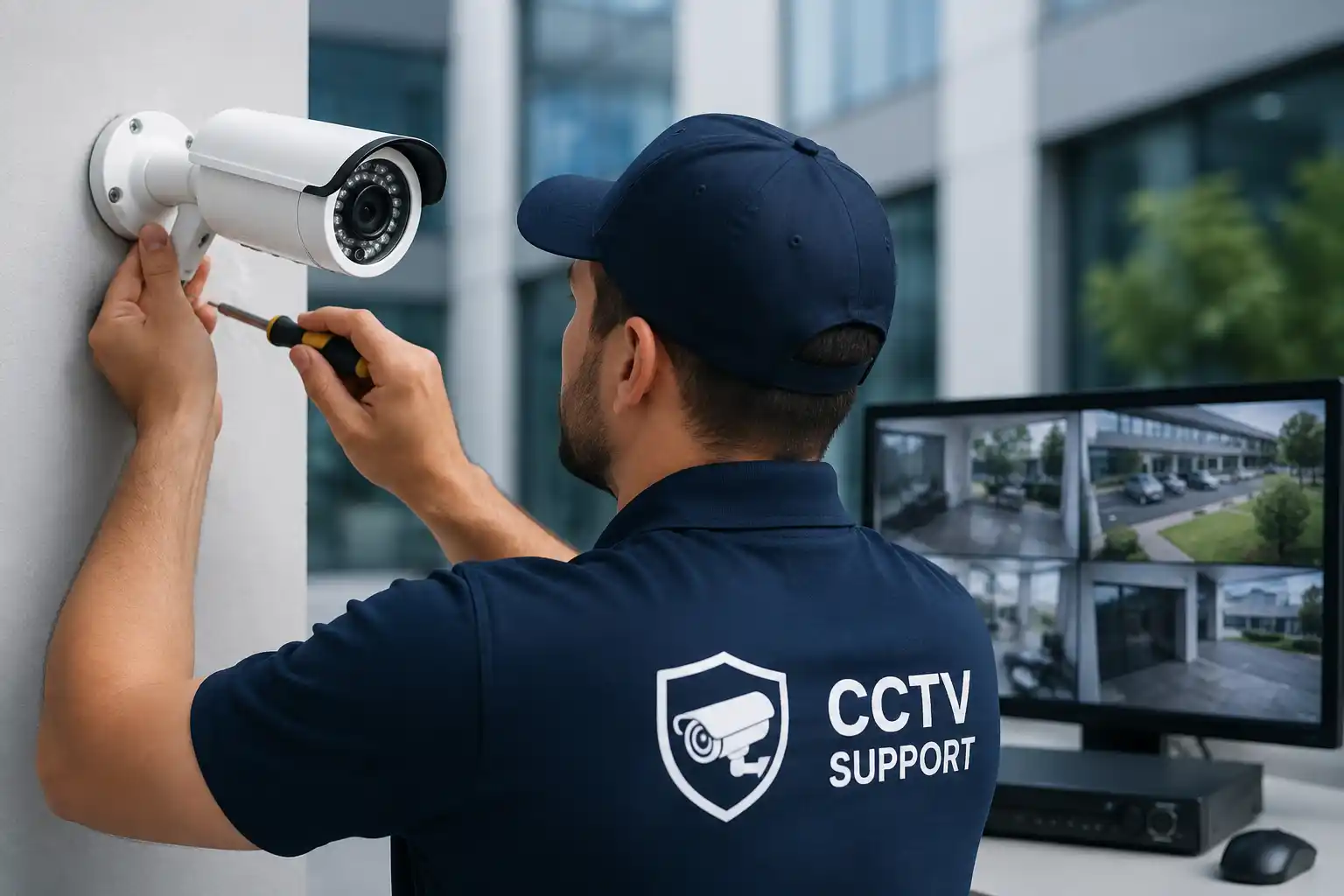
What does CCTV recording troubleshooting actually do?
CCTV recording troubleshooting is a structured investigation into why video that should have been captured, stored, retained, or played back is unavailable or unreliable. It is mainly used when footage is missing for certain cameras or time periods, recordings stop unexpectedly, retention is shorter than expected, playback fails, timestamps are wrong, storage warnings appear, or users cannot retrieve evidence they believe should exist. Businesses that depend on recorded video for incident review, operational oversight, access investigations, loss prevention, or internal verification should consider assessment when the recording behaviour no longer matches the intended policy. Before work is confirmed, the customer should identify the site, affected cameras, recorder type if known, approximate time of the missing footage, whether live video still works, recent changes, authorised system access, and the practical business impact. This information helps decide whether secure remote diagnosis is appropriate or whether physical inspection is likely to be required.
A recording fault can exist at several connected layers
A CCTV recorder only stores what successfully reaches it in a usable form and according to the configured recording rules. For that reason, a missing clip does not automatically mean the recorder has failed. The camera may have lost power, a cable may have become intermittent, a PoE switch port may have stopped delivering power, an IP address may have changed, the camera stream may not have reached the recorder, the recording schedule may have been altered, the disk may have developed errors, the storage pool may be full or unhealthy, or the user may simply be searching the wrong date because the system clock is incorrect. In hybrid or analogue environments, the signal path is different but still contains multiple dependencies that must be tested.
Camera and power
The camera must remain powered, reachable, correctly configured, and capable of producing the expected stream. Intermittent power or a failing camera can create gaps that look like a recorder problem.
Cabling and network path
IP cameras depend on cabling, switch ports, VLANs, addressing, bandwidth, and routing. Packet loss or link instability can affect recording even when live video appears normal at other times.
Recorder configuration
Recording mode, schedules, event rules, stream selection, camera registration, time settings, user permissions, and retention behaviour all influence what can later be found.
Storage and playback
Hard drives, storage arrays, file systems, indexing, database services, overwrite rules, and playback software can affect the availability of recorded material even after video was initially captured.
What the service may cover
Depending on the confirmed scope, assistance may include recorder health review, storage status checks, disk alerts, camera registration checks, recording schedule review, time and time-zone verification, event-recording behaviour, continuous-recording settings, stream checks, playback testing, export testing, user permission review, network reachability, PoE and switch investigation, cable or port checks, firmware and compatibility observations, system log review, retention assessment, and documentation of findings. Some systems may also need coordination with the installer, manufacturer, security provider, network provider, building management, or the organisation responsible for access credentials.
The final service scope is not assumed from the symptom alone. For example, a recorder showing “no record” on one channel may require a different process from a system in which all cameras stop recording at the same time each day. A site where recordings disappear after two days needs a capacity and retention review, while a site with occasional corrupted playback may require investigation of storage health, write errors, power stability, and system logs.
Who may need this support?
The service may suit offices, shops, warehouses, clinics, schools, training centres, restaurants, hotels, showrooms, residential management teams, logistics facilities, construction offices, property sites, and multi-branch businesses that already operate CCTV but cannot rely on the recording history. It can also be useful before a business changes retention requirements, adds cameras, replaces a recorder, moves to a new network, expands storage, changes viewing software, or inherits a system with limited documentation.
The need is especially clear when staff can see live cameras but cannot find past footage, when only some cameras record, when the date or time is wrong, when export files fail, when storage appears full unusually quickly, or when recorded video is missing after a power or network event.
Common recording symptoms and what they may indicate
A symptom helps narrow the investigation, but it does not prove a cause. The same visible problem can result from different technical layers, so the aim is to collect evidence before changing settings or replacing equipment.
| Observed issue | Possible technical areas | Recommended next step |
|---|---|---|
| Live view works but past video is unavailable | Recording schedule, disk state, recording service, stream assignment, retention, playback index | Check which channels and time ranges are affected before changing recorder settings. |
| Only one or two cameras have gaps | Camera power, cable, PoE port, addressing, camera stream, individual channel rules | Compare affected channels with working channels and review network or physical path evidence. |
| All recording stops at the same time | Recorder service, power event, scheduled rule, storage failure, system restart, network event | Correlate logs, uptime, power events, storage alarms, and configuration history. |
| Retention is shorter than expected | Storage capacity, bitrate, resolution, frame rate, added cameras, overwrite settings, disk loss | Calculate current recording demand from actual configuration and healthy storage capacity. |
| Playback time does not match the incident time | Recorder clock, camera clock, time zone, daylight adjustment, time synchronisation | Document the offset before correcting time so existing evidence can still be interpreted. |
| Playback freezes, skips, or reports errors | Drive health, write errors, database/indexing, stream corruption, network playback path | Preserve important footage where possible and inspect storage and log evidence before invasive changes. |
Why an unresolved recording problem matters to business operations
A CCTV system may appear healthy because cameras are visible on a monitor, yet the business value of surveillance often depends on what can be reviewed later. Missing recordings can delay incident investigation, make it harder to confirm the sequence of an operational event, reduce confidence in loss-prevention procedures, create uncertainty around access events, and consume staff time as teams repeatedly search for footage that is not present. For property managers and multi-site operators, one unreliable recorder can also create inconsistent procedures between locations because staff no longer know which systems can be trusted.
Repeated recording gaps can also hide a wider infrastructure problem. If cameras frequently drop because a PoE switch is overloaded or unstable, the same switch may affect other devices. If the recorder clock is wrong, exports may be difficult to correlate with access-control records, point-of-sale activity, alarm events, or staff reports. If one disk in a multi-disk recorder has failed, the available retention period may shrink without an obvious visible outage. If network changes were made without considering the surveillance VLAN or recorder routing, some streams may be available locally but not reach the intended storage path.
The objective of troubleshooting is therefore not only to restore one missing clip. It is to understand whether the system is recording according to the business requirement, whether the recording chain is technically stable, whether future evidence can be located and exported, and whether a maintenance or upgrade action should be planned. A successful spot check today does not remove the need for ongoing storage, time, camera, and recorder monitoring appropriate to the environment.
Service information for CCTV recording troubleshooting
| Service topic | Assessment and troubleshooting of CCTV recording, retention, storage, playback, and related surveillance dependencies. |
|---|---|
| Main purpose | Identify why expected footage is unavailable or unreliable and define corrective or follow-up work. |
| Typical systems involved | IP or analogue cameras, NVRs, DVRs, storage drives, PoE switches, network switches, cabling, monitors, viewing clients, remote-viewing applications, and supporting network equipment. |
| Remote support suitability | Suitable when authorised secure access is available and the issue can be investigated through settings, logs, storage status, playback, permissions, or network configuration. Access dependent. |
| On-site support suitability | Recommended when physical inspection of drives, recorder hardware, power, cabling, cameras, switches, or local playback is required. Location and scheduling dependent. |
| Customer information required | Affected site, camera channels, missing time range, symptoms, recent changes, business impact, equipment details where known, and confirmation that authorised access can be provided securely. |
| Testing and validation | May include live-to-recording verification, timed playback checks, export testing, channel comparison, storage review, and confirmation that approved configuration changes behave as expected. |
| Documentation and handover | Scope dependent. Findings, changed settings, remaining risks, and recommended next actions can be recorded where included. |
| Third-party dependencies | Manufacturer support, installer credentials, storage availability, ISP or network access, building access, software licensing, or customer security approval may affect the work. |
| Commercial scope | Subject to assessment and approved quotation. Parts, replacement devices, extended cabling, data recovery, or third-party work are not assumed to be included. |
Remote support or on-site CCTV troubleshooting?
When remote diagnosis may be practical
Remote support may be useful when the recorder is online, the customer can authorise secure access, and a local contact is available if a physical observation is needed. Settings, recording schedules, camera status, storage indicators, log information, time configuration, user permissions, network addressing, and playback behaviour can often be reviewed without an immediate visit. Remote work can also help determine whether the problem is likely to require parts, drive replacement, cable testing, or another on-site task, allowing the next step to be planned with better information.
Remote access should be authorised and controlled. Customers should not send passwords through a public web page or an insecure channel. Credentials, if required, should be exchanged through an approved secure method after the requestor and access authority are confirmed.
When an on-site visit is more appropriate
On-site assistance may be needed when the recorder is not reachable, the display is blank, drives are alarming, cables or switch ports must be tested, cameras lose power, a PoE budget is in question, local playback differs from remote playback, the rack needs inspection, the recorder restarts unexpectedly, or the fault cannot be reproduced through remote access. Physical replacement, additional storage, re-termination, power checks, camera access, or local export testing also require hands-on coordination.
Attendance depends on site location, building access, engineer scheduling, the approved scope, required equipment, and any third-party coordination. The service plan should identify what will be checked on site so access to CCTV rooms, racks, ceilings, stores, security offices, or restricted areas can be prepared in advance.
How a structured recording diagnosis can proceed
- Define the business impact. Establish why the missing recording matters, which event or period is being investigated, whether evidence is time-sensitive, and whether the problem affects day-to-day security operations or a single review request.
- Identify the affected scope. Confirm whether the issue involves one channel, several cameras, one recorder, one building, or multiple locations. This helps separate a local camera issue from a recorder-wide or network-wide event.
- Preserve useful evidence. Record error messages, screenshots, recorder alarms, storage warnings, channel states, system time, and the exact date range being searched before making changes that could alter the evidence.
- Review recent changes. Ask whether cameras, drives, switches, routers, VLANs, passwords, firmware, recording schedules, time settings, or network connections were changed before the fault appeared.
- Check camera-to-recorder continuity. Determine whether affected cameras are online, stable, correctly powered, and producing the expected stream. For IP systems, addressing and network reachability may be part of this stage.
- Inspect recording policy and configuration. Review whether channels are set for continuous, scheduled, motion, event, or another supported recording mode and whether the intended time periods are actually enabled.
- Assess storage. Check detected drives, capacity, errors, overwrite behaviour, retention pattern, write status, and available system health information. Important recordings should be preserved where possible before invasive storage actions.
- Correlate time and logs. Compare recorder time, camera time, restart events, storage alarms, network outages, and configuration changes. Incorrect time can make existing footage appear missing when it is indexed under an unexpected period.
- Apply only approved corrective work. Configuration changes, firmware actions, drive replacement, network changes, or recorder repair should be performed with appropriate authorisation, backups where relevant, and a rollback or recovery plan where the platform supports it.
- Validate and document. Confirm that new footage is being written, retrieve a known time segment, test playback and export if included, and record any remaining limitation, hardware concern, retention gap, or recommended maintenance action.
Corrective action should follow the evidence, not a guess
Once the likely technical layer has been isolated, the next action may be very small or may require a separate project. A schedule error can sometimes be corrected through configuration after the intended recording policy is confirmed. A camera that repeatedly drops may need cable, power, PoE, switch, or device testing. A storage warning may require drive assessment and a plan for replacement or capacity expansion. If the system is old, unsupported, or undocumented, the practical option may be to stabilise the immediate fault while planning an upgrade rather than repeatedly repairing a platform with limited supportability.
Changes should take account of existing recordings. Formatting a disk, rebuilding storage, resetting a recorder, changing time settings, or replacing a unit can affect access to historical footage, configuration, or system behaviour. Where evidence may be important, the business should first identify what must be preserved and whether a specialist recovery or forensic process is required. Standard troubleshooting cannot guarantee recovery of footage that was never recorded, overwritten, physically lost because of a failed drive, or corrupted beyond the capability of the available system tools.
If third-party action is needed, FourTeck can help organise the technical information required for escalation where included in the scope. That may mean documenting drive alarms for a hardware vendor, providing connectivity findings to a network provider, identifying firmware or compatibility questions for a manufacturer, or explaining site conditions to the original installer. Vendor response, replacement eligibility, software access, warranty decisions, and proprietary recovery tools remain dependent on the relevant third party.
Testing, validation, and handover after a recording change
A change is not complete simply because the recorder accepts a setting or a camera appears online. The result should be tested against the business requirement. For a recording issue, this can include waiting for a defined test period, confirming that the expected channels are writing video, searching the exact test time, playing the stored video, and exporting a short approved sample when export functionality is within scope. If the issue related to motion or event recording, the test should reproduce the approved trigger condition rather than assuming that a green status icon proves recording is occurring.
Time accuracy deserves separate attention. If a recorder has been corrected from an inaccurate clock, staff may need guidance on where older footage sits relative to the previous time setting. If cameras and the recorder maintain separate time sources, their relationship should be understood. Any change that affects the timestamp of recorded evidence should be made carefully and documented so users can interpret historical video correctly.
Handover may include a concise record of the fault, confirmed cause or likely technical area, configuration changes, storage observations, channels tested, export result, remaining warnings, and recommended follow-up. Where a system has weak documentation, a simple camera-channel map, recorder location, storage layout, network information, and administrator ownership can make later support significantly easier. The level of documentation depends on the agreed quotation and available access.
Faster fault isolation through channel comparison
A useful CCTV system normally contains working examples that can help diagnose the failing path. Comparing an affected camera with a healthy camera on the same recorder can reveal whether the difference is at the device, network, channel configuration, stream, recording rule, or storage layer. If every camera records except one, a recorder-wide storage failure becomes less likely. If all channels lose footage at the same moment, a common dependency such as recorder service, power, storage, or network infrastructure deserves more attention.
This comparison-led method reduces unnecessary changes because it focuses testing on the differences that matter. It also helps determine whether a fault is suitable for remote support or whether the next step needs physical access.
More dependable retention planning
A recorder can appear to work while retaining less history than the business expects. Retention depends on healthy usable storage and on the actual recording load created by camera count, resolution, frame rate, compression, bitrate, recording mode, scene complexity, and any audio or extra streams. Adding cameras or increasing quality can shorten the retained period even when no hardware fault exists.
Troubleshooting can therefore include comparing expected retention with observed retention and checking whether all installed drives are present and healthy. If capacity must be changed, compatibility, recorder limits, business requirements, existing footage, and maintenance timing should be considered before replacement or expansion is approved.
Clearer ownership and easier future support
Recording issues are harder to solve when nobody knows who manages the recorder, which cameras belong to which channels, where the network switches are located, how remote access is provided, or when storage was last replaced. A troubleshooting visit can be an opportunity to improve basic documentation without turning the engagement into a large audit.
Useful records may include the recorder location, camera naming, storage configuration, authorised administrators, network dependencies, maintenance contact, and any known limitation. This does not eliminate future faults, but it reduces time spent rediscovering the environment and helps managers make better decisions when a camera, disk, or recorder eventually needs attention.
Dependencies, access, and customer inputs that can affect the diagnosis
CCTV recording support is access dependent. The engineer may need authorised access to the recorder interface, local monitor, viewing software, network equipment, camera settings, storage status, or system logs. In a managed building, access to the security room, riser, comms rack, ceiling area, or restricted zone may require approval from facilities or security staff. In a multi-vendor environment, the customer may need to identify which organisation controls the recorder, internet connection, firewall, PoE switch, camera credentials, or manufacturer portal.
The quality of the initial information also affects how quickly the investigation can become specific. “Recordings are missing” is useful as a starting point, but the next questions should establish which camera, which date and time, whether live video works, whether other cameras recorded normally, whether the recorder restarted, whether any disk alarm is visible, and whether network or power work occurred near the incident. A short timeline often reveals patterns that are not visible from a single screenshot.
Customers should not publish or email passwords casually. Access should be shared through an approved secure method after the support request and authority have been confirmed. If the system uses shared administrator accounts, part of the follow-up recommendation may be to improve account ownership and access control where the platform permits it. Any password reset or account recovery is subject to authorisation and platform capability.
If critical footage may still exist on a failing disk, the business should say so before replacement, formatting, or rebuild work is approved. Standard support focuses on system troubleshooting and restoration of normal operation. Specialist data recovery, forensic preservation, legal evidence handling, or manufacturer-specific recovery may require a separate provider or separately quoted scope.
Important limitations and exclusions to understand
Diagnosis depends on the evidence and access that are available. A missing recording may have already been overwritten, may never have been written, or may be inaccessible because of failed hardware or proprietary storage structures. Troubleshooting cannot guarantee recovery of historical footage. If evidence recovery is the primary requirement, that should be declared before normal repair actions begin so the business can decide whether specialist recovery or forensic handling is appropriate.
Hardware replacement, new drives, additional storage, camera replacement, new cabling, rack work, licences, cloud subscriptions, manufacturer fees, or third-party visits are not assumed to be included in a troubleshooting engagement. They may be recommended after assessment and should be clearly identified in the quotation. Unsupported or legacy recorders may also have limited options if firmware, parts, compatible drives, software, or vendor assistance are no longer available.
Configuration changes can carry operational risk. Changing recording modes, time settings, storage settings, network addresses, firmware, or authentication should be planned and authorised. Where appropriate, current settings should be documented or backed up, and a maintenance window should be considered if the change could interrupt live view or recording.
A successful test confirms the state at the time of testing; it does not guarantee permanent operation. Ongoing maintenance, storage monitoring, periodic playback checks, environmental care, power protection, and documented ownership may still be appropriate depending on the system and business requirement.
Business environments where recording reliability is especially important
Retail and showrooms
Teams may need to review entrances, tills, stock movement, delivery areas, or customer incidents. A recording gap can become obvious only after staff search for a specific event, so periodic playback and export checks can be valuable.
Warehouses and logistics
Large camera counts, long cable runs, distributed switches, loading areas, and variable lighting can make the recording path more complex. Retention planning must reflect actual camera load and healthy storage capacity.
Offices and professional sites
Recordings may support access review, reception-area incidents, asset protection, or internal investigations. Network changes made for normal IT work can sometimes affect IP cameras or remote viewing if surveillance dependencies are not documented.
Hospitality and property operations
Multiple public areas, service corridors, parking zones, and security rooms can create many channels and access roles. Clear naming, correct time, storage health, and documented administrator ownership help staff locate video efficiently.
Clinics and training facilities
Surveillance may cover reception, corridors, entrances, or operational areas. Any change to recording or access should follow the organisation’s privacy, security, and internal approval requirements.
Multi-branch businesses
Different sites may use different recorder models, network designs, retention settings, and administrator practices. Troubleshooting can reveal where standardisation or better documentation would reduce recurring support difficulty.
Operational, security, and maintenance considerations
Recording reliability should be maintained as part of the wider surveillance environment. A business that only looks at live video may not notice that recording stopped days earlier. A practical maintenance routine can include checking recorder alerts, confirming that drives are detected, reviewing a small sample of historical footage, verifying time, checking that critical cameras remain online, and confirming that exported footage can be opened by authorised staff when required. The appropriate frequency depends on the importance of the system, number of sites, incident history, available staff, and agreed maintenance scope.
Security is closely related to supportability. Shared accounts, default passwords, unrecorded administrator changes, unnecessary remote exposure, and undocumented access routes make troubleshooting harder and can increase risk. Remote access should be designed for authorised users, and changes should be traceable where the platform and business process permit it. Network separation, firewall rules, vendor cloud access, VPNs, and mobile applications may all form part of the remote-viewing path and should be treated as dependencies rather than invisible background services.
Power and environment also matter. Recorders and switches depend on stable power, ventilation, suitable rack conditions, and working storage. A CCTV room that overheats, a recorder surrounded by blocked airflow, or a switch operating close to its PoE limit may produce intermittent symptoms. If a UPS or power protection device exists, its condition and role should be understood rather than assumed. Physical conditions cannot always be assessed remotely.
Maintenance recommendations should distinguish between immediate corrective work and longer-term improvement. A failing disk may need prompt action, while camera naming, documentation, administrator account cleanup, or storage expansion may be planned. Clear prioritisation helps the business avoid mixing urgent risk with optional improvement.
Before you contact FourTeck about missing CCTV recordings
Preparing a small amount of accurate information can make the first assessment more useful. You do not need to know the technical cause. The objective is to describe what happened and what the business expected the system to do.
- The Dubai or UAE site where the CCTV system is installed.
- A contact person who can describe the issue and authorise appropriate access.
- Which camera channels or areas are affected.
- The exact date and approximate time range of the missing or unreliable footage.
- Whether live viewing is currently working for the affected cameras.
- Whether other cameras recorded normally during the same period.
- Any recorder error, storage warning, beeping, restart, or unusual message you observed.
- Any recent change to cameras, drives, network switches, internet service, router, firewall, cabling, passwords, firmware, or recording schedules.
- Recorder brand and model if readily available, without opening equipment unnecessarily.
- Approximate camera count and whether the system is IP, analogue, or mixed if known.
- Whether authorised administrator access can be provided securely when required.
- Whether the site has building-access, security-room, ceiling-access, or maintenance-window restrictions.
- Whether any historical footage may need preservation before storage changes are considered.
- The business impact and the result you need, such as restoring recording, confirming retention, testing export, or planning replacement.
Service evaluation checklist for quotation and engagement
The items below help define what the engagement should cover. They do not mean that every activity is included automatically.
- Confirm whether the objective is fault diagnosis, recording restoration, retention review, export testing, hardware assessment, or a combination.
- Confirm the number of recorders, camera channels, and physical sites in scope.
- Confirm whether secure remote access is possible and authorised.
- Identify any on-site work that may require rack, camera, switch, cable, or storage access.
- Identify whether existing footage must be preserved before corrective work.
- Confirm whether configuration backup or documentation is required before changes.
- Define the testing expected after corrective work, including playback or export if relevant.
- Identify whether new drives, replacement hardware, extra storage, or cabling may require separate supply and quotation.
- Confirm whether vendor, installer, ISP, building management, or another IT provider must participate.
- Confirm any approved maintenance window or operational restriction.
- Define the level of documentation or administrator handover required.
- Confirm whether the business also wants preventive maintenance or a wider CCTV health review after the incident is addressed.
How FourTeck can assist with the support journey
FourTeck can begin by clarifying the reported recording problem and separating the business requirement from the technical symptom. The team can review what footage is expected, which systems and users are affected, what evidence already exists, and whether a remote session can safely gather enough information to narrow the cause. Where physical checks are needed, an on-site scope can be planned around the recorder, storage, network equipment, camera path, cabling, power, and local viewing environment relevant to the fault.
Depending on findings, assistance may include correcting approved configuration, reviewing storage health, testing camera connectivity, verifying recording behaviour, checking time settings, validating playback, coordinating with vendors, or preparing a recommendation for replacement, storage expansion, network correction, or maintenance. The emphasis is on explaining what has been observed, what remains uncertain, and what action is practical rather than making a repair promise before the system is assessed.
If the issue sits across several technical areas, FourTeck can help connect the evidence. A camera may depend on a PoE switch, which depends on the network, which in turn may be affected by a recent VLAN or firewall change. A recorder may be healthy but unable to reach cameras after addressing changes. A storage problem may reduce retention while leaving live view untouched. Treating those dependencies together can reduce vendor confusion and help the customer decide who needs to act.
A quotation can be prepared once the expected work is clear enough to define. Contact FourTeck to confirm the service scope, remote or on-site approach, access needs, likely dependencies, and scheduling options. Replacement parts, new storage, extensive cabling, specialist data recovery, major upgrades, or third-party charges should be separately identified when relevant.
Dubai and UAE service coordination
For CCTV recording troubleshooting in Dubai, the most efficient starting point depends on the symptom and access. If the recorder remains online and authorised remote access is available, a remote assessment may help identify whether the issue relates to recording schedules, camera status, storage, time settings, logs, permissions, or network configuration. If the fault involves a recorder that will not start, a suspected drive failure, unstable power, damaged cabling, PoE issues, inaccessible cameras, or local playback, an on-site visit may be the more appropriate next step.
Across Dubai, Abu Dhabi, Sharjah, and Ajman, service coordination may include remote troubleshooting, planned on-site inspection, corrective configuration, storage assessment, maintenance review, or upgrade planning depending on the confirmed scope. Scheduling and the service plan can be affected by travel, building access, site induction, security-room permissions, ceiling or rack access, equipment availability, third-party providers, and the customer’s preferred maintenance window. FourTeck does not assume the same attendance model for every location.
When several sites are affected, it can be helpful to compare recorder models, camera counts, retention requirements, administrator ownership, and recurring symptoms across locations before arranging multiple visits. Some checks may be completed centrally, while physical work can then be targeted to the sites that actually need it. Contact FourTeck to confirm the appropriate service scope and scheduling options for the affected UAE location.
Related FourTeck IT service paths
See how CCTV, network, server, endpoint, communication, and other support areas fit into a connected business environment.Explore FourTeck service options
Review broader support categories that may be relevant when a recording issue is linked to networking, cameras, power, or other infrastructure.About FourTeck IT Services
Understand the company’s service orientation for business technology support across Dubai and the UAE.Discuss a CCTV recording problem
Share the site, affected channels, missing time period, recent changes, and business impact so the next assessment step can be planned.
Why businesses contact FourTeck for this type of issue
A recording problem often crosses the boundary between CCTV and IT. The recorder may depend on network switches, IP addressing, VLANs, remote-access rules, time services, storage devices, user permissions, and power infrastructure. FourTeck can look at these connected layers together rather than treating the recorder as an isolated box. This is particularly useful when the original installer, current IT provider, and building team each control different parts of the environment.
The support process can begin with a clear assessment instead of a presumption that hardware must be replaced. Businesses can use the findings to decide whether they need a configuration correction, physical repair, network work, drive replacement, recorder upgrade, improved documentation, or ongoing maintenance. When another vendor must act, the technical evidence can be organised so the customer has a clearer escalation path.
FourTeck can also help define what should be tested and handed over after work. Recording restoration is more useful when staff can confirm that expected channels are writing video, timestamps are correct, playback works, exports can be completed where required, and remaining risks are known. The exact service, timing, on-site requirement, and commercial terms depend on the approved scope.
Questions Dubai businesses often ask before requesting CCTV recording support
Can missing CCTV footage be checked remotely?
Often, some of the investigation can be performed remotely if the recorder is online, secure access is authorised, and the fault appears to involve settings, schedules, camera status, storage indicators, logs, permissions, or playback. Remote support can be especially useful for determining whether a physical visit is actually necessary. It cannot replace hands-on inspection when a drive must be removed, a cable or switch port must be tested, a recorder is not reachable, a camera has lost power, or local playback behaves differently from remote playback. The right approach therefore depends on the symptom, system access, and physical work required. When contacting FourTeck, say whether the recorder is online, whether live view works, and whether an authorised administrator can assist. That information helps define whether a remote diagnostic session is a sensible first step.
Why can I see live cameras but not find recordings?
Live video and recorded video use related but different parts of the system. A camera can be visible in real time while its channel is not scheduled to record, the recorder is not writing the stream, the storage is unavailable, the channel is set for event-only recording that is not being triggered, or the expected footage is indexed under the wrong time. The recorder may also have overwritten older footage earlier than expected because usable storage is lower than assumed or recording demand increased. The correct next step is to identify whether the problem affects one camera or all cameras, confirm the exact missing period, review recording status and storage health, and check the time configuration before making broad changes. Do not assume that a functioning live screen proves historical recording is working.
Why did our CCTV retention period suddenly become shorter?
A shorter retention period can result from changes in storage capacity or recording demand. If a drive fails or drops out of a multi-disk recorder, the system may continue recording but keep fewer days. If more cameras were added, image quality was increased, frame rates changed, bitrates increased, audio was enabled, or recording changed from motion to continuous, more data may be written each day. Overwrite rules can also affect how long footage remains available. Troubleshooting should compare current usable storage with actual camera settings and the observed retention pattern rather than relying only on the original design expectation. If the business has a defined retention requirement, share that target and the current number of cameras so the assessment can determine whether the existing storage configuration remains appropriate.
Should we replace the recorder if recordings keep disappearing?
Not necessarily. Repeated missing recordings can be caused by storage drives, power events, camera connectivity, network instability, configuration, time problems, or unsupported software as well as recorder hardware. Replacement may eventually be the best option if the recorder is failing, unsupported, incompatible with current cameras, unable to meet retention needs, or difficult to maintain, but that decision should follow assessment. A replacement also creates migration questions: current camera compatibility, storage sizing, network capacity, remote access, user accounts, time settings, export requirements, and how existing footage will be handled. If the existing recorder still has recoverable evidence, replacing or resetting it without a preservation plan may create additional risk. FourTeck can help separate immediate fault isolation from longer-term upgrade planning.
What information should we prepare before an on-site visit?
Prepare the affected site, camera names or channel numbers, missing date and time, whether live view works, visible recorder warnings, recent changes, recorder model if known, approximate camera count, and the business reason the recording is needed. Also identify who can authorise access to the recorder, security room, rack, switches, cameras, ceilings, or restricted areas. If the system is managed by another company, provide the appropriate contact so technical questions can be coordinated. Confirm whether important historical footage must be preserved before any storage action. If building access needs permits, security approval, parking coordination, or a maintenance window, mention that before scheduling. This preparation helps ensure the visit focuses on the likely recording path rather than spending time discovering basic access limitations after arrival.
Can a network problem cause CCTV recording gaps?
Yes, in an IP CCTV environment the recorder depends on a working network path between each camera and the NVR or storage service. An unstable switch port, insufficient PoE power, damaged cable, duplicate address, VLAN change, incorrect routing, link congestion, or intermittent device connection can interrupt the stream that should be recorded. The symptom may affect only one camera, a group connected to one switch, or all cameras that share a common network segment. Because live viewing may be tested at a different moment from the outage, the network can appear normal when staff later investigate the missing footage. Useful evidence includes link events, switch history where available, camera uptime, recorder logs, and the exact times of the gaps. Network troubleshooting should be targeted and authorised; broad changes can create new surveillance outages.
What can make CCTV timestamps wrong?
The recorder, cameras, viewing software, and connected systems may each maintain time settings. A wrong time zone, incorrect manual clock, failed time synchronisation, daylight adjustment mismatch, or a device that was reset can make footage appear under a different time from the real event. Correcting the clock is important for future recordings, but the existing offset should first be documented because older footage may still be searchable only under the previous time. If the business needs to correlate video with access logs, point-of-sale records, alarm events, or staff reports, the relationship between those clocks becomes operationally important. When reporting the issue, provide a known reference event with its real time and the time shown in the CCTV system. This can help establish whether the footage is truly missing or simply indexed incorrectly.
Is a one-time troubleshooting visit enough, or should we consider maintenance?
A one-time engagement may be enough when the cause is isolated, corrected, tested, and the system otherwise appears maintainable. Ongoing maintenance becomes more relevant when the site has many cameras, multiple recorders, recurring storage alerts, frequent network changes, difficult access, older equipment, or a business requirement that depends heavily on reliable historical footage. Preventive checks can include recorder alarms, storage state, sample playback, time accuracy, critical camera status, remote access, and documentation, subject to the agreed maintenance scope. Maintenance should not be assumed to include unlimited visits, replacement parts, licences, or every future change. The value is in regularly confirming the recording chain and identifying deterioration before an incident forces the business to discover that footage is missing.
What if the footage is already gone?
If footage was never recorded, has been overwritten, or is inaccessible because of failed or corrupted storage, ordinary troubleshooting may not be able to recover it. The first priority should be to avoid actions that could reduce the chance of recovery, such as formatting, resetting, rebuilding, or writing new data to questionable storage without considering preservation needs. Tell the support provider immediately if the historical video has high business, legal, insurance, or investigative importance. Depending on the system and condition, specialist data recovery, forensic handling, manufacturer tools, or another dedicated service may be required. FourTeck can assess the normal CCTV environment and help identify when the request goes beyond standard support, but recovery of historical video cannot be guaranteed.
How do we know whether to repair, expand storage, or plan an upgrade?
The decision should be based on the current condition and business requirement. Repair may be appropriate when the recorder is supported, storage can be restored, camera compatibility remains good, and the system still meets operational needs. Storage expansion may be justified when the system is healthy but current retention is too short for the required camera count and quality settings. An upgrade becomes more attractive when hardware is unreliable, software is unsupported, compatible replacement parts are difficult to obtain, remote access is no longer manageable, or the platform cannot meet the required retention, security, or camera capacity. The assessment should separate mandatory corrective work from optional improvement so decision-makers can prioritise spending and schedule change without unnecessary disruption.
Can FourTeck support CCTV recording issues across several UAE sites?
Multi-site support is possible subject to the confirmed scope, system access, location, scheduling, and quotation. A useful starting point is to inventory the recorders, camera counts, retention expectations, administrator contacts, and symptoms at each site. Remote checks may identify common configuration or network patterns, while planned on-site work can then focus on locations that need physical inspection. For Dubai, Abu Dhabi, Sharjah, and Ajman, travel, building access, site conditions, equipment availability, maintenance windows, and third-party participation can affect the service plan. A standardised checklist across sites can also help identify where documentation, naming, retention settings, administrator ownership, or maintenance practices differ. Contact FourTeck with the number of locations and the main business concern so the engagement can be structured appropriately.
Frequently asked questions about CCTV recording troubleshooting
Does a hard-drive warning mean all recordings are lost?
Not automatically. The effect depends on the recorder design, number of drives, storage layout, the type of warning, and whether other storage remains healthy. Important footage should be preserved where possible before replacement or rebuild actions. Assessment is required to determine the practical risk.
Can a camera record intermittently even if it looks normal now?
Yes. Intermittent power, cabling, PoE, network, camera, or recorder events can create gaps that are no longer active when the system is inspected. The exact gap times, logs, uptime information, and comparison with other cameras can help identify a pattern.
Will troubleshooting change our current settings?
Investigation can begin by reviewing and documenting the existing state. Any change that could affect recording, time, storage, networking, or access should be authorised and planned. Where appropriate, settings should be backed up or recorded before corrective work.
Can you guarantee recovery of missing video?
No. Footage may never have been recorded, may have been overwritten, or may be inaccessible because of hardware or data corruption. Specialist recovery may be required in some cases, and even specialist work cannot guarantee success.
Do you need our CCTV passwords before assessing the issue?
Do not send passwords through a public page. The support request can begin with symptoms and system details. If authorised access is later required, credentials should be exchanged through an approved secure method after identity and authority are confirmed.
Can new cameras reduce our recording history?
Yes. More cameras can increase daily storage consumption. Higher resolution, frame rate, bitrate, audio, or continuous recording can also shorten retention. The system should be assessed using current usable storage and actual recording settings.
What if the recorder is completely offline?
If the recorder cannot be reached and no local display or network connection is available, on-site inspection may be required. Power, hardware, storage, local network, display output, and physical condition may need to be checked before configuration can be reviewed.
Can you coordinate with our existing CCTV installer or IT provider?
Vendor or provider coordination can be included where relevant to the approved scope. This may help when another party controls credentials, warranties, proprietary software, network changes, replacement approvals, or specialised manufacturer support.
Can the service include a wider CCTV health review?
Yes, if requested and quoted. A broader review may look at camera status, recorder alarms, storage, time, playback, export, remote access, network dependencies, documentation, and maintenance priorities rather than focusing only on one missing recording.
How is the final support scope confirmed?
The scope depends on the reported issue, number of sites, devices involved, access, physical work, testing, documentation, third parties, parts, and scheduling. FourTeck can prepare a quotation after enough information is available to define the intended work.
Need help understanding why CCTV recordings are missing?
Send FourTeck the affected location, camera channels, missing time range, recorder details if known, recent changes, and the business impact. The first assessment can determine whether remote troubleshooting is practical or whether an on-site inspection should be included. Service timing, access, parts, third-party involvement, and the final corrective scope remain subject to assessment and quotation.