
SURVEILLANCE MAINTENANCE FOR BUSINESS SITES
CCTV Maintenance in Dubai, UAE
A CCTV system is useful only when cameras remain available, recordings can be retrieved, timestamps are dependable, storage has capacity, and authorised users can view the right channels when needed. Maintenance connects those practical outcomes to the camera, power, cabling, recorder, storage and network layers behind them.
FourTeck helps Dubai businesses review surveillance faults, preventive maintenance needs and recurring system concerns before corrective work is agreed. The exact scope depends on the installed system, current condition, access, number of cameras, recorder type, site layout, required testing and any third-party or replacement requirements.
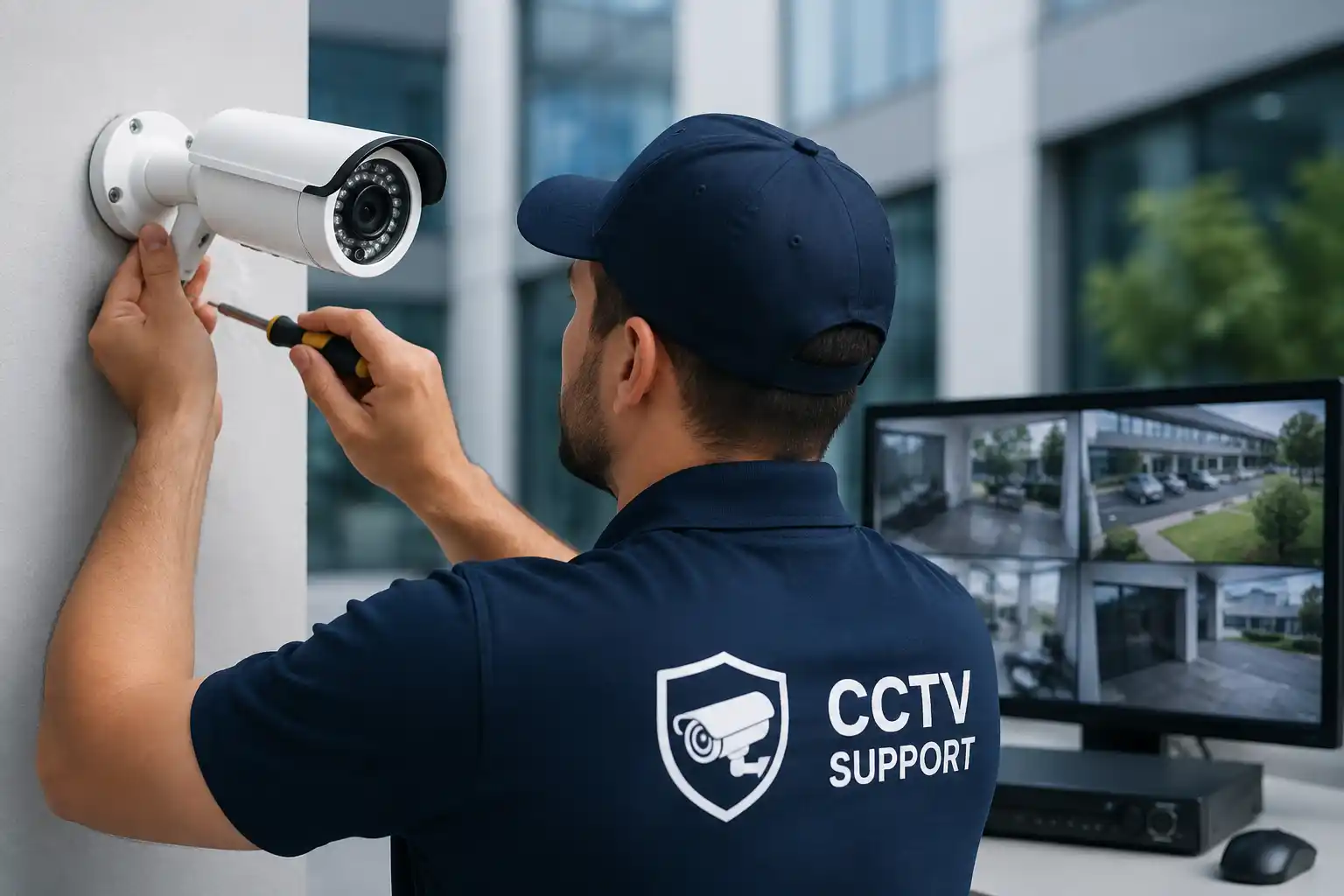
What maintenance should protect
A maintenance visit is not simply a camera-cleaning exercise. The useful result is a surveillance environment in which expected channels are online, recording is confirmed, image quality is appropriate for the intended view, storage behaviour is understood, and authorised access can be tested.
If any of those outcomes are uncertain, the maintenance scope may need diagnosis, configuration review, hardware inspection, network checks or a separate replacement recommendation.
What is CCTV maintenance and when should a business consider it?
CCTV maintenance is a structured review of the surveillance components and dependencies that allow cameras to provide usable live and recorded video. It is mainly used to identify faults, confirm recording, inspect physical and network connections, review storage behaviour, check viewing access, correct approved configuration issues and document recommendations for continued operation. Businesses should consider maintenance when cameras are offline, images have deteriorated, recordings are difficult to retrieve, storage warnings appear, remote viewing becomes unreliable, equipment has been moved or changed, or the system has not been checked for an extended period.
Before proceeding, the customer should confirm the business location, approximate camera count, recorder type if known, main symptoms, when the problem started, any recent electrical or network changes, available authorised administrator access, and whether physical site access can be arranged. These details help determine whether initial remote checks are practical or whether an on-site inspection is the more useful first step. Final maintenance scope remains subject to assessment and quotation.
What a business CCTV maintenance service may cover
Cameras and image path
Depending on the system, maintenance may include visual inspection of cameras and housings, mounting condition, lens cleanliness, image sharpness, field of view, day and night behaviour, power availability and evidence of environmental exposure. A poor image does not automatically mean the camera has failed; focus, lighting, obstruction, connector condition, power, stream settings or recorder display can also influence what users see.
Recorder and storage
Network video recorders and digital video recorders may require review of channel status, recording schedules, storage health indications, available capacity, playback, export functions, event settings and time synchronisation. Where a drive shows errors or capacity no longer matches the retention requirement, the next action may involve a separate replacement or storage-planning scope rather than a simple configuration change.
Network and remote access
IP surveillance can depend on switches, PoE, structured cabling, addresses, gateways, firewall policy, DNS, internet service and authorised viewing applications. Maintenance may include checks that help isolate whether the issue is at the camera, local network, recorder, internet connection or remote application. Any change to network or remote access should be authorised, controlled and documented.
Users and operational readiness
A technically online system can still be difficult to use if staff do not know where recordings are stored, which account is authorised, how cameras are named or what to do when a channel fails. The agreed scope may include user-access review, clear camera naming, playback checks, simple operator guidance and maintenance notes so the business can identify new faults earlier.
Who may need CCTV maintenance in Dubai?
Maintenance may be relevant to a small office with a few cameras, a retail site where recordings support incident review, a warehouse with many wide-angle views, a clinic or training centre that needs reliable common-area monitoring, a hospitality property with multiple surveillance zones, or a multi-branch business that wants more consistent surveillance administration.
The reason for contacting a maintenance provider is often operational rather than technical. Managers may discover that a camera has been offline for days, a specific date cannot be played back, a mobile app no longer connects after an internet change, storage seems to overwrite sooner than expected, or a newly moved camera is no longer giving the intended view. These situations require evidence and testing before the cause or corrective action is confirmed.
Maintenance is also useful before a fault becomes urgent
Preventive reviews can be scheduled around business needs to confirm whether expected cameras are online, recording can be retrieved, time settings are sensible, storage behaviour is known, viewing accounts remain appropriate and obvious physical issues are identified. The frequency should be based on the environment, criticality, equipment condition and agreed maintenance plan rather than an assumed universal interval.
A preventive visit may reveal recommendations that sit outside routine maintenance, such as damaged cabling, a failing storage drive, an unsuitable power source, an obsolete recorder, restricted network capacity or a camera position that no longer matches the operational requirement. Those findings should be explained and quoted separately where additional work is needed.
Common symptoms and what they may involve
The same symptom can come from different technical layers, so maintenance should avoid assuming a failed camera or recorder before evidence is collected. A black image may relate to power, a disconnected cable, PoE, a camera fault, a recorder channel, display settings or network reachability. Missing playback may relate to recording schedules, storage, time settings, camera registration or a failed drive. Remote viewing failure may involve user credentials, application settings, internet service, firewall policy or a recorder-side connectivity problem.
| Observed issue | Possible technical areas | Useful next step |
|---|---|---|
| One camera is offline | Camera power, connector, cable, PoE port, address, recorder registration or hardware condition. | Confirm when it failed and whether any cabling, switch or power work happened recently. |
| Several cameras disappear together | Shared power, PoE switch, uplink, recorder, network segment or electrical issue. | Treat the shared dependency as a priority instead of replacing cameras individually. |
| Video is blurred or too dark | Lens cleanliness, focus, lighting, reflections, obstruction, exposure settings, camera capability or physical angle. | Review the intended viewing objective and inspect the actual scene conditions. |
| Recordings cannot be found | Schedule, storage, drive health, channel status, timestamp or playback method. | Test a known recent period and compare live status, time and storage indicators. |
| Mobile viewing stopped | Application, account, password, internet, router, firewall, address or recorder connectivity. | Confirm whether local viewing still works and whether internet or firewall settings recently changed. |
| Storage seems too short | Drive capacity, camera count, bitrate, resolution, frame rate, recording mode or failed storage. | Define the required retention goal before changing stream or storage settings. |
Business impact when CCTV faults remain unresolved
Missing evidence
A camera that appears live today may still have a recording problem. If playback is not tested, the business can discover the gap only when an incident needs to be reviewed.
Reduced operational visibility
Offline channels, poor angles or unclear images can make it harder for authorised staff to review entrances, loading areas, counters, corridors or other monitored zones.
Repeated support cost
Temporary fixes can recur when shared causes such as power, cabling, storage or network stability are not identified and documented.
Difficult administration
Unclear camera names, shared accounts, undocumented recorder settings and unknown storage behaviour increase dependence on trial and error during incidents or staff changes.
Possible maintenance scope
Depending on the confirmed scope, FourTeck assistance may include an initial consultation, remote diagnosis, on-site inspection, camera and channel checks, recorder review, recording and playback verification, storage-health review, user-access checks, network connectivity testing, cable and power inspection, approved configuration correction, image-quality review, time synchronisation checks, documentation and preventive recommendations. Not every activity is required for every site, and hardware replacement, major cabling work, construction access, new licenses, specialist vendor tasks or broader infrastructure changes may require separate approval.
Service-fit matrix for CCTV maintenance requests
| Business situation | Relevant assistance | What must be confirmed |
|---|---|---|
| A few cameras are intermittently offline | Camera, power, cable, PoE, switch, recorder registration and network checks. | Affected channels, timing, recent changes and access to relevant network or recorder equipment. |
| Playback or export is unreliable | Recording schedule, time, storage, drive indicators, playback and export workflow review. | Required date range, expected retention and whether historical recordings are already missing. |
| The business wants preventive maintenance | Agreed checklist across camera status, recorder, storage, network, physical condition and authorised access. | Asset count, site layout, critical areas, maintenance frequency and exclusions. |
| Remote viewing failed after an internet change | Local recorder connectivity, application, internet and approved network-access review. | What changed, whether local viewing works, and who can authorise router or firewall checks. |
| Older equipment has recurring faults | Condition assessment, fault isolation, maintainability review and replacement planning if justified. | Model information, available parts, compatibility, retention needs, budget priority and approved scope. |
CCTV maintenance service information
| Main purpose | Maintain usable live video, recording, storage, connectivity and authorised access, and identify corrective actions where faults are found. |
|---|---|
| Suitable for | Business sites with existing CCTV, recurring surveillance faults, uncertain recording status, planned preventive checks or changes affecting the system. |
| Typical systems involved | IP or analogue cameras, NVR or DVR, storage drives, PoE switches, power supplies, cabling, monitors, local network and authorised viewing applications. |
| Assessment method | Remote checks where practical, on-site inspection when physical or local testing is required, or a combination based on the issue. |
| Customer access required | Authorised access to relevant equipment, viewing software, recorder administration, network information and site areas as needed. Credentials should be shared only through an approved secure method. |
| Testing and validation | Scope dependent; may include live view, playback, channel status, timestamp, storage indication, remote access, connection stability and agreed user checks. |
| Maintenance guidance | Frequency and checklist should match system criticality, site conditions, equipment age, environment and agreed service plan. |
| Vendor coordination | May be required when firmware, licenses, cloud services, proprietary applications, warranties or manufacturer-specific faults are involved. |
| Service location | Dubai and UAE service coordination, subject to location, access, scheduling and approved scope. |
| Quotation | Required scope and commercial terms depend on the environment, work requested, parts or licenses if needed, access and service method. |
When remote CCTV maintenance support can help
Remote assistance can be a useful first step when the internet is working, secure access is authorised, the recorder or viewing application is reachable, and the issue appears related to settings, user access, playback, recording schedules, logs or network configuration. A local staff member or administrator may need to confirm what is visible on the recorder, power state or cabling while remote checks are performed.
Remote support is not a substitute for physical inspection. A camera with water exposure, a damaged connector, a weak power supply, a loose mount, dirty lens, failing hard drive or suspect cable can require hands-on testing. If remote evidence points to a physical issue, an on-site visit may be recommended rather than continuing with configuration changes that do not address the underlying problem.
When an on-site visit is usually more appropriate
On-site assistance is usually more useful when camera hardware must be inspected, cabling or connectors require testing, PoE or local power must be measured, the recorder cannot be reached remotely, several channels fail through a shared local dependency, physical access to a rack is needed, image angle or focus must be reviewed, or storage hardware needs condition assessment.
Site work also depends on practical access. The customer may need to arrange building permission, safe access to camera locations, lift or access-equipment coordination where applicable, rack keys, electrical or network room access, and an authorised contact who can confirm the operational objective. Scheduling and the exact work plan are confirmed after scope review rather than assumed in advance.
How a CCTV maintenance assessment is normally approached
A useful maintenance visit follows evidence rather than guesses. The order can change according to the fault, but the process usually starts with business impact and then works through the system dependencies that could produce the reported symptom.
- Define the impact. Confirm which areas, cameras, users or recording periods are affected and why the issue matters operationally.
- Collect evidence. Record camera numbers, error messages, screenshots, recorder warnings, recent changes and the approximate time the fault began.
- Confirm access and authorisation. Identify who can approve recorder, network or account changes and whether current configuration information or backups are available.
- Check shared dependencies first where appropriate. If multiple cameras fail together, review common power, switch, uplink, recorder or network conditions before treating each camera as a separate fault.
- Test the affected path. Follow the route from camera and power through cabling or network to the recorder, storage, display and authorised remote viewing point.
- Isolate the likely cause or scope. Distinguish configuration, connectivity, storage, hardware and third-party dependencies using repeatable evidence.
- Agree corrective action. Explain what can be adjusted within the approved visit and what needs separate parts, access, vendor assistance or quotation.
- Validate and record. Re-test the intended function, note remaining limitations and provide the next maintenance or improvement recommendation.
Preventive maintenance should follow the actual surveillance journey
A preventive checklist is most useful when it follows how surveillance information moves through the site. The camera captures a scene, receives power, sends video through cable or network, registers with a recorder, writes data to storage, displays live and recorded images, and allows authorised users to retrieve what they need. A weakness at any stage can reduce the usefulness of the entire chain even when other components appear healthy.
Testing, validation and handover after maintenance
Maintenance is not complete simply because an error message disappears. The result should be checked against the original business concern. If the complaint was an offline camera, the camera should be confirmed at the expected viewing point and, where applicable, recording should be checked. If the issue was missing playback, a known recent period should be retrieved. If the complaint was remote access, local and remote behaviour may need to be distinguished so that an internet or application issue is not confused with a camera fault.
Validation can also reveal limits. A camera may return online but still show a poor angle. A storage drive may continue operating while indicating that replacement planning is sensible. A remote application may work after a configuration correction but still depend on a third-party service or account outside FourTeck’s control. These points should be documented rather than hidden behind a simple “working” label.
The handover should explain what was checked, what was changed, what was not changed, any remaining risk, any recommended replacement or infrastructure work, and how the customer can report a recurrence. Where administrator details or configuration records are updated, they should be handled through the customer’s approved secure process rather than placed in public notes.
Protect recording usefulness, not just camera uptime
A camera can appear online while recording is disabled, storage is unhealthy, the timestamp is wrong or retention is shorter than expected. Maintenance therefore needs to include the recorder and storage path when recording matters to the business.
The exact checks depend on the recorder and configuration. The practical objective is to know whether the expected channels are recording, whether recent playback is available, whether time is sensible and whether storage indicators suggest a problem that needs further action.
Keep image quality aligned with the operational view
Image quality is contextual. A general corridor view, an entrance, a loading area and a cash counter may need different framing and detail. Maintenance can identify whether the current image still supports the intended use after furniture changes, renovations, lighting changes or accidental camera movement.
Cleaning or refocusing may help some issues, but other limitations can come from lighting, obstruction, camera capability, mounting position or environmental conditions. A maintenance report should separate simple adjustments from design changes or replacement decisions.
Make the surveillance system easier to support later
Repeated CCTV faults become harder to manage when camera names are unclear, network details are unknown, recorder access belongs to a former employee or there is no record of previous changes. Maintenance can be an opportunity to improve basic documentation and ownership.
Useful records may include camera naming, affected areas, recorder location, relevant network dependencies, authorised contacts, known limitations and outstanding recommendations. Documentation should support troubleshooting without exposing passwords or sensitive access details.
Dependencies, access and customer inputs
CCTV maintenance often crosses several technical and operational boundaries. A camera may be physically maintained by one party, connected through a network managed by another, recorded on equipment administered by the customer, and viewed through an application or cloud service provided by a third party. The maintenance scope should identify those boundaries before changes are made.
FourTeck may need authorised access to the recorder, relevant cameras, network switch or firewall information, local display, viewing application, and physical areas of the site. The customer should identify an authorised contact who can approve changes and confirm whether building or security permission is required. If a network or firewall is managed by another provider, coordination may be necessary before remote-viewing or IP camera issues can be resolved.
Passwords, private keys and other credentials should not be placed in public forms or page comments. They should be shared only through an approved secure method after identity and authorisation are confirmed. Where a configuration change could affect recording or access, backup or rollback considerations should be reviewed where the platform supports them.
Important limitations and exclusions to confirm
Diagnosis depends on the evidence and access available at the time of service. Intermittent faults may require monitoring or repeated observation. A hardware failure may require parts or replacement outside the original maintenance labour scope. Proprietary firmware, cloud services, licensing or vendor-locked functions may require manufacturer or original-provider involvement. Building cabling, high-level access equipment, civil work or electrical repair may also need separate coordination.
Maintenance cannot recreate recordings that were never recorded or have already been overwritten. Data recovery from failed storage cannot be guaranteed. Security improvements can reduce exposure but cannot guarantee complete protection. Unsupported or legacy equipment may have limited repair, update or integration options, and compatibility should be confirmed before replacement or upgrade work.
On-site work depends on location, safe access, scheduling, building rules and the confirmed scope. Commercial terms, parts, licenses, third-party charges and recurring maintenance inclusions should be stated in the approved quotation or service agreement.
Business environments where maintenance may be useful
Offices and professional workplaces
Maintenance can focus on entrances, common areas, reception views, recorder reliability and authorised management access without treating the surveillance system as an isolated appliance.
Retail and showroom locations
Useful checks may include image clarity around key areas, recording retrieval, camera naming and maintenance of views that can change when displays or shelving are rearranged.
Warehouses and logistics sites
Long cable paths, PoE dependencies, exposed locations, changing layouts and wide coverage zones can make fault isolation more dependent on physical inspection and network understanding.
Clinics, training centres and hospitality sites
Maintenance can help confirm system availability and user access while the customer remains responsible for its own privacy, policy and regulatory obligations.
Multi-branch businesses
A maintenance plan can benefit from consistent camera naming, site contacts, recorder records, escalation paths and a clear distinction between remote checks and site-specific physical work.
Property and facility-managed sites
Coordination may involve building access, network rooms, common-area equipment and multiple responsible parties, so ownership and authorisation should be clarified before changes.
Operational, security and lifecycle considerations
Good maintenance balances availability with controlled access. Remote viewing should not be opened broadly simply because it is convenient. Accounts should be appropriate for the user’s role, former-user access should be reviewed, shared administrator credentials should be avoided where the platform and customer process allow, and changes to network exposure should be authorised. These controls support safer administration but do not replace the customer’s wider security policy.
Lifecycle planning also matters. Cameras, recorders, storage devices, power supplies and switches do not age at the same rate. A recurring fault may be more economically and operationally sensible to address through planned replacement rather than repeated temporary repair. That decision should consider current condition, availability of compatible parts, future expansion, required image quality, storage goals and compatibility with the rest of the environment.
Maintenance records help with this decision. Instead of replacing equipment only when it fails, the business can see which channels repeatedly cause incidents, which storage devices show concern, whether network capacity is becoming restrictive, and whether the existing recorder still supports the required number of cameras or operational workflow. Recommendations remain subject to assessment and budget approval.
Before you contact FourTeck about CCTV maintenance
Preparing basic information can make the first assessment more useful and reduce time spent identifying the environment. You do not need to know every technical detail; provide what is available and clearly mark what is unknown.
- The Dubai or UAE service location and site contact.
- Approximate number of cameras and how many are affected.
- Whether the system uses an NVR, DVR or another recording arrangement.
- The main symptom, error message or user complaint.
- When the issue started and whether it is constant or intermittent.
- Recent power, internet, firewall, switch, cabling or equipment changes.
- Whether live local viewing still works.
- Whether recent playback and export have been tested.
- Recorder and camera model details if readily available.
- Whether authorised administrator access can be arranged securely.
- Whether the system or network is managed by another vendor.
- Any required building access, permit or security escort.
- The operational importance of the affected camera or recording.
- Preferred remote or on-site assessment, subject to technical suitability.
Checklist for defining the maintenance quotation
A maintenance quotation should state what is being assessed and what is outside scope. Confirming the following points helps prevent a routine visit from being confused with an installation, upgrade or major repair project.
- The exact objective: preventive review, fault investigation, recording check, image-quality issue, remote-access issue or a combination.
- The number of sites, recorders and cameras included in the requested scope.
- Whether physical camera access is required and whether safe access arrangements are available.
- Whether network switches, PoE, firewall or internet dependencies are included in diagnosis.
- Whether storage health, playback and retention behaviour must be reviewed.
- Whether authorised remote viewing and user-account checks are required.
- Whether configuration changes can be made during the visit or require separate approval.
- Whether replacement parts, drives, cameras, power supplies or cabling are excluded until assessed.
- What testing, maintenance notes or handover information the customer expects.
- Whether recurring maintenance is being considered after the initial assessment and what assets it should cover.
How FourTeck can assist with CCTV maintenance
FourTeck’s role can begin by clarifying the reported surveillance problem and identifying which technical layers need to be checked. A camera fault may involve the camera itself, but it may also involve power, cable, PoE, switching, addressing, recorder registration, storage, display, user permissions or remote connectivity. Looking at those relationships helps avoid unnecessary replacement and helps define when another vendor or specialist is needed.
For preventive work, FourTeck can help define a maintenance checklist around the actual installed environment rather than applying an identical list to every site. The scope can include remote review where useful, planned on-site inspection for physical items, validation of recording and playback, documentation of findings and recommendations for corrective work or future maintenance.
Where a broader IT dependency is involved, the CCTV issue can be considered alongside network, firewall, internet, switching and user-access requirements. This can be especially useful for IP camera systems where the video path crosses infrastructure outside the recorder itself. Any configuration work should remain authorised and should be tested after change.
To understand FourTeck’s wider business technology scope, customers can review the FourTeck IT Services website and the company service approach. A final maintenance or corrective-work quotation is prepared from the confirmed environment, requested outcomes, access conditions and work required.
Dubai and UAE CCTV maintenance coordination
For a Dubai CCTV maintenance request, the first planning question is whether useful checks can begin remotely or whether the issue requires physical access to cameras, recorder, storage, rack, power or cabling. Remote or on-site assistance depends on the fault, authorisation, location, urgency, site access and approved quotation. An on-site visit may be recommended when physical inspection, cabling tests, equipment access, camera-position review or local network checks are required.
Service coordination across Dubai, Abu Dhabi, Sharjah and Ajman can involve remote troubleshooting, planned site visits, preventive checks, corrective maintenance or wider project assistance depending on the confirmed scope. Scheduling, travel, building access, equipment availability, site conditions and third-party dependencies can affect the service plan. FourTeck should be contacted to confirm the appropriate service method and scheduling options for the specific location.
Where a site has multiple branches, it can be useful to start with a system inventory and a consistent fault-reporting format. That allows remote checks and future site visits to use the same camera names, recorder details, contact information and maintenance notes rather than rebuilding the environment record each time.
Related FourTeck support areas
CCTV maintenance often overlaps with other business technology services. The following areas may become relevant when the fault extends beyond the surveillance device itself. Customers can review the FourTeck services overview to discuss connected requirements.
IP camera support
Useful when addressing, PoE, switch ports, network registration or camera-to-recorder communication is part of the issue.
Network support
Relevant when camera traffic, switching, VLANs, cabling or local connectivity affects video availability.
Firewall and remote-access support
May be required when authorised off-site viewing depends on controlled network access or internet changes.
Preventive IT maintenance
Can help a business coordinate CCTV checks with wider network, server, user and infrastructure maintenance planning.
Why businesses contact FourTeck for surveillance support
Businesses often need a practical explanation of what is failing and what must happen next, especially when several providers touch the same system. A surveillance issue can sit between CCTV hardware, network infrastructure, internet service, firewall policy, storage, viewing applications and building access. FourTeck can help organise that technical picture so the customer knows which layer is being tested, what information is missing and which actions require approval.
The service approach can include initial assessment, remote and on-site coordination, business-focused fault isolation, safe change planning, testing, documentation, vendor coordination and quotation scoping. The value comes from making the maintenance work understandable and traceable rather than from unsupported promises about instant attendance, guaranteed repair or universal compatibility.
Customers who want to understand how FourTeck handles broader support can review the FourTeck service profile. For a specific CCTV site, the most useful next step is to share the current symptoms, camera count, recorder information, location and access situation so the maintenance scope can be confirmed.
Questions Dubai businesses ask before arranging CCTV maintenance
Can a CCTV problem be checked remotely before booking a site visit?
Yes, some problems can be assessed remotely when the recorder or viewing environment is reachable, the internet connection works and authorised access can be provided. Remote checks may help establish whether local live view works, whether cameras are registered, whether recording schedules are active, whether storage warnings are visible, whether a user account is functioning and whether the fault began after a network or internet change. This can narrow the scope before an on-site visit. It cannot confirm physical camera condition, cable damage, connector quality, lens cleanliness, mounting, water exposure, actual PoE delivery or storage hardware condition when those items require hands-on testing. If the evidence points to a physical fault, on-site inspection is usually the more productive next step.
How do we know whether a camera needs repair, replacement or only configuration?
The decision should come from fault isolation, not the symptom alone. If a camera is offline, the maintenance check may need to confirm power, cable continuity or link status, PoE port, network address, recorder registration and the camera response before a hardware failure is concluded. A camera with an unclear image may need cleaning, focus correction or angle review, but it could also be limited by lighting, obstruction or the camera’s capability for the scene. Replacement becomes a stronger option when hardware is confirmed faulty, repeat incidents make the device uneconomical to maintain, compatibility is restricted, or the existing equipment no longer meets the operational requirement. The quotation should separate repair or configuration work from replacement supply and installation when replacement is not already in scope.
What should we check if live video works but recordings are missing?
Live video and recording are separate outcomes, so the recorder and storage path should be reviewed. Useful checks can include whether the relevant channel is enabled for recording, whether the schedule matches the required time, whether the system time is correct, whether storage is detected, whether any drive warning is present and whether playback works for a recent known period. If older footage is already overwritten or was never recorded, maintenance cannot reconstruct it. The business should therefore explain the expected retention period and any critical dates before changes are made. If storage capacity is too small for the required number of cameras, resolution or recording mode, a storage-planning or recorder-upgrade discussion may be needed.
Why does mobile CCTV viewing stop after a router or internet change?
Remote viewing depends on more than the camera. The viewing application, user account, recorder connectivity, local network, router, firewall, internet service and any vendor-provided remote service may all be part of the path. A change to internet equipment, addressing or firewall policy can therefore affect off-site access even while local viewing remains normal. The first useful distinction is whether the CCTV system still works on the local network. If it does, the maintenance scope can focus more closely on the remote path. Any router or firewall change should be authorised and should avoid unnecessary internet exposure. Where another provider manages the network, coordination may be required rather than making unapproved changes.
Should CCTV maintenance be a one-time visit or a recurring service?
Either can be appropriate. A one-time visit may suit a clearly reported fault, a system health check before a move, or a customer that wants an independent review of a specific concern. Recurring maintenance may be more useful when the site has many cameras, difficult physical locations, critical surveillance areas, repeated storage issues, multiple branches or a need for consistent reporting. The frequency and included checks should be defined from the installed assets, environment and business risk rather than promised as a generic schedule. A recurring plan should also state exclusions, how faults are reported, what remote and on-site work is covered, whether replacement parts are separate, and how recommendations are approved.
What information helps get an accurate CCTV maintenance quotation?
The most useful information is the service location, number of cameras and recorders, known system type, reported symptoms, number of affected channels, business impact, recent changes, available administrator access, whether network or firewall checks may be needed, and whether cameras require physical access. If the customer wants preventive maintenance, it also helps to state whether the objective includes recording verification, image review, storage checks, remote access, user accounts, documentation or a repeat maintenance plan. The quotation can then distinguish assessment from corrective work, replacement parts, cabling, access equipment, vendor coordination and project work. Clear exclusions are as important as included tasks because CCTV faults can cross several technical layers.
Can maintenance improve a camera view that has become less useful?
Maintenance can help determine why the view is less useful and whether a simple adjustment is enough. Dust, focus, accidental movement, a new obstruction, changed lighting or display settings can affect the image. In other cases, the physical location or camera capability may no longer match the business objective because the space has been renovated, shelves moved, an entrance changed or the monitored area expanded. The maintenance review should start with the intended viewing requirement rather than adjusting the camera without context. If a different camera position, additional cabling or replacement device is needed, that work should be planned separately so coverage, compatibility and installation access are considered properly.
What if several cameras fail at the same time?
Several simultaneous failures often justify checking shared dependencies before individual cameras. A group of IP cameras may share one PoE switch, uplink, network segment or power source. Analogue channels may share power distribution or a recorder-side issue. Treating each camera as a separate failed device could waste time and miss the real cause. The customer should note which cameras failed, whether they are in the same area, whether any switch, electrical or cabling work happened recently, and whether the recorder itself shows alerts. This information can help the technician choose an efficient test sequence and decide whether remote evidence is sufficient or a site visit is needed.
How should a business prepare for an on-site CCTV maintenance visit?
Arrange an authorised contact who understands the reported problem and can approve access to relevant equipment. Confirm the recorder location, rack or cabinet access, network-room permission, camera areas, building rules and any safety or access-equipment requirements. Keep available system information such as camera count, recorder model, recent changes, network provider details and previous maintenance notes. If the work may affect recording, internet access or network configuration, identify a suitable change window and the person who can approve it. Do not publish credentials in advance; use the agreed secure method after authorisation is confirmed. These preparations reduce uncertainty and help separate inspection from work that needs extra equipment, vendor support or a new quotation.
When should we contact FourTeck rather than continue trying temporary fixes?
Contact FourTeck when the fault affects recording or important views, keeps returning after resets, involves several cameras, began after network or power changes, requires access to a recorder or switch that staff should not alter, or cannot be explained from the information available. It is also sensible to request an assessment when the business is unsure whether the issue is CCTV hardware, network, storage or remote access, because uncoordinated changes can make diagnosis harder. Share the observed symptom, business impact, affected channels and what has already been tried. FourTeck can then help determine whether the next step should be remote diagnosis, an on-site maintenance visit, vendor coordination or a separately planned upgrade or replacement project.
Frequently asked questions about CCTV maintenance in Dubai
Does CCTV maintenance include every repair and replacement?
No. The maintenance visit should define what inspections, tests and approved corrective tasks are included. Failed cameras, storage drives, power equipment, cabling, access equipment, licenses or major replacement work may require a separate quotation depending on the confirmed scope.
Can FourTeck check an NVR or DVR that still shows live video?
Yes, the recorder may still need maintenance even when live view is available. Recording schedules, timestamps, storage indicators, playback, channel status and export behaviour can be assessed according to the system and access available.
Can an offline IP camera be caused by the network?
Yes. IP cameras rely on power, PoE, cabling, switching, addressing and connectivity to the recorder or management environment. A camera should not be declared failed until relevant shared and local dependencies have been checked.
Will maintenance recover missing CCTV recordings?
Maintenance can identify recording or storage issues and verify what footage remains accessible, but recordings that were never captured or have already been overwritten cannot be recreated. Recovery from failed storage is separate and cannot be guaranteed.
Is camera cleaning enough for preventive maintenance?
Cleaning can be useful, but preventive maintenance should also consider camera availability, recording, storage, time, physical condition, connectivity and authorised viewing. The checklist should match the installed environment and agreed maintenance objective.
Do you need administrator access to maintain the CCTV system?
Some checks can be completed without full administration, but configuration, recording, storage, user and network diagnostics may require authorised access. Credentials should be shared only through an approved secure method after identity and permission are confirmed.
Can maintenance be done outside normal business activity?
Scheduling depends on engineer availability, customer access, site rules and the confirmed work. If a change could interrupt recording or network service, the quotation or service plan should identify an appropriate maintenance window before the work begins.
Can FourTeck coordinate with our internet or CCTV vendor?
Vendor coordination may be included where it helps isolate a dependency involving internet service, proprietary applications, firmware, warranties or platform-specific functions. The exact responsibility and any third-party charges remain scope dependent.
What happens after the maintenance visit?
The useful handover should state what was checked, what was changed, whether the reported problem was validated, what limitations remain and which recommendations need separate approval. Recurring maintenance can then be discussed if the environment warrants it.
How do we request CCTV maintenance in Dubai?
Provide the site location, camera and recorder details if known, main symptoms, number of affected channels, recent changes, business impact and access situation. FourTeck can then help confirm whether remote assessment, an on-site visit or a broader project scope is appropriate.
Request a CCTV maintenance assessment
Share the CCTV issue, service location, approximate camera count, recorder information, recent changes and the business impact. FourTeck can review the available information, clarify what needs to be assessed and help define whether the next action is remote troubleshooting, an on-site maintenance visit, vendor coordination or a separately quoted repair or upgrade.
Service timing depends on engineer availability, customer access, site conditions, required parts, third-party providers and the confirmed work scope. For project planning, installation, configuration or ongoing maintenance requirements, make sure those items are specifically included in the approved quotation.
For wider technology assistance connected to surveillance, network, user devices, servers, communication systems or infrastructure, customers can use the FourTeck contact page to describe the environment and request a scope review.