
CCTV Camera Replacement in Dubai, UAE
A failed or unsuitable camera can affect recording coverage, incident review, remote viewing, and confidence in an existing surveillance system. FourTeck helps businesses assess the affected camera, confirm the surrounding technical dependencies, plan a compatible replacement, complete approved on-site work, and validate the result before handover.
The replacement scope depends on the current camera technology, recorder, cabling, power or PoE, network design, mounting conditions, image objectives, access, and any third-party or site requirements. The first step is therefore to understand the complete camera path rather than assuming that one device can be exchanged without further checks.
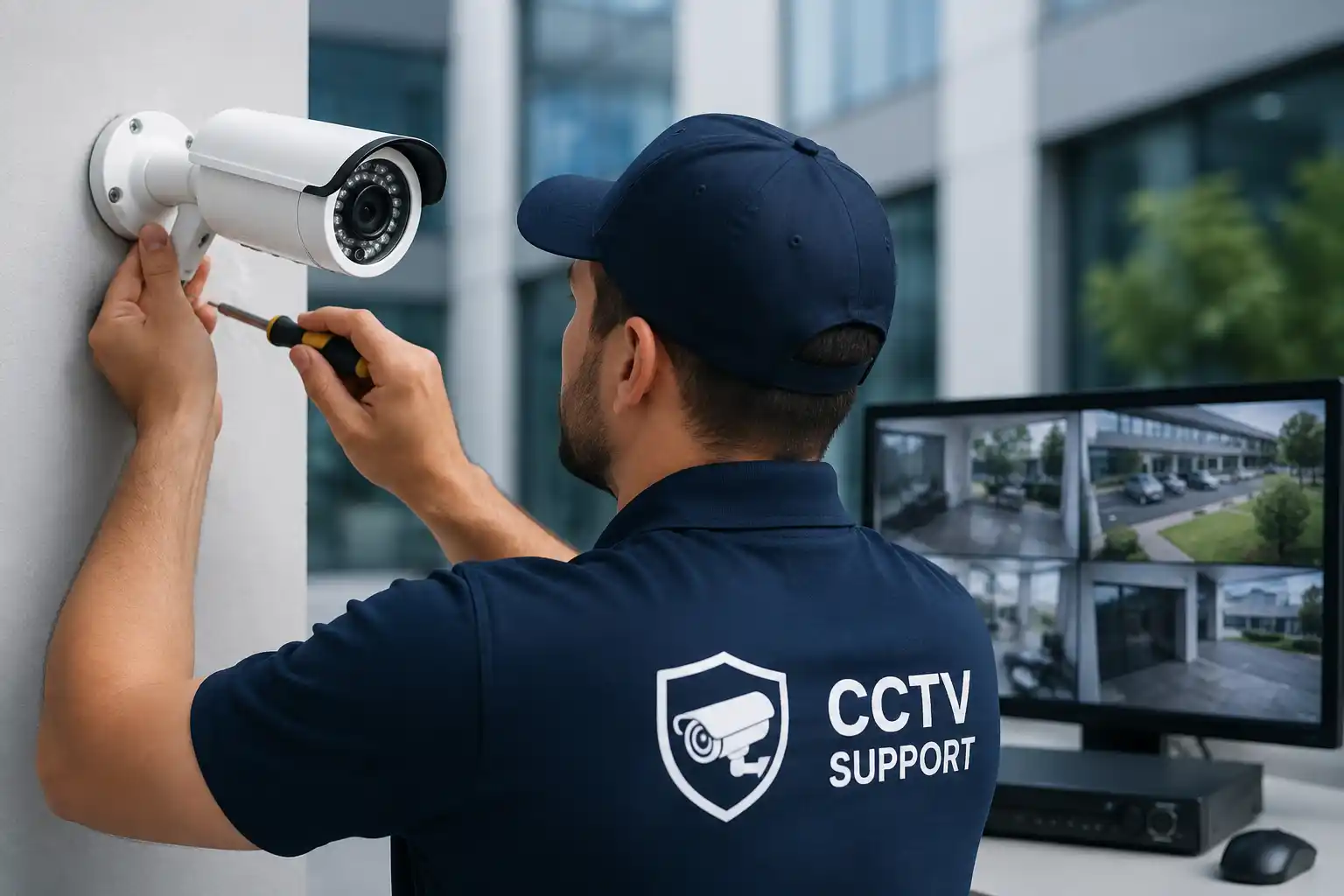
Confirm the actual fault and replacement requirement.
Check recorder, power, network, stream, and mounting dependencies.
Plan access, approved work, testing, and rollback considerations.
Verify viewing and recording, then record remaining actions.
What does CCTV camera replacement involve?
CCTV camera replacement is the process of assessing an existing surveillance point, confirming why the current camera should be replaced, selecting or validating a technically suitable replacement, installing it within the approved scope, and confirming that live view and recording work as intended. Businesses should consider replacement when a camera has failed, produces unusable images, has physical damage, repeatedly drops offline, no longer fits the required viewing area, or cannot reasonably meet the current system need. Before work is confirmed, the customer should be ready to share the site location, affected camera position, recorder or platform details if known, recent changes, access arrangements, business impact, and the expected view or recording outcome. Compatibility, mounting, cabling, power, network, recorder capacity, and site conditions must be assessed before the final scope and quotation are confirmed.
Why a camera replacement should be assessed as part of the whole CCTV path
A camera is only one part of a surveillance chain. The image begins at the lens and sensor, but the usable result depends on how the device is powered, how the signal reaches the recorder or network, how the video stream is accepted, how storage is configured, how the system keeps time, and how authorised users view or retrieve recordings. A camera that appears faulty may actually be affected by damaged cabling, a failed connector, insufficient PoE power, an unstable switch port, an incorrect network address, a recorder channel problem, a storage fault, a configuration mismatch, or a power-supply issue. That is why FourTeck begins by separating the visible symptom from the underlying technical layer.
For analogue and HD-over-coax environments, the condition of the cable path, connectors, baluns where used, power delivery, recorder input, camera format, and local environment can affect the outcome. For IP camera environments, the replacement decision may also involve switch capacity, PoE budget, VLAN design, addressing, gateway settings, stream profiles, recorder compatibility, credentials, firmware support, bandwidth, storage consumption, and remote-viewing configuration. The exact checks depend on the installed system, and a replacement should not be assumed compatible only because the new camera has a similar shape or advertised resolution.
The physical installation matters as well. A replacement unit may need a different junction box, mounting plate, weather protection, cable entry, bracket, or orientation. A new field of view can introduce blind areas, glare, backlight, reflections, or an angle that captures less useful detail than the original. Indoor and outdoor locations can have different environmental considerations, and the existing mounting surface must be suitable for the proposed work. These factors should be reviewed before the replacement is treated as complete.
What the service may cover
Depending on the confirmed scope, assistance may include fault review, camera and recorder checks, cable or power testing, network reachability checks, PoE assessment, replacement planning, physical camera change, mounting adjustment, recorder registration, stream configuration, live-view verification, recording checks, time verification, authorised remote-view review, image adjustment, documentation, and recommendations for remaining faults or lifecycle issues.
Who may need this service
The service may suit offices, retail locations, warehouses, clinics, hospitality sites, property-management locations, schools, showrooms, construction offices, logistics sites, and multi-branch organisations with an existing CCTV system. It can also be relevant where only one camera is affected, where several devices are reaching the end of useful service, or where a site is changing its surveillance coverage and needs selected camera positions reviewed before replacement.
Common signs that a CCTV camera may need replacement or deeper assessment
No video or repeated offline status
A camera that disappears from the recorder, shows no image, or repeatedly reconnects may be faulty, but the same symptom can come from power, PoE, cabling, switching, addressing, recorder configuration, or a damaged connector. Replacement should follow evidence rather than assumption.
Image quality no longer supports the task
Blur, haze, colour problems, poor night performance, glare, damaged covers, unstable focus, or an unsuitable viewing angle can reduce the practical value of a camera. Cleaning, adjustment, lighting, lens, settings, or positioning may sometimes be relevant before replacement is approved.
Physical damage or environmental wear
Impact damage, water entry, corrosion, damaged seals, broken mounts, loose housings, or exposed cable entries can justify physical inspection. The replacement plan may need to address the mounting surface or cable protection as well as the camera itself.
Recorder or platform changes
A recorder upgrade, network redesign, office relocation, switch replacement, or wider CCTV refresh can create a need to replace selected cameras. Compatibility must be confirmed against the intended recorder, network, storage, licensing, and management method where applicable.
Coverage requirements have changed
A camera can still function but no longer show the right area after shelves, partitions, entrances, counters, machinery, or traffic routes change. Replacement may involve a different lens, position, field of view, or form factor, subject to the site and operational requirement.
Recurring faults consume support time
Repeated resets, intermittent links, unstable recording, or ongoing service visits can make replacement worth evaluating. A useful decision compares the camera condition with the health of the supporting cable, power, switch, recorder channel, storage, and network so that the same fault is not carried into the new installation.
Business impact when a weak surveillance point is left unresolved
A missing or unreliable camera can create a gap between what a business assumes is being recorded and what is actually available when an incident needs to be reviewed. The impact may include incomplete visual evidence, delayed investigation, repeated staff checks, reduced visibility around entrances or operational areas, unnecessary support visits, and uncertainty about whether other parts of the system are affected. In a multi-camera environment, a recurring problem can also indicate a wider dependency such as a weak power source, damaged cable route, overloaded PoE switch, recorder channel issue, storage problem, or unmanaged network change.
Replacement planning therefore should focus on restoring a dependable surveillance function, not merely installing another device. The useful outcome is a camera position that can be viewed, recorded, retrieved, maintained, and understood within the wider system. Where the root issue sits outside the camera itself, the quotation or corrective plan may need separate work on cabling, power, switching, recording, storage, network configuration, or third-party services.
Possible CCTV camera replacement assistance
The exact service is defined after assessment. A single replacement may be relatively contained, while a group of replacements can become a wider upgrade project if the recorder, cabling, power, network, storage, or viewing environment also needs change. Depending on the approved quotation, FourTeck assistance may include the following activities.
Review the reported symptom, current image, camera condition, recorder status, and any recent changes before deciding whether a replacement is the appropriate next step.
Confirm relevant recorder, cabling, power, PoE, network, stream, storage, mounting, and access requirements. Additional vendor or platform checks may be required where compatibility is not clear.
Remove the approved failed or outdated unit, inspect the immediate installation point, mount the replacement where suitable, connect the required cable or power path, and make controlled configuration changes within scope.
Where applicable, add or update the camera in the NVR, DVR, VMS, network, or viewing environment using authorised access and configuration information supplied or approved by the customer.
Check live view, intended field of view, basic image usability, timestamp, recording status, playback, and authorised viewing path. More advanced tuning may require additional site or platform work.
Record what was changed, identify outstanding risks or dependencies, and recommend further work where the wider CCTV environment needs maintenance, cabling repair, recorder work, storage review, or planned refresh.
Service-fit matrix: when replacement may be the right next step
| Business situation | Relevant assistance | What must be confirmed |
|---|---|---|
| One camera has no image | Fault isolation, power or link checks, camera assessment, replacement if approved. | Whether the fault is actually the camera rather than cabling, power, switch, recorder, or configuration. |
| Camera works but image is no longer useful | View review, cleaning or adjustment check, positioning assessment, replacement planning where needed. | Required detail, lighting, lens or field of view, mounting point, and recorder support. |
| Several older cameras fail intermittently | Grouped assessment, lifecycle review, staged replacement options, supporting infrastructure checks. | Whether common power, cable, network, switch, or recorder problems are contributing to multiple symptoms. |
| Recorder or network is being upgraded | Compatibility review and replacement planning for cameras that cannot be retained. | Protocol or format support, licensing where applicable, bandwidth, storage, power, and migration sequence. |
| Site layout has changed | Coverage review, new camera position or replacement type assessment, installation planning. | Operational objective, mounting permission, cable route, lighting, environment, and recording requirement. |
| Physical damage is visible | On-site inspection, removal, mounting review, replacement and validation where approved. | Damage to the camera, bracket, cable, junction point, weather protection, and supporting surface. |
CCTV replacement service information
| Service topic | CCTV camera replacement for existing business surveillance systems. |
|---|---|
| Main purpose | Assess a failed, damaged, unsuitable, or outdated camera position and complete a controlled replacement within the confirmed scope. |
| Typical systems involved | Cameras, NVR or DVR, cabling, PoE or local power, switches, storage, network services, viewing software, monitors, remote-viewing paths, and mounting hardware. |
| Assessment method | Remote review where safe and practical, plus on-site inspection when physical testing, mounting, cable checks, or replacement work is required. |
| Remote support suitability | Access dependent. Remote checks may help with recorder status, network reachability, logs, configuration, playback, or system information when authorised access is available. |
| On-site support suitability | Usually required for physical camera replacement, cable testing, mounting, power checks, environmental inspection, viewing-angle adjustment, or inaccessible systems. |
| Customer information required | Location, affected camera, symptoms, recorder details if known, recent changes, access arrangements, business impact, expected view, and authorised technical contact. |
| Testing and validation | Scope dependent. May include live view, field of view, recording, playback, timestamp, authorised user access, and network or recorder status. |
| Security considerations | Authorised access, controlled credentials, unnecessary exposure avoidance, account review, secure remote access design, and documented configuration where applicable. |
| Scheduling dependency | Depends on engineer availability, site access, confirmed scope, required equipment, customer approvals, building conditions, and third-party dependencies. |
| Quotation requirement | A quotation should define labour, replacement equipment if applicable, configuration, access requirements, testing, documentation, exclusions, and any separate corrective work. |
| Important note | The final replacement choice and work scope are environment dependent and subject to assessment. |
Can CCTV replacement be checked remotely, or is an on-site visit required?
Remote assessment may help when
The recorder, camera management interface, or network can be accessed through an approved secure method and an authorised customer contact is available. Remote work may help establish whether the camera is online, whether the recorder sees it, whether the stream is being recorded, whether playback is available, whether the channel configuration changed, or whether the camera has a reachable network address. It can also help collect model, firmware, recorder, storage, and configuration information before an on-site visit.
Remote review does not replace physical inspection where the symptom may involve cabling, power, mounting, water ingress, damaged connectors, loose hardware, environmental conditions, or a device that is completely inaccessible.
On-site assistance is usually needed when
The camera has to be removed or replaced, the cable or connector must be tested, local power or PoE needs physical verification, the bracket or junction box must be checked, the mounting surface needs inspection, or the final angle and image need adjustment at the actual site. On-site work is also appropriate when the system cannot be reached remotely or when several cameras share a local fault that needs switch, rack, recorder, or cable-path checks.
The visit scope should be agreed before work begins so the customer understands the access, equipment, approvals, testing, and possible follow-up tasks involved.
How FourTeck assesses a camera before recommending replacement
A useful assessment begins with the business impact, not with a guess about the hardware. The engineer needs to know what the camera is supposed to show, what the customer currently sees, when the problem began, whether it is constant or intermittent, and whether any work was carried out on the recorder, network, cabling, electrical supply, switch, internet connection, or building layout around the same time. This provides a working timeline and helps identify whether the issue is isolated or part of a broader system change.
- Confirm the affected surveillance point. Identify the camera location, the viewing purpose, the recorder channel or system identity if known, the number of users affected, and whether live view, recording, playback, or remote access is impacted.
- Collect evidence without unnecessary changes. Review current images, error messages, offline status, recorder indicators, network state, recent service history, and any physical damage that can be observed safely. The aim is to preserve useful evidence before settings or hardware are changed.
- Check power and connectivity dependencies. Depending on the system, this may involve PoE status, local power, cable continuity or condition, connectors, switch ports, network addresses, link status, and recorder input. Not every check applies to every camera technology.
- Review recorder and stream behaviour. Determine whether the recorder or management platform detects the camera, whether video is accepted, whether recording is active, whether the channel is configured correctly, and whether storage or playback issues are creating the appearance of a camera fault.
- Inspect the installation point when on site. Check the mounting condition, enclosure, cable entry, environmental exposure, camera cover, bracket stability, field of view, lighting, and nearby changes that may affect image usefulness.
- Confirm compatibility needs for a replacement. A suitable replacement must be evaluated against the existing recorder or platform, cabling, power method, network, mounting, storage impact, viewing application, user expectations, and any licensing or vendor dependency that applies to the system.
- Agree the corrective action. The finding may support a camera replacement, but it may instead show that cable repair, power correction, switch work, recorder configuration, storage maintenance, or another action is required. The quotation should separate these items clearly.
- Plan safe access and change. Confirm working height, building access, shutdown or maintenance-window needs, authorised credentials, network change approval, equipment availability, and any site coordination required before implementation.
- Implement only the approved scope. The technician removes and replaces the approved device, completes the required mounting and connection work, applies necessary authorised configuration, and avoids unrelated changes unless separately agreed.
- Validate and document. Live view, recording, playback, field of view, timestamp, connection stability, and authorised user access may be checked as relevant. Completed work, remaining limitations, and recommended next actions should then be recorded.
This process is intentionally evidence-led. It reduces the chance of replacing a functioning camera when the actual fault sits elsewhere, and it also reduces the chance of fitting a new unit without addressing the condition that caused the original problem.
Planning the replacement before the camera is removed
Once replacement is confirmed, the change should be planned around the existing environment. The first requirement is a clear target outcome. For example, an entrance camera may need a specific field of view, a loading area may need wider coverage, a corridor may need a different mounting position, or an indoor camera may simply need to restore the original view. The purpose influences the replacement choice and the final angle. A technically compatible camera can still be operationally unsuitable if it does not show the required area.
The supporting system must then be checked. In a network camera environment, the replacement may need an available PoE port, suitable power budget, correct VLAN or network path, appropriate IP address, compatible stream settings, recorder support, available channel capacity, and sufficient storage for the selected recording profile. In coaxial environments, the recorder input, camera format, cabling condition, power arrangement, connectors, and distance can affect the plan. A site can also contain mixed technologies, so the existing device type should be confirmed rather than assumed.
Physical fit is another planning step. A replacement can require a new junction box, adapter plate, mounting bracket, weather seal, cable gland, or other installation material. Existing holes or mounts may not line up. Outdoor or exposed locations may need additional attention to environmental protection and cable entry. Work at height, access restrictions, parking, building permits, facilities coordination, or restricted operating areas can also affect how the visit is scheduled and what preparation is required.
Before any network or recorder configuration is changed, the authorised access method and rollback approach should be clear. Existing settings may be backed up where the platform supports this and where the scope includes configuration work. Shared administrator passwords should not be requested through a public web form; credentials should be exchanged only through an approved secure method after customer identity and authorisation are confirmed.
The quotation should state what is included: assessment, equipment if supplied within the engagement, installation labour, mounting material if applicable, recorder or network configuration, testing, documentation, and disposal or return handling for the removed unit if agreed. Separate cabling repairs, network upgrades, recorder replacement, storage work, access equipment, civil work, electrical work, or third-party services should be identified where they are outside the confirmed scope.
Implementation, testing, and handover after a CCTV camera replacement
Physical installation is only the middle of the task. After the replacement unit is mounted and connected, the surveillance path needs to be checked from the camera to the user. The exact validation steps depend on the system, but a complete handover should answer a simple question: can the authorised business user rely on the new camera for its intended viewing and recording purpose?
Live view
Confirm that the camera is visible through the intended local interface and that the picture is stable enough for the agreed purpose. A successful connection alone does not prove that the viewing angle is useful.
Field of view
Check that the important area is actually captured. Where practical, confirm position, horizon, focus, reflections, glare, obstruction, and expected scene coverage under the conditions available during the visit.
Recording and playback
Verify that the recorder or management platform is storing the stream as intended and that recorded video can be retrieved. Retention duration remains dependent on storage capacity and recording configuration.
Time and identity
Check that the camera or channel is clearly named where relevant and that date and time behaviour is appropriate for the system. Accurate system time supports easier incident review and device management.
Authorised access
Where included, confirm that approved users can reach the camera through the intended local or remote viewing path without exposing the system unnecessarily. Account and permission changes should be controlled and documented.
Handover record
Document the replaced position, important configuration changes, remaining issues, recommended maintenance, and any work that still depends on cabling, storage, recorder, network, vendor, or customer action.
Capability focus 1: restore useful coverage, not just a powered camera
A replacement succeeds only when the camera produces a view that matches the operational need. A new device can power on, register with the recorder, and still fail the business objective because the lens is too wide or too narrow, the angle misses the activity area, lighting creates glare, shelves or signage block the view, or the mounting height produces an image that is technically clear but practically unhelpful. The correct outcome therefore begins with a simple description of what the customer needs to see and why.
For a doorway, the priority may be the movement through the entrance rather than a broad room view. For a warehouse, the requirement may involve a wide operational area, a loading point, or a specific lane. For a retail environment, the important scene may be a counter or circulation area. FourTeck can help review the existing position and compare the intended outcome with what the replacement camera actually shows. This does not mean every replacement includes a full surveillance design; detailed redesign, extra camera positions, structural work, or new cabling may require a separate scope.
The practical benefit of this approach is that the business can distinguish between restoring a failed point and redesigning coverage. That distinction supports clearer quotation, installation planning, testing, and future maintenance. It also makes handover easier because the customer has a defined viewing objective against which the replacement can be checked.
Capability focus 2: protect compatibility across recorder, network, power, and storage
Many replacement problems are caused by assuming that camera compatibility is defined by resolution alone. In practice, a surveillance system is a group of dependencies. The recorder or video management platform must accept the camera and stream method. The cable path must support the selected technology. The power source or PoE switch must provide the required power. The network must carry the stream reliably. The recorder must have a suitable channel or license where applicable. The storage environment must be able to accommodate the recording profile. The viewing application must be able to display the resulting stream to authorised users.
A replacement can therefore trigger a chain of questions. Is the existing recorder still supported for the required camera type? Are there free channels? Does the network use a dedicated surveillance segment? Is the switch port configured correctly? Is there enough PoE capacity for the new device? Will a higher video bitrate change storage retention? Does the existing viewing method depend on a particular recorder function or vendor service? Is the mounting location reachable by the same cable? The answers are environment dependent, so they should be checked before final equipment selection and scheduling.
Where a legacy system restricts replacement options, the business may need to compare a compatible like-for-like camera with a wider recorder or platform upgrade. FourTeck can help separate the immediate need from the longer-term upgrade decision. The goal is not to force a larger project, but to avoid installing a camera that creates new instability or leaves the customer with an unsupported combination that is difficult to maintain.
Capability focus 3: improve maintainability through clearer records and lifecycle decisions
Camera replacement is also an opportunity to improve the information available for future support. Many surveillance faults take longer to diagnose because the site has no reliable record of camera names, locations, recorder channels, network addresses, switch ports, power sources, model details, installation dates, or previous repairs. Even a modest update to this information can make the next incident easier to understand.
For a single camera, documentation may be simple: location, purpose, replacement date, important configuration notes, and any outstanding condition such as a weak cable route or aging recorder. For larger sites, the information may need to be organised into an asset list, channel map, network reference, or replacement priority plan. The depth depends on the agreed engagement and the customer’s existing documentation standards.
Lifecycle planning also matters when several cameras are the same age or share the same recorder. Repeated one-off replacements can become inefficient if the wider system is close to a major change. Conversely, replacing an entire system may be unnecessary when only a small number of positions are failing and the supporting platform remains suitable. FourTeck can help the customer review condition, operational importance, compatibility, recurrence of faults, and likely future changes so replacement decisions are based on evidence rather than urgency alone.
Dependencies, access, compatibility, and customer inputs
A camera replacement can only be confirmed when the relevant dependencies are understood. The customer does not need to know every technical detail before contacting FourTeck, but a few pieces of information can make the assessment faster and reduce avoidable site uncertainty.
- The exact site and the physical position of the affected camera.
- What the camera is expected to show and whether the requirement has changed.
- Whether the camera has no image, poor image, intermittent image, physical damage, recording problems, or another symptom.
- The recorder, NVR, DVR, VMS, switch, or camera model information if readily available.
- Whether the affected camera uses network/PoE, coaxial cabling, separate power, wireless connectivity, or another arrangement if known.
- Any recent work on the network, recorder, switch, electrical supply, internet connection, building layout, or cabling.
- Whether there is an authorised administrator or site contact who can provide access to the recorder or management system.
- Whether there are building-access rules, work-at-height restrictions, parking limits, permit needs, or restricted working periods.
- Whether a maintenance window is required before a camera, recorder channel, switch port, or network configuration can be changed.
- Whether the business has current configuration backups, diagrams, camera lists, warranty information, or previous service reports.
- Whether remote viewing, mobile viewing, or multi-site access must continue after replacement.
- Whether there is a target completion window driven by business operations, project work, or a planned site change.
Passwords should not be placed in public enquiry forms or ordinary page comments. Credentials should be shared only through an approved secure method after identity, permission, and the service process are confirmed.
Risk, limitation, and exclusion guidance
CCTV camera replacement is subject to the condition and design of the existing environment. Diagnosis depends on the evidence and access available. A failed camera may be only one part of the issue, and additional cabling, power, network, recorder, storage, application, or building work can be required before the surveillance point is fully restored.
Compatibility cannot be assumed for unknown or legacy equipment. Older recorders may have limited camera support, proprietary requirements, restricted stream options, unavailable updates, or storage limitations. Where a vendor-specific question cannot be verified during the initial assessment, compatibility may need confirmation before equipment is ordered or installed. Unsupported systems may have fewer safe or maintainable replacement options.
Physical work depends on safe site access and suitable installation conditions. Damaged mounts, inaccessible cable routes, water ingress, electrical issues, structural conditions, lift or ladder requirements, restricted ceilings, or landlord and facilities rules can affect the scope. Separate electrical, civil, access-equipment, cabling, or specialist work may be required and should be identified rather than assumed included.
A successful camera test confirms the observed condition at the time of validation; it does not guarantee that future faults will not occur. Ongoing reliability depends on the wider system, including cabling, power, switches, recorder health, storage, network stability, software, user access, environmental exposure, and maintenance. Remote viewing also depends on network and internet services that may be outside the replacement labour scope.
Final commercial terms, supplied equipment, warranty handling, scheduling, exclusions, follow-up work, and support responsibilities depend on the approved quotation or service agreement. Contact FourTeck to confirm the exact service scope before work begins.
Business environments where CCTV camera replacement may be required
Offices and professional workplaces
Entrances, reception areas, corridors, parking approaches, or shared spaces may need selected camera replacements after device failure, layout changes, refurbishment, or a wider IT and security upgrade. Coordination with network and facilities teams can be important where cameras share PoE switches or structured cabling.
Retail and showrooms
Store layouts change frequently, so a camera can remain operational while its view becomes less useful. Replacement may be combined with angle review, recorder checks, or selected repositioning, subject to the approved installation scope and the current cable path.
Warehouses and logistics locations
Large spaces can expose cameras to dust, vibration, temperature variation, high mounting points, long cable paths, and changing operational zones. Replacement planning may require access equipment, local coordination, network or PoE checks, and a clear definition of the required coverage.
Clinics, schools, and training centres
Camera work can require careful scheduling around staff, visitors, students, or patients. The service plan should consider access control, operational disruption, authorised viewing, privacy-related internal policies, and the site contact responsible for the surveillance system.
Hospitality and property sites
Outdoor entrances, service areas, car parks, corridors, loading points, and public-facing zones can have different lighting and environmental conditions. Replacement may require a position-specific review rather than one identical camera choice for every location.
Multi-branch organisations
Different branches may use different recorders, camera generations, networks, or viewing methods. A replacement standard can help, but it should be based on what each site actually supports. Documentation and staged planning become more important as the number of locations increases.
Operational, security, and maintenance considerations after replacement
The camera should be maintainable after the installation team leaves. That means the business should know where the camera is located, how it is identified in the recorder or management system, who is authorised to view it, what network or power dependency it uses, and what to check if the device later goes offline. Clear naming and basic records can save time during future troubleshooting.
Security also matters for network-connected cameras. Default credentials should not be left in place where account configuration is within scope. Shared administrator access should be reduced where the platform supports appropriate user roles. Remote access should be designed around authorised users and should avoid unnecessary exposure. Firmware and software changes should be planned carefully because updates can affect compatibility, stability, or supported features. The appropriate action depends on the device and platform, so updates should not be applied blindly as part of a camera swap.
Maintenance can include periodic checks of camera image, cleanliness, physical condition, mounting, cable entry, recorder status, storage health, time accuracy, network connectivity, and user access. The frequency depends on the site, environment, operational importance, equipment condition, and agreed maintenance plan. A dusty warehouse, exposed outdoor installation, or frequently changing retail layout may require different attention from a stable indoor office environment.
Replacement history can also guide future planning. If several cameras from the same installation period begin to fail, the customer may benefit from a broader health review instead of repeated unplanned swaps. That does not automatically mean the entire system should be replaced. A practical review can separate urgent failed points from equipment that remains serviceable and from infrastructure that needs planned upgrade or documentation.
Before you contact FourTeck about a camera replacement
Preparing the following information can help FourTeck understand the request and decide whether an initial remote review, an on-site assessment, or a defined replacement visit is the most suitable next step.
- Site location and building or branch name.
- Main on-site contact and technical contact if different.
- Camera location and what the camera should show.
- Current symptom and how often it occurs.
- When the problem was first noticed.
- Any recent network, recorder, electrical, building, or cabling changes.
- Camera, NVR, DVR, or VMS details if known.
- Whether other cameras on the same system are working normally.
- Whether live view, recording, playback, or remote access is affected.
- Availability of authorised administrative access.
- Building-access, height, parking, permit, or restricted-time conditions.
- Any available camera list, network diagram, service report, or configuration backup.
- Business impact and operational priority.
- Preferred remote assessment or on-site coordination where practical.
- Target outcome, such as restoring the same view or changing the coverage.
- Any required completion window or planned project date.
Service evaluation checklist for quotation and engagement
Before approval, the customer and service team should have a shared understanding of the objective and boundaries of the work. The following points help define a practical quotation.
- Exact replacement objective and affected camera positions.
- Number of cameras to assess and number expected to be replaced.
- Current camera technology, recorder, network, and power environment.
- Whether cabling, connectors, PoE, or power testing is included.
- Whether mounting materials, adapters, brackets, or junction boxes are required.
- Whether recorder, VMS, switch, or network configuration is included.
- Whether remote viewing or mobile viewing needs validation after the change.
- Testing expectations for live view, recording, playback, time, and field of view.
- Documentation or updated camera list requirements.
- Site access, work-at-height, facilities, or maintenance-window requirements.
- Vendor, landlord, building, ISP, network, or other third-party dependencies.
- Known exclusions such as civil work, electrical work, major cabling, recorder replacement, or storage expansion unless specifically quoted.
- Preferred schedule and business operating constraints.
- Post-replacement support or maintenance expectations.
How FourTeck can help define the replacement and quotation
FourTeck can begin by clarifying the reported problem and establishing whether the affected point is likely to require a camera replacement or a broader technical investigation. The service may involve surveillance, network, power, recorder, storage, or user-access dependencies, so the initial conversation should identify the customer objective, the visible symptom, the number of affected devices, the site location, and the information already available.
Where remote access is suitable and authorised, FourTeck may be able to review recorder status, camera connectivity, channel behaviour, network information, playback, or configuration details before a site visit. Where physical inspection is necessary, an on-site assessment can focus on the camera position, cable path, power or PoE, mounting, environment, and local supporting equipment. The purpose is to narrow the scope before replacement equipment and labour are finalised.
After assessment, the quotation can identify the proposed work, equipment responsibility, installation tasks, configuration tasks, testing, documentation, exclusions, site dependencies, and any separate corrective work. If the existing recorder, switch, storage, or cabling creates a limitation, FourTeck can explain the effect and outline practical options rather than hiding the dependency inside a simple replacement description.
For businesses with several sites or recurring camera failures, FourTeck can also help organise the issue into immediate replacements, planned maintenance items, documentation gaps, and longer-term lifecycle decisions. The resulting plan can be used for budgeting and scheduling without assuming that every camera or recorder needs to be changed at once.
To understand how FourTeck approaches connected business technology services, visit the FourTeck IT Services home page, review the business IT services overview, read more about FourTeck’s service approach, or contact FourTeck to discuss the replacement scope.
Dubai and UAE service coordination
CCTV camera replacement in Dubai often combines technical assessment with physical site coordination. Remote troubleshooting may help collect system information or confirm recorder and network behaviour, while the actual camera change normally requires access to the installation point. The service plan therefore depends on the issue, customer authorisation, site location, urgency, approved quotation, engineer availability, equipment availability, and any facilities or third-party requirements.
Businesses should tell FourTeck about building-access procedures, restricted working periods, work-at-height conditions, loading or parking rules, security approval, maintenance windows, and the contact person who can provide access to the recorder, rack, network cabinet, or camera area. These practical details can be as important as the technical information because they determine what can be completed during the visit.
Replacement work should be clearly included in the quotation along with any installation, cabling, network configuration, recorder configuration, testing, or documentation tasks that are expected. Service timing cannot be fixed until the site and work scope are understood.
Coordinating CCTV replacement across Dubai, Abu Dhabi, Sharjah, and Ajman
Businesses with sites in Dubai, Abu Dhabi, Sharjah, and Ajman may need a consistent method for assessing failed cameras while still recognising that every branch can have a different recorder, network, cable route, building condition, and access process. FourTeck can coordinate remote troubleshooting, planned on-site assessment, replacement work, testing, maintenance review, or wider project support depending on the confirmed requirement.
A multi-site request is easier to plan when the customer provides a simple list of affected branches, camera positions, symptoms, recorder types if known, local contacts, site-access requirements, and operating constraints. This allows the work to be grouped by urgency and dependency rather than treating every camera as an identical task. Some sites may need only a confirmed camera replacement; others may need additional cabling, power, network, recorder, storage, or mounting work.
Scheduling and travel depend on site location, engineer availability, building access, site conditions, required equipment, customer approvals, and third-party dependencies. Contact FourTeck to confirm the practical service plan for each location before committing to a replacement schedule.
Related FourTeck IT services that may support a CCTV replacement project
Useful when replacement is part of recurring camera checks, recording review, storage maintenance, or a wider surveillance health assessment.IP camera support
Relevant when replacement depends on PoE, addressing, switch ports, network segmentation, recorder registration, or remote-viewing connectivity.Network support
Helpful where camera availability is affected by switching, cabling, VLANs, IP addressing, bandwidth, or wider office-network changes.Business IT services
Suitable when CCTV replacement is one part of an office move, infrastructure refresh, new site setup, structured cabling project, or wider support requirement.
Why businesses contact FourTeck for CCTV replacement assistance
Businesses often need help because the visible problem sits between several technical responsibilities. A camera may be mounted by one contractor, connected through a network managed by another provider, recorded on an appliance installed years earlier, viewed through a mobile application, powered by a shared PoE switch, and dependent on cabling that no one has documented. When the camera fails, it is not immediately obvious which supplier should own the diagnosis.
FourTeck’s role is to help bring those dependencies into one technical view. The assessment can start from the reported symptom, check the affected layer, identify what needs on-site inspection, separate camera failure from supporting-infrastructure faults, and define the approved corrective work. Where a third-party vendor, building team, ISP, network provider, or equipment supplier must act, the findings can be organised so the customer knows what information to share and what remains outside the replacement scope.
The emphasis is on practical diagnosis, controlled change, clear quotation boundaries, testing, documentation, and next-step recommendations rather than unsupported promises. This is especially useful for organisations that need to keep existing surveillance systems maintainable while they decide which components should be replaced now and which can remain in service.
Questions businesses usually ask before replacing a CCTV camera
A replacement decision often begins with a simple search such as “my CCTV camera is offline” or “can I replace one camera without changing the recorder?” The useful answer depends on the current system. The following questions explain the main decision points a Dubai business should consider before requesting a quotation or site visit.
Can one failed CCTV camera be replaced without changing the whole system?
Often, yes, if the existing recorder or platform, cabling, power method, network, channel capacity, and mounting conditions support a suitable replacement. The key is to confirm that the camera is actually the failed component and that the replacement can be integrated with the current system. A single-camera change may become a wider task if the recorder is incompatible, the cable is damaged, PoE capacity is insufficient, the power supply is unstable, or the existing platform is too limited for the required camera. A short assessment helps separate a contained replacement from an upgrade decision.
How do we know whether the camera is faulty or the cable is the problem?
The symptom alone is not enough. A dead or unstable image can be caused by the camera, connector, cable path, local power, PoE switch, network port, recorder input, address configuration, or another dependency. A technician can compare the camera status with power and connectivity indicators, test the relevant path, review whether other cameras on the same equipment are affected, and inspect the installation point where needed. The objective is to gather enough evidence to avoid replacing a working camera while leaving the actual fault unresolved.
Can we replace an old camera with a higher-resolution model?
Possibly, but resolution should not be treated as the only compatibility factor. The recorder or management platform must support the camera and stream. The network and storage may need to handle a different bitrate. The PoE switch or power supply must be suitable. The lens and field of view must match the operational need. A higher-resolution camera can also change storage retention if recording settings remain comparable. For these reasons, the requested image improvement should be discussed together with recorder, network, storage, and viewing requirements before a replacement model is confirmed.
Is a remote check worth doing before an engineer visits?
Yes, when authorised remote access is available and the recorder or network can still be reached. Remote review can help identify whether the camera is online, whether the recorder recognises it, whether video is being recorded, whether the channel configuration changed, and what model or network information is available. It can also help prepare the right replacement or testing equipment for the visit. Remote work is not enough when the task requires physical cable testing, mounting inspection, removal, replacement, work at height, or confirmation of environmental damage.
Should we repair the existing camera or replace it?
That decision depends on the cause, device condition, age, recurrence of faults, availability of supported parts or configuration options, business importance, and the health of the wider system. Cleaning, connector repair, power correction, cable work, reset or authorised reconfiguration may solve some issues without replacement. Physical damage, repeated internal failure, severe image degradation, unsuitable performance, or lack of practical compatibility can make replacement more sensible. The assessment should compare the immediate corrective action with the likelihood of repeat work and any wider lifecycle plan.
What information helps you quote a CCTV camera replacement?
The most useful starting information is the site location, number of affected cameras, where they are mounted, what the current symptom is, what each camera should show, recorder or camera details if known, access conditions, whether the camera is indoor or exposed, and whether remote viewing must continue. Photos of the installation point and equipment labels can help when shared through an appropriate channel. It is also useful to know if other cameras are affected and whether any network, electrical, recorder, or building work happened before the fault appeared.
Will a new camera keep all existing recordings?
Replacing a camera does not by itself preserve or remove existing recordings; that depends on the recorder, storage system, retention settings, and how the existing footage is managed. Before work begins, the business should state whether historical recordings need to be protected or exported. Recorder changes, storage maintenance, channel reconfiguration, or a platform migration can involve additional considerations. If older footage is important for an active incident or investigation, tell the service team before any recorder or storage change is approved so the required preservation steps can be assessed.
Does a replacement camera need a new IP address?
For IP camera systems, the replacement needs a valid network configuration that fits the site design. Some environments may reuse the previous address after controlled removal of the old device; others may use DHCP reservations, static addressing, central management, or a different process. The correct approach depends on the network and recorder configuration. Duplicate addresses can cause instability, so the camera should be added through an authorised and documented method rather than simply copying settings without checking the active network.
What if the new camera works locally but remote viewing fails?
That can indicate a separate dependency in the recorder, network, internet connection, firewall, application, user account, or remote-access method rather than a problem with the new camera. Remote viewing should be validated as a specific requirement if the business depends on it. The service team may need to confirm whether the replacement changed a channel, stream, address, account, or recorder setting. Third-party cloud or vendor services may also affect remote access and can require vendor coordination where the issue is outside the local camera replacement scope.
Can the camera be moved to a better position during replacement?
Yes, if repositioning is part of the approved scope and the proposed location is practical. Moving a camera can require new cabling, a different bracket, surface work, access equipment, a new network or power route, and a revised field-of-view test. It can also change privacy or operational considerations inside the site. A small position change may be simple, while relocation to another wall, ceiling, exterior area, or floor can become a separate installation task. The quotation should make the difference clear.
When does one camera replacement become a wider CCTV upgrade project?
The project becomes wider when the existing platform cannot support the desired replacement, several cameras have similar lifecycle problems, the recorder has limited capacity, storage no longer meets the retention objective, the network or PoE infrastructure is inadequate, or the customer wants a major change in coverage or viewing method. A wider upgrade may also be appropriate during an office move or refurbishment. The important point is to separate urgent restoration from optional improvement so the business can decide what to approve now and what to plan later.
How should we plan replacement at a site that cannot stop operations?
Start by identifying the camera’s operational importance, the safest access period, the expected interruption to that surveillance point, and whether the recorder or network needs any controlled change. Physical access may need coordination with facilities, security, store management, warehouse operations, or building management. If the location is high, busy, or restricted, access equipment or an out-of-hours maintenance window may need to be quoted. The exact schedule should be based on confirmed site conditions and engineer availability rather than an assumed standard duration.
What should we check after the replacement is complete?
At minimum, confirm that the live image is available, the field of view matches the intended area, recording is active, playback works, time information is appropriate, and authorised users can access the camera through the agreed viewing method. If the camera is outdoors or in a difficult environment, the mounting and cable entry should also be checked. Any remaining limitations, such as an aging recorder, weak cable path, limited storage, or third-party remote-access issue, should be recorded so the business does not mistake an open dependency for a completed fix.
Frequently asked questions about CCTV camera replacement in Dubai
Do you replace only one CCTV camera?
A single-camera replacement can be assessed where the existing system supports it. The service team first needs to confirm the fault, camera position, recorder or platform, cabling or network path, power method, and the required view. The final scope depends on compatibility and site conditions.
Can a replacement use the existing CCTV cable?
Possibly, if the cable type and condition are suitable for the selected camera technology and the path is functioning correctly. A damaged, degraded, incorrectly terminated, or incompatible cable may need repair or replacement as separate work. Physical testing may be required before the existing cable is approved for reuse.
Can the replacement use the same recorder channel?
Often this is possible, but it depends on the recorder and camera combination, channel configuration, network design, licenses where applicable, and how the old device was registered. The existing channel should be reviewed before settings are reused.
Do you check recording after changing the camera?
Recording and playback can be included in the validation scope. The technician may confirm that the camera is being recorded and that recent footage can be retrieved. Long-term retention still depends on storage capacity, recording mode, bitrate, resolution, and recorder settings.
Can you replace an outdoor camera?
Outdoor replacement may be possible subject to the mounting point, environmental exposure, cable entry, access, safe working conditions, suitable equipment, and the approved installation scope. Weather protection and physical condition of the existing mount should be inspected rather than assumed suitable.
Can you help if several cameras are offline?
Yes, but several offline cameras should be treated as a possible shared-system problem until proven otherwise. Common dependencies can include a switch, PoE supply, network segment, power source, recorder, storage, or cable route. Assessment should identify whether individual camera replacement is actually required.
Will you need administrator passwords?
Administrative access may be required for recorder, VMS, network, or camera configuration, but credentials should be shared only through an approved secure method after identity and authorisation are confirmed. Customers should not publish passwords in website enquiry text.
Can the work be completed remotely?
Physical replacement cannot be completed remotely. Remote support can still be useful for diagnosis, information gathering, recorder review, network checks, and post-change validation when secure access is available. On-site work is required for the actual device change and other hands-on tasks.
How long does CCTV camera replacement take?
There is no reliable fixed duration without understanding the site. Timing depends on access, mounting height, camera type, cabling condition, recorder configuration, network changes, equipment availability, site restrictions, testing needs, and whether additional faults are found. The schedule should be confirmed after assessment.
Do you provide a quotation before the replacement?
The final commercial scope should be based on the assessed requirement. The quotation can define the planned replacement work, equipment responsibility, installation, configuration, testing, documentation, site dependencies, and exclusions. Additional faults found outside the approved scope should be discussed separately.
Discuss a failed or planned CCTV camera replacement
Share the site location, affected camera position, visible symptom, recorder details if known, recent changes, access requirements, and the view you need to restore. FourTeck can use that information to decide whether an initial remote review or an on-site assessment is appropriate and to define the replacement, testing, and quotation scope.
The final plan depends on the existing CCTV environment, equipment compatibility, cabling or network condition, power, recorder, storage, mounting, site access, engineer availability, required equipment, and any third-party dependencies.