
Business Telephony Configuration
IP PBX Call Queue Configuration in Dubai, UAE
A call queue should reflect how your business actually answers customers, not simply the default settings of the PBX. FourTeck helps organisations review inbound call behaviour, define agent and overflow logic, plan controlled configuration changes, test the result, and document the final call path. The exact work depends on the current platform, authorised access, user roles, telephone provider, network condition, business hours, and the outcome your team needs.
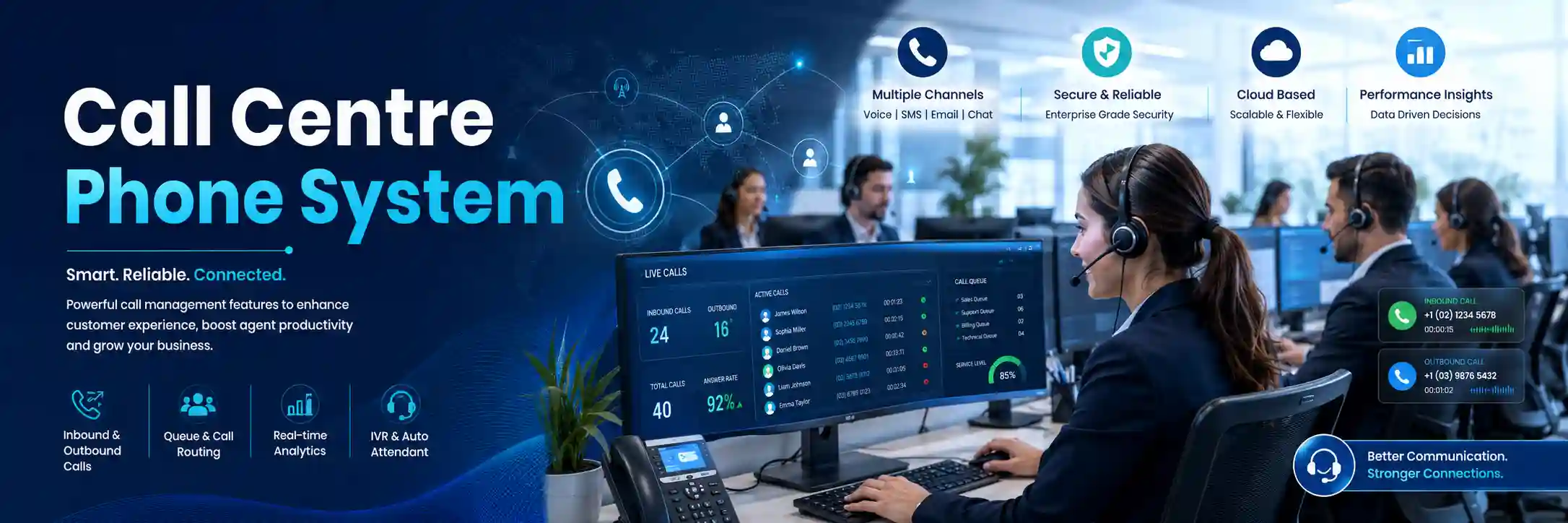
Queue logic is planned around the required caller journey and staff workflow.
Existing routing, access, backups and rollback considerations are reviewed before edits.
The support method depends on access, physical checks and the affected environment.
Inbound, agent, overflow and after-hours behaviour can be validated and documented.
What does IP PBX call queue configuration do?
IP PBX call queue configuration defines how an incoming call is presented to a group of authorised users when one person may not be available to answer immediately. It can control queue membership, ringing behaviour, time limits, caller waiting logic, overflow destinations, office-hour rules, voicemail or alternate routing, and the way users enter or leave the answering group. Businesses should consider the service when calls are reaching the wrong people, callers wait too long, agents are missed, overflow is inconsistent, or a new team needs a structured inbound route. Before work begins, the customer should prepare the affected telephone number, current and desired call flow, agent extensions, operating hours, administrator access availability, recent changes, and any provider or network information that may affect the call path.
What the call queue service can cover
Queue logic and membership
Depending on the confirmed scope, assistance may include reviewing which extensions or users should participate, whether participation is permanent or status-dependent, the order or distribution method used by the platform, and what should happen when an agent is busy, unavailable, logged out, unreachable or already handling another call. Platform capabilities and licences can affect the available options, so the design is based on what the installed environment actually supports.
Waiting, overflow and no-answer behaviour
A queue needs a clear decision for calls that cannot be answered within the expected period. The route may need to overflow to reception, a second department, another queue, voicemail, an external destination, an announcement or an after-hours path, subject to PBX capability and commercial requirements. The timing should be chosen from the customer workflow rather than copied from a generic template.
Business hours and caller journey
Queue behaviour often changes outside working hours, during holidays, at lunch, or when a department is closed. FourTeck can help map the required caller journey so office-hour rules, IVR choices, queue destinations, voicemail and alternate numbers do not conflict. Any schedule-dependent behaviour should be tested against the PBX time zone and the organisation’s actual operating pattern.
Agent and endpoint readiness
The queue can be configured correctly while calls still fail because an extension is not registered, a desk phone is offline, a softphone is signed out, a user has changed status, or the network is unstable. Queue work may therefore include validation of participating extensions, user availability, phone registration, relevant permissions and the connection path that supports voice traffic.
Who may need call queue configuration assistance?
The service can be useful for organisations where several people share responsibility for one inbound number or department. Reception desks may need overflow when the primary operator is busy. Sales teams may need a predictable way to distribute enquiries. Customer service groups may need calls to remain in a queue while available agents answer in turn. Clinics may need front-desk calls to reach more than one authorised user without exposing unrelated extensions. Property management, logistics, maintenance, hospitality, retail, training, professional services and branch-based businesses may use queues to keep a public number separate from individual extensions.
Queue configuration can also become necessary during staff changes, office expansion, a PBX migration, a new SIP trunk activation, an IVR redesign, a shift in business hours, a move to remote or hybrid work, or the introduction of a new department. Even when the queue already exists, recurring complaints such as missed calls or uneven call distribution can justify an assessment of the current logic.
The exact requirement should be defined from the real call journey. A small office with two reception users needs different logic from a support team with rotating shifts, multiple branches and separate escalation paths. FourTeck therefore treats the queue as part of the wider IP PBX, phone, network and provider environment rather than as an isolated setting.
Common signs that the current queue or call flow needs review
Calls wait but the expected phones do not ring
This can involve queue membership, agent state, extension registration, forwarding rules, phone connectivity, licensing, PBX reachability or platform-specific behaviour. The symptom alone does not prove which layer is responsible.
One employee receives far more calls than others
The distribution method, agent availability, wrap-up behaviour, device registration or working schedule may need review. A technically correct setting may still be unsuitable for the intended workload.
Calls disappear after a specific waiting period
The queue may have an overflow, timeout or failure route that no longer matches the business process. It is important to trace the destination rather than simply increasing the wait timer without understanding the effect.
After-hours callers reach the wrong department
Time conditions, holiday schedules, IVR selections, inbound routes and queue destinations may overlap. The complete route should be documented and tested using an agreed schedule.
New staff cannot receive queued calls
Creating an extension is not always the same as adding an authorised queue participant. Membership, permissions, device registration, status and platform settings may all need to align.
Callers report long delays or repeated ringing
The issue may be staffing, queue design, an unreachable agent, an inappropriate timeout, network problems, provider delays or a call path that sends callers through unnecessary steps. Evidence should be collected before changing the configuration.
Why queue problems can affect more than the telephone system
Poor queue behaviour can create operational problems even when the PBX itself is online. A missed sales enquiry may never reach the responsible team. A reception operator may become overloaded while other agents remain available. Customers may call again because they are uncertain whether the first attempt was received. Internal staff may begin bypassing the published number and using personal or direct numbers, which makes the official call flow harder to manage. Managers may also have difficulty determining whether the problem is staffing, configuration, provider behaviour or network instability.
A controlled review provides a clearer basis for decisions. The aim is not to force every caller into a long queue, but to match the route to the business process, define sensible failure paths, and ensure participating users understand their role. Configuration should also leave room for future staff changes, holiday schedules, maintenance and troubleshooting. A documented queue is easier to support than one that has accumulated undocumented edits over several years.
Possible service scope
Depending on the confirmed scope, FourTeck assistance may include a business call-flow discussion, review of the current PBX configuration, queue and extension inventory, backup or configuration export where supported and appropriate, administrator access review, queue membership changes, ringing or distribution changes, timeout and overflow planning, office-hour alignment, IVR relationship checks, voicemail routing, extension registration checks, softphone or desk-phone validation, SIP trunk coordination, basic network path review, test calls, documentation, user guidance and recommendations for further work. Not every activity is required for every customer.
Confirm the intended caller journey, affected numbers, users, business hours, existing symptoms and platform dependencies.
Apply authorised queue, membership, timing or routing changes within the agreed scope and supported platform options.
Test representative inbound, busy, unavailable, overflow and after-hours scenarios with customer participation where needed.
Record agreed queue members, main routes, dependencies and remaining recommendations so future changes are easier to manage.
Service-fit matrix
| Business situation | Relevant assistance | What must be confirmed |
|---|---|---|
| A single public number should be answered by several staff | Queue membership, distribution method, ringing behaviour and no-answer path | PBX platform, available queue features, extension list, working pattern and desired caller experience |
| The current queue misses agents or rings unexpected users | Configuration review, agent-state checks, extension validation and call testing | Recent changes, agent availability, registration status, forwarding and platform behaviour |
| Calls should overflow to reception after a defined period | Timeout and overflow route planning with representative test calls | Target destination, acceptable waiting period, reception capacity and after-hours treatment |
| A new branch or department needs its own call handling | New queue design, extension mapping, number routing and documentation | Number ownership, SIP trunk routing, site connectivity, users, business hours and PBX capacity |
| Remote users need to participate in a business queue | Remote extension, client, registration and queue-participation review | Supported client method, internet quality, security, licensing, user status and remote-access design |
| The business is migrating to another PBX | Current queue documentation, dependency mapping, target design, staged testing and cutover planning | Compatibility, numbers, trunks, prompts, licences, devices, recordings, routing and rollback options |
Service information for planning and quotation
| Service topic | IP PBX call queue configuration and related call-flow support |
|---|---|
| Main purpose | Organise how inbound calls are offered to a group of users and how unanswered or unavailable calls are handled. |
| Typical systems involved | IP PBX, SIP trunk, inbound routes, IVR or auto attendant, extensions, desk phones or softphones, local network, firewall and internet connection where relevant. |
| Assessment method | Business call-flow discussion, configuration review, access validation, extension checks, test calls and evidence collection. Environment dependent. |
| Remote support suitability | Often suitable for configuration review and authorised changes when secure remote access, reliable connectivity and a local contact are available. |
| On-site support suitability | May be recommended when physical phones, cabling, PoE, switching, user workflow, local network behaviour or equipment access must be checked. |
| Customer access required | Authorised PBX administration access and, where necessary, access to relevant network, provider or endpoint information. Credentials should be shared only through an approved secure method after authorisation is confirmed. |
| Customer information required | Affected number, desired call path, agent list, hours, observed symptoms, recent changes, platform details, provider details and business impact. |
| Testing and validation | Scope may include normal inbound calls, busy or unavailable agents, timeout, overflow, office hours and agreed failover paths. |
| Vendor coordination | May be needed when the PBX vendor, hosting provider, telecom carrier, SIP provider or licensing portal controls part of the required change. |
| Scheduling dependency | Depends on engineer availability, customer access, maintenance window, urgency, third-party actions and the approved scope. |
| Quotation requirement | The commercial scope should be confirmed after FourTeck understands the current environment and required outcome. |
Can the queue be configured remotely, or is an on-site visit needed?
Remote assistance
Remote work may be appropriate when the IP PBX can be accessed securely, the internet connection is stable, the administrator has authorised the session, and the required change is mainly related to software configuration, call routing, queue membership, schedules, logs or user settings. A local user may still be needed to make test calls, confirm which phones ring, describe display messages or verify the practical workflow.
Remote access does not remove the need for change control. Existing configuration should be reviewed, backups or rollback options should be considered where supported, and the intended route should be written down before edits are made. If the symptom cannot be reproduced remotely, the support method may need to change.
On-site assistance
An on-site visit may be recommended when the queue issue appears connected to physical phones, handset behaviour, PoE, network ports, cabling, switches, local firewall equipment, office layout, staff workflow, or an inaccessible PBX appliance. Physical inspection can also help when several endpoints fail intermittently or when staff need coordinated testing from different desks.
On-site scheduling depends on the service location, building access, approved quotation, engineer availability and the work required. A visit does not automatically include replacement hardware, new cabling, licences or third-party provider work unless those items are specifically confirmed.
How FourTeck approaches assessment and diagnosis
- Define the business impact. The first question is what callers and staff are experiencing. FourTeck may ask whether calls fail completely, wait too long, ring the wrong users, overflow unexpectedly, behave differently after hours or affect only one number or department.
- Map the expected caller journey. The customer describes what should happen from the moment a call enters the business: IVR selection if used, queue entry, agent treatment, waiting period, overflow path and final destination.
- Identify the affected systems. The review may include the inbound number, SIP trunk, PBX routes, queue object, extensions, phones or clients, network path, firewall and any provider-controlled component.
- Collect evidence. Useful information may include call timestamps, caller numbers where appropriate, screenshots, queue status, user state, extension registration, logs, recent changes and a simple diagram of the current route.
- Confirm access and change safety. Administrator access, backup availability, maintenance expectations and rollback options are reviewed before a change that could affect live calls.
- Test the relevant layers. FourTeck may compare a successful call with a failed one, verify extension reachability, check agent status, trace routing decisions and confirm whether the issue is inside the PBX or depends on another system.
- Agree the corrective action. Findings are explained before configuration changes are applied. If the evidence points to a carrier, vendor, network or licensing dependency, that dependency is identified instead of changing unrelated settings.
- Validate and document. Representative calls are tested and the final route, remaining limitations and recommended next actions can be recorded for future administration.
Planning controlled queue changes
A queue change can affect a live business number, so even a small edit should start with a clear objective. If the requirement is “make sales calls ring more people,” the practical questions are which people, at what times, in what order or distribution pattern, for how long, and what should happen if nobody is available. If the request is “send unanswered calls to reception,” the team should also confirm whether reception is open at the same hours, whether calls should still reach voicemail, and whether the new route creates a loop back into the original queue.
Where the PBX supports configuration backup or export, a suitable recovery point may be taken before significant changes. The exact method varies by platform. FourTeck does not treat configuration changes as risk-free; live routing can be disrupted if dependencies are overlooked. A maintenance window may be appropriate for more substantial changes, especially when inbound routes, trunks, IVR menus or several departments are involved.
The implementation should be no broader than necessary. Once the approved change is applied, test calls can confirm the expected sequence. If a problem appears, the team can compare the new behaviour with the recorded baseline and decide whether to adjust, roll back or escalate to another provider. This controlled approach helps prevent one queue adjustment from unintentionally affecting unrelated departments.
Testing, validation and handover
A configuration change is not complete merely because the administration screen accepts it. The queue should be tested from a caller’s perspective and from the participating users’ perspective. Depending on scope, tests may include a normal inbound call while several agents are available, a call while one agent is busy, a call with one or more users signed out, a timeout test, an overflow test, an after-hours test, and a check of the final voicemail or alternate destination. If the PBX exposes useful status or logs, those can be compared with what the users actually hear and see.
Handover is especially important where staff are expected to log in or out of queues, change presence status, answer through a softphone, or follow an escalation procedure. Users should understand the practical action that changes their availability and whom to contact if the queue behaves differently from the documented route.
Documentation can include the queue name, public number, participating extensions, high-level routing sequence, office-hour relationship, overflow destination, relevant provider dependency and the date of the change. Sensitive credentials should not be placed in ordinary public or shared documents. Future modifications should follow the same authorised process so the call flow remains understandable.
Capability focus: more predictable inbound call distribution
The main value of a queue is that the caller reaches a defined group through a controlled route rather than depending on one extension. That does not mean every business should use the same ringing strategy. A two-person reception team may prefer both phones to ring together, while a larger service desk may need the PBX to distribute calls according to a supported queue method. A branch may need local agents first and a central team as overflow. The appropriate design depends on staffing, workload, platform capability and how quickly someone should answer.
Predictability also requires clear treatment for unavailable users. An employee who is not registered, is on leave, has changed status or is already on a call should not create an unexplained dead end. Queue configuration and user process must work together. FourTeck can help distinguish configuration from staffing or endpoint issues so the final design reflects both the PBX and the way the team actually works.
Capability focus: safer overflow and after-hours behaviour
Overflow is the decision the system makes when the primary queue cannot complete the call within the intended rules. Poor overflow logic can send callers in circles, return them to a closed department, ring an unattended extension or terminate the call without a useful next step. A controlled design records the primary destination, timeout, alternate destination and final action. Where office hours are involved, the route should be tested both inside and outside the active schedule.
The final path may depend on other PBX features such as IVR menus, ring groups, voicemail, external forwarding or provider services. Some platforms or licences may limit how these functions can be combined. FourTeck can help review the available options and identify any dependency before the route is changed. The goal is a path that staff can explain and support later, not a collection of timers that nobody remembers.
Capability focus: clearer queue documentation and future administration
Queue problems are harder to troubleshoot when nobody knows why a user was added, what an overflow destination was intended to achieve, or which business-hour rule controls the route. A simple call-flow record can reduce this uncertainty. It gives future administrators a baseline when staff change, a department moves, a new number is introduced, or a migration is planned.
Documentation also helps separate responsibility. The PBX may control queue logic, the SIP provider may control number delivery, the network team may control voice connectivity, and business managers may control staffing schedules. Recording these dependencies makes escalation more focused. FourTeck can include practical documentation and handover within the confirmed service scope rather than leaving the customer with only an undocumented change.
Dependencies, access and customer inputs
Call queues depend on more than the queue object itself. The inbound number must reach the PBX, the trunk must be available, routing rules must send the call to the intended destination, participating extensions must be registered and permitted to receive calls, phones or clients must be reachable, and the local network must carry voice traffic reliably. If remote users are involved, internet quality, security design, application status and platform support may also matter. A failure in any one of these areas can produce symptoms that look like a queue configuration fault.
Customers should identify the person authorised to approve telephony changes and provide suitable access to the PBX or hosting portal. If provider coordination is likely, account or circuit details may be needed without publishing passwords. Credentials should be exchanged only through an approved secure method after identity and authorisation are confirmed. If a backup exists, its age and location should be known before broader work begins.
The target outcome is equally important. FourTeck should know which number is affected, who should answer, what hours apply, what callers should experience, what should happen when everyone is busy or unavailable, and whether any department has a priority or escalation requirement. The final technical configuration should follow this business decision rather than invent it.
Risks, limitations and exclusions to consider
Diagnosis depends on the evidence and access available. If the PBX is managed by another provider, the customer may need that provider to grant access or apply part of the change. Hosted systems can have licence or service-plan restrictions. Older or unsupported platforms may offer limited queue options or may require additional care before configuration is changed.
A queue change cannot correct every cause of missed calls. A phone may be offline, the SIP trunk may be unstable, a firewall may interfere with voice traffic, the internet connection may be congested, a remote user may be disconnected, or staffing levels may simply be insufficient for the call volume. FourTeck may recommend separate network, provider, endpoint or capacity work when the evidence points outside the queue.
Hardware replacement, new cabling, additional phones, licences, carrier changes, number porting, custom application integration or new PBX deployment are not assumed to be included unless the quotation states them. Changes that affect live inbound numbers may require a maintenance window and a rollback plan. No configuration can guarantee that every call will be answered; the technical route and the operational staffing model both influence the result.
On-site work depends on location, scheduling, access and the confirmed scope. Final commercial terms are based on the approved quotation or service agreement.
Business environments where structured queues may be useful
Professional offices often use a queue to protect the main number from depending on one receptionist. Sales departments may route a campaign or public number to several staff while keeping personal extensions separate. Service and maintenance companies can use a queue for customer requests while retaining a separate route for internal operations. Clinics and training centres may need reception coverage from multiple authorised desks during busy periods. Logistics and warehouse operations can route customer or supplier calls to a small coordination team without publishing every user’s direct extension.
Multi-branch businesses may use queues to keep a consistent public number while calls are answered by staff in more than one location, subject to PBX architecture, licensing and network readiness. Hybrid teams may use supported softphones or remote clients, but the business should confirm whether remote participation fits the platform and security requirements.
The service can also support planned change. A company opening a new department can define the inbound route before staff start. A business replacing an older PBX can document the existing queue behaviour so the target system can be tested against a known requirement. In each case, the useful starting point is the caller journey and the operational responsibility for answering it.
Before you contact FourTeck
Preparing a small amount of accurate information can make the first assessment more useful. You do not need to know the technical cause, but it helps to describe what should happen and what is actually happening.
- The Dubai or UAE service location and the main on-site contact.
- The public telephone number or inbound route affected.
- The IP PBX platform, hosting model or appliance details if known.
- The extensions, users or departments expected to answer.
- A simple description of the current caller journey.
- A simple description of the desired caller journey.
- Business hours, break periods and known holiday rules.
- Examples of missed, delayed or incorrectly routed calls.
- The approximate time the issue began and how often it occurs.
- Any recent PBX, phone, network, ISP or provider changes.
- Whether administrator access can be authorised.
- Whether a current configuration backup or export is available.
- The SIP or telecom provider details where relevant.
- Whether remote support is acceptable or physical inspection is required.
- The business impact and any preferred maintenance window.
- Any security or building-access restriction affecting the work.
Service evaluation checklist for defining the engagement
How FourTeck can help define the quotation and next action
FourTeck can begin by clarifying the reported problem or desired call flow, identifying the systems and users involved, and determining whether the first step should be remote assessment, an on-site visit, or a planned configuration task. The assessment may identify a straightforward queue change, but it may also show that the issue depends on extension registration, SIP delivery, network quality, firewall behaviour, licences, a hosted provider or physical equipment. The quotation can then reflect the actual work instead of assuming every telephone problem is caused by the same setting.
Where approved, FourTeck can help implement controlled changes, coordinate relevant providers, perform agreed testing, document the result and recommend follow-up actions. For a broader view of connected workplace support, visit the FourTeck IT Services home page or review the business IT service overview. The final scope remains subject to the current environment, access and approved quotation.
Dubai and UAE service coordination
For businesses in Dubai and across the UAE, call queue work can often begin with a remote discussion and configuration review. Remote assistance may be practical when the PBX is securely accessible and the affected users can participate in testing. An on-site visit may be recommended when the PBX appliance, desk phones, cabling, PoE, switching, firewall, office layout or local user workflow needs physical inspection. Installation, configuration, migration and maintenance tasks should be clearly included in the quotation rather than assumed.
Service timing depends on engineer availability, customer access, site conditions, the agreed maintenance window, required hardware or licences, and third-party providers. If the queue depends on a carrier change or hosted-platform action, that dependency can affect the sequence of work. Contact FourTeck to confirm the service scope and scheduling options for the actual environment.
Coordinating support across Dubai, Abu Dhabi, Sharjah and Ajman
Businesses with users or offices in Dubai, Abu Dhabi, Sharjah and Ajman may need one call flow to support several locations or may need separate queues that follow local working practices. FourTeck can help assess remote troubleshooting, planned on-site visits, configuration tasks, migration work, maintenance or project support according to the confirmed scope. Multi-site planning should identify where the PBX is hosted, how branch phones connect, which users answer each queue, what happens when a location is closed, and whether central overflow is required. Scheduling, travel, building access, site conditions, equipment availability and third-party dependencies can affect the final plan. A multi-site queue should therefore be tested from more than one representative location when connectivity or remote registration forms part of the route.
Related FourTeck IT services
Review extensions, inbound routes, IVR relationships, queues, office hours and wider telephone-system dependencies.
Office telephone support
Assist with user phones, registration, calling behaviour, moves, additions and related network checks.
Office network support
Investigate switching, VLAN, cabling, addressing and connectivity issues that can affect IP telephony.
Business IT services
Coordinate communication systems with the wider office infrastructure, user environment and support plan.
Why businesses contact FourTeck for queue and call-flow work
Businesses often need help because the telephone system sits between several technical and operational responsibilities. The telecom provider delivers the number, the PBX controls the route, the network carries the traffic, endpoints present the call, and staff availability determines who can answer. FourTeck can review these relationships as one service context instead of assuming the queue setting is the only factor.
The engagement can focus on a clear initial assessment, controlled configuration, remote or on-site coordination, practical testing, documentation, vendor communication and a quotation that defines what is included. When the issue is outside the agreed queue scope, the next action can be identified rather than hidden behind repeated changes.
For more information about the company and its wider technical-support approach, see About FourTeck IT Services. To discuss the actual PBX environment, use the FourTeck contact page.
Questions businesses ask before changing an IP PBX call queue
Can a call queue be fixed remotely?
Often, yes, when the problem is in PBX configuration and secure administrator access is available. A remote session may allow review of queue membership, routing, schedules, user state and logs without touching physical equipment. However, remote work is less suitable when phones are offline, cabling is suspect, PoE is unstable, the PBX appliance cannot be reached, or staff need hands-on testing across the office. The practical next step is to describe the symptom and confirm whether the PBX and affected endpoints are reachable.
Why do queue agents sometimes stop receiving calls?
There is no single cause. The user may no longer be a queue member, may be logged out, may have a presence state that affects availability, may be unregistered, may have forwarding rules, or may be using a client that is no longer connected. The queue itself may also have a rule that excludes busy or unavailable agents. Network or provider faults can create similar symptoms. A useful assessment compares the user’s state, extension registration, queue membership and a known test call at the same time.
Should we use a queue or a simple ring group?
The choice depends on the business requirement and the capabilities of the installed PBX. A small group that simply needs several phones to ring may not need the additional waiting and agent logic of a queue. A queue becomes more useful when callers may wait, agents may join or leave, distribution rules matter, or an overflow process is required. FourTeck can review the required caller experience first and then determine which available PBX feature fits that requirement.
How long should a caller remain in the queue before overflow?
There is no universal timer that suits every business. The decision depends on staffing, expected call volume, the importance of the number, whether callers hear useful queue information, and the quality of the overflow destination. A short timeout can move callers away from an available team too quickly, while a long timeout can leave them waiting without a realistic chance of answer. The business should define the intended experience and then test the chosen timing.
Can unanswered queue calls go to reception, voicemail or another department?
Many IP PBX platforms support alternate destinations, but the exact options depend on the platform, licence and configuration. The important part is to confirm the final caller journey before changing the route. An overflow destination should be open and staffed when it is expected to receive calls, and it should not send the caller back into a loop. Test calls should confirm the result during normal and after-hours conditions.
What should we prepare before asking for a queue change?
Prepare the affected public number, the current and desired call path, a list of users or extensions that should answer, business hours, overflow preference, recent changes, PBX platform details, and examples of failed or unexpected calls. It also helps to know whether administrator access and a current backup can be authorised. If a SIP or telecom provider controls the number or trunk, keep the provider details available for coordination if needed.
Can remote employees answer the same business queue as office staff?
Potentially, if the PBX supports the remote client or phone method, the user is licensed and authorised, and the remote connection is stable and secure. The design should also consider internet quality, extension registration, presence or login state, and how calls behave when the remote user disconnects. A proof test with one representative user can be useful before a wider rollout.
Why does the queue work internally but fail for external callers?
An internal test may bypass the public number, SIP trunk and inbound route that external callers use. If internal calls reach the queue but external calls do not, the assessment should include number delivery, provider status, inbound routing, PBX rules and any firewall or network dependency relevant to the trunk. This is why a representative external test is important before declaring the queue fixed.
Can we change the queue during business hours?
A small change may be possible during normal operation, but the risk depends on what is being edited and how critical the inbound number is. Changes involving multiple routes, IVR menus, trunks or several queues may justify a planned maintenance window. The customer should confirm acceptable disruption, backup or rollback options and who will test the result. Configuration should not be treated as risk-free simply because it is performed through a web interface.
What if the real problem is the network rather than the queue?
FourTeck can help identify that dependency during assessment. One-way audio, dropped calls, unregistered extensions, delayed signalling or intermittent client connectivity can involve switches, VLANs, firewall rules, internet quality, cabling, PoE or provider behaviour. If the queue logic is correct but voice connectivity is unstable, the next step should focus on the affected technical layer rather than repeatedly changing queue timers.
Should we configure a new queue or redesign the entire call flow?
If the existing inbound route is simple and only one department needs a controlled group, a focused queue change may be enough. If the business has several IVR choices, overlapping office hours, multiple sites, outdated prompts, undocumented forwarding and repeated exceptions, a wider call-flow review may be more efficient. The quotation should reflect the confirmed scope, and unrelated functions should not be changed without a reason.
How do we know whether the new queue design is successful?
Success should be defined before configuration. For example, the customer may require calls to enter the sales queue, ring authorised users, avoid staff who are unavailable, overflow to reception after the agreed period, and reach voicemail after closing time. Those behaviours can be tested directly. Wider management reporting or performance targets depend on the PBX features and the organisation’s own operational measures and should be treated separately from the basic configuration test.
When should we contact FourTeck instead of continuing to adjust settings ourselves?
Contact FourTeck when the caller journey is unclear, the configuration has become difficult to follow, changes affect a live business number, several technical layers may be involved, there is no current backup, or the issue continues after basic checks. Share the desired outcome and the available evidence rather than guessing the cause. FourTeck can then advise whether the next step is remote assessment, on-site inspection, provider coordination, a focused configuration task or a wider telephony review.
Frequently asked questions
What is an IP PBX call queue?
It is a PBX function that places an inbound call into a controlled group route so one of several authorised users can answer according to the platform’s configured rules. The queue may also define waiting, agent availability, timeout and overflow behaviour.
Can FourTeck add or remove queue agents?
Agent membership changes may be included after the PBX platform, access and desired user list are confirmed. The service may also check extension registration, user status and any platform-specific requirement that affects participation.
Can the queue follow different office hours?
Many systems can combine queues with time conditions or schedules, but the exact method is platform dependent. FourTeck can review the current route and test the agreed behaviour inside and outside normal hours.
Do you need PBX administrator access?
Configuration work normally requires authorised access to the relevant administration interface or hosting portal. Customers should not publish passwords. Credentials should be shared through an approved secure method after identity and authorisation are confirmed.
Will changing a queue interrupt live calls?
The risk depends on the platform and the scope of the change. Some edits may be low impact, while broader routing work may require a maintenance window. Backup, rollback and testing considerations should be agreed before significant changes.
Can you troubleshoot one-way audio or dropped calls at the same time?
Those symptoms can involve the PBX, network, firewall, internet or voice provider and may require a wider troubleshooting scope. FourTeck can identify the likely technical layer and confirm whether additional work should be included in the quotation.
Can a queue overflow to another branch?
It may be possible if the PBX architecture, licences, extensions and connectivity support the required route. Multi-site overflow should be tested carefully because remote registration and network conditions can affect the result.
Is queue documentation included?
Documentation can be included when it forms part of the approved scope. A useful handover may record the queue, members, public number, high-level route, office-hour relationship, overflow destination and remaining dependencies.
Can you configure queues on any PBX brand?
Support depends on the specific platform, version, access method, licensing, support status and available administration features. FourTeck should confirm the exact environment before promising a configuration task.
How do we request a quotation in Dubai?
Send FourTeck the affected number, PBX platform, desired call flow, queue users, business hours, observed problem, service location and access availability. The service scope and scheduling options can then be confirmed from the actual requirement.
Plan the queue around the way your team answers calls
If callers are waiting too long, reaching the wrong users, failing to overflow correctly, or following an outdated route, FourTeck can review the current environment and help define a controlled next step. Share the PBX platform, affected number, agent list, desired call journey, hours, recent changes and the business impact. Remote or on-site assistance depends on access, location, urgency, physical checks and the approved quotation.