
BUSINESS TELEPHONY MAINTENANCE
Preventive IP PBX Maintenance in Dubai, UAE
A business telephone system can continue to pass calls while backups fail silently, unused extensions accumulate, routing rules become difficult to trace, firmware or platform updates are postponed, and provider details remain undocumented. Preventive maintenance gives organisations a controlled opportunity to review those dependencies before an urgent fault forces changes under pressure. FourTeck supports scheduled IP PBX health checks, configuration review, call-path testing, documentation and maintenance planning for business environments in Dubai and across the UAE.
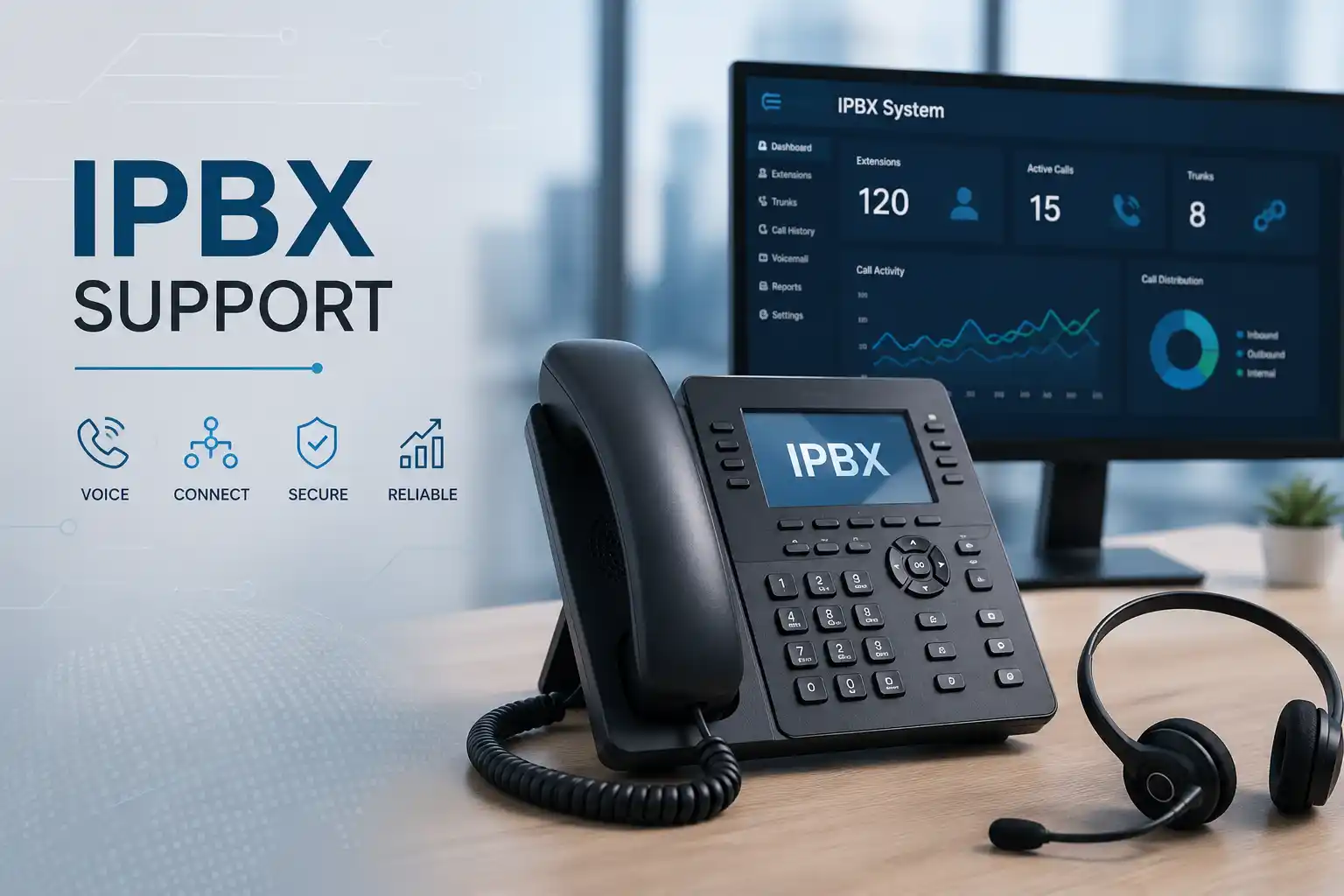
Maintenance tasks are confirmed after platform and access review.
The service method depends on the work and physical checks required.
Backups, authorisation, testing and rollback are considered before changes.
Findings and next actions can be documented for future support.
What Is Preventive IP PBX Maintenance?
Preventive IP PBX maintenance is a planned review of the business telephone environment before a known fault, capacity problem or configuration issue causes unnecessary disruption. It is mainly used to check the health and maintainability of the PBX, connected extensions, phones, SIP trunks, call routes, voicemail, backups, network path, administrative access and supporting records. Businesses should consider it when telephony is important to reception, sales, customer service, operations or internal coordination, especially if the system has changed gradually over time. Before work is confirmed, the customer should identify the PBX platform and deployment model, service location, number of users or extensions, voice provider, recent issues, available administrator access, maintenance window and any business-critical call flows that must not be interrupted.
What the Maintenance Service May Cover
An IP PBX is not only a server or appliance. It sits in the middle of extension registrations, desk phones, mobile or softphone clients, SIP trunks, dial plans, voicemail, queues, office-hour rules, network switching, firewall policies, DNS, internet connectivity and sometimes gateways or analogue lines. Preventive work looks at these relationships rather than treating the PBX as an isolated box.
Depending on the confirmed scope, FourTeck may review system status, licence or subscription visibility where relevant, configured extensions, disabled or unused accounts, trunk status, inbound and outbound routes, reception handling, ring groups, queues, auto-attendant menus, voicemail destinations, time conditions, backup settings, update position, administrator ownership and known provider dependencies. The purpose is to identify issues that deserve attention and to make future support easier, not to change working settings without a business reason.
Maintenance can also include test calls that follow the paths the business actually uses. A test may check an external incoming call to reception, a department queue, after-hours handling, voicemail, outbound calling and selected internal extensions. Where call recording is used, any review must respect the customer’s approved policies, platform capabilities, storage design and applicable requirements. The exact checks depend on how the system is configured and what the business expects the telephone service to do.
Who May Need Planned PBX Maintenance
Preventive maintenance can be useful for organisations that depend on phone availability but do not want the first detailed system review to happen during an outage. It may suit an office where several people administer the PBX, a company that has added and removed staff frequently, a business with multiple inbound numbers, a reception team using complex call routing, or a branch environment where voice traffic crosses firewalls, VPNs or provider links.
It is also relevant after repeated support incidents, office expansion, a move, a change of internet provider, a SIP trunk modification, network switch replacement, firewall changes, new remote users or a handover from a previous service provider. These events can leave hidden dependencies even when everyday calls appear normal. A maintenance review can document what changed, what remains uncertain and which items should be corrected in a planned window.
Businesses with older or lightly documented PBX environments may use maintenance as a starting point for lifecycle planning. The review does not automatically mean the system must be replaced. It can help management distinguish between a stable platform that needs better records, a system that needs corrective configuration, and an environment where age, support status, capacity or compatibility should be assessed before future expansion.
Maintenance Signals That Should Not Be Ignored
Preventive maintenance is not limited to systems that are already failing. The strongest reason to review an IP PBX is often a pattern of small warnings that indicates the environment is becoming harder to support. The same symptom can originate from the phone, PBX, network, firewall, internet connection, SIP provider or configuration, so no single symptom should be treated as proof of one cause.
Intermittent Call Quality
One-way audio, clipping, delay, jitter, short dropouts or calls that fail only at certain times may justify a review of network quality, firewall behaviour, provider path and PBX logs. A maintenance check can establish whether the symptom is isolated or part of a wider dependency.
Growing Configuration Complexity
Old extensions, duplicate names, temporary forwarding rules, legacy ring groups and undocumented office-hour changes can make future support risky. Cleaning up should be planned carefully because a configuration that looks unused may still serve a business process.
Uncertain Backup Status
A configured backup task is not the same as a verified recovery position. Maintenance may include checking whether backups are current, where they are stored, what they contain and whether the business understands the restore dependency for its platform.
Provider or Network Changes
Internet migration, firewall replacement, VLAN changes, SIP trunk updates or switch work can affect telephony in subtle ways. A post-change maintenance review can verify that routes, registrations, DNS, time settings, quality controls and relevant security rules remain appropriate.
Repeated User Workarounds
Staff forwarding calls manually, restarting phones, changing destinations repeatedly or using personal numbers because the intended call flow is unreliable are operational signals. Maintenance should capture the user experience as well as technical status.
Unclear Administrative Ownership
If no one knows who controls the PBX, trunk portal, DNS, hosting, firewall or backups, a minor change can become a major coordination problem. Preventive maintenance can identify these ownership gaps before an urgent request depends on them.
Why Preventive Care Matters to Business Operations
Telephone problems can affect more than the person who reports them. A reception route that sends callers to the wrong destination can delay customer response. A queue that does not ring the expected agents can make a department appear unavailable. A failed outbound route can interrupt supplier coordination, while an undocumented after-hours rule can create confusion when offices close early or operate on different schedules. Preventive maintenance reduces uncertainty by making the current design easier to understand and by identifying corrective work before it must be performed during active disruption.
The practical outcome is not a promise that faults will never occur. Hardware can fail, internet links can be interrupted, provider services can change and users can make unexpected requests. The value of maintenance is that the organisation has a clearer baseline: known extensions, known trunk ownership, current backups, tested call paths, documented risks and a list of recommended actions. That baseline can shorten future decision-making and reduce the temptation to make broad, untested changes while staff are waiting for calls to return.
Possible Preventive Maintenance Scope
The final scope should be agreed before work starts. A small single-site PBX with a few extensions may require a different maintenance plan from a multi-branch system with remote users, queues, SIP trunks, gateways and several administrators. Depending on the confirmed environment, assistance may include the following activities.
Platform and Health Review
Review system status, reported warnings, platform version information, resource concerns, licence visibility where applicable, active services and any obvious configuration or capacity indicators. What can be checked depends on the PBX type and available administrative access.
Extension and Device Review
Compare active extensions, user names, device registrations, remote users and shared phones with the organisation’s current staff and operational layout. Unused entries should not be removed until ownership and business dependencies are confirmed.
Inbound Call-Flow Review
Trace selected external numbers through reception, IVR menus, ring groups, queues, overflow rules, office hours and voicemail. The review should begin with the customer’s intended call behaviour so technical settings can be compared with a real business requirement.
Outbound Calling Checks
Review selected outbound routes, permissions and trunk behaviour and perform approved test calls. International, mobile, emergency or special-number handling may depend on provider rules and customer policy and should not be assumed without confirmation.
SIP Trunk and Provider Coordination
Check registration or connectivity status where visible, record provider references, identify required portal ownership and collect evidence for carrier escalation if a symptom appears outside the PBX. Provider-side work remains dependent on the telecom or SIP service organisation.
Backup and Recovery Readiness
Review backup configuration, recent success indicators, storage destination and the administrative information required for recovery. A maintenance review can improve readiness, but it cannot guarantee recovery where source data, backup integrity or platform support is unavailable.
Network and Voice Path Review
Assess relevant voice VLANs, switch connectivity, PoE, gateway reachability, DNS, time synchronisation, firewall dependencies and internet quality where they relate to the PBX. Physical cabling and switch checks may require an on-site visit.
Security and Access Review
Identify administrator accounts, remote-access methods, exposed services, unused accounts and responsibility for updates. Security changes should be approved and tested because restricting the wrong service can interrupt legitimate phones, trunks or remote users.
Documentation and Action List
Record useful facts such as platform details, extension ranges, key call flows, provider contacts, backup location, ownership dependencies, identified risks and recommended follow-up work. Sensitive credentials should not be placed in normal documents without an approved secure method.
Service-Fit Matrix: When Maintenance May Be Appropriate
| Business Situation | Relevant Maintenance Assistance | What Must Be Confirmed |
|---|---|---|
| PBX works, but no one is sure whether backups are current. | Backup configuration review, destination check, recovery-dependency documentation and follow-up recommendations. | Platform access, backup location, storage access, retention needs and whether a restore test is approved and practical. |
| Reception routing has changed repeatedly as staff moved roles. | Call-flow mapping, extension review, ring group or queue review and approved clean-up planning. | Current business routing requirement, office hours, escalation destinations and staff ownership. |
| Calls occasionally have one-way audio or brief dropouts. | Evidence collection across PBX, phone, network, firewall and provider path; selected test calls; escalation preparation. | When the issue occurs, affected numbers, device types, internet changes, network access and provider details. |
| An office move, firewall change or ISP migration was recently completed. | Post-change review of registrations, routes, network dependencies, DNS, remote access and documented settings. | Old and new network information, change records, maintenance window and access to affected equipment. |
| The system is older and future expansion is being discussed. | Current-state inventory, capacity and supportability review, compatibility questions and upgrade or migration planning inputs. | Platform model or deployment, user growth, phone estate, trunk setup, required features, budget priority and target timeline. |
Preventive IP PBX Maintenance Service Information
| Main Purpose | Planned health, configuration, dependency, backup and documentation review to improve maintainability and identify corrective actions before urgent incidents. |
|---|---|
| Suitable For | Businesses that rely on IP telephony for reception, sales, support, operations, branch communication or internal coordination. |
| Typical Systems Involved | IP PBX platform, desk phones, softphones, gateways, SIP trunks, switches, PoE, voice VLANs, firewall, DNS, internet connectivity, voicemail, queues and related administrative portals. |
| Assessment Method | Remote review, approved test calls and evidence collection where secure access is available; on-site inspection where physical systems or local testing must be checked. |
| Remote Support Suitability | Often suitable for configuration, logs, extension review, call-flow mapping, trunk status, backup review and documentation, subject to authorised access and working connectivity. |
| On-Site Support Suitability | Appropriate when phones, cabling, PoE, gateways, switches, racks, analogue interfaces, physical appliance status or local call conditions require inspection. |
| Customer Access Required | Administrator or delegated access as needed, authorisation for remote access, local contact availability and secure access to provider or network information where relevant. |
| Testing and Validation | Scope dependent. May include selected inbound and outbound calls, extension registration, queue or IVR paths, voicemail, after-hours routing and user confirmation. |
| Documentation and Handover | May include maintenance findings, current-state records, key dependencies, open risks, corrective-action priorities and recommended next review points. |
| Vendor Coordination | Available where provider, hosting, software or telecom action is required; third-party response and commercial terms remain vendor dependent. |
| Scheduling Dependency | Depends on engineer availability, customer access, maintenance-window requirements, location, current system condition, approved quotation and third-party coordination. |
| Important Note | Preventive maintenance reduces uncertainty and identifies risks, but it does not guarantee uninterrupted service or eliminate the possibility of hardware, network, provider or software failure. |
When Remote Maintenance Makes Sense
Remote maintenance can be efficient when the PBX is reachable through an authorised secure method and the work concerns configuration, users, logs, routes, trunks, backups or administrative records. It can be particularly useful for an initial assessment because the engineer can review the current state before deciding whether physical inspection is necessary.
A customer representative or administrator should be available where local confirmation is required. For example, an engineer may need someone to confirm which phone is assigned to a user, test ringing at reception, verify that a queue member receives a call or describe an audio issue from the user’s perspective. Remote access alone does not provide complete knowledge of the office environment.
Remote work may be limited when internet access is unstable, the PBX is inaccessible, credentials are unavailable, the platform requires local console access, a gateway or phone must be physically inspected, or the network path cannot be verified from the system side. In those cases, an on-site visit or third-party assistance may be recommended.
When an On-Site PBX Visit Is More Useful
On-site maintenance is appropriate when the telephone environment includes physical dependencies that cannot be assessed reliably from an administrative screen. Phones may need to be inspected, patch leads traced, PoE switch ports checked, gateways identified, rack cabling documented or analogue lines tested. A site visit can also be useful when several users report different symptoms and the engineer needs to compare behaviour across desks or departments.
Physical inspection can reveal issues such as overloaded power arrangements, unlabelled cables, unsupported network equipment, damaged patch leads, inconsistent phone connections or undocumented gateways. These observations do not automatically mean components must be replaced; they become evidence for the maintenance report and scope discussion.
On-site work depends on building access, security procedures, engineer scheduling, site contact availability and the approved scope. If the visit may affect active calling, the customer should also confirm a suitable change or test window. FourTeck does not assume that every maintenance request requires an on-site visit; the service method should match the work required.
A Controlled Preventive Maintenance Journey
A maintenance visit should be structured so the business understands what is being checked, why it matters and which actions require approval. The sequence below can be adapted to the platform, risk level and customer priorities.
1. Define the Business-Critical Call Paths
The first step is to understand how the telephone system supports the business. Reception, sales, support, management, after-hours calls, branch calls, emergency contacts and key outbound destinations may have different importance. This establishes what must be protected during maintenance and what should be tested afterwards.
2. Confirm Platform, Access and Ownership
The PBX model or platform, hosting location, administrator access, trunk provider, internet service, firewall ownership and network responsibilities are identified. If access is incomplete, the maintenance scope may begin with documentation and evidence collection rather than configuration changes.
3. Review Recent Incidents and Changes
Recent audio problems, failed calls, queue complaints, new users, office changes, ISP migrations, firewall updates, new phones or trunk changes can guide the review. Maintenance should not start from the assumption that a current symptom has one obvious cause.
4. Establish a Backup and Rollback Position
Before approved configuration work, the engineer should understand whether current settings can be backed up and how a rollback would be performed if the change creates an unexpected result. Backup capability varies by platform, version, licence, hosting model and available storage.
5. Inspect System and Registration Health
Review available health indicators, warnings, extensions, registrations, trunks, resource status, logs and administrative records. Physical systems may also require checks of power, network links, rack placement, gateways and phone connectivity.
6. Compare Configuration With Business Intent
A technically valid call route may still be wrong for the business. The maintenance process compares configured rules with the intended destination, office hours, overflow behaviour, voicemail, queue membership and user roles. Any mismatch should be explained before correction.
7. Check Network and Provider Dependencies
Where call quality, registration or remote-user behaviour is part of the maintenance objective, relevant switching, VLAN, firewall, DNS, internet and SIP provider dependencies are reviewed. The goal is to isolate the technical layer rather than making broad changes to unrelated systems.
8. Apply Only Approved Corrective Changes
Minor corrections may be completed during the maintenance session when they are understood, authorised and within scope. Larger changes, upgrades, replacements, migrations or provider work may be better handled as separate planned tasks with their own quotation and maintenance window.
9. Validate Calling From the User Perspective
Testing should follow the actual call paths that matter to the organisation. A PBX screen showing registered devices is useful but does not prove that reception, queues, voicemail, external numbers and selected users experience the intended behaviour.
10. Record Findings and Priorities
The service can conclude with a practical record of completed checks, approved changes, unresolved dependencies, risks and recommended next actions. This separates urgent corrective work from improvements that can be scheduled later and gives future support engineers a clearer starting point.
Testing, Validation and Handover After Maintenance
A maintenance task is not complete simply because an administrator screen looks normal. Validation should be linked to the customer’s actual call behaviour. Depending on the approved scope, testing may include selected incoming numbers, direct extensions, reception routing, ring groups, queues, auto-attendant selections, office-hour rules, voicemail, outbound calls, caller identification and remote-user registrations. The exact set of tests should reflect business priorities and platform capability.
Where changes were made, the engineer should verify that the new behaviour matches the agreed objective and that unrelated critical routes still operate as expected. If a test cannot be completed because a provider, customer user, remote office or third-party destination is unavailable, that limitation should be recorded rather than assumed to be successful.
Handover may include updated extension details, an outline of key call flows, backup information, provider references, identified risks and recommended actions. Credentials should only be transferred through an approved secure method after identity and authorisation are confirmed. The purpose of documentation is to make the system easier to support without publishing sensitive access information.
Three Maintenance Outcomes That Improve Supportability
1. A More Credible Backup and Recovery Position
A backup process should be understood, not merely enabled. Maintenance can establish whether the business knows where PBX backups are stored, whether recent jobs appear successful, which information is included and who has authority to use the backup during recovery. Some systems rely on licences, cloud services, certificates, provider settings or compatible versions, so a backup file alone may not represent complete recovery readiness.
The outcome should be an evidence-based recovery position with known dependencies. If a restore test is practical, authorised and supported by the platform, it can be planned separately or included where appropriate. If not, the limitation should be documented. This is more useful than claiming that a backup guarantees restoration.
2. Call Flows That Match Current Business Roles
PBX configurations often outlive the organisational decisions that created them. A ring group may contain former employees, an after-hours destination may point to an old mobile number, or a queue may still use a temporary overflow rule created during a busy period. Preventive maintenance provides a controlled opportunity to compare those technical settings with current staffing and customer-handling requirements.
The business should define the desired outcome before technical changes are made. This prevents maintenance from becoming an unstructured clean-up exercise. Once the intended flow is clear, selected routes can be corrected, tested and documented while preserving the ability to roll back if an unexpected dependency appears.
3. Better Visibility Across Voice, Network and Provider Dependencies
IP telephony depends on the wider network. A PBX can be healthy while users experience poor calls because of packet loss, incorrect switching, unstable internet, firewall behaviour or provider-side conditions. Maintenance that considers these relationships creates a more useful support baseline than a PBX-only inspection.
The review does not replace a full network audit where one is required. It identifies which network, firewall or carrier areas are relevant to voice and whether further assessment should be quoted separately. That distinction helps management avoid replacing phones or changing PBX settings when the evidence points toward another technical layer.
Dependencies, Access and Customer Inputs
Preventive maintenance becomes more useful when the customer can explain the environment and authorise access before the session starts. FourTeck may need the PBX platform or appliance model, deployment location, extension count, SIP or telecom provider, phone types, network overview, current administrator availability, known remote users, recent configuration changes, backup location and a list of business-critical call paths. If the system is hosted by another provider, the hosting responsibility and portal access may also need to be confirmed.
Customers should identify a person who can approve changes and another contact who understands day-to-day call behaviour, if those roles are different. Reception staff often know which calls fail in practice, while an IT administrator may know how the network and firewall are configured. Combining these perspectives prevents technical maintenance from overlooking real user problems.
Where a maintenance action may interrupt calls, restart a service, update a system or change routing, an agreed maintenance window may be required. The customer should explain any restricted periods, important events, critical inbound numbers or departments that cannot tolerate testing at certain times. A backup or rollback path should be considered before changes where the platform supports it.
Passwords and sensitive credentials should not be submitted through public web-page text or informal channels. Access should be shared only through an approved secure method after identity and authorisation are confirmed. If required access cannot be provided, FourTeck can still help define the information gap and next steps, but the technical scope may be limited.
Risk, Limitation and Exclusion Guidance
Preventive maintenance is intended to improve visibility and reduce avoidable support risk, but it cannot remove every possible failure. IP PBX environments depend on third-party providers, networks, power, internet connectivity, physical devices, software support, certificates, licensing, storage and human administration. The following boundaries should be understood before work is approved.
If logs, administrative access, provider records or the affected device are unavailable, the maintenance review may identify a likely area rather than a confirmed technical cause.
FourTeck can collect evidence and assist with coordination, but SIP carrier, telecom, ISP, hosted platform or cloud-provider action is controlled by the relevant third party.
Failed phones, gateways, power supplies, switches or PBX appliances may require replacement parts, repair or a separate quotation depending on the confirmed condition and availability.
Firmware, operating-system or PBX updates may need restarts, compatibility checks, backups and a maintenance window. They should not be treated as automatic maintenance tasks without review.
Older PBX platforms, phones, gateways or unsupported software may not support current security, compatibility or integration requirements. The maintenance outcome may therefore include upgrade or migration planning.
Passing test calls after maintenance does not guarantee future uptime. Ongoing monitoring, provider service quality, network health and continued maintenance remain relevant.
Final commercial terms, included tasks, visit requirements, parts, project work and follow-up activity depend on the approved quotation or service agreement. Contact FourTeck to confirm the scope before assuming any particular item is included.
Business Environments Where PBX Maintenance Can Be Useful
Professional Offices
Law firms, consultancies, finance teams and administrative offices may rely on direct numbers, reception transfer, voicemail and department routing. Maintenance can help keep extension ownership and call paths aligned with changing staff roles.
Clinics and Service Desks
Businesses that handle appointments or frequent inbound enquiries may depend on queues, ring groups and overflow routing. A planned review can verify that the intended staff receive calls and that after-hours behaviour remains appropriate.
Retail and Hospitality
Sites with reception, reservations, customer enquiries, back-office teams and multiple departments may need telephone routing that remains understandable even when staff schedules and responsibilities change.
Warehouses and Logistics Operations
Operational sites may combine office phones, cordless or mobile endpoints, gate or reception communication and branch links. Maintenance can identify dependencies on network switches, internet links and provider services.
Multi-Branch Businesses
Branch calling, central reception, remote phones and shared trunks create dependencies across sites. A maintenance plan may need to map which services are local, central, hosted or provider controlled before corrective work is scheduled.
Growing Teams
Rapid hiring can leave unused extensions, inconsistent phone templates, duplicated groups and unclear call ownership. Preventive maintenance can help standardise records before growth makes the environment harder to manage.
Operational, Security and Maintenance Considerations
A maintainable telephone system needs more than correct call routing. Administrative access should be controlled, inactive accounts should be reviewed, backups should have an understood destination, remote-user access should be intentional, and public exposure should be limited to what the platform and service design actually require. Security improvement is about reducing unnecessary risk without disrupting legitimate phones, trunks or integrations.
Update planning should consider platform support, phone compatibility, gateway dependencies, licence or subscription requirements, backup capability and the possibility that a change needs a restart. Maintenance is not a reason to install every available update immediately. The safer approach is to establish whether an update is relevant, supported and compatible, then schedule it with a rollback or recovery plan where practical.
Network quality also matters. Voice traffic is sensitive to latency, packet loss, unstable links and incorrect routing. Where an organisation experiences recurring call-quality complaints, PBX maintenance may need to be paired with targeted network testing. Voice VLANs, PoE capacity, switch health, firewall handling and internet service can all influence the user experience. A full network redesign is not automatically part of PBX maintenance and may require a separate assessment.
Documentation should remain practical. Useful records can include extension ranges, main numbers, reception flow, queue ownership, provider account references, hosting responsibility, backup location, critical network dependencies and the date of significant changes. Sensitive passwords do not need to be stored in ordinary maintenance documents. The objective is to make future support faster and safer without creating a new security exposure.
Maintenance frequency is scope dependent. A rapidly changing call-centre environment may need reviews more often than a small office whose users and routes rarely change. FourTeck can discuss whether the requirement is a one-time health check, a periodic preventive visit or part of a wider annual maintenance arrangement. No frequency, visit count or support window should be assumed until it is agreed in the service scope.
Before You Contact FourTeck
Preparing a few details makes the initial assessment more productive. You do not need perfect documentation; provide what is available and identify what is unknown.
- The Dubai or UAE service location and main on-site contact.
- PBX brand, platform, appliance model or hosted service name, if known.
- Approximate number of extensions, phones and remote users.
- Main incoming numbers and the departments they should reach.
- SIP trunk, telecom or voice-provider details available to your team.
- Recent call-quality, routing, registration or voicemail complaints.
- Any firewall, ISP, switch, office-move or PBX changes made recently.
- Whether administrative access is available and who can authorise its use.
- Whether the current PBX backup location is known.
- Important queues, ring groups, IVR menus or after-hours routes.
- Any periods when testing or service restarts must be avoided.
- Whether remote support is allowed under your internal security policy.
- Building access or site-security requirements for an on-site visit.
- The business outcome you want from the maintenance review.
Service Evaluation and Quotation Checklist
Before a quotation or engagement is confirmed, the following points may need to be defined so both sides understand what the preventive work includes.
- Exact maintenance objective and reported concerns.
- Number of sites, extensions, devices and remote users in scope.
- PBX deployment model and current support ownership.
- Remote assessment versus on-site inspection requirements.
- Backup review, configuration review and test-call expectations.
- Network, firewall, gateway or SIP-provider areas that must be checked.
- Approved corrective changes that may be completed during maintenance.
- Tasks that should be quoted separately, such as major upgrades or replacement.
- Documentation and handover detail required by the customer.
- Maintenance window, site-access limits and business-critical periods.
- Vendor coordination required for trunks, hosting or connectivity.
- Any ongoing maintenance expectation after the initial review.
How FourTeck Can Assist With Preventive IP PBX Maintenance
FourTeck can begin by clarifying what the business expects from its telephone system and which areas are creating uncertainty. The initial conversation may cover call-routing concerns, backup status, recent provider or network changes, undocumented extensions, remote-user issues, recurring audio complaints or the need for a general health review. This helps define whether the first step should be remote assessment, an on-site visit or a combination of both.
During the technical review, FourTeck can examine the PBX and its connected dependencies within the approved scope, collect evidence, identify maintenance priorities and explain where another provider or a separate specialist task is needed. If low-risk corrective changes are authorised, they can be planned with backup and testing considerations. Larger upgrades, hardware replacement, migration or network changes can be documented and quoted separately so the customer understands the difference between maintenance and project work.
The service can conclude with testing, findings, a current-state record and recommended next actions. For organisations that want recurring support, the maintenance result can also help define a more realistic ongoing support scope because the systems, users, dependencies and known risks are clearer.
For broader context on connected workplace technology, customers can review FourTeck business IT support, explore the full IT service overview, learn more about FourTeck IT Services, or use the FourTeck contact page to discuss the maintenance scope.
Dubai and UAE Service Coordination
Preventive IP PBX maintenance in Dubai can be coordinated as remote work, a planned on-site visit or a combination of both, depending on access, the platform, the issues being reviewed and the approved quotation. Remote assessment is often useful for configuration and documentation. On-site assistance may be recommended where physical phones, gateways, network switches, rack equipment, cabling or local testing must be inspected.
Service timing depends on engineer availability, customer access, building rules, maintenance-window requirements, system condition, required parts and third-party providers. If a task may interrupt calling, the customer should identify a suitable period and critical numbers that must be tested afterwards. FourTeck does not assume immediate attendance or a fixed maintenance duration before the environment and scope are understood.
For organisations with more than one UAE location, the maintenance plan can begin with a central review and then identify which sites need physical attention. This approach can reduce unnecessary travel while still recognising that some faults and infrastructure checks require local access.
Coverage Coordination for Dubai, Abu Dhabi, Sharjah and Ajman
FourTeck can discuss preventive PBX maintenance requirements for businesses operating in Dubai, Abu Dhabi, Sharjah and Ajman as one coordinated UAE service requirement. The most appropriate plan may combine remote troubleshooting, scheduled health checks, planned on-site visits, corrective configuration, documentation or related project support depending on the system and confirmed scope.
Scheduling, travel, building access, site conditions, equipment availability, engineer availability and third-party dependencies can affect how work is arranged. A multi-site business should provide the affected locations, extension distribution, local contacts, platform ownership and any shared trunk or central-PBX dependencies so the maintenance plan can distinguish what can be reviewed centrally from what needs on-site verification.
Related FourTeck IT Services
Fault diagnosis, call routing, extension administration, trunk coordination and PBX documentation within the confirmed scope.
Office Network Support
Switching, routing, VLAN, cabling and connectivity review where voice problems depend on the wider network.
IP Phone Support
Phone registration, provisioning, user settings, PoE, network connectivity and device-level troubleshooting.
Annual Maintenance Support
Recurring maintenance planning for wider business IT systems, subject to the agreed service plan and covered assets.
Why Businesses Contact FourTeck for PBX Maintenance
Businesses often contact FourTeck when they need a technical view that connects the telephone platform with the network, internet connection, firewall, SIP provider, phones and user experience. This joined-up view is useful because a voice problem can cross several systems. The maintenance process focuses on identifying the relevant layer before recommending corrective work.
Another reason is documentation. Telephone systems can become difficult to manage after years of user changes, temporary call-flow adjustments and provider handovers. A maintenance session can create a clearer record of what the system does, who controls important accounts, where backups are stored and which risks should be addressed first.
FourTeck can also coordinate remote and on-site work so the service method matches the task. Configuration review may not require a site visit, while a gateway, PoE, cabling or phone problem may. Customers receive a clearer separation between maintenance, corrective support, replacement, upgrade and migration tasks rather than assuming they are all part of one undefined service.
The objective is practical: understand the current environment, reduce avoidable uncertainty, make controlled changes where approved, test important call paths and leave the business with clearer next steps. Final scope and commercial terms are confirmed through assessment and quotation.
Questions Businesses Ask Before Booking Preventive IP PBX Maintenance
Businesses rarely search for maintenance because they want a generic checklist. They usually have a practical concern: calls are becoming unreliable, the PBX has not been reviewed for years, staff changes have made routing confusing, backups are uncertain, or management wants to know whether the current system is still supportable. The answers below address those decision-stage questions directly so a customer can prepare a useful support request.
Can an IP PBX be maintained even when there is no active fault?
Yes. Preventive maintenance is specifically useful when the system is working but the business wants to verify health, backups, call routing, user records, provider dependencies and support readiness before an incident. A working PBX can still contain obsolete extensions, unclear administrative ownership, failed backup jobs or temporary rules that have become permanent. The review should avoid unnecessary changes; the point is to establish a reliable baseline and identify only the actions that have a clear reason.
What is the difference between PBX troubleshooting and preventive maintenance?
Troubleshooting starts from a fault or symptom and aims to isolate the cause and restore the expected service. Preventive maintenance starts from the current environment and looks for weaknesses, outdated records, recurring incident patterns, backup concerns and configuration risks before they create urgent disruption. The two activities can overlap. For example, a maintenance visit may discover a trunk warning that needs troubleshooting, while a troubleshooting incident may reveal that the wider PBX needs documentation and planned follow-up. The quotation should make clear which corrective tasks are included and which are separate.
Can the PBX health check be done remotely?
Many administrative checks can be performed remotely when secure authorised access and working connectivity are available. Configuration review, extension status, trunk information, call-flow mapping, logs, backup settings and selected test calls may not require an engineer to be physically present. Remote work becomes less suitable when phones, PoE, cabling, gateways, local analogue services, rack equipment or physical network ports must be inspected. An initial remote review can often determine whether an on-site visit is worth scheduling.
When should we choose an on-site maintenance visit in Dubai?
Choose on-site assessment when the maintenance objective includes physical equipment, local infrastructure or symptoms that cannot be reproduced from the PBX interface. Examples include intermittent desk-phone power, damaged cabling, gateway faults, unknown rack connections, several phones failing on one switch, or audio problems that seem linked to a particular office area. Site work also helps when the environment is undocumented and the business needs an inventory of PBX, gateways, phones, switch connections and related equipment. Scheduling depends on access, engineer availability and the confirmed scope.
What information should we prepare before requesting a PBX maintenance quotation?
Prepare the platform name or appliance model if known, site location, approximate extension count, key inbound numbers, provider details, number of remote users, known issues, recent network or firewall changes, backup information and the name of the person who can authorise access. It is also useful to describe the business call flow in plain language: where reception calls should go, which departments use queues, what should happen after hours and which numbers are critical. This information helps define the work more accurately than a request to “check everything.”
Does preventive maintenance include firmware or PBX upgrades?
Not automatically. Maintenance can identify the current version, known support concerns and whether an update should be considered, but an upgrade may require compatibility review, licensing, backups, downtime, phone or gateway checks and a separate maintenance window. On older systems, the safer recommendation may be to plan a staged upgrade or migration rather than apply a major version change during a routine review. The exact action is platform and environment dependent and should be confirmed before work begins.
How do we know whether poor call quality is a PBX issue or a network issue?
The symptom alone usually cannot prove the cause. Voice quality depends on the endpoint, PBX, switch path, VLAN configuration, firewall, internet connection and provider route. A maintenance or troubleshooting review can compare affected users, call times, destinations and available logs, then test the relevant layers. If only one phone is affected, the investigation may focus on the device and local port. If many users experience the same issue, network or provider evidence becomes more important. Replacing phones or changing PBX settings without this isolation can waste time and hide the real problem.
Should inactive extensions be deleted during maintenance?
Only after the business confirms they are truly unused and no call flow, voicemail, queue, device, recording policy or integration depends on them. An extension that appears inactive may still be referenced by a route or retained for a returning role. The safer process is to identify candidates, document the dependency check, obtain approval and then disable or remove them according to the platform’s recommended process. This reduces clutter without creating an unexpected call-routing gap.
What should a PBX backup review actually verify?
The review should establish whether backups are being created, where they are stored, how recent they are, who can access them and what additional dependencies would be required to restore service. Depending on the platform, those dependencies may include compatible software versions, licences, certificates, trunk details, DNS, hosting access or device provisioning. A backup file should not be treated as proof of recovery unless the recovery method is understood. Where an approved restore test is possible, it can be planned separately; where it is not, the limitation should be documented.
Is one-time maintenance enough, or should we arrange recurring checks?
That depends on how quickly the telephone environment changes and how important it is to daily operations. A small office with stable users and simple routes may only need periodic review after significant changes. A larger business with frequent staff movement, queues, remote users, multiple branches or recurring provider incidents may benefit from more structured recurring maintenance. FourTeck can help define what should be reviewed and how often, but the schedule, included visits, support channels and commercial terms must be agreed in the maintenance plan rather than assumed.
Can maintenance help us decide whether to repair, upgrade or replace an older PBX?
Yes, a current-state review can provide the evidence needed for that decision. The useful questions are not limited to the age of the system. Management should consider support status, available backups, capacity, security, phone compatibility, trunk compatibility, remote-user requirements, reporting needs, reliability, documentation and how difficult it is to obtain parts or platform assistance. Maintenance can identify which limitations are manageable and which create growing operational risk. A migration should only be proposed when it is justified by the business requirement and technical evidence.
What happens if the maintenance review finds a bigger problem?
The finding should be explained with its business impact, technical evidence and available options. A small configuration issue may be corrected during the approved maintenance window. A failed gateway, unsupported appliance, network redesign, carrier fault or major migration may require separate work. The important point is to avoid turning a maintenance visit into an uncontrolled project. FourTeck can define the next step, coordinate relevant vendors where appropriate and prepare a quotation for work that falls outside the original scope.
What should we expect after preventive maintenance is completed?
You should expect a clearer understanding of the current PBX environment, the checks that were completed, any authorised corrections, tests performed, unresolved dependencies and recommended next actions. Depending on the agreed scope, the handover may also include updated extension information, call-flow notes, provider references, backup status and maintenance priorities. The result is a more supportable environment and a better starting point for future incidents, changes or migration planning. It is not a guarantee that no future fault will occur.
Can preventive maintenance be coordinated for multiple UAE branches?
Yes, the maintenance plan can separate central and site-specific work. If branches share a hosted or central PBX, much of the configuration and trunk review may be performed centrally. Local phone, gateway, cabling, PoE or network issues may still require site-level checks. Provide the branch locations, extension distribution, local contacts, network differences and any shared services so the assessment can identify which tasks are remote and which need planned visits. Scheduling and travel depend on the confirmed scope and site access.
How can we make future PBX support easier after the maintenance visit?
Keep a practical record of key numbers, extension ranges, user ownership, reception routing, queue membership, office-hour rules, provider contacts, platform ownership, backup location and recent change dates. Record the reason for significant changes rather than only the technical setting. Use a controlled process for adding and removing users, and confirm that someone remains responsible for PBX administration when staff roles change. These habits reduce guesswork and make future support less dependent on one person’s memory.
Frequently Asked Questions
What does preventive IP PBX maintenance normally include?
The exact scope depends on the platform and agreed quotation. It may include health review, extension and registration checks, trunk status, selected call-flow verification, backup review, network dependencies, administrative access, documentation and approved corrective changes.
Can maintenance be performed without interrupting calls?
Some checks can be completed while the system remains active, but changes, restarts, upgrades or certain tests may require a maintenance window. Downtime should not be assumed or promised until the required work and platform behaviour are understood.
Do you maintain hosted and on-premises PBX systems?
FourTeck can assess both types where the platform, hosting responsibility, access method and support boundaries are confirmed. Hosted systems may require coordination with the hosting or platform provider for tasks that are outside customer administrative control.
Can you check SIP trunks during preventive maintenance?
Trunk status and related configuration can be reviewed where access allows. If a fault appears to be provider-side, FourTeck can help collect evidence and coordinate with the provider, but provider actions and response are third-party dependent.
Will maintenance fix every existing call-quality problem?
Not necessarily. Maintenance can identify evidence and corrective opportunities, but poor audio may involve endpoints, switching, firewall rules, internet quality or the voice provider. Additional network or provider work may be required depending on findings.
Is documentation included after the maintenance check?
Documentation can be included when agreed in the scope. Useful outputs may include completed checks, key call flows, extension information, provider dependencies, backup status, identified risks and recommended actions. Sensitive credentials should be handled separately through a secure method.
Can maintenance include IP phones and gateways?
Yes, where those devices are part of the confirmed maintenance requirement. Physical device checks may require an on-site visit, particularly for PoE, cabling, analogue ports, damaged hardware or local network conditions.
What access does FourTeck need?
Access depends on the work. It may include PBX administration, network or firewall information, provider details and a local user for test calls. Credentials should only be shared through an approved secure method after authorisation is confirmed.
Can you schedule maintenance outside our busiest calling period?
The customer can provide preferred maintenance windows and restricted periods. Scheduling remains dependent on engineer availability, access, third-party coordination and the approved scope, so a particular time should be confirmed rather than assumed.
How is the maintenance quotation determined?
The quotation depends on the PBX platform, number of sites and extensions, access, remote or on-site requirements, physical devices, testing needs, documentation, known issues, maintenance window and whether vendor coordination or corrective work is required.
Plan a Preventive PBX Maintenance Assessment
If your organisation depends on an IP PBX but the current configuration, backup status, call-flow ownership or network dependencies are unclear, FourTeck can help define a maintenance review. Share the platform, service location, approximate extension count, recent concerns, provider information and preferred service method. FourTeck will use that information to determine what can be checked remotely, what may require an on-site visit, which changes need a maintenance window and what should be included in the quotation.
The aim is to leave the business with clearer system knowledge, tested critical call paths where included, documented risks and practical next actions. Upgrade, replacement, migration, provider work or wider network changes can be separated from the maintenance scope so management can decide what to address now and what to plan later.