
BUSINESS CCTV RECORDING • CONFIGURATION • TROUBLESHOOTING
NVR Configuration Dubai in Dubai, UAE
A network video recorder is only useful when cameras, network paths, storage, recording policies, time settings and authorised viewing access work together. FourTeck helps businesses review and configure NVR environments with attention to the complete recording path rather than treating the recorder as an isolated box.
Assistance may cover a new recorder, an existing system with missing cameras or recordings, a network change, a storage concern, remote-viewing setup, expansion planning or a controlled reconfiguration. The final work depends on the installed equipment, access, compatibility, site conditions, required retention, security policy and approved quotation.
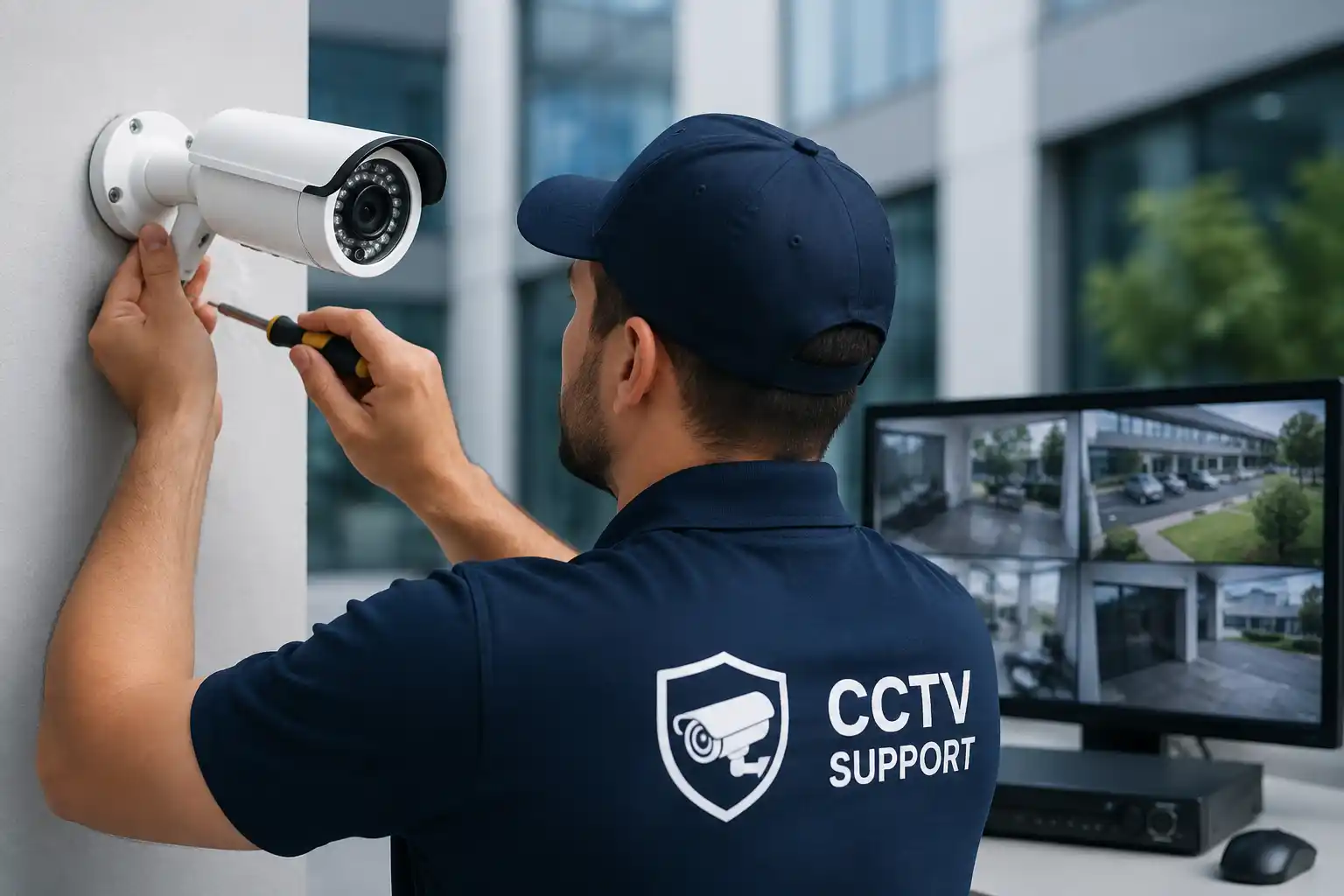
Recorder, cameras, network and storage must be assessed together.
The service method depends on access and whether physical checks are required.
Existing settings should be reviewed and backed up where practical before changes.
Live view, recording, playback, access and time accuracy should be validated.
What NVR configuration means for a business
NVR configuration is the controlled setup and validation of a network video recorder so compatible IP cameras can be discovered or added, video can be recorded according to business requirements, storage can be used correctly, users can be given appropriate access, and authorised staff can retrieve footage when needed. It is mainly used when a new CCTV recorder is being commissioned, an existing system has been changed, cameras are not recording as expected, remote viewing needs to be organised, or the business wants clearer control of recording schedules, retention, time synchronisation and user permissions. Offices, shops, warehouses, clinics, schools, hospitality sites, property operations and multi-location businesses may all require this work. Before configuration is confirmed, the customer should be ready to identify the recorder model, camera count, network connection, storage arrangement, required users, desired recording behaviour, remote-access requirement and any known faults or recent changes. The final scope is environment dependent and may require remote checks, an on-site assessment, third-party coordination or equipment work.
What the service may cover
Depending on the confirmed scope, NVR assistance may include recorder initialization, camera registration, network addressing review, stream selection, recording schedules, motion or event recording settings where supported, storage allocation, date and time configuration, playback checks, user permissions, display layouts, notification review, remote-viewing setup, configuration backup, health checks and documentation.
Configuration is not limited to the recorder interface. Camera power, switching, VLANs, IP routes, DNS or gateway settings, internet access, mobile applications, storage drives and firewall policy can all affect the result. FourTeck can assess these related layers when they are relevant to the reported problem.
Who may need NVR configuration support
The service may suit a business installing a new recorder, adding cameras, replacing an older NVR, moving surveillance equipment to a different network, changing internet service, introducing remote viewing, recovering from a configuration reset, reorganising user access, or investigating gaps in recording.
It can also be useful when several people have inherited an undocumented CCTV system and no one is certain how cameras, recorder channels, storage, network addresses and mobile access were originally arranged. In that situation, assessment and documentation may be as important as the settings themselves.
Common NVR problems and planning triggers
A request for NVR configuration often begins with a simple symptom, but the symptom does not prove the cause. A camera that shows offline could have a power problem, cabling fault, switch issue, address conflict, credential problem, incompatible stream, recorder setting or camera fault. Missing playback could be related to schedules, time settings, storage condition, retention behaviour, drive health, stream selection or the way footage is being searched. Remote viewing may fail because of the application, account permissions, internet connectivity, network translation, firewall policy, cloud relay service, changed public address or recorder settings.
Recording gaps
Footage is missing for certain times, channels or events even though live video appears available.
Offline channels
One or more cameras disappear after network changes, restarts, replacement or address conflicts.
Storage uncertainty
The business cannot confirm how long footage is retained or whether all drives are healthy and recognised.
Remote access failure
Authorised users can view locally but cannot connect from approved mobile devices or remote offices.
Incorrect time
Recorder and camera clocks differ, making incident searches and exported footage harder to interpret.
System expansion
New cameras or higher-resolution streams are planned and capacity, bandwidth and storage need review first.
Why unresolved recorder configuration can affect operations
A CCTV system is often expected to provide usable evidence after an event rather than simply display live pictures. If recording is incomplete, timestamps are wrong, retention is shorter than assumed, permissions are unclear or users do not know how to export footage, the business may discover the weakness only when information is urgently needed. The operational impact can include delayed incident review, extra time spent searching through footage, repeated calls between IT and security teams, difficulty verifying events, uncertainty about whether every camera is recording and avoidable disruption when changes are made without documentation.
Configuration problems can also spread beyond surveillance. An overloaded or poorly planned network path may affect cameras and other business devices. A storage problem can consume recorder resources. Uncontrolled remote exposure can create security risk. Shared administrator accounts can make it difficult to understand who changed settings. The purpose of a structured service is therefore not to adjust random options until the screen looks correct. It is to understand the recording requirement, map the relevant dependencies, make approved changes, test the result and leave the environment easier to support.
Possible NVR configuration assistance
The exact work depends on the recorder, cameras, network design, software, licenses, storage and current condition. Subject to assessment and quotation, assistance may include the following activities.
Confirm system model, channel use, firmware context, network settings, time, storage status and current recording behaviour.
Discover or register compatible cameras, confirm credentials through authorised methods, and check channel mapping and live streams.
Set schedules or supported event-based recording according to the approved operational requirement.
Check recognised drives, available capacity, recording load and practical retention expectations without guaranteeing a fixed period before calculation and testing.
Organise authorised roles for live view, playback, export and administration where the platform supports granular permissions.
Validate live video, recording, playback, time, selected remote access and basic export workflows, then record relevant settings and next actions.
When NVR configuration support may be appropriate
| Business situation | Relevant assistance | What must be confirmed |
|---|---|---|
| A new NVR has been installed but cameras are not yet recording. | Camera discovery, channel setup, network review, recording policy and storage validation. | Compatibility, credentials, camera addressing, available channels, storage and access. |
| Existing cameras became unavailable after a network change. | Addressing, VLAN, gateway, switch-port and recorder connectivity review. | Network diagram, recent changes, switch access and affected devices. |
| Playback does not show the expected period. | Schedule, time, drive, retention and recording-status checks. | Exact time range, affected channels, storage status and whether recording was enabled then. |
| Authorised managers need remote viewing. | Supported remote-access method, user permissions, connectivity and application review. | Security policy, internet status, platform capability and approved users. |
| The site is adding more cameras. | Capacity, channel, bandwidth, PoE, storage and compatibility planning. | Target camera count, resolution, frame rate, switch capacity and required retention. |
NVR configuration service information
| Service topic | Business NVR configuration, assessment and troubleshooting. |
|---|---|
| Main purpose | To align cameras, recording, storage, users, time settings and network access with an approved CCTV operating requirement. |
| Typical systems involved | NVR, IP cameras, storage drives, PoE switches, LAN, firewall or router, monitor, viewing applications and user devices. |
| Assessment method | Remote review, on-site inspection, or a combination, depending on access and the fault or project requirement. |
| Remote suitability | Suitable for many settings, logs and access checks when secure remote access and a working connection are available. |
| On-site suitability | Often required for cabling, power, PoE, rack, drive, camera, switch or physical installation work. |
| Customer access required | Authorised administrator access, site access and relevant network or vendor access as the scope requires. Credentials should be shared only through an approved secure method. |
| Testing and validation | Scope dependent; may include live view, recording, playback, time, user permissions, selected remote viewing and export workflow checks. |
| Documentation | Configuration notes, channel references, network details, completed changes and recommended follow-up may be documented when included. |
| Service location | Dubai and UAE coordination, subject to location, access, engineer scheduling and confirmed scope. |
| Quotation requirement | The commercial scope should be confirmed after the current environment and required work are understood. |
When remote NVR support may be suitable
Remote work can be practical when the NVR is powered and reachable, the internet connection is functioning, secure access has been authorised, and the requirement mainly involves settings, user accounts, camera registration, recording schedules, playback checks, logs or remote-viewing configuration. A customer representative may still need to be present to confirm what appears on local monitors, approve changes or restart equipment when required.
Remote access does not remove the need for change control. Before important settings are altered, the existing configuration should be recorded or backed up where the platform allows, and the business should understand any service interruption that may occur during a restart or network change.
When an on-site visit may be needed
On-site assistance may be recommended when the recorder cannot be reached remotely, cameras are physically disconnected, cabling or PoE must be tested, drives require inspection, a rack or monitor must be accessed, equipment is being installed or replaced, multiple network paths need checking, or a fault cannot be reproduced without local testing. Site attendance may also be useful when the current system is undocumented and a physical inventory is required.
Scheduling depends on the location, building access, engineer availability, site conditions and approved scope. A visit should have a clear objective so the right equipment access, contact person and maintenance window are available.
How an NVR configuration assessment usually begins
A structured assessment reduces the risk of changing the wrong layer. FourTeck can adapt the sequence to the site, but the following journey shows the type of information and checks that may be involved.
- Understand the business outcome. Confirm whether the priority is new setup, restoring recording, adding channels, remote viewing, retention planning, user access, system relocation or another defined requirement.
- Identify affected components. Record the NVR, camera count, storage, switches, network segments, monitor or workstation, mobile application and any third-party services involved.
- Collect evidence. Note error messages, offline channels, missing time periods, storage warnings, connection failures, screenshots and the approximate time any issue began.
- Review recent changes. A router replacement, internet change, password reset, switch reconfiguration, power event, camera addition, firmware update or drive replacement can help narrow the investigation without assuming it caused the fault.
- Confirm access and authorisation. Determine who is permitted to approve changes and whether administrator, network, building or vendor access is available.
- Protect recoverability. Where practical, capture current settings or export a configuration backup before significant changes, and consider rollback requirements.
- Test the relevant layers. Check power, link status, addressing, credentials, stream compatibility, recorder channels, storage, time and network reachability as required.
- Define corrective action. Explain the likely scope, dependencies and any maintenance window, equipment or vendor involvement before implementation.
- Validate the approved change. Confirm live view, recording, playback and the agreed access functions after configuration.
- Record what remains. Document completed work, unresolved third-party items, capacity risks, follow-up maintenance and practical next steps.
Planning configuration changes without creating new recording gaps
Recorder settings can affect every connected channel, so changes should be planned around the business impact. The first decision is what needs to change and why. A company moving from continuous recording to event-based recording, for example, should understand the platform capability, event source, expected behaviour and risk of missed activity before the setting is approved. A company increasing resolution or frame rate should review recorder decoding or recording capacity, network load and storage impact rather than considering image quality alone.
Where settings can be exported, a backup of the current configuration can provide a practical reference. It is also useful to record camera names, locations and channel numbers before remapping. For network-related changes, addressing, gateways, VLANs, switch ports and remote-access dependencies should be mapped first. Changes that may interrupt live view or recording should be scheduled for a suitable maintenance window with an agreed contact person available to confirm critical areas after the work.
Implementation should stay within the approved objective. A request to restore two offline cameras does not automatically justify changing every recorder setting. Likewise, a remote-viewing request should not lead to unnecessary public exposure of the NVR. FourTeck can help define a controlled change plan, apply supported settings, test the agreed functions and identify separate work that requires another specialist, vendor, part or quotation.
Testing, validation and handover after NVR configuration
A configuration change is not complete simply because the interface accepts a setting. Validation should be tied to the business requirement. If the objective is reliable recording, representative channels should be checked for live video, active recording status and playback across a recent time period. If the objective includes remote viewing, the approved remote user should be tested from the intended device or network where practical. If user roles have changed, the business should confirm that each role can access what it needs without receiving unnecessary administrative control.
Time accuracy is important because a recorder, camera and viewing client can show different clocks if synchronisation is inconsistent. Storage should also be reviewed after changes that affect stream quality, recording mode or camera count. A short successful test does not guarantee a specific future retention period because real recording volume can change with scene activity, bitrate, codec, resolution, frame rate, event frequency and drive condition.
Handover may include a concise record of channel names, relevant network settings, approved users, key changes, known limitations and follow-up actions. Administrator guidance can cover safe playback and export procedures, where to report new faults, and which settings should not be changed without review.
1. Make recording behaviour easier to verify
A well-organised NVR should allow an authorised user to understand which cameras are recording, how they are named, when recording is expected and how footage can be found. This sounds basic, yet systems become difficult to manage when channel names no longer match physical locations, schedules were copied from older sites, or different administrators changed settings without documentation.
Configuration can improve visibility by aligning camera names, channel order, schedules, time settings and user access with the actual site. The outcome still depends on the recorder platform, camera compatibility, storage health and network condition. Clear configuration cannot compensate for a failed drive, damaged cable or unsupported camera, but it can make those limits easier to identify and communicate.
2. Connect the recorder to the network safely
An NVR often sits at the meeting point between surveillance and the business network. It may communicate with cameras on one segment, provide local viewing to selected workstations and support authorised remote access through a vendor application or controlled network path. Poor addressing, duplicate IPs, incorrect gateways, unsuitable VLAN rules or unmanaged internet exposure can create reliability and security problems.
FourTeck can review the recorder within the wider network context, including switch connectivity, address planning and access paths when these items are part of the confirmed scope. Security should be based on authorised accounts and appropriately restricted connectivity rather than leaving management interfaces broadly exposed. Exact options depend on the recorder, firewall, network design and remote-viewing method.
3. Improve storage and supportability
Storage planning should begin with the business requirement for usable footage and the technical reality of camera count, resolution, bitrate, frame rate, codec, recording mode and installed capacity. A retention figure should not be guessed from disk size alone. Drive health, recorder limits and future expansion also matter.
Configuration work can verify whether drives are recognised, whether the intended channels are recording, and whether current storage behaviour is broadly aligned with the requirement. Documentation then gives future support teams a clearer starting point. If drives show faults or capacity is insufficient, replacement or upgrade work may fall outside the configuration labour and should be quoted separately after compatibility is confirmed.
Dependencies, access and customer information that may be required
NVR configuration can involve several systems owned or managed by different people. The recorder may be maintained by security staff, while the switches and firewall are managed by IT, the internet connection belongs to a telecom provider, cameras came from another installer and the mobile application depends on a vendor service. Work progresses more predictably when these ownership boundaries are identified before changes begin.
Useful customer inputs may include the service location, NVR make and model, approximate camera count, network diagram if available, switch details, current IP addressing information, storage size, required retention, authorised user list, remote-viewing requirement, recent changes, known errors, backup status, vendor information, building access and a suitable maintenance window. Administrator access may be required for the NVR and, when relevant, the network. Do not send passwords through an unapproved public channel; credentials should be exchanged only through an agreed secure method after identity and authorisation are confirmed.
Compatibility must also be considered. A recorder may not support every camera feature, codec, stream profile or third-party device in the same way. Existing licenses, channel limits, storage bays, firmware relationships and vendor restrictions can influence what can be configured. Where a capability cannot be verified, FourTeck can treat it as an assessment item rather than promising support in advance.
Risks, limitations and exclusions to confirm before work
NVR configuration should be approached with realistic expectations. Diagnosis depends on available evidence and authorised access. If a recorder, camera, storage drive or network device has a hardware failure, configuration alone cannot restore it. Replacement parts, manufacturer repair, data recovery or specialist component work may require a separate supplier or quotation. Existing footage that was never recorded, has already been overwritten or is stored on failed media cannot be assumed recoverable.
Some changes require a maintenance window because cameras, recording services or remote access may restart. Legacy or unsupported systems may have limited configuration options, security constraints or compatibility gaps. Third-party mobile applications, vendor cloud services, internet providers and telecom equipment can also affect remote access. A successful test at handover confirms the agreed function at that time; it does not remove the need for monitoring, storage checks, user management and future maintenance.
The service scope should distinguish configuration labour from new cabling, camera relocation, equipment replacement, storage upgrades, civil work, access equipment, licenses, manufacturer support and wider network remediation. Final commercial terms depend on the approved quotation or service agreement.
Business environments where NVR configuration may be useful
Offices and professional sites
Recorder configuration can help organise entrance, reception, corridor and common-area cameras, with user access limited to authorised managers or security staff.
Retail and showrooms
Businesses may need dependable recording for customer areas, stock rooms, tills or entrances, with practical playback and export workflows when an event must be reviewed.
Warehouses and logistics sites
Larger camera counts and long cable runs can make network, PoE, bandwidth and storage dependencies especially important during recorder configuration or expansion.
Hospitality and restaurants
Multiple operating areas may require clear camera naming, controlled user access and reliable time settings so authorised staff can retrieve the correct footage without searching every channel.
Clinics and education environments
Configuration should follow the organisation’s authorised surveillance policy, access restrictions and operational requirements rather than providing broad viewing privileges by default.
Multi-branch businesses
Consistent naming, user roles, network records and remote-viewing practices can make separate NVR systems easier to support while still respecting site-specific requirements.
Operational, security and maintenance considerations
A recorder should be managed as part of the business technology environment. Administrative access should be restricted to authorised personnel, shared accounts should be avoided where practical, and credentials should not be exposed in public documentation. Remote access should use the platform and network methods approved for the organisation. Unnecessary internet exposure should be avoided because a surveillance recorder may contain sensitive operational video as well as system configuration.
Maintenance should include more than watching a live monitor. A useful review may check whether expected channels remain online, whether storage is healthy, whether time remains accurate, whether users still require their access, whether remote viewing works for authorised staff, and whether configuration documentation matches reality. Firmware and software changes should be planned because updates can affect compatibility, applications or available features. Backups of configuration, where supported, can make recovery easier after hardware replacement or reset, but a configuration backup is not the same as a backup of recorded video.
Businesses should also consider who is responsible for reviewing alerts, replacing failed drives, responding to offline cameras and approving configuration changes. Clear ownership reduces the chance that a warning remains unnoticed or that several people change settings independently. FourTeck can help document responsibilities and recommend a maintenance approach according to the confirmed environment.
Before you contact FourTeck about an NVR
Providing a concise picture of the environment helps determine whether the first step should be remote troubleshooting, an on-site assessment or a planned configuration project. Prepare as many of the following details as are safely available.
- The Dubai or UAE site where the NVR is installed.
- A local contact person who can authorise access and confirm the business impact.
- NVR brand and model, plus approximate age if known.
- Number of connected cameras and number currently affected.
- Camera brands or models if compatibility is part of the request.
- The main symptom, error message or desired configuration outcome.
- When the issue started and whether it is constant or intermittent.
- Recent changes to internet service, router, switch, passwords, cameras, storage or firmware.
- Whether local live view and playback currently work.
- Whether remote viewing is required and which authorised users need it.
- Current network or IP information if documented.
- Installed storage capacity and any drive warnings visible on the NVR.
- Required footage retention or recording policy, if the business has defined one.
- Availability of authorised administrator access without sending passwords publicly.
- Building access, rack access and any maintenance-window restrictions.
- Any vendor, installer, ISP or facilities contact that may need coordination.
Checklist for defining the service and quotation
Before a quotation is finalised, the engagement should distinguish the requested outcome from optional improvement work. This helps avoid assumptions about what is included.
- Confirm whether the objective is setup, troubleshooting, expansion, access, retention, migration or documentation.
- Confirm the number of NVRs, cameras and sites involved.
- Confirm whether the existing system is currently recording.
- Confirm which administrator and network access can be provided.
- Choose whether the initial scope is remote, on-site or assessment first.
- Identify any new cameras, drives, switches, cabling or licenses expected to be added.
- Define the tests that must be completed before handover.
- State whether configuration documentation is required.
- Identify vendor or ISP coordination that may be necessary.
- Confirm the preferred maintenance window and any business blackout periods.
- Separate equipment replacement or civil work from configuration where applicable.
- Confirm whether follow-up maintenance or periodic health checks should be quoted separately.
How FourTeck can assist with NVR configuration
FourTeck can begin by clarifying what the business expects the recorder to do and what is currently failing or changing. That may involve a new NVR that needs commissioning, an existing recorder with offline cameras, uncertainty about recording schedules, storage warnings, remote-viewing problems, a network move or an expansion that requires capacity review. The initial discussion is used to identify the likely technical layers and decide what evidence or access is needed next.
For remote work, FourTeck can review authorised recorder and network settings when secure access is available. For physical issues, the service can be coordinated on site where the quotation includes the required inspection, cabling checks, device access or equipment work. When another vendor or provider owns part of the problem, FourTeck can help organise relevant findings so the customer has clearer technical information for escalation.
After assessment, the proposed scope can separate essential corrective work from optional improvements. The quotation may define configuration tasks, required equipment, testing, documentation, travel or site conditions, vendor dependencies and exclusions. This makes it easier for managers to approve a controlled change rather than authorising an undefined troubleshooting session.
To understand FourTeck’s broader approach to connected workplace support, visit the FourTeck IT Services home page or review the company service background. The focus is practical assessment, controlled technical work, clear testing and support that considers the recorder as part of the wider network and CCTV environment.
Dubai and UAE service coordination
For a Dubai NVR configuration request, the first service decision is usually whether the issue can be assessed securely from the existing network or whether an engineer needs physical access to the recorder, cameras, switches, cabling or storage. Remote assistance can reduce unnecessary site work when the environment is reachable and the required task is configuration based. On-site support may be more appropriate when there are offline devices, suspected power or cabling faults, storage replacement, rack work, network tracing or a new installation that needs physical validation.
Across the UAE, service timing depends on the confirmed scope, engineer availability, customer access, site conditions, required parts and third-party providers. Building permits, security desk procedures, restricted technical rooms and business operating hours can affect the visit plan. Customers should identify these conditions before scheduling so the necessary access and contact people are available.
Contact FourTeck to confirm whether the requirement is best handled as configuration support, fault diagnosis, an on-site CCTV assessment or a broader network and surveillance project. Installation, configuration, migration, maintenance and equipment work should each be explicitly included in the quotation when required.
Dubai, Abu Dhabi, Sharjah and Ajman coordination
FourTeck can coordinate business IT and surveillance support requirements for customers in Dubai, Abu Dhabi, Sharjah and Ajman, with the service method determined by the technical need and approved scope. A configuration problem may begin remotely when secure access and working connectivity are available, while camera, cabling, PoE, storage or rack issues may justify a planned site visit. Multi-site businesses may also require a common configuration standard, separate local assessments or staged changes so each location can be validated before moving to the next. Scheduling, travel, building access, equipment availability, maintenance windows and third-party dependencies can affect the service plan. The presence of a recorder in an emirate does not by itself define attendance timing or coverage; contact FourTeck with the site details, system condition and target outcome so the appropriate support route can be confirmed.
Related FourTeck services that may support an NVR project
NVR work often crosses into camera, network and wider business IT support. Rather than assuming every related task belongs in the same engagement, FourTeck can help identify which services should be included and which should be treated as separate work.
Review surveillance, camera, recorder and maintenance requirements within the wider service catalogue.
Office network support
Useful when NVR or camera issues involve switches, VLANs, IP addressing, cabling or connectivity.
IT infrastructure assessment
Appropriate when an undocumented site requires a broader review before configuration or expansion.
On-site technical assistance
Discuss physical checks for recorders, cameras, racks, network ports, power and storage where required.
Why businesses contact FourTeck for recorder and CCTV support
A recorder problem often sits between security operations and IT. Security staff may know which camera matters, while the network team understands addressing and switching, a facilities team controls physical access, and a third-party installer may own part of the original design. FourTeck can help bring these technical threads into one assessment so the customer receives a clearer explanation of what is affected and what should happen next.
The service approach focuses on practical questions: Is the camera powered? Can the NVR reach it? Is the stream compatible? Is recording enabled? Is storage healthy? Are clocks aligned? Can authorised users find and export footage? Is remote access configured in an acceptable way? Which changes can be made safely, and which require a maintenance window or vendor involvement? Answering these questions methodically reduces guesswork and makes quotation scope easier to define.
FourTeck can also provide documentation and handover when these items are included, helping the customer understand the completed work and remaining dependencies. To discuss a current recorder problem or planned configuration, use the FourTeck contact page.
Questions businesses ask before arranging NVR configuration
Businesses often search for NVR help only after a recording problem appears, but the same service can also be useful during installation, expansion, relocation or network change. The following answers are designed to help managers decide what type of support they need, what information to prepare and what should be confirmed before work starts.
Can an NVR be configured remotely?
Many recorder settings can be reviewed remotely when the NVR is powered, reachable through an authorised secure method, and connected to a working network. Remote work may include checking camera status, channel settings, schedules, time, storage status, users, logs and selected remote-viewing settings. It can be a practical first step when the problem is clearly software or configuration related. Remote access is less useful when the recorder has no network connectivity, a camera is physically disconnected, a storage drive must be handled, or the problem depends on cabling, PoE or switch-port testing. In those cases, an on-site visit may be required. The customer should confirm who can authorise access and have a local contact available during the session if physical actions such as restarts or cable checks may be needed.
Why does my NVR show a camera as offline?
An offline message does not identify one guaranteed cause. The camera may have lost power, the cable or switch port may be faulty, its IP address may have changed, another device may be using the same address, the NVR may have an old password, the camera may be on a different VLAN, or the selected stream may not be compatible with the recorder. A useful diagnostic process starts by identifying whether one camera or many cameras are affected and whether the change happened after a power event, network modification, password reset or equipment replacement. If several cameras connected to one switch fail together, the switch or uplink may need attention. If only one camera is affected, power, cable, address and credentials become more relevant. The correct next step depends on evidence rather than replacing equipment immediately.
Why is live video available but no playback can be found?
Live video confirms that a camera can currently deliver a stream, but it does not prove that the recorder saved footage for the time being searched. Recording schedules may be disabled for that channel, the wrong stream may be selected, the storage drive may be full or faulty, the recorder may be set to overwrite older footage, or the camera and NVR clocks may not match. The first step is to check recording status and the exact date, time and channel where footage is expected. It is also useful to compare the recorder time with the real local time. If storage warnings are present, further recording should be assessed carefully. A technician can review the recording policy, drive status and available history, but cannot guarantee recovery of footage that was never recorded or has already been overwritten.
How should we decide between continuous and event-based recording?
The decision should follow the business requirement, the capabilities of the NVR and cameras, available storage and the acceptable risk of relying on event detection. Continuous recording generally creates predictable coverage but uses more storage. Event-based recording can reduce storage use, yet its usefulness depends on how events are generated, camera analytics, sensitivity, scene conditions and platform support. Some businesses use different schedules for different cameras because entrances, storage areas and low-activity spaces have different priorities. Before changing the recording mode, identify which locations are business critical and how footage is expected to be reviewed. Any retention target should then be checked against real stream settings and storage capacity rather than assumed from a generic calculator alone.
How much footage can an NVR retain?
Retention depends on more than the total hard-drive size. Camera count, resolution, bitrate, frame rate, codec, scene activity, recording mode and the recorder’s storage management all affect how quickly capacity is used. Adding cameras or increasing quality can shorten retention even if the physical storage does not change. Event recording may use less space in a quiet environment, but actual consumption varies with activity. Drive health and reserved system capacity also matter. For a useful estimate, FourTeck can review the configured streams, camera count, recording schedule and installed drives. The result should be treated as an operational estimate and then checked in the live system over time. If a specific retention policy is mandatory for the organisation, that requirement should be shared before configuration so storage and recording decisions can be assessed against it.
Can we add cameras from another brand to the existing NVR?
Possibly, but compatibility must be confirmed rather than assumed. Different recorders support different protocols, profiles, codecs, resolutions, analytics and channel limits. A third-party camera may provide basic live view and recording while some advanced functions remain unavailable. Firmware versions and authentication methods can also affect interoperability. Before purchasing or installing additional cameras, provide the NVR model and intended camera models so the supported combination can be checked. Network and PoE capacity should be reviewed at the same time. A camera that is technically compatible can still create a wider problem if the switch has insufficient power budget, the recorder has no free channel, the network path is constrained or storage is already close to the required limit.
Why did remote viewing stop after our internet or router was changed?
Remote viewing often depends on several settings outside the NVR itself. A router replacement may change the local subnet, gateway, DNS behaviour, firewall policy or network address translation. A new internet service can also change public addressing or the way inbound connections are handled. If the recorder uses a vendor cloud or relay service, account status and outbound connectivity may be relevant instead. The safest approach is to identify how remote access was designed before attempting to recreate old rules. Broadly exposing the recorder to the internet is not a good substitute for understanding the intended access method. FourTeck can review the supported remote-viewing path, recorder network settings and relevant firewall or router configuration where this is included and authorised.
What should be backed up before changing NVR settings?
Where the platform supports it, exporting the current configuration can provide a useful rollback reference before major changes. It is also sensible to record current camera names, channel mapping, network details, time settings, user roles, recording schedules and remote-access information. The exact backup capability varies by recorder. A configuration backup should not be confused with a video backup: it normally protects settings, not the historical recordings stored on the drives. If an important incident is already under review, the required footage should be exported through the authorised process before risky maintenance is undertaken. Any factory reset, storage initialisation or destructive recovery step should be avoided until the business understands its impact and the correct authorisation is in place.
Do we need an on-site NVR assessment before receiving a quotation?
Not always. A clear remote discussion may be enough to quote a defined configuration task when the customer can provide the recorder model, camera count, screenshots, network context and exact objective. An on-site assessment becomes more useful when the system is undocumented, several faults are present, camera cabling or power must be traced, storage needs physical inspection, network cabinets are involved, or the customer is planning an expansion without reliable records. The quotation itself should state what is included so configuration, equipment supply, cabling, installation, travel, testing and documentation are not mixed together unintentionally. If the initial information is incomplete, FourTeck can recommend assessment first and prepare the final scope after the environment is understood.
What information should our IT team provide to speed up the assessment?
The most useful information is a short current-state summary rather than a large collection of unrelated screenshots. Include the NVR make and model, number of configured and affected cameras, IP range or VLAN if known, switch location, storage warnings, exact error messages, recent changes, whether live view works, whether playback works, and whether the issue affects local or remote users. If there is a network diagram or previous configuration document, share it through an approved channel. The IT team should also state which systems they manage and which belong to another installer, telecom provider or security contractor. This ownership information helps avoid delays when a change requires access that the local IT administrator does not control.
Should we repair the current NVR configuration or replace the recorder?
Replacement should follow assessment, not frustration. If the recorder is healthy, supported, appropriately sized and compatible with the existing cameras, a configuration or network correction may be enough. Replacement becomes more relevant when hardware is failing, storage interfaces are unreliable, the recorder lacks required channels or capacity, the platform is no longer supportable, required security or remote-access methods cannot be implemented, or planned cameras are not compatible. The business should also consider the effort of migrating camera settings, user accounts and existing workflows. FourTeck can help separate faults that are repairable through configuration from limitations that justify a hardware or platform review, but equipment selection should be based on confirmed requirements.
What should we test before accepting completed NVR configuration work?
Acceptance should be tied to the agreed scope. At minimum, representative cameras should show live video, recording should be active according to the approved schedule, playback should work for a recent period, timestamps should be reasonable, and authorised users should have the intended permissions. If remote viewing is part of the project, test it from the approved device or network rather than only from inside the site. If footage export is operationally important, confirm that an authorised user can complete the agreed export process and understand where files are stored. Any known limitations, unavailable cameras, drive warnings or third-party dependencies should be recorded at handover instead of being left as assumptions.
Frequently asked questions about NVR configuration in Dubai
Does NVR configuration include camera installation?
Not automatically. Camera mounting, cabling, power work and physical installation should be included specifically in the quotation if required. Configuration may be quoted separately from installation.
Can FourTeck configure an existing NVR?
Yes, subject to assessment, authorised access, platform condition and compatibility. Existing configuration should be reviewed before significant changes are made.
Can you recover deleted or overwritten footage?
Recovery cannot be guaranteed. If footage was never recorded, has been overwritten or storage has failed, specialist recovery may be required and may still be unsuccessful.
Will changing NVR settings interrupt recording?
Some changes or restarts can interrupt live view or recording temporarily. Maintenance-window needs depend on the platform and planned work and should be confirmed before implementation.
Can user access be limited?
Many NVR platforms support different user roles or permissions, but the exact controls depend on the model and software. FourTeck can configure supported access according to the approved requirement.
Can remote viewing be set up on phones?
Remote mobile viewing may be possible when the recorder, application, account, network and security policy support it. The access method should be verified rather than assumed.
Do you need the NVR password before the visit?
Authorised administrator access may be required, but passwords should not be published or sent through an insecure public channel. Agree a secure credential-sharing method after the engagement is confirmed.
Can an NVR work on a separate CCTV VLAN?
A segmented design may be possible and can improve manageability, but routing, firewall policy, camera reachability and authorised viewing paths must be planned for the actual network environment.
How long does NVR configuration take?
The duration depends on camera count, current condition, access, documentation, compatibility, network changes, storage work, testing and third-party dependencies. A fixed duration should not be promised before scope assessment.
Can FourTeck support multiple NVR sites?
Multi-site support can be assessed. The service plan should define the NVRs, cameras, locations, access methods, local contacts, remote or on-site requirements and any common configuration standard.
Discuss your NVR configuration requirement with FourTeck
Whether the task involves a new recorder, offline cameras, recording gaps, storage questions, remote viewing, user permissions or an expansion, the first useful step is to define the current environment and required business outcome. Share the NVR model, camera count, site location, main symptom, recent changes and available access. FourTeck can then advise whether remote assessment, an on-site visit or a scoped configuration project is the appropriate next action.
The final service scope depends on the installed equipment, compatibility, network condition, authorised access, storage, site conditions, required testing and any third-party involvement. Configuration, installation, replacement parts, cabling and maintenance should be identified separately where applicable so the quotation is clear.