
NVR Installation in Dubai, UAE
A network video recorder sits at the centre of many IP CCTV systems. A dependable installation needs the recorder, cameras, storage, network, user access and viewing methods to work as one controlled environment. FourTeck helps businesses assess those dependencies before configuration begins, so the project can be scoped around the actual site rather than assumptions.
Whether the requirement is a new recorder, replacement of an older NVR, additional cameras, improved recording retention or a cleaner handover of an existing system, the first step is to confirm camera compatibility, network design, storage requirements, security access and the physical work needed at the premises.
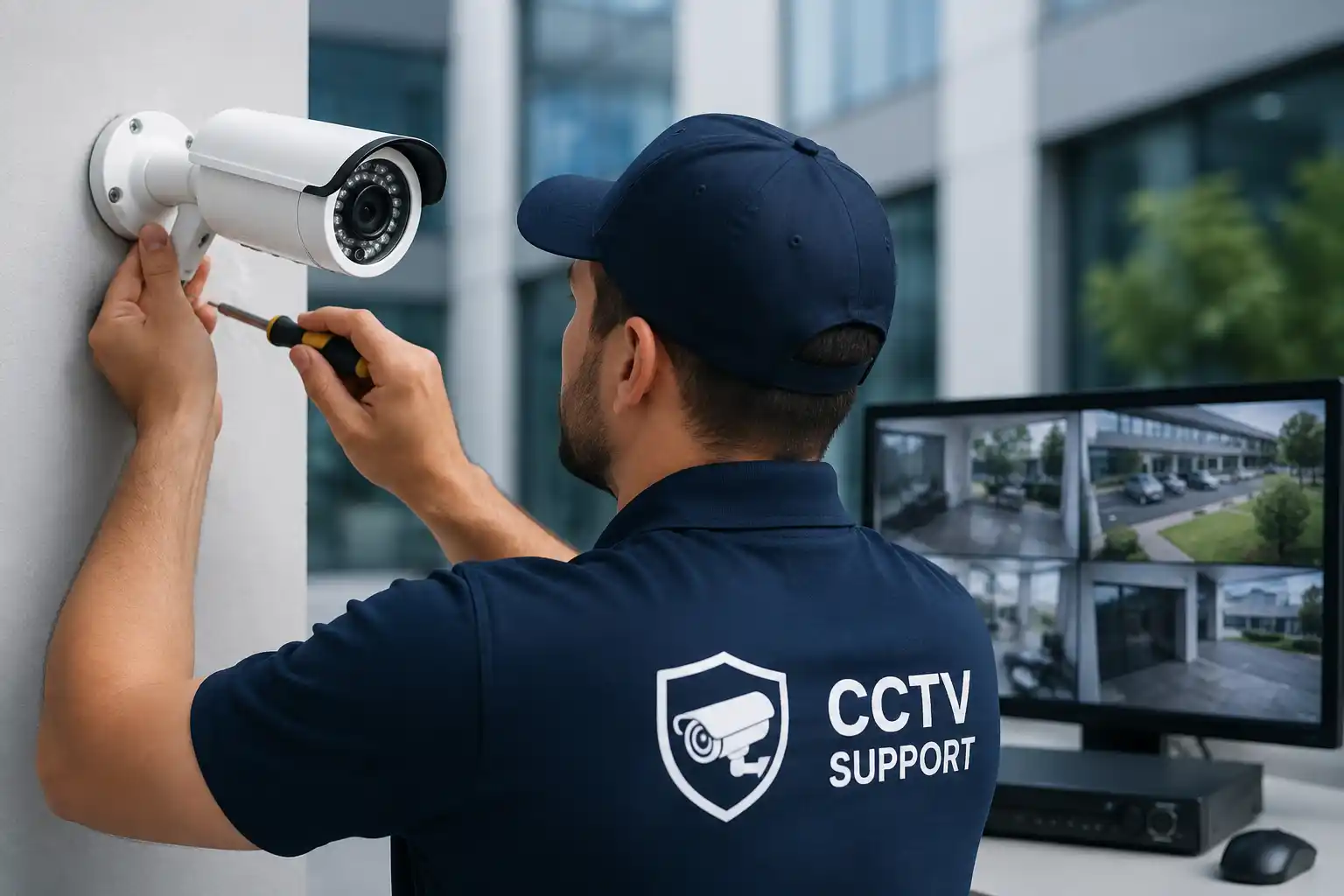
Camera, storage and network requirements are confirmed before the final scope.
The service method depends on access, physical work and the condition of the current system.
Recorder settings, user access and network changes should be authorised and documented.
Live view, recording, playback, time settings and access can be validated before handover.
What does NVR installation involve?
NVR installation is the planned setup of a network video recorder as the recording and management point for compatible IP cameras. The work may include recorder placement, storage preparation, network addressing, camera registration, recording schedules, time synchronisation, viewing permissions, local display setup, secure remote access and functional testing. Businesses should consider the service when deploying a new IP CCTV system, replacing an existing recorder, expanding camera capacity, reorganising a surveillance network or correcting an installation that is difficult to manage. Before work is confirmed, the customer should be ready to provide the site location, recorder and camera details, approximate camera count, existing network information, desired recording retention, authorised access contacts and any known constraints. The exact scope depends on the current environment, available cabling and switching, compatibility, storage condition, network access, building access and whether physical work is required.
What the NVR installation service may cover
A recorder does not operate in isolation. It receives video streams from cameras, writes those streams to storage, presents live and recorded video to authorised users, and often relies on the local network for camera connectivity and remote administration. Depending on the confirmed project scope, FourTeck assistance may begin with checking the intended recorder location, rack or shelf space, power availability, ventilation, monitor connection, network connection and the condition of installed storage drives. If the NVR is replacing another unit, the existing camera list, IP addresses, recording configuration and user requirements may need to be reviewed before any change is made.
Camera onboarding can involve confirming that each IP camera is reachable, has a suitable address, is visible from the recorder network and can be registered using authorised credentials or a supported discovery method. The installer may need to review encoding profiles, camera resolution, frame rate, bitrate, recording mode and time settings because those choices influence storage use, bandwidth and the quality of recorded evidence. These settings should be selected around the business requirement rather than copied from a generic template.
Storage planning is another central part of the service. The number of cameras alone does not determine retention. Recording duration depends on resolution, compression method, frame rate, bitrate, motion or continuous recording policy, scene activity and available drive capacity. Existing disks may require health review, and replacement or additional storage should be treated as a separate hardware requirement where applicable. FourTeck can help define the technical information needed to estimate storage, but actual retention should be validated after the system is operating with real camera streams.
Where the scope includes remote viewing, access should be planned with security in mind. User accounts, permissions, network policies, vendor-dependent connectivity methods and mobile or desktop viewing applications can all affect the final design. The objective is to give approved users the access they require without creating unnecessary exposure. Some remote-access methods depend on the recorder brand, firmware, licensing, internet connection or third-party service, so availability must be confirmed for the specific system.
Who may need this service?
NVR installation can suit offices, retail locations, warehouses, clinics, education facilities, showrooms, hospitality sites, property-management environments and multi-branch businesses that use IP cameras for authorised surveillance. It may also suit a business moving into a new office, expanding the number of cameras, replacing a failed or outdated recorder, changing its network design or trying to improve how recordings are accessed and documented.
The service is especially relevant when internal staff can identify what they want from the surveillance system but do not want to make unmanaged changes to camera addressing, storage, recorder settings or network access. A scoped installation gives the business a defined point for assessment, implementation, testing and handover.
What should be confirmed first?
The useful starting questions are practical: How many cameras are connected now? Are they IP cameras? Is an NVR already installed? Are the cameras and recorder from the same vendor or a mixed environment? Is PoE supplied by the NVR or network switches? What recording period is required? Who needs live view, playback or export rights? Is remote viewing required? Is the installation new work or a replacement?
Answers to these questions help determine whether the job is mainly recorder configuration, a wider network and CCTV project, or a replacement that also needs migration planning. They also help identify dependencies that may need separate hardware, cabling, switch, firewall or vendor work.
Planning triggers and problems that often lead to an NVR project
New CCTV deployment
A new site may already have cabling and cameras planned but still needs the recorder, storage, network connections, viewing stations and user access organised into one working system. Installation planning should account for current camera count and realistic future expansion.
Recorder replacement
An existing NVR may be unreliable, unsupported, damaged, undersized or difficult to administer. Replacement is not only a hardware swap; camera compatibility, credentials, storage, addressing, playback expectations and remote access may all need review.
Camera expansion
Additional cameras can increase recorder load, network bandwidth, PoE demand and storage consumption. The recorder channel capacity and network path should be reviewed before cameras are added so that the change does not create avoidable recording gaps.
Missing or unreliable recordings
When playback is incomplete, the cause could sit in the recorder, storage, camera stream, network, time configuration or recording schedule. Installation or corrective work should begin with evidence rather than assuming that the NVR itself is defective.
Poor system documentation
A CCTV environment becomes harder to maintain when nobody has a reliable camera list, address plan, administrator ownership record or explanation of which switch and recorder ports are used. A planned NVR project is a useful opportunity to improve documentation.
Office relocation or network change
Moving the recorder or changing subnets, switches, firewalls or internet services can interrupt camera communication and remote viewing. The NVR should be treated as part of the wider network change, with testing before the project is signed off.
Why an incomplete recorder setup can affect business operations
A surveillance system may appear healthy because live camera images are visible, yet still fail when recorded evidence is needed. Examples include incorrect recording schedules, full or unhealthy storage, wrong date and time, cameras that drop intermittently, user accounts that cannot export footage or remote access that depends on one undocumented administrator account. These are operational issues as much as technical issues because they affect how quickly authorised staff can review an incident, confirm activity or support an internal investigation.
Poor recorder design can also make later expansion expensive. An NVR selected without considering future cameras, higher recording quality or longer retention may reach its practical limit sooner than expected. Likewise, a recorder connected to an unmanaged network without clear addressing or switch documentation can be harder to troubleshoot when a camera disappears. The aim of an installation service is therefore not simply to produce a live picture; it is to create a system whose recording, access, storage, network dependencies and handover are understandable.
Possible NVR installation scope
Depending on the confirmed scope, assistance may include some of the following activities. Not every item is automatically part of every quotation, and existing-system condition can change the amount of work required.
Review intended location, rack or shelf space, power, ventilation, monitor access, network connection and physical access.
Identify camera count, IP addressing, connection status, model information where available and the current method used to reach each camera.
Review installed drives, available capacity and retention requirements, with hardware replacement or expansion treated according to the quotation.
Coordinate suitable NVR addressing, gateway, DNS or VLAN requirements where they are relevant and authorised.
Add compatible cameras to the recorder and verify that streams can be viewed and recorded consistently.
Configure approved recording schedules, stream profiles and retention-related settings according to the agreed operational requirement.
Create or review authorised user roles so that live view, playback, export and administration are limited appropriately.
Assist with a supported remote-access method when the recorder platform, internet service, security policy and approved scope allow it.
Validate live view, recording, playback, timestamps, selected user access and documented next steps before completion.
Service-fit matrix
| Business situation | Relevant assistance | What must be confirmed |
|---|---|---|
| New IP camera system | Recorder placement, storage, network setup, camera registration, recording and handover. | Camera compatibility, count, PoE design, cabling, storage objective and viewing requirements. |
| Replacing an existing NVR | Current-state review, replacement planning, camera re-registration, testing and access handover. | Existing credentials, camera support, available backups, required downtime and remote-viewing method. |
| Adding more cameras | Capacity review, network and PoE check, storage impact review and recorder configuration. | NVR channel capacity, drive space, network bandwidth, switch capacity and camera type. |
| Recorder works but playback is unreliable | Diagnostic review of storage, stream continuity, schedule, timestamps and camera communication. | Symptoms, affected cameras, time range, error messages, storage health and recent changes. |
| Need remote access for authorised managers | Access-method review, user-role configuration and functional testing. | Platform support, internet connectivity, security policy, mobile or desktop application and user approvals. |
NVR installation service information
| Main purpose | Install or reconfigure a network video recorder so compatible IP cameras can be viewed, recorded, played back and managed according to the agreed business requirement. |
|---|---|
| Typical systems involved | NVR, IP cameras, hard drives, PoE switches or recorder PoE ports, network switches, router or firewall, monitor, viewing applications and supporting cabling. |
| Assessment method | Remote review may be possible for accessible configurations; on-site assessment is suitable when physical equipment, cabling, drives, ports or local display connections must be inspected. |
| Customer access required | Authorised administrative access to the recorder and relevant network equipment may be required. Credentials should be shared only through an approved secure method after identity and authorisation are confirmed. |
| Customer information required | Site location, camera count, recorder details, existing network information, recording objective, remote-viewing requirement, known faults, maintenance window and site contact. |
| Configuration support | Scope dependent. May include recorder network settings, camera registration, streams, schedules, time settings, user roles and supported remote access. |
| Testing and validation | May include live view, recording, playback, timestamps, camera reconnect behaviour, selected user accounts and export workflow where included. |
| Security considerations | Access should be limited to authorised users, default credentials should not remain in use, and remote connectivity should follow the capabilities and security controls of the environment. |
| Scheduling dependency | Engineer availability, customer access, building access, required parts, third-party providers and the confirmed work scope can affect scheduling. |
| Quotation requirement | The final commercial scope should be confirmed through an approved quotation after the environment and required work are understood. |
Remote configuration or on-site NVR installation?
When remote assistance may be suitable
Remote work can be appropriate when the NVR is already powered, connected to a working network, reachable through an authorised method and supported by a customer representative who can confirm local status. Configuration tasks such as reviewing camera registration, recording schedules, user permissions, time settings or remote-viewing settings may be possible without an engineer physically handling the recorder.
Remote support is not a substitute for physical testing. If a hard drive, PoE port, cable, power source, rack location, monitor connection or camera link must be inspected, an on-site visit may be needed. Remote access also depends on the security policy and the customer’s approval.
When on-site work is usually more appropriate
Physical installation normally requires local access to position the recorder, connect power and network, fit or check storage drives, label cables, connect monitors, inspect switch ports and verify camera links. On-site assistance is also useful when the existing CCTV documentation is incomplete and the real topology must be traced before changes can be made safely.
The visit scope should identify whether the work includes only the recorder or also cameras, cabling, PoE switches, network changes, firewall changes or display installation. These items can affect time, access permissions and material requirements, so they should be confirmed before work begins.
Assessment and installation journey
- Define the operational objective. FourTeck first needs to understand why the NVR is being installed. A new deployment, replacement, expansion or corrective project has different risks. The business should explain which areas are monitored, who needs access, how recordings are used and what retention expectation should be considered.
- Identify existing components. The camera count, camera models where available, NVR model, installed drives, PoE switches, network switches, router or firewall and viewing workstations can be inventoried. Existing diagrams and login ownership records are useful, but a site review may be needed when documentation is missing.
- Review compatibility and capacity. The recorder must be appropriate for the camera environment, channel count and recording profile. Storage and network capacity should be considered together because higher camera quality and longer retention increase demand. Mixed-vendor systems may require additional verification.
- Confirm access and change control. Administrative access, security approval, backup of relevant settings and a suitable maintenance window should be arranged before configuration. If an existing recorder is being replaced, the customer should understand what historic footage, if any, must remain available and how that will be handled.
- Prepare the physical installation. The recorder location should have appropriate power, ventilation, network connectivity and controlled physical access. Rack installation, shelf placement, monitor connection and cable labelling should be included where required by the agreed scope.
- Configure the recorder network. Suitable addressing, gateway and related network settings are applied according to the existing network design. Changes to VLANs, routing or firewall policies should be authorised and should consider the wider IT environment rather than the CCTV system alone.
- Register and validate cameras. Compatible cameras are added to the NVR, live streams are checked and communication stability is reviewed. If cameras are offline, the cause may be power, cabling, switch, addressing, credentials or compatibility rather than the recorder itself.
- Set recording and access policies. Recording schedules, stream profiles, time configuration and authorised user roles can be applied according to the approved requirements. Remote viewing is configured only where the chosen method is supported and acceptable under the customer’s security policy.
- Test recorded evidence. A useful test checks more than live view. The installer should confirm that selected cameras actually record, timestamps are sensible, playback can be found, authorised users can perform their expected tasks and the recorder can continue operating after normal reconnect events.
- Document and hand over. The customer should receive practical information about recorder access ownership, camera naming, basic recording policy, key network details, known exclusions and future maintenance recommendations. Documentation depth depends on the confirmed service scope.
Capability focus 1: recording that can be validated, not merely viewed
The most important distinction in an NVR project is the difference between seeing a camera live and knowing that usable recordings are being stored. A camera can appear normally on a monitor while the recorder has an incorrect schedule, a storage fault, a time mismatch or an intermittent stream that creates gaps. Installation testing should therefore include recorded playback from representative cameras and time periods, not just a live-view screen.
This matters to businesses because recorded footage is often needed after an event rather than while it is happening. If the system is difficult to search, timestamps are wrong or storage retention is shorter than expected, the problem may only become visible when evidence is requested. FourTeck can help align recording settings with the agreed operational purpose and explain the dependencies that influence actual retention.
No installer should promise a specific retention period without considering camera streams, drive capacity and recording policy. Even a well-planned estimate should be validated against actual operation. Ongoing storage health and periodic playback checks remain important after installation because drive condition, added cameras or configuration changes can affect future results.
Capability focus 2: camera, network and recorder dependencies kept visible
IP CCTV is a networked system. A camera may receive power from a PoE switch, use a configured IP address, send a compressed video stream across one or more switches and deliver that stream to the NVR. The recorder may then serve live and recorded video to local users and, where authorised, to remote users through an internet connection or vendor-supported service. Each stage creates a dependency that should be understood during installation.
This connected view prevents the recorder from becoming the default explanation for every fault. If one camera is missing, the issue may be a damaged cable, unavailable PoE, wrong address, changed credentials or a switch-port problem. If all remote viewing fails while local playback works, the problem may sit with internet connectivity, firewall policy, a remote-access service or the viewing application. If playback stutters, the cause could relate to stream load, storage, network performance or client capability.
A documented installation makes these relationships easier to troubleshoot later. Camera names, addresses, switch connections and user roles do not need to become an oversized manual, but they should be clear enough that authorised support staff can identify the path and avoid unnecessary trial-and-error changes.
Capability focus 3: controlled access and clearer handover
Surveillance access should follow business responsibility. A person who only needs live view does not necessarily need administrator rights. Another user may require playback and export but no ability to change network settings or delete configurations. The exact permission options depend on the NVR platform, but the principle is consistent: authorised access should be deliberate, documented and limited to the functions users need.
This is particularly important when a recorder has been inherited from a previous supplier, office manager or contractor. Shared administrator credentials, unknown recovery ownership or undocumented mobile access can create operational and security problems. An installation or replacement project provides an opportunity to clarify who owns the system administration process and how credentials should be managed securely.
FourTeck can assist with user-role setup where supported by the recorder, but the customer remains responsible for approving access and identifying authorised users. Passwords should not be posted in public service requests. Credentials and recovery information should be exchanged only through an approved secure method after identity and authorisation are confirmed.
Dependencies, access and customer inputs
The quality of an NVR installation depends heavily on information and access available at the start. The customer does not need to know every technical detail, but it helps to identify the person who understands the site, the person authorised to approve CCTV access and the person responsible for the business network. In smaller companies this may be one person; in larger organisations it may involve facilities, security and IT teams.
Camera compatibility is a major dependency. An NVR may support cameras differently depending on brand, protocol, firmware and feature set. Basic video may work while advanced functions do not. Mixed-vendor environments therefore need verification rather than assumptions. The same applies to viewing applications, browser access, mobile access and remote connectivity, all of which can depend on the recorder platform and current software support.
Network access can affect both installation and troubleshooting. The installer may need approved access to a switch, router, firewall or VLAN configuration to confirm why cameras are not reachable or why remote viewing is unavailable. These changes should not be made casually because the network may also support computers, phones, servers, Wi-Fi and other business services. Where a separate IT provider manages the network, vendor coordination may be part of the project.
Physical access matters as well. Recorder cabinets, ceiling camera points, telecom rooms, locked racks and building access procedures can affect the work plan. If cabling changes, ladder work, new power points or civil work are required, those items should be identified and quoted appropriately rather than assumed to be part of recorder configuration.
Risk, limitation and exclusion guidance
NVR work should be scoped with realistic limits. Diagnosis depends on available evidence, access and the ability to test the affected system. A camera that cannot be reached may require cabling or power work outside the recorder scope. A failed hard drive may require replacement hardware. A legacy recorder or camera may have limited compatibility or no current software support. Remote-viewing problems may require action from an ISP, firewall administrator, vendor service or mobile application provider.
Configuration changes can interrupt recording, so suitable maintenance windows and rollback thinking are important when modifying an existing system. If historic recordings must be retained during a recorder replacement, that requirement should be discussed before work starts because export or migration options depend on the existing platform and available storage. No general service page can guarantee that historic footage will transfer between recorders.
A successful installation test confirms the agreed functions at that point in time; it does not remove the need for storage checks, firmware review, access management and periodic maintenance. Final commercial terms, hardware requirements, third-party work and exclusions depend on the approved quotation or service agreement.
Business environments where NVR installation may be useful
Different sites use CCTV differently, so recorder planning should reflect the operational context. A retail location may care about clear playback around entrances, counters and stock areas. A warehouse may need longer retention, wider camera coverage and careful network planning across a larger building. An office may focus on controlled access, reception areas, corridors and a clean handover to facilities or IT staff. A clinic may require strict internal control over who can view or export recordings. A multi-branch organisation may need standard naming, access practices and recorder documentation so different sites can be supported consistently.
Construction offices, showrooms, restaurants, schools, hospitality sites and property-management locations can each present different access, cabling and camera-placement conditions. The role of the NVR remains similar, but the number of cameras, network design, retention needs, remote-viewing expectations and maintenance responsibilities can vary considerably. This is why a service quotation should be based on the actual environment rather than a generic camera count alone.
Businesses expanding from a small standalone CCTV system to a larger networked environment may also need coordination between surveillance and core IT. In that case, FourTeck can consider the recorder alongside network switches, addressing, firewall rules and authorised user access so that the change does not create confusion for the rest of the business infrastructure.
Operational, security and maintenance considerations after installation
Once the NVR is operating, simple operational checks help reveal problems before an urgent playback request. Staff responsible for the system should know how to confirm that all expected cameras are online, whether recording indicators are normal, how much storage is available, how to find a recent recording and whom to contact if a camera or drive shows an alert. The exact monitoring method depends on the recorder, but ownership should be clear.
Security should also remain part of maintenance. Accounts change when staff join or leave, mobile devices are replaced and contractors finish projects. Unused accounts should be reviewed, administrator rights should stay limited and remote access should be reassessed when the network or business policy changes. Firmware and application updates may be relevant, but they should be planned with compatibility, backup and rollback considerations rather than applied blindly.
Physical conditions matter to recording reliability. NVRs and hard drives generate heat and should not be placed where airflow is blocked or equipment is exposed to unsuitable environmental conditions. Power quality, UPS arrangements and rack organisation can also affect system stability. Where the recorder is part of a larger surveillance deployment, periodic camera, storage and network checks can be included in a maintenance plan according to an agreed scope.
Before you contact FourTeck about an NVR installation
Preparing the following information can make the initial assessment more useful. Exact details are not mandatory if they are unknown; FourTeck can identify what needs to be checked.
- Dubai or UAE service location and building-access requirements.
- Main site contact and person authorised to approve CCTV changes.
- Whether the project is new installation, replacement, expansion or corrective work.
- Current or planned number of IP cameras.
- NVR brand and model if already purchased or installed.
- Camera brand or model information where available.
- Existing PoE switch, network switch or recorder PoE arrangement.
- Desired recording retention or business playback requirement.
- Any missing-camera, storage, playback or remote-viewing symptoms.
- Recent network, internet, camera or recorder changes.
- Availability of authorised NVR and network administration access.
- Whether remote viewing is needed and who should receive access.
- Whether a local monitor, control room or viewing PC is required.
- Preferred maintenance window and any operational restrictions.
Service evaluation checklist for quotation planning
- Confirm the exact objective: new NVR, replacement, expansion, reconfiguration or fault correction.
- Confirm the number of cameras and whether all are expected to connect to one recorder.
- Confirm whether storage drives are existing, new, customer-supplied or to be quoted separately.
- Confirm whether network and firewall work is included or handled by another provider.
- Confirm whether cabling, PoE equipment, rack work and monitor installation are part of the job.
- Confirm authorised remote-access expectations and user roles.
- Confirm playback, export and retention testing requirements.
- Confirm whether existing configuration must be documented or backed up before changes.
- Confirm building access, work permits, escort requirements and maintenance window.
- Confirm handover, documentation and any post-installation maintenance requirement.
How FourTeck can assist with NVR installation and quotation planning
FourTeck’s role is to turn a general requirement such as “install this recorder” into a clearer technical scope. That can begin with a conversation about the business purpose, site, camera count and current environment. If more information is required, the next step may be a remote review, an on-site assessment or coordination with the customer’s existing IT or security provider.
For a new installation, assistance can cover requirements review, physical placement, network and recorder configuration, camera registration, recording settings, user access, testing and documentation according to the quotation. For a replacement project, the work may include a current-state inventory, compatibility checks, change-window planning, re-registration of cameras and validation that approved viewing workflows still function. For a fault-correction project, the process may focus first on identifying whether the issue actually sits in the NVR, storage, camera, PoE, cabling, network or remote-access layer.
The quotation should identify the agreed tasks and any major exclusions. Hardware, replacement drives, new cameras, cable installation, network upgrades, licenses, specialist vendor work or third-party services should not be assumed unless they are specifically included. This makes the engagement easier for both the technical team and the business owner to understand.
Dubai and UAE service coordination
For NVR installation in Dubai, service planning can include remote configuration, on-site assessment, physical recorder installation, camera and network checks, testing or follow-up support depending on the confirmed requirement. An on-site visit may be recommended when the job requires equipment handling, hard-drive work, rack access, cabling inspection, switch-port testing, local monitor setup or direct verification of camera connections.
For organisations with sites elsewhere in the UAE, the same assessment principles apply. Scheduling depends on engineer availability, customer access, travel, building rules, required equipment, third-party providers and the approved work scope. Contact FourTeck to confirm the service method and scheduling options rather than assuming that every task can be completed remotely or within a fixed visit window.
Coordinating Dubai, Abu Dhabi, Sharjah and Ajman sites
A business with surveillance systems in Dubai, Abu Dhabi, Sharjah and Ajman may need a combination of remote troubleshooting, planned on-site visits, installation work, maintenance and standardisation. Multi-site coordination is easier when each recorder has clear site naming, camera labels, authorised ownership, network notes and a consistent handover record. FourTeck can help define a common service approach while recognising that each location may have different building access, network design, camera mix and operational restrictions. Travel, scheduling, equipment availability, site conditions and third-party dependencies can affect the plan, so each location should be included in the confirmed quotation rather than treated as automatically covered.
Related FourTeck IT services
Support across connected devices, networks and infrastructure when CCTV dependencies overlap with wider IT.About FourTeck IT Services
Review the wider service approach for business technology assistance in Dubai and the UAE.
Useful when camera discovery, PoE, addressing, stream stability or recorder registration needs troubleshooting.
Relevant when switches, VLANs, addressing, internet access or network stability affect the surveillance system.
Why businesses contact FourTeck for recorder and surveillance assistance
Businesses often need help not because an NVR is technically complicated in isolation, but because it sits between security operations and the IT network. Facilities staff may understand camera locations while IT staff control network access, and management may define who is allowed to review recordings. FourTeck can help connect those requirements into one assessment so the installation scope reflects the way the site actually operates.
The service approach focuses on clarifying the reported requirement, identifying the affected technical layers, planning safe changes, testing the agreed functions and explaining what remains outside the scope. Where another vendor or provider controls a dependency, FourTeck can help organise the relevant technical information for coordination. Documentation and handover can also be included so that the business is less dependent on memory when the system needs support later.
This practical structure is useful whether the customer has an internal IT team, an external IT provider or no dedicated technical staff. The goal is not to make unsupported claims about instant outcomes; it is to give the customer a clearer route from requirement to assessment, quotation, implementation and ongoing maintenance.
Questions businesses ask before arranging NVR installation
The following decision guidance covers common questions a Dubai or UAE customer may ask while comparing service options, preparing a site or deciding whether the problem is a recorder issue or a wider CCTV and network requirement.
Can an NVR be installed without changing the existing cameras?
Sometimes, but compatibility must be confirmed rather than assumed. Existing IP cameras may connect to a replacement recorder if the NVR supports their video streams and authentication method, yet advanced functions can vary between platforms. Camera firmware, resolution, codec support and vendor-specific features may also matter. Before planning a recorder-only replacement, prepare the camera list and current NVR details. If documentation is incomplete, an assessment can identify what the existing cameras are actually using and whether any need separate configuration or replacement.
How many days of CCTV recording can the NVR keep?
There is no reliable answer from camera count alone. Retention depends on storage capacity, resolution, frame rate, bitrate, compression, recording schedule, motion activity and the number of streams being stored. A business should define the retention objective first, then provide camera and storage information so a practical estimate can be made. After installation, actual retention should be checked under real operating conditions. If a fixed retention period is operationally important, ongoing monitoring and storage review should be part of the maintenance plan.
Do we need an on-site visit for NVR setup?
A physical installation usually benefits from on-site work because the recorder, drives, power, network cable, rack position, monitor and camera links can be inspected directly. Remote support may still be useful for later configuration or troubleshooting when the system is already connected and securely reachable. If the recorder is simply being reconfigured and no physical work is required, remote assistance may be suitable. The decision depends on access, the present system condition and whether someone on site can support local checks.
Should we use the NVR’s PoE ports or a separate PoE switch?
Both designs can be valid, and the right choice depends on the recorder, camera count, site layout, network design and future expansion. Direct NVR PoE ports can simplify some installations, while separate PoE switching can suit larger or more distributed networks. The decision also affects addressing, troubleshooting and how cameras are reached for administration. An assessment should consider cable paths, power budget, switch capacity, network segmentation and how the business expects the CCTV system to grow.
Can FourTeck configure remote CCTV viewing?
Remote viewing can be included when the recorder platform supports an appropriate method and the customer’s network, internet connection and security policy allow it. The exact method may depend on vendor services, applications, firewall settings or account requirements. Remote access should be limited to authorised users, and default or shared administrator access should be avoided. Before requesting this work, confirm who needs access, what devices they will use and whether another provider controls the firewall or internet service.
What if some cameras show live video but do not record?
That symptom does not prove that the recorder is faulty. The issue could relate to recording schedules, stream configuration, storage, camera communication, time settings or permissions. A useful diagnostic process checks which cameras are affected, whether the problem is continuous or intermittent, what the NVR reports about storage and whether recent changes occurred. Avoid reformatting storage or resetting equipment before important footage and configuration have been considered. FourTeck can assess the relevant layers and recommend the next action.
Is replacing an old NVR the same as a fresh installation?
A replacement has additional dependencies because the business may need to preserve camera access, naming, recording expectations and user workflows while changing the recorder. Historic footage may remain on the old system and may not transfer to the new one, so evidence-retention requirements should be discussed before removal. Compatibility must also be checked because an older camera environment may not behave identically with a newer recorder. A planned change window, backup of available configuration information and post-change validation are useful.
What information helps FourTeck prepare an NVR quotation?
The most useful details are the site location, whether the project is new or existing, camera count, NVR and camera models if known, storage requirement, remote-viewing expectation, network or PoE arrangement, current faults, building access rules and preferred work window. It also helps to state whether cameras, cabling, switches, hard drives and monitor work already exist or need to be included. If information is missing, an assessment can be used to define it before a final project scope is approved.
When should we choose troubleshooting instead of a new NVR?
If the main complaint is missing cameras, unstable playback, remote-access failure or short retention, assessment should usually come before replacement. The underlying cause may be storage, cabling, PoE, network settings, a damaged camera, incorrect schedules or user configuration. Replacing the NVR without isolating the fault could leave the same problem unresolved. Replacement becomes more relevant when the recorder is confirmed to be defective, unsuitable for the required capacity, unsupported for the intended environment or part of an approved upgrade plan.
What should be tested before the installer leaves?
The agreed acceptance check should normally confirm that expected cameras are visible, representative channels are recording, playback can be found, timestamps are reasonable, authorised users can perform their approved tasks and remote viewing works where it was included. Storage status and basic error indicators should also be reviewed. For larger installations, the quotation may define a more detailed test plan. The customer should know any open issues, excluded cameras, third-party dependencies and maintenance actions that remain after handover.
Frequently asked questions
What does NVR stand for?
NVR means network video recorder. It is commonly used to receive, record and manage video from compatible IP cameras over a network. The exact features depend on the recorder platform.
Can FourTeck install a customer-supplied NVR?
Potentially, subject to assessment. The recorder should be checked for suitability, camera compatibility, required capacity and available accessories before the service scope is confirmed.
Can existing IP cameras be added to a new recorder?
They may be, but compatibility is environment dependent. Camera model, stream format, credentials, firmware and supported integration methods should be checked before assuming that every function will work.
Does NVR installation include new hard drives?
Only when the approved quotation includes them. Storage hardware, drive replacement and capacity upgrades should be identified separately from configuration labour when applicable.
Can the recorder be connected to a phone app?
That depends on the NVR platform, supported application, account requirements, internet connectivity and the customer’s security policy. FourTeck can review the supported method within the agreed scope.
Will installation guarantee a specific number of recording days?
A retention target can be planned, but actual duration depends on camera streams, storage, recording policy and real usage. It should be validated after the system is operating.
Can NVR problems be checked remotely?
Many settings and logs can be reviewed remotely when secure authorised access and working connectivity are available. Physical faults with drives, cables, ports, power or local equipment may still require an on-site visit.
Do you need our passwords before an assessment?
Do not send passwords through public forms or page comments. If authorised credentials are required for service, they should be shared through an approved secure method after access authority is confirmed.
Can the installation include network or firewall changes?
It can where those changes are required and specifically included. Network work should be authorised because switches, VLANs and firewall policies may affect systems beyond CCTV.
Is a site survey always required?
Not always. A simple, well-documented environment may be scoped from available information, while a larger or unclear site may benefit from an on-site assessment before quotation.
What happens after installation?
The agreed functions are tested, open issues are recorded and the system can be handed over with the documentation included in the scope. Ongoing CCTV maintenance can then be planned separately if required.
Do you cover only Dubai?
FourTeck coordinates business IT and CCTV-related service across Dubai and the UAE. Remote or on-site assistance depends on the location, required work, access, scheduling and approved quotation.
Request an NVR installation assessment
If you are planning a new recorder, replacing an existing unit or trying to understand why the current recording system is unreliable, provide the site location, camera count, recorder details and the result you need. FourTeck can help determine whether the next step should be remote review, an on-site assessment, installation work or a wider CCTV and network scope.
Service timing, materials, third-party dependencies and on-site scheduling depend on the confirmed requirement. A clear quotation should identify the work to be completed, the information or access required from the customer, and any exclusions that need separate coordination.