
BUSINESS CCTV RECORDING SUPPORT
DVR Support in Dubai, UAE
When a recorder stops capturing video, loses channels, fills its storage, shows the wrong time, refuses playback or becomes unreachable from authorised viewing devices, the problem can affect both daily monitoring and the ability to retrieve evidence later. FourTeck helps businesses assess the recorder and the connected surveillance path so the next action is based on evidence rather than guesswork.
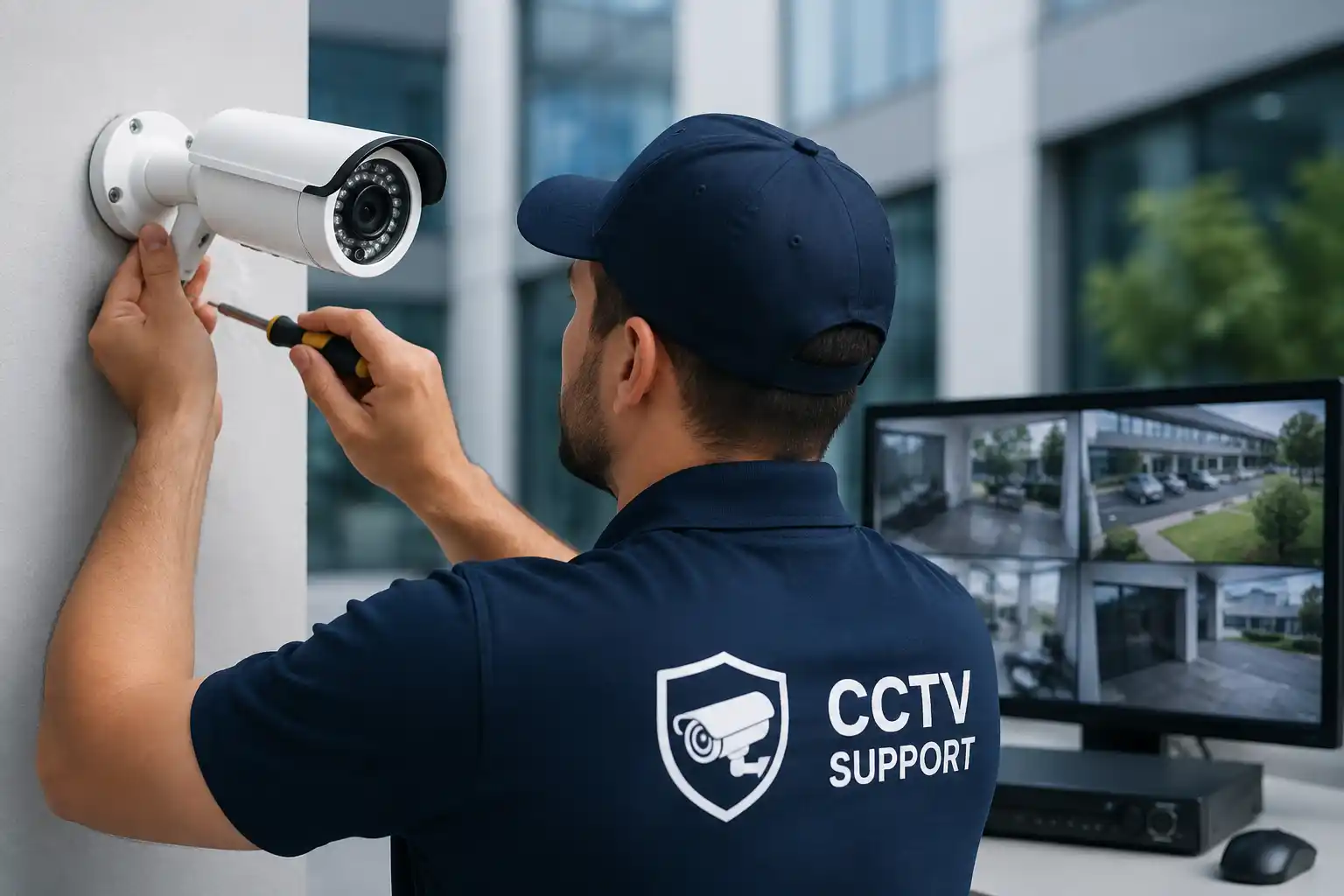
Recorder problems are often connected to cameras, power, cabling, storage, network access and viewing devices. The practical scope depends on which layer is affected.
Recorder, camera channels, storage, display, network or user access
Remote where secure access is practical; on-site when physical checks are needed
Authorised access, recording impact and rollback considerations are reviewed first
Final tasks depend on assessment, site conditions and approved quotation
What does DVR support mean for a business?
DVR support is the structured assessment, troubleshooting, configuration, testing and maintenance of a digital video recorder and the surveillance components required for it to record and reproduce video. It is mainly used when recordings are missing, camera channels are unavailable, storage is not behaving as expected, playback is difficult, the recorder has network or remote-viewing problems, or the site needs a controlled review before changes are made. Businesses that depend on recorded CCTV for operational visibility, incident review or site management should consider support when a fault is repeated or evidence cannot be retrieved reliably. Before proceeding, prepare the recorder make and model, affected channels, issue timing, recent changes, storage symptoms, network status, the person authorised to approve access, and any known maintenance restrictions. The final scope remains subject to evidence, access, equipment condition and quotation.
What DVR support may cover
A recorder sits in the middle of a chain. Cameras must provide a usable signal, power must remain stable, cabling and connectors must carry the signal correctly, the DVR must recognise its channels, the storage device must accept recordings, the system clock must be correct, and authorised users need a practical way to view live or recorded video. Depending on the confirmed scope, assistance may include channel checks, recording schedule review, playback testing, storage status review, date and time correction, display troubleshooting, user-permission review, network configuration checks, secure remote-viewing assessment, export testing, log review, camera-to-recorder signal checks and basic maintenance planning.
Support does not assume that a recorder itself is defective. A black channel can originate from camera power, a loose connector, damaged cabling, an incompatible signal, a failed camera, an incorrect input setting or the DVR. A playback gap may be caused by schedule settings, storage condition, time configuration, overwritten data, a period when the recorder was offline or another issue. The diagnostic process should therefore test the relevant layers before replacement or configuration changes are recommended.
Who may need this service
DVR assistance can be useful for offices, retail locations, restaurants, warehouses, clinics, showrooms, property sites, schools, training centres and other organisations with an existing camera system that records to a local device. It is especially relevant when the system is operationally important but the site lacks clear documentation, the original installer is unavailable, user access has changed, the network has been replaced, storage capacity is uncertain, or recurring faults are being handled without finding the underlying cause.
A facilities manager may need help because several cameras have disappeared after electrical work. An office manager may find that recordings exist but the wrong date appears during playback. A retail team may need to confirm whether footage can be exported correctly before an incident occurs. An IT administrator may inherit a recorder connected to a new firewall or network and need to understand why authorised remote viewing stopped. Each situation calls for a different starting point, so the support method should follow the actual symptoms, the available access and the business importance of the system.
Common DVR symptoms and what they may indicate
The same symptom can come from more than one technical layer. For that reason, FourTeck does not treat an error message or a missing picture as proof of a particular hardware failure. The examples below show the areas that may need to be checked rather than a fixed diagnosis.
One or more camera channels are blank
Possible areas include camera power, connectors, cabling, video-signal compatibility, damaged cameras, input configuration, channel condition or the recorder itself. Physical inspection may be needed when the signal path cannot be verified remotely.
Recordings cannot be found
The review may include recording schedules, motion or event settings where applicable, disk status, date and time, overwrite behaviour, recorder uptime, playback filters and whether the required time period is still retained.
Storage warnings or repeated disk errors
The drive may require health assessment, connection checks, capacity review or replacement planning. Existing footage and business retention needs should be considered before destructive storage actions are approved.
Remote viewing stopped after a network change
The recorder may still be recording normally while network addressing, gateway settings, DNS, firewall rules, application settings or authorised access paths have changed. Remote access should be restored through controlled configuration rather than unnecessary exposure to the internet.
Recorder restarts or becomes unstable
Power quality, power adapters, heat, storage faults, software condition, internal hardware or connected devices may need review. Repeated restarts can interrupt recording, so the pattern and timing should be documented before changes are made.
Playback time does not match real time
Clock, time-zone, daylight settings, manual time changes or failed time synchronisation can affect incident searches. Any correction should consider how existing footage is indexed so users understand the change.
Business impact of leaving a recorder problem unresolved
A DVR can appear to be working because live images are visible while recording is incomplete, time is incorrect or storage has stopped accepting new footage. This creates an operational gap that may only be discovered when someone tries to review an incident. For a shop, the missing period may affect review of a transaction or delivery. For a warehouse, a dead channel may remove visibility from a loading area. For an office or building, unstable remote access can force authorised managers to travel to the site simply to verify camera status. These are practical business problems rather than just technical inconveniences.
Repeated faults can also increase support cost when the response is limited to restarting the recorder without finding the failing layer. Poor documentation can make every future change harder because nobody knows which camera belongs to which channel, which network address the recorder uses, who has administrator authority, what the recording schedule is, or how long footage is normally retained. A structured assessment should therefore aim not only to restore the immediate function where possible, but also to leave clearer information about the system, its remaining risks and the next maintenance decision.
Possible DVR support scope
The final work should be confirmed after assessment. Depending on the environment, approved assistance may include some of the following activities. Inclusion of one item does not mean every item is automatically part of the service.
Review business impact, recorder status, affected channels, issue timing, error messages and recent changes.
Check schedules, available footage, date and time, overwrite behaviour and playback filters where appropriate.
Review recorder-reported disk condition, capacity and symptoms before replacement, formatting or other storage actions are considered.
Investigate power, connectors, cabling, inputs and camera availability when channels are missing or unstable.
Check authorised local or remote access, addressing, application reachability and network changes affecting the recorder.
Confirm authorised logins, playback, search and export workflows needed by the business.
Document findings, recurring risks, storage concerns, channel labels and recommended follow-up checks.
Collect technical evidence for a manufacturer, installer, ISP or supplier when the next action depends on a third party.
Is DVR support the right next step?
| Observed situation | Possible technical areas | Recommended next step |
|---|---|---|
| Live video is visible but yesterday’s footage is missing | Recording schedule, disk status, date/time, overwrite, recorder uptime | Preserve the current state and assess recording and storage before changing settings |
| One camera is blank while others work | Camera power, cable, connector, input, signal compatibility, camera fault | Compare the affected path with a working channel and plan on-site testing if physical access is required |
| All remote viewing stopped after router replacement | IP addressing, gateway, DNS, firewall, application configuration, remote-access method | Review the new network and restore only the authorised access method |
| The DVR repeatedly restarts | Power, heat, storage, internal hardware, software condition | Record the restart pattern and arrange controlled assessment before repeated power cycling |
| The site needs longer footage retention | Drive capacity, number of channels, recording mode, resolution, frame rate, recorder limits | Review the current recording load and recorder capability before changing storage or quality settings |
Service information to confirm before work starts
| Service topic | DVR troubleshooting, recording support, configuration review and maintenance assistance |
|---|---|
| Main purpose | Identify why surveillance recording, playback, channels, storage or authorised viewing are not working as expected |
| Typical systems involved | Digital video recorder, cameras, power supplies, coaxial or other installed video cabling, storage drives, monitors, local network, router or firewall, and viewing applications |
| Remote support suitability | Access dependent. Often suitable for settings, logs, playback, users and network checks when secure remote access is authorised and the recorder is reachable |
| On-site support suitability | Recommended when hardware, disks, camera power, connectors, cabling, monitors or recorder access must be checked physically |
| Customer information required | Site location, recorder make/model, affected channels, issue start time, recent changes, business impact, network status, storage symptoms and authorised contact |
| Access requirement | Authorised administrative or site access may be required. Credentials should be shared only through an approved secure method after identity and authorisation are confirmed |
| Backup and preservation | Existing evidence, configuration and recording impact should be considered before formatting disks, resetting equipment or making potentially disruptive changes |
| Testing and validation | Scope dependent. May include live channel check, test recording, playback, time verification, authorised login, export and remote-viewing confirmation |
| Vendor coordination | Vendor dependent where firmware, proprietary software, licensed features, replacement components or manufacturer-specific recovery is required |
| Service location | Dubai and UAE coordination, subject to site location, travel, access, scheduling and the confirmed work scope |
| Quotation requirement | The commercial scope should be confirmed after the required assistance, access and any third-party dependencies are understood |
Can the DVR issue be checked remotely, or is an on-site visit needed?
Remote support may be appropriate when
The recorder is online, the internet connection works, secure remote access is authorised, and the problem mainly concerns settings, user access, playback, logs, recording schedules, network configuration or application connectivity. A customer representative may need to be present to confirm what appears on the local monitor, approve access or test a viewing application. Remote diagnosis can also help determine whether an on-site visit is actually necessary, which equipment needs physical checking and what information should be prepared before the visit.
On-site support may be appropriate when
The recorder cannot be reached remotely, cameras need physical testing, connectors or cabling must be inspected, a storage drive needs hands-on assessment, the local display is faulty, there are power or overheating concerns, the system has several unexplained channel failures, or replacement work is being considered. Site access, equipment location, ladders or safe working arrangements, building permissions and the availability of an authorised contact can affect the visit scope and schedule.
Remote and on-site work are not competing service types. A practical engagement may begin remotely to collect evidence and continue on site when the remaining checks involve physical infrastructure. The final method depends on the fault, access, location, urgency and approved quotation.
How a DVR diagnostic visit or remote assessment usually progresses
A useful diagnosis starts with the business effect, not with changing settings. The purpose is to understand what is failing, what still works, how important existing footage is, and whether any action could interrupt recording. A typical support journey may follow the stages below, adapted to the actual system.
Confirm whether the issue is no live video, no recording, incomplete playback, incorrect time, disk warnings, unstable recorder operation, lost remote access or another symptom. Identify whether one channel, multiple channels or the whole system is affected.
Ask whether recent footage may be required. Avoid resetting, formatting or replacing storage until preservation needs are understood. Confirm who is authorised to approve administrative access and changes.
Collect the DVR model, camera count, storage details shown by the recorder, display arrangement, network connection, viewing method, known passwords ownership, site layout and any available documentation without publishing credentials.
Network replacement, power work, camera replacement, account changes, storage replacement, firmware changes, office renovation or a simple time adjustment may be relevant. The timing of a change can narrow the investigation without proving the cause.
Inspect available system status, channel state, storage status, date/time, recorded intervals, alerts and logs where supported. Physical noise, heat, power instability or unusual restart patterns may also matter during on-site work.
For missing cameras, compare a non-working channel with a known working path where safe and practical. Camera power, connectors, cable condition, input settings and signal compatibility may need separate checks.
Confirm whether the recorder reports a healthy disk, whether schedules match business requirements, whether the required dates are retained, and whether the device can create and play back a fresh test recording without damaging existing evidence.
Where remote viewing is part of the requirement, review local addressing, gateway and network reachability before considering changes at the firewall or viewing application. Access should be limited to approved users and methods.
Separate confirmed observations from assumptions. If replacement hardware, storage work, configuration change or vendor involvement is required, explain the dependency, possible recording impact and whether a maintenance window should be agreed.
After approved work, test the relevant channels, create and retrieve a sample recording where appropriate, verify time, confirm user access and document remaining risks or actions. A successful test confirms the tested condition at that time; it does not replace future maintenance.
From diagnosis to corrective action
Once the affected layer is clearer, the corrective plan should match the evidence. A settings problem may require an approved configuration change followed by recording and playback validation. A damaged camera path may require cable, connector, power or camera work. A storage problem may require a separate decision about retaining existing footage, replacing a drive, selecting compatible capacity and rebuilding recording settings. A network problem may require coordination with the IT administrator or firewall provider. A recorder that is no longer dependable may need replacement planning rather than repeated repair attempts.
Before changes, FourTeck can help identify what must remain available, what can be interrupted, and who needs to approve the work. Where a configuration backup or export is possible and appropriate, it may be taken before significant changes. Where the system is legacy or poorly documented, a rollback may be limited, which should be explained before work begins. If the issue depends on manufacturer tools, proprietary firmware, replacement components or account recovery, the task may require vendor or supplier coordination.
Corrective action should also consider the user’s real objective. Restoring live video alone may not solve a recording fault. Increasing storage without reviewing recording quality may not achieve the intended retention period. Reopening remote access without controlling authorisation can create unnecessary security risk. The service outcome should therefore be tested against the requirement that triggered the support request.
Testing, validation and handover after DVR work
A support task is not complete simply because an error message disappears. Validation should be aligned with the fault and the approved scope. If the issue concerned recording, the test may include creating a fresh recording, waiting for the expected interval, searching for it and playing it back. If the issue concerned missing channels, each repaired path should be checked for stable live video and recording. If time was corrected, the displayed time and recorded index should be verified so users understand which timestamps apply to future footage. If remote access was restored, the authorised user should confirm the approved viewing method from the intended device or network.
Handover can include channel labels, basic recorder details, network information that is safe to document, storage observations, user roles, the work completed, tests performed and outstanding recommendations. Passwords and sensitive credentials should not be placed in public documents or casual email threads. The business should decide who owns administrator access and how credentials are stored securely. Clear handover reduces dependency on memory and makes future faults easier to investigate.
Capability focus: finding the failed layer faster
DVR faults are frequently misdiagnosed because every symptom appears on the recorder screen. The actual source can sit elsewhere. A camera may have lost power. A connector may be loose. A cable may have been damaged during fit-out work. The recorder input may be configured differently from the camera signal. A hard drive may be generating errors while live view continues. A router change may block remote viewing even though recording remains healthy. A structured path-by-path check helps separate these layers.
For the business, faster isolation means fewer unnecessary changes and clearer decisions about where to spend maintenance effort. It also makes vendor escalation more useful because the relevant symptoms, tests and failed component are documented rather than described as a general “CCTV not working” problem. The exact diagnosis still depends on access, equipment condition and the ability to reproduce the fault.
Capability focus: protecting recording continuity during changes
A recorder can lose useful footage when changes are made without understanding storage, schedules or current operation. Reformatting a drive, resetting a DVR or replacing hardware may erase information or interrupt recording. Before disruptive work, the support plan should confirm whether recent footage needs to be preserved, whether the system is actively recording, whether users rely on the recorder during business hours and whether a maintenance window is required.
This does not mean every intervention can preserve every recording. Existing drive damage, overwritten footage or a recorder that is already offline can limit options. The objective is to avoid creating an additional loss through an uncontrolled support action and to explain the trade-offs before the customer approves the change.
Capability focus: making future surveillance support easier
Many DVR environments become difficult to maintain because channel names no longer match camera locations, the recorder’s network address is unknown, old user accounts remain active, nobody knows the normal retention period, and the device is restarted whenever a fault appears. Support can create value beyond the immediate repair by documenting the system at a practical level.
Useful records may include recorder make and model, installed drive information visible during assessment, channel-to-location mapping, normal recording mode, authorised users, local network details, remote-viewing method, recurring alerts and recommended maintenance actions. Documentation does not replace technical expertise, but it gives the next engineer or administrator a more reliable starting point and helps the business plan replacement before a legacy recorder becomes a critical unknown.
Dependencies, access and information the customer may need to provide
DVR troubleshooting is affected by the surrounding environment. A recorder that uses the business network may require coordination with the person responsible for switches, routers or firewalls. A camera issue may require access to ceilings, walls, cabinets or outdoor locations. Storage work may require a decision about existing footage. Remote viewing may depend on an internet provider, a manufacturer service, a mobile application or a firewall policy. None of these dependencies should be assumed to be available until confirmed.
The customer should identify the authorised contact who can approve access and changes. If the recorder is in a locked room or rack, the site should confirm physical access. If building management controls working hours or permits, that should be known before an engineer is scheduled. If the system was installed by another provider, any drawings, channel schedules, configuration exports, invoices showing model information or prior service notes can reduce diagnostic time. If the business has an IT administrator or outsourced network provider, their involvement may be useful when the recorder’s connectivity crosses managed network or firewall infrastructure.
Credentials are a special case. A public service page should never ask a customer to post a password. FourTeck can confirm an approved secure method after identity and authorisation are established. Where credentials have been lost, account recovery options depend on the recorder, current ownership, available recovery methods and vendor policy. Support should not bypass access controls or claim that every locked device can be recovered.
Risks, limitations and exclusions to understand
Diagnosis depends on available evidence, safe access and the ability to test the affected system. Missing footage cannot be assumed recoverable, especially if it was never recorded, has already been overwritten or the storage device is physically damaged. A storage drive that reports errors may need specialist handling or replacement; support labour does not automatically include replacement parts. Legacy recorders may have limited compatibility, discontinued software or account-recovery constraints. Remote viewing can also depend on third-party applications, manufacturer services, internet providers and firewall policies outside the recorder itself.
Configuration work may interrupt live viewing or recording and can therefore require an agreed maintenance window. A successful test verifies the function tested at that moment; it does not guarantee that hardware will not fail later or remove the need for maintenance. Security changes can reduce exposure but cannot guarantee complete protection. On-site work depends on site location, building access, equipment placement, safe physical access, scheduling and the confirmed scope. Final commercial terms, parts, replacement equipment, specialist data-recovery work and third-party fees should be stated separately in the approved quotation or service agreement where applicable.
Business environments where DVR support may be useful
Retail and showrooms
Cash counters, entrances, stock areas and customer zones may be recorded for operational review. A missing channel, wrong time or playback problem can make incident searches difficult. Support should confirm the channels that matter most and the time period the business expects to retain.
Warehouses and logistics sites
Loading bays, gates and storage areas can have long cable runs and cameras exposed to heat, dust or physical movement. On-site testing may be required when a signal path is unstable or several cameras share a power problem.
Offices and professional firms
Recorders may be located in a server room and connected to the same network used by other business systems. Remote-viewing changes should therefore be coordinated with network and firewall policies rather than treated as an isolated CCTV setting.
Restaurants and hospitality locations
Long operating hours can make maintenance windows important. Support may need to be planned around times when brief recording or display interruption has the least operational impact.
Clinics and training centres
Authorised access and privacy expectations should be considered when viewing recorded material. The technical support role is to maintain the approved system while the customer remains responsible for its policies and permissions.
Multi-site businesses
Different branches may have different recorder models, network arrangements and user accounts. A support review can help standardise documentation and identify which sites need repair, replacement planning or more consistent authorised viewing procedures.
Operational, security and maintenance considerations
A recorder is both a storage device and a network-connected system in many modern business environments. Maintenance should therefore look at recording reliability and access control together. The business should know who can administer the DVR, who can only view cameras, who can export footage and who is responsible for retaining or deleting recordings. Shared administrator accounts make accountability difficult. Unnecessary internet exposure can create avoidable risk. Where the recorder supports multiple user roles or approved secure remote-access methods, these should be configured according to the organisation’s actual needs rather than providing every user with full administrative rights.
Time accuracy matters because footage is searched by timestamp. The DVR clock should be checked after power events, network changes or time-related complaints. Storage condition should be reviewed when the recorder reports warnings, when retention becomes shorter than expected or when playback gaps appear. Cooling and physical cleanliness can matter because recorders and drives produce heat, especially in closed cabinets. Power stability is also relevant; frequent uncontrolled shutdowns can damage storage or corrupt recordings.
Maintenance frequency depends on the site, equipment age, operational importance and service agreement. A high-use retail or warehouse system may justify more regular verification than a small office with limited cameras. The goal of preventive checks is not to promise that faults will never happen. It is to detect warning signs, confirm that recording and playback still work, keep access understandable and create a record of system condition before an incident exposes a hidden failure.
Before you contact FourTeck about a DVR problem
Providing a concise picture of the fault helps determine whether remote assessment is practical and what may be needed for an on-site visit. The following information is useful; if a detail is unknown, it can simply be marked as unknown rather than guessed.
- Business name and service location in Dubai or elsewhere in the UAE.
- Name of the authorised contact who can approve access and changes.
- DVR make and model, if visible.
- Number of installed camera channels and which channels are affected.
- Exact symptom, such as no recording, blank channel, disk warning or remote-viewing failure.
- Approximate date and time the issue began and whether it is constant or intermittent.
- Any recent power, network, camera, storage, account or office changes.
- Whether live video is still visible locally.
- Whether recent recordings may need to be preserved before work begins.
- What the DVR currently reports about storage or hard-drive status.
- Whether the recorder is connected to the business network and internet.
- Whether authorised administrator access is available without sending passwords publicly.
- Whether the recorder, cameras, cabling and power equipment are physically accessible.
- Business impact and any preferred maintenance window.
Checklist for defining the support quotation
A clear engagement separates diagnosis from optional repair, replacement or improvement work. Before approving a quotation, confirm which of the following points matter for your site.
✓ Is the objective fault diagnosis, configuration correction, storage assessment, camera-path repair, remote-viewing restoration, maintenance or replacement planning?
✓ How many recorders, camera channels and locations are in scope?
✓ Is remote access authorised and technically available, or is physical attendance required?
✓ Does any existing footage need special care before changes are made?
✓ Are camera power, cabling or connectors included in the requested investigation?
✓ Is hard-drive replacement or other hardware supply expected, and is it quoted separately?
✓ Does the DVR network depend on a separate IT provider, firewall administrator or internet provider?
✓ What testing is required: live video, recording, playback, export, time accuracy or remote viewing?
✓ Is documentation or administrator handover required after the work?
✓ Are there building-access rules, safe-working restrictions or an agreed maintenance window?
✓ Should ongoing preventive maintenance be discussed after the immediate fault is resolved?
How FourTeck can assist with DVR support
FourTeck’s role is to turn a broad report such as “the CCTV recorder is not working” into a defined technical problem that can be tested and scoped. The first stage may involve clarifying the affected channels, whether live video still appears, whether the problem concerns recording or viewing, what changed before the fault, and whether the recorder is reachable remotely. This helps determine whether the next useful step is remote troubleshooting, an on-site inspection, network coordination, storage assessment, camera-path testing or a separate replacement discussion.
During support, FourTeck can review the relevant system layers within the approved scope, explain confirmed findings, identify dependencies and carry out authorised corrective work. Where the issue crosses the boundary between CCTV and business IT, such as a router replacement affecting remote viewing, FourTeck can help connect the recorder requirement with the network or firewall change. Where a manufacturer or supplier must provide firmware, a proprietary reset process or replacement hardware, the diagnostic evidence can be organised for escalation.
After work, the service can include validation and practical documentation so the business knows what was changed, what was tested and what remains unresolved. If recurring maintenance, broader CCTV review or infrastructure improvement is appropriate, that can be discussed separately. Visit scope, timing, parts and commercial terms remain dependent on location, access, engineer availability, site conditions and the approved quotation.
DVR support coordination in Dubai and across the UAE
For a Dubai site, the support method can be planned around the actual fault and access requirements. A recorder that is online and has an authorised user available may be suitable for an initial remote review. A site with blank camera channels, storage hardware warnings, inaccessible equipment or physical cabling concerns is more likely to need an on-site assessment. Contact FourTeck to confirm the service scope and scheduling options before relying on a particular attendance plan.
Service timing can be affected by engineer availability, building access, parking or loading arrangements, safe access to camera locations, customer approvals, replacement-part availability and third-party providers. If the site operates long hours or cannot tolerate recording interruption during a busy period, that should be stated before work is scheduled so the quotation and maintenance window reflect the operational requirement.
Dubai, Abu Dhabi, Sharjah and Ajman service coordination
FourTeck can discuss DVR and wider surveillance-support requirements for businesses in Dubai, Abu Dhabi, Sharjah and Ajman. Depending on the issue and confirmed scope, coordination may involve remote troubleshooting, a planned on-site visit, recorder or camera-path assessment, configuration work, maintenance or a wider CCTV review. The practical service plan can vary by site because travel, building access, working-hour restrictions, equipment condition, availability of replacement components and third-party involvement are different for each location. Multi-site businesses should identify which branches are affected, whether the systems are the same across locations and whether local contacts can provide access. That information makes it easier to decide whether one standard support approach is appropriate or whether each recorder needs individual assessment.
Related FourTeck IT service areas
Useful when the DVR problem overlaps with user devices, networks, internet connectivity or other office systems.
CCTV and infrastructure services
Review the wider range of support services where recorder faults form part of a broader surveillance or site requirement.
About FourTeck IT Services
Understand the service approach for connected business technology in Dubai and the UAE.
Request a support assessment
Share the recorder symptoms, site location and access information so the next step can be scoped.
Why businesses contact FourTeck for recorder-related support
A DVR fault often crosses the boundary between surveillance equipment and ordinary IT infrastructure. The recorder may need a camera signal, storage, a monitor, a local network address, internet connectivity, firewall rules, a mobile application and user permissions before the complete workflow operates. Businesses may therefore prefer one technical assessment that considers those dependencies together rather than moving between multiple providers without a clear owner of the problem.
FourTeck can help establish the starting facts, identify which layer needs deeper testing, coordinate remote or on-site work and keep the customer informed about what is confirmed versus what remains uncertain. The business also benefits from a quotation that separates diagnostic labour, corrective configuration, physical repair, replacement hardware and optional maintenance where those items are relevant. This makes it easier for managers to approve work based on a defined scope instead of an open-ended assumption.
Documentation and handover are also practical reasons to request structured support. Knowing which camera belongs to each channel, who controls administrator access, what the current storage condition is, how remote viewing is authorised and what unresolved risks remain makes future maintenance easier. The objective is not to create complexity around a recorder; it is to give the organisation enough technical clarity to operate and maintain the surveillance system responsibly.
Questions businesses commonly ask before requesting DVR support
Customers often search for help only after they discover that the recorder is not doing the exact task they depend on. The following decision guidance addresses practical questions that can help a business choose the next action and prepare useful information before support starts.
Why is my DVR showing live cameras but not recording?
Live view and recording are separate functions. A DVR may display a camera while the recording schedule is disabled, the storage drive is full or unhealthy, the recorder is in the wrong mode, time settings are incorrect, or the system has another recording-related fault. The safest first step is to avoid formatting storage or resetting the device until you know whether existing footage is important. Note which channels are affected, check the recorder’s visible storage status and record the time period that cannot be found. FourTeck can then assess the recording path and determine which checks are appropriate.
Can missing CCTV footage be recovered from a DVR?
It depends on why the footage is missing. If video was never recorded, has been overwritten by newer recordings, or the storage device is severely damaged, recovery may not be possible. If the footage exists but is difficult to find because of time, search filters or playback settings, the problem may be access rather than data loss. A support assessment should first establish whether the relevant period is visible to the recorder and whether the storage device reports a problem. Do not assume recovery can be guaranteed.
Why did one camera channel disappear while the others still work?
A single blank channel usually narrows the investigation, but it still does not prove that the camera itself has failed. The problem may involve camera power, a loose connector, damaged cabling, an input issue, signal compatibility, the channel configuration or the DVR input. If the camera and recorder are physically accessible, on-site testing can compare the failed path with a working one. Before the visit, identify the camera location and channel number and mention any recent maintenance or construction near the cable route.
Why did remote DVR viewing stop after changing the router or internet connection?
A router or internet change can alter local addressing, gateway information, firewall rules, DNS behaviour or the external path used by the viewing application. The recorder may continue recording locally even when remote viewing fails. The support task should confirm local access first, then review the authorised remote-viewing method with the current network. Avoid exposing the recorder directly to the internet merely to make an application work. The appropriate configuration depends on the DVR, network and security policy.
Should we replace the DVR or repair the current system?
Replacement is a business decision that should follow assessment. Repair may be sensible when the recorder is supported, compatible with the installed cameras, storage can be restored and the system still meets retention and access needs. Replacement planning may be more appropriate when hardware is unstable, the recorder is obsolete, replacement parts are impractical, remote applications are no longer maintainable, storage needs have grown beyond the platform or recurring faults create excessive support effort. The decision should also consider camera compatibility, cabling, data preservation and the cost of changing surrounding equipment.
How can we tell if the DVR hard drive is failing?
Warning signs can include recorder-reported disk errors, missing recording periods, repeated restart behaviour, unusual drive noise, inability to initialise storage or unexpectedly short retention. These symptoms are not a complete diagnosis by themselves. The recorder’s own disk status, logs and behaviour should be reviewed, and physical assessment may be needed. If footage is important, avoid repeatedly formatting or reinitialising the drive before the preservation requirement is discussed. Replacement drives must also be appropriate for the recorder and required workload.
Can DVR support be done without interrupting recording?
Some checks can be performed while recording continues, but not every task is non-disruptive. Storage replacement, recorder rebooting, certain configuration changes, cable testing and hardware replacement can interrupt recording. The service plan should identify which activities may cause an outage and agree a maintenance window if the business cannot accept interruption during operating hours. Zero downtime should not be assumed for an unknown or unstable system.
What information should we send before asking for a quotation?
Share the site location, recorder make and model if known, number of cameras, affected channels, exact symptoms, when the issue started, whether live video is available, whether recordings are important to preserve, visible storage warnings, recent network or power changes and whether administrator access is available. Also state whether the DVR is easy to reach physically and whether there are building-access restrictions. Do not send passwords in a public form or ordinary message; FourTeck can confirm an approved secure access method after authorisation is established.
Do we need an on-site engineer if the DVR is still online?
Not always. If the recorder is reachable securely and the problem concerns playback, settings, users, logs or network access, remote assessment may be a useful first stage. On-site work becomes more likely when the fault involves physical storage, camera power, connectors, cabling, monitor output, overheating, repeated hardware restarts or equipment that cannot be reached remotely. Starting remotely can also help define what an engineer should bring and which parts of the site need access.
How long should a DVR keep recordings?
There is no single retention period that applies to every business. Actual retention depends on installed storage, number of channels, resolution, frame rate, recording mode, compression supported by the system, scene activity and the recorder’s own limits. The business may also have internal policy or legal requirements that it must determine separately. A technical review can measure current retention and explain what system changes may be needed to reach a practical target, subject to recorder capability and storage compatibility.
What should we test after a DVR repair or configuration change?
Testing should follow the reason for the job. At minimum, affected channels should be checked for stable video, a fresh recording should be created and played back where appropriate, the date and time should be confirmed, authorised users should be able to search the expected period, and remote viewing should be tested if it was part of the scope. If export is operationally important, a sample export can be verified. The handover should record what was tested and any functions that remain outside scope.
When should we move from one-time support to preventive maintenance?
Recurring disk warnings, repeated channel outages, time drift, unstable remote viewing, unexplained restarts, poor documentation or multiple recorders across sites are signs that one-time fixes may not be enough. A maintenance plan can define periodic checks for recording, playback, time, storage status, physical condition, authorised access and documentation. The actual frequency and included tasks should be agreed in the service plan rather than assumed to be unlimited or automatic.
Frequently asked questions about DVR support in Dubai
Does DVR support include camera troubleshooting?
It can include camera-path checks when they are part of the confirmed scope. A blank or unstable channel may require camera power, connector, cable and input testing. Physical repairs, replacement cameras or extensive cabling work should be identified separately in the quotation if required.
Can FourTeck check a DVR remotely?
Remote assessment may be possible when the recorder and internet connection are working, authorised secure access is available, and the fault involves settings, users, logs, playback or network connectivity. Physical faults still require on-site inspection.
What if we do not know the DVR administrator password?
Recovery depends on the specific recorder, ownership evidence, available recovery method and vendor policy. Support should not bypass access controls. Do not publish or send credentials through an insecure public channel; access arrangements can be discussed after authorisation is confirmed.
Can a faulty hard drive be replaced during the visit?
That depends on the confirmed diagnosis, compatible drive requirements, part availability, preservation needs and whether hardware supply is included in the quotation. A drive should not be replaced simply because recordings are missing without first checking the relevant evidence.
Can the system be configured for longer recording retention?
Possibly, but the options depend on recorder capacity, supported storage, camera count, recording quality and recording mode. Increasing retention may require trade-offs in settings or hardware, so the current workload should be reviewed before changes are made.
Will a network change affect the DVR?
It can affect local or remote viewing if the recorder depends on a fixed address, gateway, DNS, firewall rule or application path. Recording to local storage may continue. The exact impact depends on the current network and DVR configuration.
Do you guarantee recovery of deleted or missing recordings?
No. Recovery depends on whether the footage was recorded, overwritten, deleted, corrupted or stored on damaged media. An assessment can establish what evidence is available and whether specialist recovery should be considered, but recovery cannot be guaranteed.
Can support include DVR replacement planning?
Yes, when the existing recorder is unreliable or no longer fits the business requirement, the support discussion can identify camera compatibility, storage needs, viewing requirements, network dependencies, installation work, migration of settings where possible and testing. Replacement is a separate approved scope.
What happens if the fault is caused by a third-party service?
If the issue depends on an internet provider, firewall administrator, manufacturer service, vendor application or another supplier, FourTeck can help document the relevant technical findings and coordinate information. The third party may still need to complete its own work or approve changes.
Is DVR maintenance available for more than one site?
Multi-site support can be discussed. The plan should identify each location, recorder, camera count, support method, access arrangement, documentation status and expected maintenance tasks. Visit frequency, included work and exclusions depend on the agreed service plan.
Request a DVR support assessment
Share the site location, recorder model if known, affected camera channels, recording or storage symptoms, the approximate time the issue started and whether authorised administrator access is available. FourTeck can use that information to determine whether remote troubleshooting, an on-site inspection or a broader CCTV maintenance review is the appropriate next step. Service scope, scheduling, replacement parts and third-party work remain subject to assessment and an approved quotation.