
Business CCTV recording configuration and review
DVR Configuration Dubai in Dubai, UAE
A DVR is useful only when its recording, storage, time, user access, camera channels, playback, export, and network settings match the way the site actually operates. FourTeck helps businesses review and configure digital video recorder settings with attention to the connected cameras, storage media, local network, viewing applications, authorised users, and the evidence the organisation needs to retrieve later.
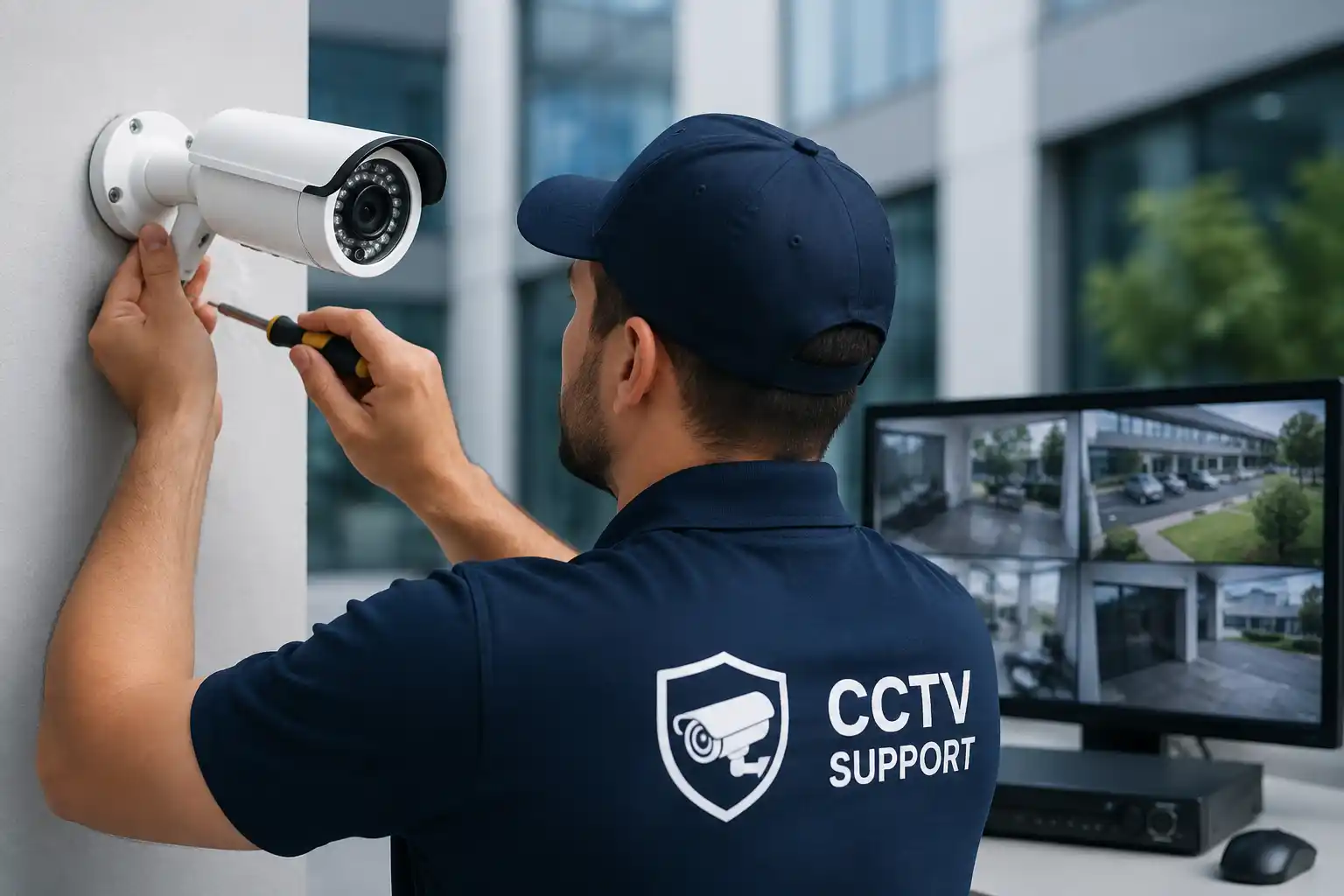
Recording, time, storage, access, and channel settings are reviewed against the required business outcome.
Available options depend on the DVR, cameras, hard drives, network, firmware, and supported viewing method.
The service method is selected according to secure access, physical checks, site conditions, and confirmed scope.
Approved changes should be validated with live view, recording, playback, export, time, and authorised access checks.
What does DVR configuration mean for a business CCTV system?
DVR configuration is the process of setting up and validating a digital video recorder so that connected surveillance cameras record in a controlled, usable, and maintainable way. It is mainly used to define channel behaviour, recording schedules, image and stream settings supported by the system, storage use, date and time, user permissions, playback, export, display, network addressing, and authorised remote viewing. Businesses should consider configuration assistance when installing a recorder, changing cameras, replacing storage, moving premises, updating network equipment, adding users, correcting missing recordings, or standardising an undocumented system. Before work is confirmed, the customer should prepare the DVR make and model, site location, camera and channel details, current symptoms or required outcome, authorised administrator access, network information where remote viewing is involved, storage status if known, and a suitable maintenance window for changes that could interrupt recording.
What the service may cover
Depending on the recorder and approved scope, DVR configuration can include channel naming, camera signal review, recording modes, continuous or scheduled recording, motion or event settings where supported, resolution and frame-rate choices, stream parameters, storage allocation, overwrite behaviour, time and time-zone configuration, user roles, password policy guidance, display layouts, playback, footage export, network parameters, remote application access, notification settings where available, and configuration documentation.
The work is not limited to changing menu values. A useful configuration connects the recorder settings to the business requirement. For example, a retail site may need reliable recording across trading hours and simple incident export, while a warehouse may place more emphasis on overnight coverage, storage duration, remote supervisory access, and accurate timestamps across many channels. The exact capabilities depend on the model, firmware, connected cameras, storage drives, and supported network services.
Who may need DVR configuration
This service may suit organisations that already have an analogue or hybrid CCTV recording environment and need the recorder brought into a known, documented state. It can also help when a site has inherited a recorder without clear settings, has changed internet or network equipment, is experiencing inaccurate time stamps, cannot find expected footage, needs to restrict which users can view or export video, or wants to review recording behaviour before a maintenance or upgrade decision.
Typical users include office managers, facilities teams, security supervisors, IT administrators, property managers, retail operations teams, warehouse managers, hospitality operators, and business owners. A configuration review can also be part of a wider CCTV service when cameras, power, cabling, storage, network access, and remote viewing all need to be assessed together.
Common reasons a business requests DVR configuration support
A recorder can appear to be working while important settings no longer match operational needs. The monitor may display live video even though one channel is not recording, the date could be wrong by several minutes, storage may be overwriting sooner than expected, or a remote user may have more privileges than required. These are configuration and environment questions that deserve checking before an incident creates a need for footage.
Missing or incomplete recordings
A channel may be set to a schedule that excludes certain periods, storage may be unavailable, the recorder may have changed to event-only recording, or the camera signal may be intermittent. The symptom does not prove one cause, so schedule, channel state, storage health, and camera input should be checked together.
Incorrect date or time
A wrong time zone, manual clock drift, unavailable time synchronisation, or an incorrect daylight-saving setting can make incident review confusing. Time should be checked against the site requirement and, where supported, maintained with an appropriate time source.
Remote viewing no longer works
An ISP router change, new firewall policy, altered local IP address, expired or changed application setup, vendor service dependency, or account problem may interrupt remote access. The safest approach is to identify the supported remote method and avoid unnecessary internet exposure.
Storage fills too quickly
Retention is affected by channel count, resolution, frame rate, compression options, recording schedule, event activity, and usable drive capacity. A configuration review can show which settings influence storage consumption, but a retention target must still be matched to actual hardware and recorder capability.
Users share one administrator account
Shared access makes it difficult to control privileges and understand who can change settings or export footage. Where the platform supports roles, authorised users can be separated according to operational responsibilities, subject to the capabilities of the DVR.
The recorder was moved or reset
A factory reset, office move, power incident, drive replacement, network redesign, or ownership change can leave settings undocumented. Before changing values, the current state should be reviewed and any available configuration backup or screenshots captured for rollback and handover.
Why configuration quality matters to day-to-day operations
CCTV footage is most valuable when the organisation can locate the correct period, understand which camera recorded it, confirm that the timestamp is credible, export the relevant clip, and provide it to an authorised person without unnecessary delay. Poorly managed recorder settings can make each of those steps harder even when the cameras themselves are producing an image.
The operational impact is not limited to security staff. A retail manager may need footage to review a transaction or delivery. A warehouse team may need to investigate a loading-area incident. A facilities manager may need to verify access to a common area. An office administrator may be asked to confirm whether a camera was recording during a particular time window. If channel names are unclear, the time is inaccurate, retention is shorter than assumed, or only one person understands the system, the business loses time and confidence during an event.
Good configuration therefore supports maintainability as much as recording. It creates clearer user roles, predictable recording behaviour, documented network details, known storage expectations, and a repeatable method for playback and export. It also makes future support more efficient because the engineer can start from recorded information rather than rediscovering every setting.
Possible DVR configuration scope
The final scope depends on assessment and quotation. Not every DVR exposes the same settings, supports the same camera formats, offers the same user controls, or uses the same remote-viewing method. Depending on the confirmed work, FourTeck assistance may include the following activities.
Identify model information, firmware status where visible, connected channels, current recording mode, storage state, network addressing, users, and existing remote access.
Review channel labels, signal presence, supported format or mode, display order, image settings available from the recorder, and any camera-dependent limitations.
Configure applicable continuous, scheduled, motion, or event recording rules and check that important operating periods are not unintentionally excluded.
Review installed drive status, overwrite policy, estimated retention behaviour, and alerts or health information that the platform provides.
Set time zone, clock, time synchronisation where supported, camera names, recorder name, and other labels that make playback and support easier.
Create or review user roles, restrict permissions where the system allows, and advise on secure credential handling without publishing passwords in documentation.
Review local addressing, gateway and DNS requirements, vendor-supported application or service setup, and firewall implications for authorised remote access.
Check that recorded video can be found, played back, and exported using the available recorder interface and supported media or application workflow.
Record key configuration details, channel names, network information, user responsibilities, known limitations, and recommended maintenance actions.
Service-fit matrix: what the symptom may point to
| Observed issue | Possible technical areas | Recommended next step |
|---|---|---|
| Live view works, but expected footage is missing | Recording schedule, channel recording state, storage, event rules, time settings, intermittent camera signal | Review the affected channel, date range, schedule, storage status, and event history before changing settings. |
| Remote viewing stopped after an internet or router change | Local IP addressing, gateway, DNS, vendor remote service, firewall, application account, ISP environment | Confirm the supported remote method and current network details; avoid opening unnecessary inbound access. |
| Retention is shorter than the business expects | Drive capacity, drive health, recording resolution, frame rate, compression, channel count, recording hours | Measure actual storage behaviour and compare it with the target; hardware changes may be required if settings alone cannot meet it. |
| One camera shows video intermittently | Camera power, coax or connector, supported signal type, DVR channel, camera hardware, environmental factors | An on-site physical check may be required because configuration alone cannot prove whether the fault is in the camera path. |
| Different users need different levels of access | Local account roles, remote application permissions, export rights, administration privileges | Define who needs live view, playback, export, and configuration rights, then apply the closest supported role model. |
| Time on footage is inaccurate | Time zone, manual clock, network time, RTC condition, daylight-saving settings, internet reachability | Confirm the required local time and supported synchronisation method, then validate new recordings after the change. |
DVR configuration service information
| Service topic | Digital video recorder configuration and related CCTV recording support. |
|---|---|
| Main purpose | Align recording, storage, time, access, playback, export, display, and network settings with the business requirement. |
| Typical systems involved | DVR, analogue or compatible cameras, coaxial cabling, camera power, storage drives, display, local network, router or firewall, viewing applications, and supported vendor services. |
| Remote support suitability | Access dependent. Suitable when secure remote access is authorised, internet connectivity is working, and physical testing is not required. |
| On-site support suitability | Recommended when camera signal, connectors, power, hard drives, monitor outputs, physical network, rack location, or inaccessible equipment must be checked. |
| Customer access required | Authorised DVR administration and, where relevant, network or vendor portal access. Credentials should be shared only through an approved secure method after authorisation is confirmed. |
| Testing and validation | Scope dependent; may include live view, recording, playback, export, timestamp, storage status, user permissions, local display, and remote-viewing checks. |
| Documentation | Can include channel naming, key settings, network details, user responsibilities, confirmed changes, known limitations, and follow-up recommendations. |
| Service location | Dubai and UAE service coordination, subject to issue type, location, access, scheduling, and approved quotation. |
| Scope dependency | Recorder capability, firmware, camera compatibility, drive condition, network environment, vendor services, site access, and target outcome. |
| Quotation requirement | Contact FourTeck to confirm the work scope, service method, scheduling options, exclusions, and any separate hardware or vendor requirements. |
Can DVR configuration be completed remotely?
When remote assistance may be suitable
Remote work can be practical when the DVR is functioning, the customer has a working internet connection, secure access can be authorised, and an on-site contact can confirm what is visible on the recorder or monitor. Configuration tasks such as reviewing schedules, channel names, time, user roles, network values, playback settings, and supported remote-viewing options may be possible without a site visit.
Remote configuration still requires control. The current state should be understood before changes are made, and the business should identify a period when temporary interruption is acceptable if a reboot or service restart becomes necessary. Remote access should not be enabled by exposing unnecessary management ports simply for convenience.
When an on-site visit is usually more appropriate
On-site assistance is more useful when the recorder cannot be reached, the issue may involve a hard drive, one or more camera signals are unstable, cabling or BNC connectors must be tested, camera power is uncertain, a display output is not working, the DVR is in a rack or secured room, or the network path needs physical tracing. It is also appropriate for new installations, recorder replacement, storage replacement, site surveys, and situations where several connected components need to be verified together.
Attendance timing depends on engineer availability, the customer location, building access, site rules, equipment availability, and the approved work scope. A physical visit should not be treated as proof that a fault can always be corrected without replacement parts or third-party action.
How the DVR assessment and configuration process can work
Start with the reason for the work: new setup, missing recordings, shorter-than-expected retention, remote viewing, additional users, a network change, time correction, a moved recorder, or a wider CCTV maintenance requirement. This prevents unnecessary menu changes.
Record which cameras are connected, which channels show a problem, whether the issue affects live view or recording, what storage is installed, and whether the recorder depends on the local network or a remote application.
Establish who owns the system, who can approve configuration changes, whether administrator access is available, and whether network or vendor account access will be needed. Passwords should be handled securely rather than placed in public notes.
Where practical, record existing settings, channel labels, network parameters, schedule behaviour, user roles, storage status, and screenshots before changing the recorder. If the platform supports configuration backup, its suitability can be assessed before use.
Configuration cannot compensate for a failed hard drive, unstable camera power, damaged coaxial cable, incompatible signal type, overheating recorder, or unreliable network. Basic health checks help separate a settings problem from a physical fault.
Adjust the specific settings needed for the confirmed outcome. Larger changes can be sequenced to reduce risk, especially when recording must remain available for most of the business day.
Verify live view, new recording, playback from a chosen time, correct timestamp, export, user access, storage recognition, and remote viewing where included. Tests should reflect how authorised staff will actually use the system.
Record the completed work, known limitations, device and network details that support future troubleshooting, and any recommendation for storage, cabling, cameras, networking, firmware, power, or ongoing maintenance.
Planning configuration changes without losing track of the existing setup
Recorder configuration should be treated as a controlled change rather than a sequence of experimental adjustments. This matters because a single setting can influence more than one operational outcome. Changing recording resolution may alter storage retention. Rebuilding a recording schedule may create periods with no footage if it is not reviewed carefully. Resetting network settings may interrupt remote viewing. A factory reset can remove user accounts, channel labels, network values, recording rules, and other information that may be difficult to reconstruct without documentation.
The first planning decision is therefore whether the existing configuration should be preserved, corrected in place, or rebuilt. A recorder that is basically healthy and well documented may need only targeted changes. A system with unknown credentials, inconsistent channel labels, unexplained network values, and no clear recording policy may require a broader review. Unsupported or unstable hardware may justify replacement planning rather than repeated configuration work.
Where the platform supports exporting or backing up its configuration, that option can be considered, but a backup should not be assumed usable across a different model, firmware release, or replacement recorder without verification. Screenshots, written channel maps, network details, and a simple record of current schedules can provide valuable context even when a native backup feature is not available.
The maintenance window should also match the risk. Minor user-account changes may have little effect on recording, while firmware work, storage changes, factory resets, network reconfiguration, or recorder replacement can create interruption. FourTeck can help define which activities belong in the initial configuration scope and which should be quoted as separate repair, replacement, network, or maintenance work.
Testing, validation, and handover after configuration
A configuration change is not complete because a menu value was saved. The useful test is whether the recorder performs the business task that motivated the change. A recording schedule change should be validated with new footage. A time correction should be confirmed on playback, not only on the live display. A remote-viewing change should be tested from an authorised external connection if that is part of the scope. A new user should be checked against the permissions they are supposed to have, including whether they can access playback, export, or administration functions.
Playback and export deserve particular attention. Staff may successfully watch live video for months and only discover an export problem when they need to provide a clip. Testing can include selecting a known time range, playing the recording, switching between required channels, confirming the time shown, and exporting a short sample using the supported method. If exported footage requires a proprietary player or codec, that dependency should be documented so the organisation knows how to review evidence later.
Handover should identify the recorder location, administrator responsibility, channel names, storage status, recording schedule, network information relevant to support, remote-viewing method, and any limitations discovered. The handover does not need to expose passwords. It should instead state who controls access and how credentials are stored securely. Where additional work remains, such as replacing a failing hard drive, repairing a camera cable, improving network security, or upgrading unsupported equipment, those actions can be recorded separately rather than being hidden inside a general configuration note.
Capability focus 1: make recording behaviour easier to understand
One of the most important outcomes of a DVR configuration review is a clear answer to a simple question: when should each camera be recording? Without that clarity, a system can produce false confidence. A channel set to event recording may have gaps because the event rule is not triggered consistently. A schedule copied from an old business routine may exclude weekends or overnight periods that now matter. A channel added later may inherit a different recording profile from the rest of the system.
The recording plan should reflect the operational need and what the recorder supports. Continuous recording can simplify review but consumes more storage. Scheduled recording can focus capacity on required hours but must be checked whenever working hours change. Motion or event recording may extend retention, yet its usefulness depends on camera position, scene activity, sensitivity options, and the reliability of the event mechanism. The best choice is therefore configuration dependent rather than universal.
FourTeck can help map the intended coverage periods to the available recorder settings, then validate a sample of new footage. This does not guarantee a particular retention period, because actual storage duration depends on drive capacity, channel count, resolution, frame rate, compression, scene complexity, and system behaviour. It does, however, give the business a documented basis for understanding what the recorder is expected to do and when a storage or hardware change may be needed.
Capability focus 2: provide controlled access to live and recorded video
CCTV access is often shared informally because a site needs several people to see cameras. That can become difficult to manage when employees change roles, a third-party contractor is given temporary access, or a manager needs playback rights without permission to alter recorder settings. Where the DVR supports multiple users or roles, access can be aligned more closely with responsibilities.
A useful access model separates administration from everyday viewing. The people who maintain network settings, storage, recording schedules, firmware, and user accounts do not necessarily need to be the same people who watch live video. Playback and export permissions may also need separate treatment. The available granularity varies by recorder, so the service should use the controls the platform genuinely provides rather than assuming enterprise-level role features exist on every device.
Remote access adds another dependency: the recorder, network, internet service, firewall or router, viewing application, and any vendor cloud or peer-to-peer service must all work together. FourTeck can review the supported method and help avoid unnecessary direct exposure of the recorder management interface. Where a vendor service is required, availability and behaviour remain dependent on that provider. The customer should also maintain current authorised-user records so access can be removed when staff or contractors no longer require it.
Capability focus 3: improve evidence retrieval and future maintenance
When an incident occurs, the first challenge is often not video quality but finding the correct footage. Good channel names reduce confusion between similar camera views. Accurate time settings reduce disputes over when something happened. A known retention pattern tells the team how quickly footage may need to be exported. A tested export process avoids experimenting with file formats while an incident is being investigated.
Configuration documentation supports the same goal over a longer period. A future engineer should be able to identify the recorder, understand which channels matter, see which local network values are expected, know whether remote access uses a vendor application, and distinguish operational settings from unresolved faults. This information can shorten later troubleshooting and reduce the risk of a technician unintentionally replacing a carefully planned schedule with generic defaults.
Maintainability also means knowing when configuration is no longer the right answer. A drive that reports errors, a recorder that repeatedly loses settings, a camera input that fails after physical testing, or unsupported software that can no longer be used safely may require repair, replacement, or migration planning. FourTeck can separate those recommendations from configuration work so the business can decide which actions to approve and budget for next.
Dependencies, access, and customer inputs
DVR configuration sits at the centre of several physical and network dependencies. The recorder must support the connected camera signal or hybrid mode. Cameras need stable power and usable cabling. The storage drive must be detected and healthy enough for recording. The local display must support the chosen output. Remote viewing requires a working network path, correct addressing, internet access where needed, and a supported application or vendor service. These relationships mean a menu change cannot resolve every CCTV symptom.
Before work begins, FourTeck may need the site address, DVR make and model, approximate number of cameras, affected channel numbers, description of the problem or required result, when the issue began, recent power or network changes, existing remote-viewing method, administrator access availability, network details if remote access is involved, storage status if known, preferred support method, and a responsible contact who can authorise changes. For on-site work, building access, security procedures, rack-room access, parking or loading requirements where relevant, and the availability of a local representative can affect planning.
Credentials should never be placed in a public website enquiry or informal document. The customer can state that authorised access is available and then share credentials through an approved secure method after the service engagement and identity are confirmed. If access belongs to a previous provider, landlord, installer, vendor, or former employee, recovery or ownership verification may be required before configuration can proceed.
Risks, limitations, and exclusions to confirm
DVR configuration can improve how a compatible recorder is set up, but it cannot guarantee camera availability, evidence retention, remote service availability, or the recovery of footage that was never recorded or has already been overwritten. Diagnosis depends on access and evidence. A hardware fault, failed storage drive, damaged camera, power problem, cabling issue, unsupported camera signal, network outage, or vendor cloud issue may require separate action.
Legacy DVRs may have limited user controls, outdated viewing software, unsupported browser components, weak remote-access options, restricted storage capacity, or firmware that is no longer maintained by the manufacturer. In those cases, configuration options may be limited and replacement planning may be more appropriate. Firmware changes can also introduce risk and should be assessed for model compatibility, backup or recovery options, and maintenance-window requirements rather than performed automatically.
Hard-drive replacement, camera replacement, new cabling, rack work, power correction, internet service changes, router or firewall changes, third-party application subscriptions, vendor account recovery, data recovery, and new equipment are not assumed to be included unless the quotation states them. Service timing depends on scope, access, engineer availability, site conditions, required parts, and third-party providers. Final commercial terms depend on the approved quotation or service agreement.
Where DVR configuration support can be useful
Retail and showrooms
Camera naming, trading-hour schedules, counter and entrance coverage, incident playback, and quick export can help managers review customer, delivery, and till-area events. Configuration should reflect actual opening hours rather than an inherited default schedule.
Warehouses and logistics sites
Loading areas, storage aisles, gates, and yards may require long recording periods and clear channel identification. Storage and overnight schedules should be reviewed together, particularly when multiple cameras are active continuously.
Offices and professional premises
Reception, common-area, entrance, server-room, or corridor recording may need controlled user access and documented privacy responsibilities. The business should decide who can view, export, and change configuration.
Clinics and service environments
Operational surveillance needs should be balanced with restricted access to footage and clearly assigned administrator responsibility. Configuration can support access separation where the recorder provides suitable roles.
Hospitality and property facilities
Sites with reception areas, entrances, service corridors, parking, and back-of-house zones often need many channel labels and a predictable export process so authorised teams can find footage without guessing camera numbers.
Multi-branch businesses
Branches may use similar DVRs but different internet services, schedules, user lists, and storage capacities. Standardising documentation and naming conventions can make support easier without assuming every site has identical hardware.
Operational, security, and maintenance considerations
A recorder should be maintained as a security-sensitive business system rather than treated as an appliance that never changes. Administrator access should be restricted to people who need it, and shared default credentials should be avoided where the model supports unique accounts. Remote viewing should use the recorder manufacturer’s supported method and the organisation’s network-security requirements. Unnecessary internet exposure creates avoidable risk, especially for older devices that may have limited update support.
Time accuracy should be checked periodically because footage is often reviewed against door-access records, delivery times, transactions, incident reports, or other business events. If the recorder supports network time synchronisation, the chosen source and network reachability should be documented. If it relies mainly on an internal clock, periodic verification may still be useful, especially after power outages or prolonged shutdowns.
Storage health is another recurring concern. A DVR may continue showing live images after the recording drive has developed a problem. The available health indicators, error logs, recording status, and sample playback should therefore be checked during maintenance. A successful playback test on one day does not guarantee future recording, which is why periodic checks remain useful.
Configuration records should be updated after material changes. If a new camera is added, channel names and schedules may need revision. If the router changes, network information and remote-viewing behaviour may need revalidation. If staff responsibilities change, old user access should be removed. If working hours change, scheduled recording rules should be reviewed. These small administrative actions help the CCTV environment remain understandable long after the initial setup.
Before you contact FourTeck about a DVR configuration
Providing a small amount of accurate information can make the first assessment more useful and help determine whether remote or on-site assistance is appropriate.
Checklist for defining the quotation and engagement
The quotation should describe the actual service requirement rather than use a broad label that leaves responsibilities unclear. Useful points to confirm include:
- the exact outcome expected from the recorder configuration;
- the number of DVRs, sites, channels, and authorised users involved;
- whether the work is remote, on-site, or a combination of both;
- whether camera signal, power, cabling, display, or hard-drive checks are required;
- whether network, router, firewall, ISP, or remote-viewing changes are included;
- whether user-role design and remote application setup are part of the scope;
- whether recording schedule and storage-retention review are included;
- which playback, export, timestamp, and remote-access tests are required;
- whether a configuration record, channel list, or administrator handover is required;
- whether firmware, replacement parts, data recovery, new cameras, or new storage are excluded or quoted separately;
- the approved maintenance window and any site-access limitations;
- any vendor, landlord, ISP, or previous-installer coordination that may be necessary.
How FourTeck can assist with DVR configuration
FourTeck’s role is to turn a broad request such as “configure the DVR” into a defined technical task. The process can begin by clarifying whether the business needs a new setup, a correction to an existing configuration, troubleshooting of missing recordings, a storage review, remote-viewing setup, user access changes, or a wider CCTV maintenance assessment. This first distinction matters because the skills, access, time, and physical work can be different for each case.
For a reachable recorder, FourTeck can review the visible configuration, document the current state, identify settings connected to the required outcome, and plan approved changes. For a system with physical symptoms, the assessment can extend to camera signals, connectors, power, storage, display outputs, network cabling, and the local equipment environment where included. If an issue belongs to the ISP, vendor cloud service, camera hardware, hard drive, or another third party, FourTeck can help organise the technical information needed for escalation rather than presenting a configuration guess as a confirmed diagnosis.
After approved changes, the service can include practical testing and documentation. The quotation can identify what is included, what requires customer access, what may require an on-site visit, what depends on third parties, and what hardware or additional work is separate. Customers can read more about FourTeck’s wider business technology approach on the FourTeck IT Services home page or review company and service information before requesting a scope.
DVR configuration service coordination in Dubai and the UAE
Businesses in Dubai may need different service methods depending on whether the DVR can be reached remotely and whether the issue is mainly configuration or requires physical inspection. Remote assistance can reduce the need for travel when secure access, working internet, and an authorised local contact are available. On-site assistance may be recommended when cameras, coaxial cable, BNC connectors, power supplies, storage drives, monitor connections, network cabling, rack access, or physical recorder condition must be checked.
A planned change may also be coordinated around the site’s operating hours. Retail locations, clinics, warehouses, hospitality sites, and offices can have different periods when recording interruption is acceptable. The maintenance window should therefore be agreed before work that may involve rebooting, firmware, network changes, storage work, or a reset. Service timing depends on engineer availability, location, customer access, site conditions, required parts, third-party providers, and the confirmed work scope.
For organisations with more than one UAE location, the assessment can begin with a common information checklist while recognising that each site may have a different recorder model, internet connection, router, user list, storage capacity, and camera environment. Standardising naming, documentation, and support records can make future maintenance more predictable without assuming the underlying hardware is identical.
Dubai, Abu Dhabi, Sharjah, and Ajman coverage coordination
FourTeck can coordinate DVR configuration and related CCTV support requirements for customers in Dubai, Abu Dhabi, Sharjah, and Ajman, subject to the confirmed scope. The most suitable service plan may combine remote discovery, configuration review, planned on-site inspection, testing, documentation, maintenance work, or project assistance. A recorder that is fully reachable and has no physical fault may be assessed differently from a site where cameras are offline, storage needs replacement, or the equipment room must be inspected.
Scheduling can be affected by travel, building access, site induction, security procedures, parking or loading restrictions, equipment availability, maintenance windows, and third-party dependencies such as internet providers, landlords, camera vendors, or previous installers. Customers should therefore provide the exact location and any access restrictions when requesting assistance. The quotation should state whether the engagement includes one site or multiple sites and whether follow-up visits, replacement hardware, or vendor coordination are separate.
Remote or on-site assistance depends on the issue, access, location, urgency, and approved quotation. Contact FourTeck to confirm service scope and scheduling options rather than assuming a fixed attendance time or identical service method for every emirate.
Related FourTeck IT services
A DVR rarely operates in isolation. Camera power, cabling, networking, internet access, user devices, and maintenance practices can all influence what the recorder can do. For that reason, a DVR request may connect to wider support when the assessment identifies another technical layer.
CCTV service and maintenance
Useful when the issue includes camera condition, recording reliability, storage, remote viewing, preventive checks, or a broader surveillance-system review.
IP camera and recorder support
Relevant for hybrid environments or sites that also use network cameras, NVRs, PoE switches, addressing, and network-dependent video streams.
Network support
May be required when the DVR cannot communicate on the LAN, has duplicate addressing, loses gateway access, or remote viewing depends on router and firewall configuration.
Business IT support
Can help when surveillance is one part of a larger office environment involving computers, servers, user access, internet connectivity, and vendor coordination.
Why businesses contact FourTeck for recorder and CCTV assistance
A recorder problem can sit between several providers: the original CCTV installer, the camera supplier, the internet provider, the network administrator, the building facilities team, and the person responsible for security operations. Businesses often need one technical view that starts with the symptom and follows the dependencies until the likely scope is clear.
FourTeck can help clarify whether a reported problem is mainly configuration, storage, camera signal, power, cabling, network, remote application, access control, or a third-party service dependency. That does not mean every fault can be resolved within one visit or one support session. It means the investigation can be structured so the customer receives practical next actions rather than repeated resets or unsupported assumptions.
Documentation and handover are part of that practical approach. Clear channel labels, known network information, authorised-user ownership, tested playback, and recorded limitations make the system easier to maintain. A defined quotation also separates configuration work from replacement parts, cabling, new cameras, storage upgrades, data recovery, network redesign, or vendor charges that may fall outside the initial request.
Questions businesses ask before arranging DVR configuration
The following decision guidance addresses practical questions that commonly arise before a business approves recorder configuration or CCTV support. The answers are intentionally scope dependent because the correct action changes with the recorder model, camera environment, storage condition, network, and required outcome.
Can a DVR be configured without replacing the existing cameras?
Often, configuration work can be carried out on the existing recorder and cameras when the hardware is functioning and compatible. The first step is to identify the current camera signal, recorder channels, storage, and target outcome. If the issue is an incorrect schedule, time, user permission, network address, or remote-viewing setup, replacement may not be necessary. However, configuration cannot make an incompatible camera signal work, repair a failed camera, restore damaged cabling, or correct a failing hard drive. If physical faults are suspected, an on-site test can separate configuration work from repair or replacement requirements before a quotation is expanded.
How do we know whether the DVR is actually recording?
Do not rely only on a live picture or a recording icon. A practical check is to select a recent time period, play back footage from each important channel, verify the timestamp, and confirm that the available recording matches the expected schedule. Storage status and error messages should also be reviewed. If a drive warning appears, the system may need hardware attention. A configuration assessment can verify how recording is set up, but it cannot guarantee future footage. Businesses should include periodic playback checks in maintenance so a recording problem is found before an incident creates an urgent need for evidence.
Can FourTeck set the DVR to keep footage for a specific number of days?
A retention target can be assessed, but it should not be promised from a menu setting alone. Actual retention depends on usable hard-drive capacity, number of channels, recording hours, resolution, frame rate, compression supported by the recorder, scene activity, event settings, and system overhead. The configuration can be adjusted to balance operational quality and storage use within the available capability. If the required retention cannot be achieved with the existing drives and recording profile, the next step may involve storage or recorder changes. The quotation should distinguish configuration from any new hardware required to reach the target.
Why did remote viewing stop after our router or internet service changed?
A router or ISP change can alter the DVR’s local address, gateway, DNS behaviour, firewall path, public IP conditions, or the way a vendor remote service reaches the recorder. The mobile or desktop application may also still point to old information. The correct fix depends on how the specific DVR supports remote access. The network path should be reviewed before adding new port-forwarding rules. Where a vendor cloud or peer-to-peer service is used, its availability and account status are third-party dependencies. Prepare the router details, DVR network values, application name, and description of what changed so the service can be scoped safely.
Should we use continuous recording or motion recording?
The choice depends on the scene, business requirement, storage capacity, and reliability of the recorder’s event detection. Continuous recording provides a complete timeline but uses more storage. Motion or event recording may extend retention, but it can create gaps if sensitivity, scene movement, lighting, or detection zones are not suitable. Some businesses use different modes for different periods or channels. Before changing the schedule, define which areas and times are critical, how quickly footage may be overwritten, and how staff review incidents. The selected mode should then be tested with real activity rather than assumed to work from the setting alone.
Can users be given viewing access without administrator rights?
Many DVR platforms provide some form of user or role separation, but the detail varies considerably. Where supported, a user may be limited to live view, selected channels, playback, or export while administration remains restricted. Older or basic recorders may offer fewer choices. The business should first define who needs which function and whether access is local, remote, temporary, or ongoing. FourTeck can configure the closest supported permission model and document responsibility. If the platform cannot provide an acceptable separation of duties, that limitation should be recorded and may become a factor in future replacement planning.
What information should we provide if one camera is missing from the DVR?
Provide the channel number, whether the problem is constant or intermittent, whether the camera recently changed, and whether the DVR shows a message such as video loss or unsupported signal. A missing picture can come from camera power, coaxial cable, connector condition, camera hardware, recorder channel, or signal compatibility, so the symptom should not be treated as a settings problem automatically. If the camera path must be physically tested, an on-site visit is more appropriate than remote configuration. If the camera works but is simply disabled or assigned incorrectly in the recorder, the issue may be resolved at the configuration layer.
What can cause the DVR clock to be wrong?
Possible causes include an incorrect time zone, manual clock setting, disabled or unreachable network time, an internal real-time-clock issue, power events, or daylight-saving options that do not match the location. The first action is to compare the recorder time with a trusted local reference and review how the device is configured to maintain it. If network synchronisation is supported, network connectivity and the selected source also matter. After correction, record a short new clip and play it back to confirm that the timestamp is accurate. Historical footage will not necessarily be corrected simply by changing the current clock.
Do we need an on-site visit to add a new hard drive?
Storage replacement or expansion is normally a physical task because the recorder must be opened or accessed, the drive must be compatible, power and data connections must be checked, and the system may need to initialise the disk. Existing footage can be affected by storage work, so the business should decide whether any current evidence needs to be exported first. Not every DVR supports every drive capacity or multiple disks, and hardware compatibility should be confirmed for the model. The quotation should state whether supply, installation, initialisation, recording validation, and disposal of the old drive are included rather than assuming they are part of configuration.
Is it safe to factory reset a DVR when the password or settings are unknown?
A factory reset should not be the first step unless ownership, authorisation, model behaviour, and recovery requirements are understood. A reset can remove recording schedules, user accounts, network settings, channel names, remote access, and other configuration. Some platforms have vendor-specific recovery methods that may preserve more of the system. Before resetting, identify what information can be backed up or documented, whether current footage must be protected, and whether the recorder can be reconfigured afterward. Password recovery should follow legitimate vendor or administrator procedures; the service should not bypass access controls or make unauthorised changes.
How should we prepare for a DVR configuration visit in Dubai?
Confirm the site address, building access rules, recorder location, responsible contact, model information, number of connected cameras, current symptom or target outcome, and availability of authorised administrator access. If remote viewing is part of the work, provide the router or network contact and note whether the internet service has recently changed. If the DVR is installed in a locked rack, ceiling space, security room, or shared facilities area, arrange access in advance. Choose a suitable maintenance window if a reboot or temporary interruption may be required. This preparation helps FourTeck decide which tasks can be assessed remotely and which need physical attendance.
What should we expect after the configuration is completed?
The handover should explain what changed, what was tested, and what remains dependent on hardware or third parties. Depending on scope, validation may include live view, recording, playback, timestamp, export, storage status, user permissions, and remote access. Useful documentation can list channel names, important configuration decisions, network information, user responsibilities, and recommended follow-up checks without exposing passwords. If a camera, drive, network component, or legacy recorder shows a separate fault, the next action can be quoted separately. The business should continue periodic playback and storage checks because one successful test does not guarantee indefinite recording performance.
Frequently asked questions about DVR configuration
What does FourTeck check before changing DVR settings?
The review can start with the business objective, recorder model, connected channels, current recording state, storage condition, time, user access, network settings, and remote-viewing method. Physical camera, cabling, power, or drive checks may be added when the symptom suggests they are relevant. The exact assessment depends on access and scope.
Can DVR configuration fix a camera that shows no video?
Only if the issue is caused by an applicable recorder setting or supported signal configuration. No video can also result from camera power, cabling, connectors, camera failure, an incompatible signal, or a damaged DVR input. A physical test may be necessary before deciding whether configuration or repair is required.
Can you configure mobile viewing for a DVR?
Remote viewing can be included when the recorder supports a suitable method and the customer has authorised access to the DVR, network, and required application or vendor account. The exact process depends on the model and network environment. Third-party or vendor service availability cannot be guaranteed by FourTeck.
Will changing the recording quality increase retention?
It can affect storage consumption, but the result depends on the recorder, compression, frame rate, resolution, number of channels, recording mode, scene activity, and drive capacity. Retention should be measured and tested rather than estimated from one setting in isolation.
Can the existing settings be backed up before changes?
Some DVRs support configuration export, while others may require screenshots or written records. The available method is model dependent. A configuration backup should not be assumed compatible with another recorder or firmware version unless the manufacturer supports that use.
Do you need our DVR password before quoting?
No password should be posted in a public enquiry. It is enough to confirm whether authorised administrator access is available. Credentials can be handled later through an approved secure method after identity, ownership, and service authorisation are confirmed.
Can old overwritten footage be recovered by configuration?
No. Configuration cannot recreate footage that was never recorded or guarantee recovery of data that has been overwritten or lost due to storage failure. If data recovery is required, it should be assessed as a separate specialist task, and recovery cannot be guaranteed.
Does every DVR support separate user permissions?
No. User-role options vary by manufacturer, model, and firmware. The configuration should use only the permissions the recorder genuinely supports. If the available controls are too limited for the business requirement, that limitation can be documented for future upgrade planning.
Can DVR configuration be part of regular CCTV maintenance?
Yes, when included in the agreed maintenance scope. Periodic checks can review recording status, sample playback, storage alerts, time accuracy, user access, remote viewing, and configuration changes. The frequency and inclusions depend on the service plan rather than being automatically unlimited.
What happens if the DVR is too old to support the required setup?
FourTeck can document the limitation and explain practical options. An older recorder may have restricted storage, weak access controls, unsupported viewing software, limited camera compatibility, or unavailable firmware support. Replacement or migration can then be evaluated as a separate project rather than forcing unsupported settings.
Request a DVR configuration assessment
If your business needs a new DVR setup, recording-schedule review, storage check, time correction, remote-viewing configuration, user-access changes, playback and export testing, or help deciding whether a problem is configuration or hardware related, send FourTeck the site location, recorder model, number of cameras, current symptom or desired result, and access availability. FourTeck can then identify whether remote assessment, an on-site visit, or a wider CCTV support scope is appropriate. Configuration, physical repair, replacement parts, network changes, and third-party services should be confirmed clearly in the quotation.