
REMOTE SURVEILLANCE ACCESS • BUSINESS CONFIGURATION
CCTV Mobile Viewing Configuration in Dubai, UAE
Mobile access to CCTV is useful only when the viewing path is reliable, authorised, and understandable. FourTeck helps businesses assess and configure the connection between cameras or recorders, the local network, internet service, mobile applications, and approved user accounts without assuming that every system uses the same remote-access method.
What CCTV Mobile Viewing Configuration Means
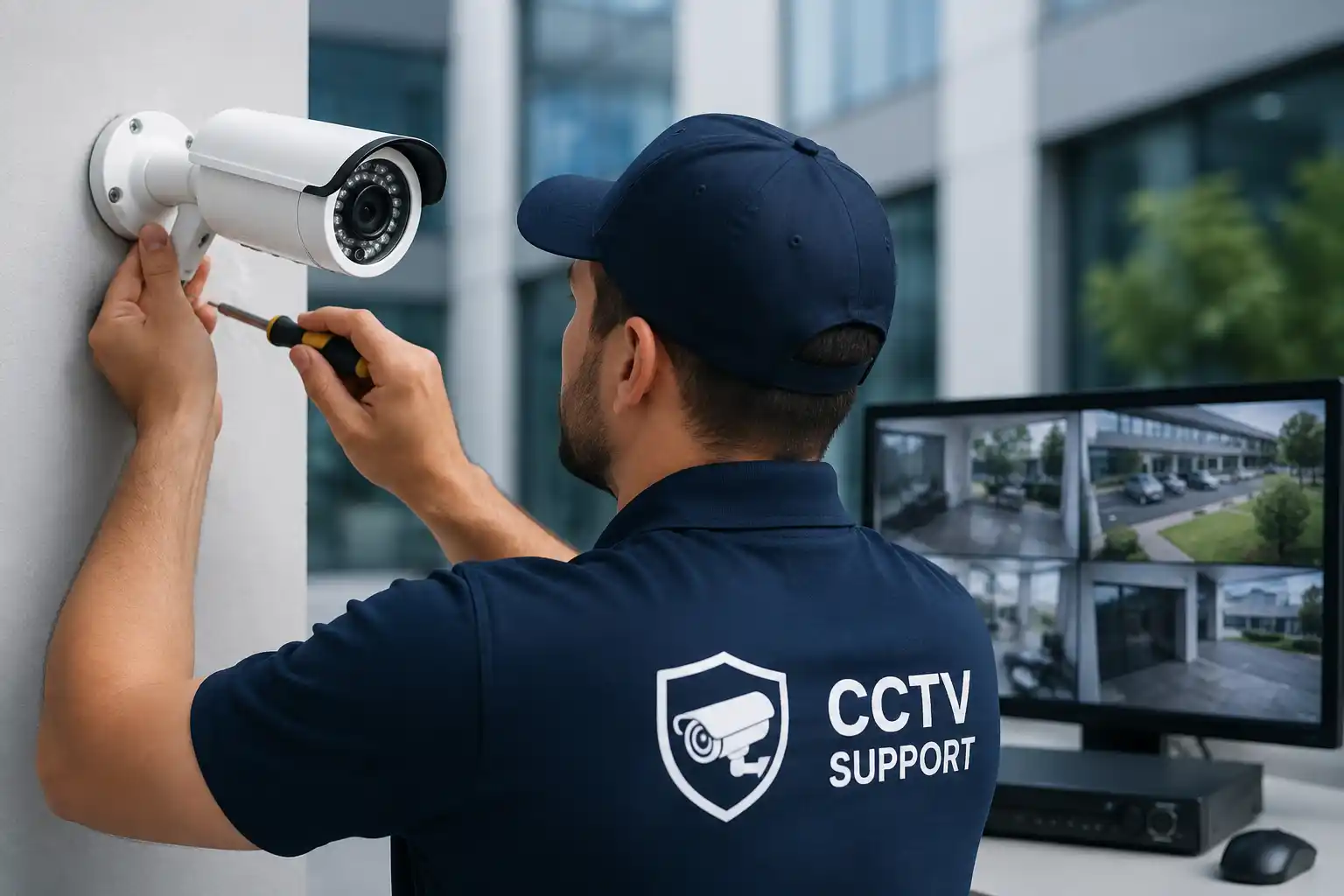
CCTV mobile viewing configuration is the controlled setup of remote camera access for authorised smartphones or tablets. In a typical business environment, the phone does not simply connect to a camera by itself. The viewing path may pass through a network video recorder or digital video recorder, the site network, internet connection, router or firewall, a vendor-supported remote-access service or another approved access method, and finally the mobile application associated with the installed surveillance platform. The exact path depends on the equipment, software, firmware, network design, account model, and security requirements already in place.
The main purpose is to allow approved users to check live video or recorded footage away from the local CCTV monitor without creating unnecessary exposure. Businesses may request this service when remote viewing has never been configured, a phone has been replaced, an authorised manager needs access, a recorder has been changed, an internet router has been replaced, a mobile application stops connecting, or viewing works on local Wi-Fi but fails on mobile data. These symptoms do not prove one cause. A mobile access problem can sit at the camera, recorder, network, DNS or gateway settings, firewall policy, internet path, user account, application, mobile operating system, or remote-access service layer.
Before work is confirmed, FourTeck normally needs enough information to understand the existing CCTV platform, the desired user experience, the number of people who need access, the business site, the current network status, whether local recording is healthy, and whether authorised administrator access is available. The final configuration method must match the installed system and the customer’s approved security approach. Where secure remote access can be established and physical checks are unnecessary, remote assistance may be possible. Where the recorder, cabling, router, switches, camera network, or local display needs hands-on investigation, an on-site visit may be the more appropriate starting point.
Direct Answer for Dubai Businesses
CCTV mobile viewing configuration is used to give approved business users remote access to an existing surveillance system from a compatible mobile application. It may involve recorder or camera registration, user permissions, application setup, network reachability, gateway and DNS checks, time synchronisation, security settings, and testing over both local Wi-Fi and an external internet connection. Organisations should consider the service when mobile viewing is unavailable, unreliable, limited to the office network, being introduced for new authorised users, or being rebuilt after a recorder, router, phone, account, or internet-service change. Before proceeding, prepare the CCTV make and model if known, the site address, the number and type of mobile devices, the required viewing permissions, details of recent changes, and authorised administrator access. Do not send passwords through an unsecured public message; credentials should be shared only through an approved secure method after identity and authorisation are confirmed.
What the Service May Cover
Depending on the confirmed scope, FourTeck may review the mobile application, recorder or camera connectivity, existing user accounts, device registration, internet status, router or firewall conditions, network addressing, DNS and gateway settings, time configuration, user permissions, live-view behaviour, playback access, stream selection, notification permissions, and the remote-access mechanism supported by the surveillance platform.
Assistance may also include testing whether the system is reachable inside and outside the site, documenting the authorised viewers, removing access that is no longer required when authorised, and explaining which parts of the configuration depend on a vendor account, subscription, cloud relay, VPN, static or dynamic addressing, or another third-party service. Not every item applies to every CCTV system, and not every mobile application exposes the same controls.
Who May Need This Service
The service may suit office managers who need controlled off-site visibility, retail managers reviewing store activity, warehouse supervisors checking loading areas, property teams responsible for common-area surveillance, clinic or education administrators managing authorised monitoring, hospitality operators with multiple cameras, or business owners who need secure access to a site while travelling.
It can also be relevant after staff changes, phone replacement, internet-router replacement, recorder upgrades, office relocation, network redesign, firewall policy changes, or a move from informal shared access toward named user permissions. The business purpose should be clear before configuration begins because different users may need different rights. A person who only requires live viewing may not need administrator privileges or unrestricted playback access.
Common Mobile Viewing Problems and What They May Indicate
Remote CCTV problems are often reported with a short description such as “the cameras are offline on my phone,” but that symptom can come from several layers. The useful first step is to establish exactly where viewing fails and what changed before the issue began. A phone that cannot connect outside the office but works on the site’s Wi-Fi suggests a different investigation from a system that is unavailable everywhere, and both are different again from a recorder that is still recording locally but fails only for one user account.
Works locally, fails remotely
Possible areas include the remote-access service, internet route, router or firewall, external addressing, account registration, or the mobile application’s off-site connection method. Testing should compare local Wi-Fi and mobile data without assuming that internet exposure is the correct fix.
One phone works, another does not
This may involve application version, operating-system permissions, account rights, device registration, incorrect login details, background data restrictions, network policy, or a user-specific configuration. The working device is useful evidence because it can show that the wider CCTV path may still be available.
Live view works, playback fails
Playback can depend on recording health, time settings, storage status, recorder permissions, event filters, channel mapping, and application capability. Mobile playback failure should not be treated automatically as a storage fault until local recording is checked.
Connection is slow or unstable
The investigation may include internet upload capacity, stream settings, mobile network quality, recorder load, application behaviour, camera stream health, and network congestion. A lower-bandwidth substream may be appropriate on some platforms, but compatibility and image requirements must be reviewed first.
Access stopped after a router change
The new router may have different LAN settings, DNS behaviour, firewall rules, internet addressing, or NAT conditions. The CCTV environment should be reviewed as part of the new network rather than restoring old settings blindly.
A former staff member still has access
This is an access-management concern, not only a viewing issue. Authorised administrators may need to review named users, shared accounts, registered devices, password or token changes, and the platform’s own revocation process. Evidence and permission should be confirmed before changes are made.
Why Unresolved Remote Viewing Problems Matter to Operations
A mobile viewing problem may not stop the local recorder from capturing video, but it can still create operational difficulty. Managers may lose convenient visibility of entrances, cash areas, loading zones, reception points, or other authorised monitoring locations. Staff may depend on a single shared phone instead of managed individual access. Incident review may be delayed because the person responsible for checking footage has to travel to the site. If the issue has been addressed through repeated informal workarounds, the business may also lose track of who has access and how that access was configured.
There is also a security dimension. Remote surveillance access should not be treated as a simple convenience setting. Unnecessary public exposure, unmanaged shared accounts, weak credentials, retained access for former users, undocumented forwarding rules, or old vendor accounts can increase risk. The aim of a proper configuration review is therefore broader than making the picture appear on a phone. It should establish an access method that fits the installed system, limit permissions to authorised users, retain enough documentation for future support, and avoid changes that weaken the wider network simply to restore remote viewing.
Service Scope and Possible Assistance
The exact work depends on the recorder or camera platform, network design, mobile application, access method, number of sites, number of authorised viewers, and the present fault or configuration objective. A new setup for one manager at a single office is different from rebuilding remote access across several recorders after a network change. The following activities illustrate what may be considered during assessment; they are not automatic inclusions in every quotation.
- Confirm the business requirement, authorised users, required channels, live-view needs, and playback expectations.
- Identify recorder or camera make, model, network connection, current recording status, and supported mobile-access method.
- Review the local network path, IP settings, gateway, DNS, internet connectivity, and relevant router or firewall conditions.
- Check whether the surveillance platform uses a vendor-supported account, QR or device registration, secure relay, VPN, direct connection, or another approved method.
- Install or review the appropriate mobile application where compatibility can be confirmed, then apply authorised account or device settings.
- Configure or refine user permissions so viewers receive only the access needed for their role where the platform supports granular permissions.
- Test live view, camera selection, playback where required, orientation, connection switching, and behaviour on local and external networks.
- Review basic security concerns such as default credentials, unnecessary exposure, shared accounts, and old authorised devices.
- Document the approved viewing method, user ownership, system dependencies, and any remaining actions requiring a vendor, ISP, or customer administrator.
Additional work such as recorder replacement, camera repair, storage replacement, structured cabling, firewall redesign, new VPN deployment, internet-service changes, or broader CCTV maintenance may require a separate or expanded scope.
Service-Fit Matrix
| Observed Situation | Possible Technical Areas | Recommended Next Step |
|---|---|---|
| No mobile viewing has ever been configured | Platform capability, app, user account, network reachability, remote-access design | Confirm desired users and supported access method before implementation. |
| Viewing stopped after internet or router replacement | LAN addressing, gateway, DNS, firewall, NAT, remote registration | Review the new network and recorder connectivity; avoid copying old settings without validation. |
| Only one authorised user’s phone fails | Account permissions, app state, mobile OS permissions, network connection | Compare the failing user with a known-working authorised device and check role-specific access. |
| System works on Wi-Fi but not mobile data | Remote path, internet exposure, relay or account service, firewall policy | Test external reachability using the platform’s approved remote method. |
| Multiple sites need authorised mobile access | Recorder inventory, account structure, user roles, site naming, network differences | Create a site-by-site access plan and confirm permissions before rollout. |
| Access must be removed after a staff change | Named users, shared credentials, device authorisations, vendor account ownership | Review authorised access with the customer administrator and record the change. |
CCTV Mobile Viewing Service Information
| Service Topic | CCTV mobile viewing configuration and troubleshooting for authorised business users |
|---|---|
| Main Purpose | Establish or restore controlled off-site viewing using the remote-access method supported by the installed system |
| Typical Systems Involved | IP cameras or analogue cameras via recorder, NVR or DVR, local network, router or firewall, internet connection, mobile application, user accounts |
| Assessment Method | Remote or on-site, depending on reachability, evidence, access, and need for physical inspection |
| Customer Access Required | Authorised CCTV and network administration access as required; credentials should be shared securely after authorisation |
| Testing and Validation | Scope dependent; may include local and external connectivity, authorised user access, live view, selected playback, and device switching |
| Security Considerations | Access method, account ownership, role permissions, password policy, unnecessary internet exposure, and old device access |
| Service Location | Dubai and UAE coordination, subject to issue type, scheduling, access, and approved scope |
| Scope Dependency | Environment dependent, vendor dependent, access dependent, and subject to assessment |
| Quotation Requirement | Contact FourTeck to confirm the configuration objective, system condition, site, and work required |
Remote Support or On-Site Support?
When remote assistance may be suitable
Remote support can be practical when the CCTV recorder or camera platform is online, the site has a working internet connection, secure authorised remote access to the relevant administration interface is available, and a responsible person can assist with the mobile device. Software settings, account permissions, application registration, logs, network parameters, and basic reachability can often be reviewed without opening equipment or tracing cables. Remote work may also be useful as an initial diagnostic stage to decide whether a site visit is actually required.
Remote access does not mean every problem can be solved remotely. If the system cannot be reached, a local administrator may still need to verify status lights, screen messages, cables, internet connection, or recorder condition before diagnosis can continue.
When an on-site visit may be needed
On-site assistance may be more suitable when the recorder is offline, the local monitor shows errors, the network path is unknown, cabling or switch ports require testing, the router or firewall must be accessed locally, the CCTV system has been moved, hardware was recently replaced, several parts of the surveillance environment are unstable, or the mobile viewing failure is only one symptom of a wider site problem.
Physical attendance can also help where equipment labels are missing, no current network diagram exists, local user confirmation is needed, or the project includes new device placement or replacement. Scheduling depends on location, building access, engineer availability, site conditions, and the approved quotation.
How the Assessment and Configuration Process Usually Begins
- Define the viewing requirement. FourTeck first establishes who needs access, which site or cameras they need, whether live view is enough, whether playback is required, and what mobile devices are involved.
- Identify the current surveillance environment. The recorder or camera platform, local monitor status, camera count, network connection, mobile application, and current remote-access method are reviewed where information is available.
- Collect evidence about the issue. Useful evidence can include app error messages, connection behaviour on Wi-Fi versus mobile data, the time the problem began, recent router or ISP changes, affected users, and whether local recording is still healthy.
- Confirm access and change authority. Administrative access, account ownership, security approval, and a suitable maintenance window are checked before changes are made. Existing settings should be recorded or backed up where practical.
- Test relevant technical layers. Depending on the system, this may include recorder network status, IP configuration, gateway and DNS, internet reachability, application registration, user rights, supported remote service status, and mobile-device permissions.
- Choose a supported access method. The solution should fit the installed platform and the customer’s security approach. FourTeck does not assume that a public port-forwarding arrangement is appropriate simply because a phone needs remote video.
- Apply approved configuration. Required account, application, recorder, or network changes are made only within the agreed scope and with rollback considerations where relevant.
- Validate from the user’s perspective. The authorised user checks the expected cameras, basic image loading, connection outside the site, and permitted playback or features where included.
- Document the result. FourTeck can record the access method, authorised users, outstanding dependencies, and next actions so future changes are not based on guesswork.
Configuration Changes Should Be Controlled, Not Experimental
Remote CCTV access touches both surveillance and networking. A rushed change made only to “get the app online” can create a larger support or security problem. Before changing recorder network settings, firewall rules, account ownership, or device registration, the existing configuration should be understood well enough to avoid disrupting local recording, camera connectivity, or other network services. Where possible, important settings should be documented before modification, and a rollback path should be considered.
Some CCTV systems support vendor-operated remote connectivity, some support direct access methods, some can be placed behind a VPN, and some older systems have limited or outdated options. The right choice depends on the installed equipment, firmware, customer network, mobile application, vendor support status, and business security policy. If a platform no longer has a supported remote service or application, the practical outcome may be an upgrade recommendation rather than a risky workaround. Any replacement or major network redesign should be quoted separately from a basic mobile-viewing configuration unless it is already included in the agreed scope.
Testing Mobile Viewing Before Handover
A successful login is only one part of validation. The configuration should be tested against the business requirement that prompted the service. If a manager needs to check a specific group of cameras from outside the site, the test should confirm that those cameras appear under the correct site or recorder, that the authorised account can open the expected streams, and that the connection works using an external mobile connection rather than only the office Wi-Fi. Where playback is included, the user may need to verify that recorded time ranges can be selected and viewed according to the permissions supported by the platform.
Time accuracy matters because mobile users often search by date and time when reviewing an incident. If cameras, recorder, and application display inconsistent timestamps, the problem may lie in recorder time configuration, camera synchronisation, time zone, daylight-saving behaviour, or the mobile app. Testing should also confirm that the mobile application can reconnect after closing and reopening and that access has not been granted more broadly than intended.
Handover should explain the authorised user’s normal sign-in method, what to do if the device is replaced, who owns the administrative account, and how access should be removed when a person leaves or changes role. The business should retain its own approved account records. FourTeck should not be treated as the permanent owner of customer credentials unless a separate managed-service arrangement expressly defines account responsibilities.
Capability 1: Faster Fault Isolation Across the Viewing Path
A mobile viewing failure can be misleading because the cameras may still be working and recording locally. FourTeck approaches the issue as a chain: camera to recorder, recorder to local network, network to internet, remote-access service or approved connection path, user account, mobile application, and smartphone or tablet. Checking the chain in this order helps distinguish a camera problem from a remote-access problem.
This structured method reduces unnecessary changes. For example, replacing an app or resetting a recorder is not a sensible first action if the actual issue is that the site’s internet gateway changed. Similarly, rebuilding network rules is unnecessary if only one user’s role was altered. Evidence from working and failing devices can make diagnosis more precise.
Capability 2: More Controlled User Access
Mobile CCTV access often grows informally. A business owner may start with one phone, then add managers, supervisors, or facilities staff over time. Without a clear access model, shared administrator credentials can spread across several devices, and former users may remain connected longer than intended.
Where the CCTV platform supports it, a cleaner approach is to use named users or defined roles with only the rights each person needs. The configuration stage is a useful time to identify who should have live view, playback, export, administration, or no further access. Platform capability varies, so permission detail is vendor dependent. The business should also define who approves future access changes.
Capability 3: Better Documentation for Future Changes
Remote viewing often breaks after an unrelated change because nobody recorded how it was originally connected. A router replacement, new ISP connection, recorder upgrade, staff phone change, or account ownership change can remove an undocumented dependency.
Useful handover notes may include the recorder or platform name, site label, supported mobile application, approved remote-access method, account owner, authorised user list, key network dependencies, and any third-party service involved. This documentation should not expose passwords. Its purpose is to help future support teams understand the architecture before changing it, which can reduce repeated trial-and-error work.
Dependencies, Access, Compatibility, and Customer Inputs
The mobile application is only one part of the service. Configuration may depend on the CCTV recorder or camera model, firmware level, supported mobile operating systems, vendor service availability, account status, local network design, internet connection, router or firewall capability, ISP conditions, and the customer’s security requirements. Some systems require a vendor account or device registration; others use a direct address, VPN, or another method. A method that is appropriate for one environment may not be appropriate for another.
FourTeck may need authorised access to the recorder, camera management interface, router or firewall, and relevant mobile device. The customer should identify the person who is permitted to approve access changes and should be ready to confirm whether any existing third-party maintenance company, building integrator, ISP, or security provider controls part of the configuration. If the system uses a vendor account that belongs to a previous employee or contractor, account ownership may need to be resolved before configuration can be completed.
Compatibility cannot be assumed from a model name alone. Older recorders may have applications or remote services that are no longer maintained, and a newer smartphone operating system may behave differently from older devices. If the existing platform cannot provide an acceptable supported remote-access method, FourTeck can explain the limitation and discuss upgrade planning, but hardware supply or replacement should be separately confirmed in the quotation.
Risk, Limitation, and Exclusion Guidance
Diagnosis depends on available evidence, authorised access, and the current condition of the CCTV and network environment. A mobile viewing failure may require action from the recorder manufacturer, mobile application provider, ISP, telecom operator, hosting provider, firewall administrator, or another vendor. FourTeck can help isolate the technical area and coordinate information, but third-party service restoration remains dependent on the responsible provider.
Hardware faults may require repair or replacement outside a configuration-only scope. A failing recorder drive can affect playback; a damaged network port can interrupt remote access; an obsolete recorder may not support a current mobile application. Changes to remote connectivity may require a maintenance window, particularly when router, firewall, or recorder network settings are involved. The business should understand that a successful test confirms the state at the time of handover; it does not guarantee that internet service, third-party cloud services, mobile networks, hardware, or future software updates will never affect remote access.
Security configuration can reduce avoidable exposure but cannot guarantee complete protection. No CCTV platform should be considered secure solely because one password or firewall setting was changed. Ongoing maintenance, access review, firmware planning, account management, network security, and vendor support status remain relevant after the initial mobile-viewing setup.
Suitable Business Environments and Use Cases
Different businesses use mobile surveillance for different reasons, so the configuration should follow the operational need rather than applying one generic profile. A retail manager may need quick live access to entrances, tills, or a stock area while away from the shop. A warehouse supervisor may need to check loading bays or gates after working hours. A property-management team may need authorised access to common areas across more than one building. A professional office may want limited viewing for selected management staff without exposing administrator controls.
Clinics, schools, hospitality locations, restaurants, showrooms, construction offices, logistics sites, and multi-branch organisations can also have legitimate remote-viewing requirements. The business context affects who should have access, how many sites must be visible, whether playback is required, how incident evidence is handled, and whether site policies limit viewing to particular roles. FourTeck’s role is to configure the technical path within the confirmed scope; the customer remains responsible for defining authorised business use and any organisational privacy or surveillance policies that apply to its environment.
Multi-site users benefit from consistent site naming and account ownership. If one phone displays several offices or branches, the handover should make it obvious which recorder and camera group belongs to each location. This reduces the chance of a user selecting the wrong site during an incident and makes future support more manageable.
Operational, Security, and Maintenance Considerations
A stable mobile-viewing setup depends on the health of the wider CCTV environment. Cameras need reliable power and connectivity, the recorder must remain operational, storage should be monitored, the local network must route correctly, and the internet connection must be available. Remote viewing can appear to be the problem when the underlying issue is actually a recorder fault, camera network failure, switch problem, incorrect gateway, or unstable internet service.
Access should be reviewed when staff join, change role, or leave. Where supported, named accounts are easier to manage than a single shared administrator login. Mobile devices also need normal security controls such as device lock, software updates, and responsible handling. If a phone used for CCTV access is lost or replaced, the business should know how to revoke or re-register access using the platform’s supported process.
Maintenance may include checking recorder health, camera availability, time synchronisation, storage status, account ownership, firmware planning, application compatibility, router or firewall dependencies, and the continued operation of the supported remote-access service. The frequency and scope of such checks should be defined in a maintenance agreement rather than assumed to be part of a one-time configuration. Customers seeking wider surveillance maintenance can review FourTeck’s IT and infrastructure service options or request a tailored assessment.
Before You Contact FourTeck
Providing accurate information helps the first assessment focus on the right technical layer. You do not need every answer before contacting FourTeck, but the following details are useful when available.
Do not send passwords in a public enquiry. Credentials should be shared only through an approved secure method after identity, authority, and service scope are confirmed.
Service Evaluation and Quotation Checklist
A quotation is clearer when the technical objective and boundaries are defined. During evaluation, confirm the following points so configuration work is not confused with unrelated repair or infrastructure tasks.
- The exact objective: new mobile viewing, fault recovery, new user access, multi-site access, or security clean-up.
- Number of CCTV sites, recorders, camera groups, and authorised mobile users involved.
- Current system condition, including whether cameras and local recording are already functioning.
- Whether recorder, network, router, firewall, vendor account, and mobile-device access is available.
- Whether the first stage can be remote or physical attendance is required.
- Any network changes, VPN requirements, firewall work, or ISP coordination expected.
- The level of mobile permission required for each user group.
- Testing expectations, including external connection and playback where applicable.
- Documentation and handover requirements after the change.
- Any hardware fault, obsolete platform, or application-compatibility concern that may require separate assessment.
- Vendor or ISP dependencies that are outside FourTeck’s direct control.
- Preferred service window, building access, and operational restrictions.
How FourTeck Can Assist
FourTeck can help turn a vague “CCTV app not working” report into a defined technical scope. The first task is to clarify whether the issue affects the surveillance system, local network, internet connection, remote-access service, account, or mobile device. From there, assistance can be planned around the smallest safe set of changes required to meet the approved business outcome.
Depending on assessment, FourTeck may coordinate remote troubleshooting, an on-site inspection, recorder and camera checks, network review, application configuration, user-permission changes, mobile device registration, external-connectivity testing, vendor or ISP communication, documentation, and handover. Where the problem reveals a wider need such as network repair, recorder replacement, camera maintenance, firewall changes, or a new VPN design, FourTeck can describe the additional requirement and prepare a separate or expanded quotation rather than treating it as automatically included.
Businesses that want to understand FourTeck’s broader technical approach can visit the FourTeck IT Services home page, review the company service overview, or use the contact page to request a CCTV assessment.
Dubai and UAE Service Coordination
For a Dubai CCTV mobile viewing request, the support method depends on the state of the system. If the recorder is online and secure authorised access is available, an initial remote assessment may identify the issue without a site visit. If the recorder, router, cabling, switch, cameras, or local network must be inspected physically, on-site assistance may be recommended. The quotation should state whether the work covers only mobile access configuration or also includes network changes, camera troubleshooting, recorder repair, account migration, or other surveillance tasks.
Service timing depends on engineer availability, customer approval, site access, current equipment condition, maintenance windows, third-party providers, and any parts or licenses required by the installed platform. For occupied offices, shops, clinics, or other operational sites, configuration work may need to be coordinated around periods when changes to the recorder or network will not interfere with normal surveillance responsibilities. FourTeck can help define the sequence before work begins so the customer knows which part can be tested remotely and which part needs local access.
Coverage Coordination Across Dubai, Abu Dhabi, Sharjah, and Ajman
Businesses operating in Dubai, Abu Dhabi, Sharjah, and Ajman may need a consistent remote-viewing approach across more than one site. FourTeck can coordinate assessment, remote troubleshooting, planned on-site visits, configuration, testing, documentation, maintenance discussion, or wider project support according to the confirmed requirement. The technical environment may differ between locations even when the same CCTV brand is used, because each site can have a different recorder model, router, ISP connection, account owner, firewall policy, network addressing plan, or building-access procedure.
For multi-site work, it is useful to create a simple inventory that records the site name, recorder, number of authorised mobile users, current remote-access method, account owner, and any known network dependency. This makes rollout and future support easier to manage. Scheduling and travel remain dependent on site location, building permission, access windows, local conditions, equipment availability, third-party providers, and the approved service scope. Remote support can reduce unnecessary travel where the technical conditions allow it, but local attendance may still be required for physical inspection or inaccessible systems.
Related FourTeck IT Services
Mobile CCTV access can depend on several infrastructure areas. The following FourTeck resources provide context for organisations that discover a broader requirement during assessment.
Assessment, camera, recorder, networking, remote access, and maintenance needs can be considered together.Network Support
Useful when CCTV reachability is affected by switches, addressing, routing, internet connectivity, or site network changes.Firewall and Internet Support
Relevant when the approved remote-access design depends on firewall policy, VPN, ISP service, or external connectivity.Managed IT Support
For businesses that want recurring support across users, networks, servers, communication, and surveillance systems.
Why Businesses Contact FourTeck for This Type of Work
CCTV remote viewing sits between surveillance technology and business networking. A recorder may be healthy while the network path is wrong; the network may be healthy while one user account is disabled; the app may connect but playback may fail because recording or time configuration is incorrect. Businesses contact FourTeck when they want one technical review across these connected layers rather than a sequence of disconnected guesses.
The service approach focuses on clarifying the reported problem, identifying the affected layer, confirming access and authorisation, planning changes safely, testing from the user’s perspective, and documenting the result. FourTeck can also coordinate with an ISP, CCTV vendor, building IT contact, or other provider when the issue crosses organisational boundaries. The aim is not to claim that every remote-access fault can be fixed with one standard setting; it is to provide a practical assessment and define the work needed for the customer’s actual environment.
Questions Dubai Customers Often Ask Before Requesting CCTV Mobile Viewing Help
Can my CCTV be viewed on a phone from outside the office?
Often yes, but only if the installed CCTV platform supports an appropriate remote-access method and the site has the required network and internet connectivity. The recorder or cameras may need to be registered with a vendor-supported service, reached through an approved network design, or accessed through another method such as a VPN. Compatibility depends on the specific recorder, firmware, application, account status, and mobile operating system. The safe next step is to identify the exact system and current network arrangement before changing firewall or internet settings.
Why does CCTV work on office Wi-Fi but not on mobile data?
This usually means the phone can reach the CCTV system from inside the local network but the external connection path is not working as expected. The cause could involve remote registration, the vendor service, external addressing, router or firewall settings, ISP conditions, account configuration, or the application’s connection method. It does not automatically mean ports should be opened to the internet. A proper assessment should first confirm which remote-access method the platform supports and whether the local network is currently healthy.
Can FourTeck configure CCTV viewing on both iPhone and Android devices?
This depends on whether the installed CCTV platform provides a supported mobile application for the required operating systems and versions. During assessment, FourTeck can identify the application and configuration method associated with the recorder or camera system and check whether the customer’s devices are suitable. If the platform is too old or its mobile software is no longer maintained, the correct recommendation may be an upgrade assessment rather than an unsupported workaround.
What if I changed my internet router and CCTV remote viewing stopped?
A router change can alter the local subnet, gateway, DNS settings, firewall policy, NAT behaviour, or external internet addressing. Even when cameras and local recording still work, the recorder may no longer have the correct route to the internet or the old remote-access dependency may no longer apply. FourTeck can review the new network and the CCTV settings together. Recreating old router settings blindly is not recommended because the previous configuration may have been poorly documented or unnecessarily exposed.
Can mobile viewing be configured without coming to site?
It may be possible when the system is online, secure authorised remote access to the relevant administration interface is available, and a responsible user can assist with the mobile device. Remote work is especially practical for account, application, and software-level configuration. An on-site visit may still be needed when the recorder is unreachable, local network information is missing, physical ports or cables need testing, equipment was recently replaced, or the fault cannot be reproduced remotely.
Do I need a static public IP address for CCTV mobile viewing?
Not necessarily. Different surveillance platforms support different remote-access methods. Some use vendor-managed registration or relay services, some can work through a VPN, and some direct-access designs may rely on fixed addressing or dynamic DNS. Whether a static public address is useful or required depends on the platform, ISP service, router or firewall design, and security policy. FourTeck should first identify the current architecture rather than adding a static IP as a default assumption.
Is port forwarding required for remote CCTV access?
Not always, and opening recorder services directly to the internet can increase exposure if it is done without a clear security design. Many current systems use other remote-access methods, and business networks may prefer a VPN or vendor-supported connection path. If port forwarding already exists, it can be reviewed as part of the assessment. The correct decision depends on the equipment, network, vendor guidance, customer security requirements, and whether the device still receives supported updates.
Why can I see live video but not old recordings from my phone?
Live view and playback can use different permissions and recorder functions. The issue may involve user rights, recording status, storage health, channel mapping, time settings, playback filters, application capability, or recorder performance. The first check is whether the required recordings can be found on the local recorder itself. If local playback also fails, the investigation should focus on recording and storage before the mobile application is blamed.
How many people can be given mobile access?
The technical limit depends on the recorder, camera platform, account model, licensing if any, network capacity, and vendor service. The better business question is how many people actually need access and what permissions each person should receive. Giving every user administrator rights is rarely necessary. During planning, FourTeck can help the customer define authorised viewers, separate sites or roles where supported, and identify whether the system can accommodate the required user model.
Can access be removed when an employee leaves?
Usually there is a supported way to revoke a user, change account credentials, remove a registered device, or rebuild access, but the exact process depends on the platform. The difficulty is often organisational rather than technical when several people share one administrator account. Businesses should maintain a record of who is authorised to view surveillance and review access during offboarding. FourTeck can assist with the technical change when the customer confirms authority and account ownership.
What should we prepare before asking for a quotation?
Prepare the site location, recorder or camera model if known, number of CCTV sites, number of mobile users, required viewing rights, app name, current symptoms, local recording status, internet status, recent network or equipment changes, and the availability of authorised administrator access. Also mention whether a third-party installer, building IT team, ISP, or vendor controls any part of the setup. This information helps FourTeck distinguish a simple app configuration from a wider network or surveillance project.
Should we repair the existing remote viewing or replace the CCTV recorder?
Replacement should not be assumed until the existing system is assessed. If the recorder is healthy and its remote-access method is still supported, reconfiguration may be sufficient. Replacement becomes more relevant when the recorder is failing, unsupported, incompatible with current applications, unable to meet the required security approach, or already part of a broader upgrade plan. FourTeck can separate the immediate fault from the lifecycle decision so the customer can compare practical options.
Can one mobile phone show CCTV from several branches?
Many platforms can manage multiple sites or devices, but the exact capability and account structure are vendor dependent. A multi-branch design should use clear site names, defined user rights, and documented account ownership. Each branch also needs its own reliable local network and supported remote-access path. When several branches are involved, a phased rollout is often easier to validate because one site can be tested before the same operational method is applied elsewhere.
What affects mobile viewing speed and image quality?
Mobile viewing performance can depend on the site’s internet upload capacity, mobile network quality, video stream bitrate and resolution, recorder load, number of simultaneous streams, camera health, and application behaviour. Some systems provide a lower-bandwidth secondary stream for remote viewing. That can improve responsiveness, but the setting should still provide enough visual detail for the business purpose. FourTeck can review performance without assuming that the highest resolution is always the best mobile experience.
Is a mobile viewing configuration the same as a complete CCTV maintenance service?
No. Mobile viewing configuration focuses on authorised remote access and the technical path required to make it work. A complete CCTV maintenance service can include camera health, lens condition, image quality, recording status, storage, power, cabling, PoE, network stability, firmware planning, retention, and broader system documentation. If the mobile issue reveals wider faults, FourTeck can identify them and discuss an additional maintenance or repair scope.
When is on-site CCTV support in Dubai more appropriate than remote support?
An on-site visit is usually more appropriate when physical equipment needs to be inspected, when the recorder or network cannot be reached remotely, when cabling or switch ports may be faulty, when the system was recently relocated, or when several cameras and network components show related symptoms. Local attendance can also be helpful when the site’s configuration is undocumented and nobody can confidently identify the recorder, router, or network path. The visit scope and scheduling should be confirmed before attendance.
What happens after FourTeck gets remote viewing working?
The useful next step is validation and handover. The authorised user should confirm that the expected cameras appear, external connectivity works, playback behaves as required where included, and access permissions match the business need. The configuration should be documented at a practical level without recording passwords in visible documentation. The customer should also understand how future phone changes, staff departures, app updates, internet changes, or recorder replacement may affect the setup.
Frequently Asked Questions
Does FourTeck support an existing CCTV system?
Yes, existing systems can be assessed for mobile-viewing configuration or faults, subject to platform support, access, system condition, and confirmed scope. Unsupported or damaged equipment may require a separate upgrade or repair discussion.
Do I need to know the recorder password before requesting support?
You can request support without sending a password. However, authorised administrative access may be required during the work. Credentials should be shared only through an approved secure method after the service and authorisation are confirmed.
Can FourTeck configure playback access on mobile?
Playback can be included where the installed platform supports it and the customer’s user permissions allow it. Recording health, storage, time settings, and account rights may also need to be checked.
Will configuration affect local recording?
A well-planned change should avoid unnecessary disruption, but any recorder or network configuration can carry risk. Existing settings should be reviewed, changes should be authorised, and a rollback approach should be considered where relevant.
Can FourTeck help if the CCTV app shows the recorder offline?
Yes. The assessment can check whether the issue is limited to the app or involves recorder connectivity, internet service, network settings, account registration, remote service status, or another dependency.
Can the service include several phones?
Yes, where the platform supports the required user model. The quotation should identify how many authorised users and devices are included, their required permissions, and whether multiple sites are involved.
Do you guarantee that an old CCTV system will work with current apps?
No. Compatibility depends on the recorder or camera platform, firmware, supported applications, mobile operating system, and vendor service status. Older systems may require upgrade planning.
Can FourTeck coordinate with our ISP or CCTV vendor?
Vendor or ISP coordination can be part of the support process when the fault crosses service boundaries, subject to the confirmed scope and the customer’s authorised account access.
Is mobile viewing secure once it is configured?
Configuration can reduce avoidable risk through controlled accounts and a suitable access method, but no setup can guarantee complete security. Ongoing updates, account review, device security, network controls, and vendor support remain important.
Do you provide support outside Dubai?
FourTeck can coordinate remote and planned on-site support across the UAE according to location, issue type, access, scheduling, and quotation. Dubai, Abu Dhabi, Sharjah, and Ajman can be discussed as part of the service plan.
What if the problem is actually the internet connection?
FourTeck can help isolate whether the CCTV system is functioning locally and whether the fault sits with the site network or internet service. ISP action may still be required for provider-side faults.
How do we request a quotation?
Use the FourTeck contact page and provide the site, system details if known, current symptom, number of mobile users, recent changes, and required outcome. FourTeck can then confirm the assessment approach and quotation scope.
Request CCTV Mobile Viewing Configuration Support
If your CCTV works on the local monitor but not on a phone, has stopped working after a network change, needs access for a new authorised manager, or requires a better-documented remote-viewing method, contact FourTeck with the site location and the current symptoms. The first assessment can determine whether the work is likely to be application and account configuration, network troubleshooting, recorder support, or a wider on-site CCTV task.
Provide the recorder or camera model if known, the name of the mobile application, whether viewing works on Wi-Fi or mobile data, and any recent internet, router, phone, or staff changes. FourTeck can then define the required access, testing, documentation, and any third-party dependencies before work proceeds.
CCTV mobile viewing should remain part of a maintainable surveillance and network environment. If the initial issue reveals camera, recorder, storage, network, internet, firewall, or broader support requirements, the work can be assessed separately so the customer understands what is included and what depends on additional approval.