
CCTV Storage Configuration in Dubai, UAE
Recording storage is the part of a CCTV system that determines whether useful footage is still available when the business needs to review an incident. FourTeck helps organisations assess NVR and DVR storage settings, retention behaviour, recording schedules, drive capacity and related network or camera dependencies before controlled configuration work is carried out.
The service is intended for existing CCTV environments as well as planned changes where storage capacity, recording quality, camera count or retention expectations are changing. Final recommendations depend on the recorder, installed disks, camera streams, access, system health and required evidence-retention period.
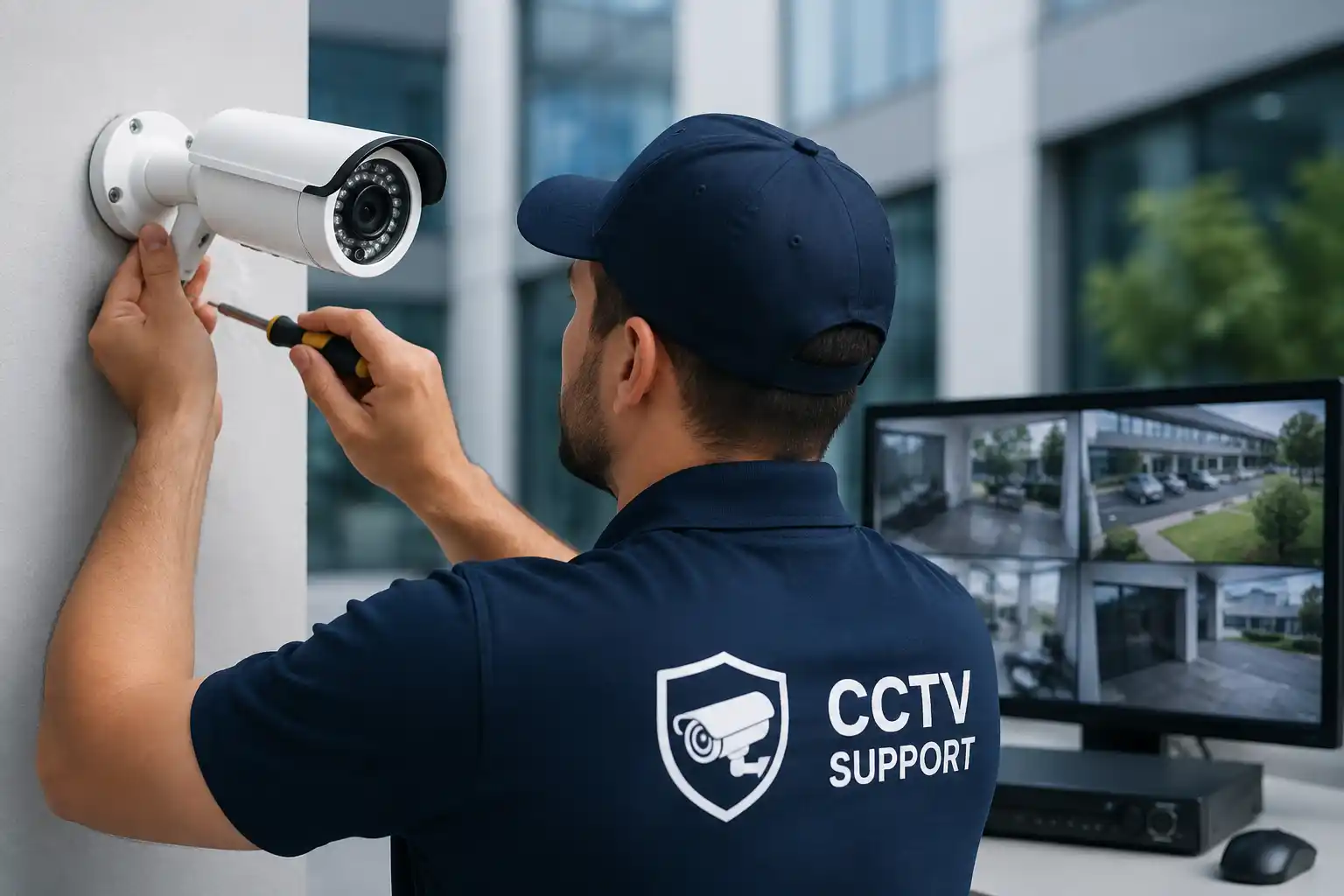
Settings are reviewed against the footage period the business expects to keep.
Usable capacity, disk status and recorder behaviour are considered together.
Configuration work should be authorised, documented and validated after change.
Remote or on-site assistance depends on access, location and confirmed scope.
What does CCTV storage configuration actually mean?
CCTV storage configuration is the work of setting up and validating how surveillance footage is written, retained, overwritten and retrieved on a recorder or connected storage system. It is mainly used to make recording behaviour match the organisation’s operational needs: which cameras should record, when they should record, at what quality, how long footage should normally remain available and how the system should respond as storage becomes full. Businesses should consider an assessment when footage disappears sooner than expected, a recorder reports disk warnings, cameras have been added, recording quality has changed, or retention requirements are no longer clear. Before work can be confirmed, the customer should provide the recorder type, approximate camera count, current recording behaviour, desired retention period, any known storage warnings and authorised administrative access. Physical disk inspection, replacement or recorder changes may require an on-site visit and a separately confirmed scope.
What the service can cover
A CCTV storage review can cover the recording path from camera stream to recorder, hard drive or storage volume. Depending on the confirmed environment, FourTeck may review recorder storage status, installed drive capacity, disk health indicators visible to the recorder, recording schedules, continuous or event-based recording modes, camera stream settings, overwrite behaviour, retention estimates, time synchronisation and playback availability.
The assessment may also look at whether network-connected cameras are reaching the recorder consistently, whether newly added cameras have changed the storage requirement, and whether the system is retaining footage in line with the business objective. The final scope is environment dependent and may require hardware, manufacturer or third-party assistance where faults are outside configuration work.
Who may need this configuration service
The service may be useful to offices, retail outlets, warehouses, clinics, restaurants, property-management locations, schools, hospitality sites, showrooms and other organisations that rely on recorded video for incident review, operational oversight or security investigations. It can also help businesses that inherited an undocumented recorder, expanded the number of cameras, changed camera resolution, replaced storage drives or moved from one recording schedule to another.
A storage configuration request is especially relevant when a manager knows how many days of footage are needed but does not know whether the present recorder can support that target. It is also suitable when the system appears to be recording but users are unsure whether all channels, dates and playback functions are working as expected.
Common signs that CCTV storage needs assessment
Storage problems do not always present as a complete recorder failure. A business may still see live video while recorded footage is missing, incomplete or retained for a shorter period than expected. The same symptom can come from different technical layers, so configuration should not begin with assumptions about the cause.
Footage is overwritten too quickly
The available days of video may be lower than the business expects. Camera count, resolution, frame rate, compression, recording schedule, usable disk space and actual scene activity can all influence retention. The correct next step is to review the current recording parameters and measured storage behaviour rather than changing one setting in isolation.
Some channels are not recording
A live camera can still have a recording schedule, stream, licensing, connectivity or recorder-registration problem. The assessment should confirm which channels are affected, whether gaps are continuous or intermittent, and whether the recorder shows storage or stream errors for those cameras.
The recorder reports disk warnings
Warnings may indicate a drive, storage volume, connection or recorder issue. A configuration review can identify what the recorder is reporting, but physical disk condition and replacement requirements may need on-site inspection and compatible hardware.
Playback is slow or inconsistent
Playback concerns can relate to storage performance, recorder load, network access, client software, simultaneous users or the way video is indexed. The service should separate storage behaviour from viewing-path problems before recommendations are made.
New cameras reduced retention
Adding channels increases the volume of recorded data when other settings remain similar. Existing storage may still function correctly but no longer meet the desired retention target. Capacity and recorder limits should be reviewed before expanding storage or reducing recording quality.
Nobody knows the current retention period
Undocumented systems often rely on assumptions. A practical review checks the earliest reliably available footage, current storage status, active schedules and channel configuration, then records the findings so managers can make informed decisions.
Why unresolved storage issues can become an operational problem
A CCTV system has limited value for incident investigation if required footage has already been overwritten or was never recorded correctly. The operational impact can include delayed incident review, uncertainty during internal investigations, difficulty confirming events, repeated time spent checking playback, and unexpected expenditure when storage limitations are discovered only after an incident.
The objective of storage configuration is not to promise that footage will always be available. Storage media can fail, settings can change, cameras can disconnect and third-party dependencies can interrupt recording. The practical goal is to make the intended recording behaviour clear, align it with available capacity, test that the configuration works at the time of handover, and document the factors that could affect future retention.
Possible CCTV storage configuration scope
Depending on the confirmed scope, assistance may include the following activities. Not every activity applies to every recorder, and some tasks may require a separate quotation, compatible hardware, vendor support or an agreed maintenance window.
Identify recorder model information, active channels, storage volumes, installed drives as reported by the system, recording modes and available playback history.
Compare the required footage period with actual retention and the settings that influence recording volume.
Check whether channels use continuous, scheduled, motion or event recording as appropriate to the business requirement and system capability.
Review configured recording streams, resolution, frame rate and related parameters where supported, while considering the impact of any change on image usability and storage.
Check recorder-reported disk condition, capacity, volume status and alerts. Physical replacement remains hardware and compatibility dependent.
Confirm how the recorder behaves when storage reaches capacity and whether the intended overwrite policy matches business expectations.
Assess whether additional compatible storage, a recorder change or recording-policy adjustment may be required to meet the target retention period.
Test a sample of channels and time periods after approved changes to confirm that recordings can be retrieved as expected at handover.
Which type of assistance fits the situation?
| Business situation | Relevant assistance | What must be confirmed |
|---|---|---|
| Footage lasts fewer days than expected | Retention and recording-setting review | Actual oldest footage, camera count, storage capacity, recording modes and required retention |
| Recorder shows a disk or storage warning | Remote status review and possible on-site inspection | Recorder message, disk status, physical access and compatible replacement options |
| More cameras are being added | Capacity and recorder-load planning | New channel count, camera streams, recorder limits, network capacity and target retention |
| Only selected cameras have recording gaps | Channel, schedule and connectivity diagnosis | Affected channels, timestamps, stream status, schedule and network path |
| The business needs a defined retention target | Requirement-led storage planning | Required days, critical cameras, recording quality expectations, growth plan and available hardware |
CCTV storage service information
| Service topic | CCTV storage configuration and retention assessment |
|---|---|
| Main purpose | Align recording behaviour, capacity and retention expectations with the confirmed surveillance environment. |
| Typical systems involved | NVRs, DVRs, IP or analogue camera channels, surveillance hard drives, storage volumes, PoE/network infrastructure and viewing clients as relevant. |
| Assessment method | Remote review where authorised access is available, with on-site inspection where physical storage or local testing is required. |
| Customer access required | Authorised administrator access to the CCTV system and safe site access when hardware inspection is included. Credentials should be shared only through an approved secure method after authorisation is confirmed. |
| Backup and rollback | Configuration backup or documented rollback should be considered before material changes where the recorder supports it. |
| Testing and validation | Scope dependent; may include channel recording checks, date/time verification, playback samples, storage-status review and confirmation of the intended schedule. |
| Hardware replacement | Not assumed. Drive or recorder replacement depends on diagnosis, compatibility, availability, physical condition and approved quotation. |
| Service location | Dubai and UAE coordination, subject to location, access, scheduling and confirmed scope. |
| Quotation requirement | The final work, attendance, hardware and configuration scope should be confirmed in the approved quotation or service agreement. |
When remote support may be suitable
Remote assistance can be useful when the recorder is online, secure access is authorised, an administrator or responsible user is available, and the main task concerns settings, logs, storage status, recording schedules, retention checks or playback behaviour. Remote review can also help identify whether an on-site visit is actually necessary before travel is arranged.
Remote access does not remove the need for physical checks when disk condition, drive replacement, cabling, power, rack access or hardware faults are involved. Access method, customer security requirements and network availability must be confirmed before the session.
When an on-site visit may be required
On-site assistance may be recommended when storage drives need physical inspection, a recorder cannot be reached remotely, the site has multiple recorder units, cabling or power needs checking, new storage is being installed, or local playback and monitor behaviour must be observed. An on-site visit can also be useful when documentation is incomplete and the actual system topology must be mapped.
Attendance depends on the site location, building access, engineer scheduling, safe equipment access, parts requirements and the approved scope. The visit should have a clear objective so diagnostic time, change work and validation can be planned responsibly.
How a CCTV storage assessment can be carried out
A useful storage configuration project starts with the business requirement rather than a list of recorder menus. The process should establish what the organisation needs from its recordings, understand the existing environment and then change only the settings or hardware that are justified by evidence.
- Define the operational objective. Confirm why recorded footage is needed, which cameras are most important, the expected retention period, any known incident-review requirements and whether the goal is troubleshooting, expansion, standardisation or a planned upgrade.
- Identify the affected system. Record the number of NVRs or DVRs, active channels, approximate camera count, network layout where relevant, existing storage volumes and who currently administers the system.
- Collect evidence before changing settings. Useful evidence can include storage warnings, screenshots of disk status, the oldest available recording on selected cameras, recording schedule pages, recent changes, drive replacement history and examples of missing footage.
- Confirm authorisation and rollback options. Administrative access should be provided by an authorised customer contact. Where supported, existing configuration can be backed up or key settings can be documented before change. Credentials should not be placed in public requests or shared through unapproved channels.
- Review storage and recording parameters. Check usable capacity, disk status, channel schedules, recording modes, configured stream quality, overwrite behaviour and whether all intended cameras are actually being recorded.
- Compare current behaviour with the target. If retention is shorter than required, determine whether the practical options are configuration adjustment, additional compatible storage, recorder upgrade, selective recording policy changes or a combination of actions.
- Plan the approved change. Changes that affect active recording should be coordinated for a suitable maintenance window where needed. The customer should understand expected impact, dependencies and any period during which recording could be interrupted.
- Validate the result. After changes, confirm that selected cameras are recording, the recorder date and time are sensible, playback works, storage status is healthy as reported by the system and the intended recording schedule is active.
- Document the handover. Record the main settings, remaining limitations, expected monitoring checks and any recommended hardware, maintenance or follow-up work so the business is not relying on memory.
Planning configuration changes without creating avoidable recording risk
CCTV recorders often operate continuously, so a storage change should be treated as a controlled change rather than an isolated technical adjustment. Before altering a recording schedule, stream quality, storage volume or disk configuration, the existing state should be understood and the likely effect on ongoing recording should be discussed. Some recorder operations can temporarily interrupt recording, require a reboot, initialise disks or change how existing footage is retained. The exact behaviour is platform dependent.
Where the system supports configuration export or backup, that option can be considered before material changes. Important settings can also be documented manually. If a storage drive is suspected of failing, unnecessary writes or reinitialisation should not be performed without understanding the customer’s need to preserve existing footage. If specific footage is required for an active incident, the customer should identify that requirement before storage work begins so preservation options can be discussed.
A planned change should define the desired outcome, approved actions, responsible contact, maintenance window where necessary, validation steps and rollback considerations. This approach is particularly useful in multi-camera sites where changing recording quality or schedules can affect retention across the entire recorder.
Testing, validation and handover after storage configuration
Configuration is not complete merely because a setting was saved. The service should include validation appropriate to the scope. This may involve checking that selected channels are actively recording, confirming that the recorder sees the intended storage volume, reviewing current disk warnings, testing playback at different times, verifying that camera timestamps are aligned and confirming that expected recording modes are active.
Retention itself is measured over time. A same-day test can confirm that recording works after the change, but it cannot prove a future number of days of footage with certainty because scene activity, camera stream behaviour, capacity, later changes and hardware condition can affect results. Where a target retention period is important, follow-up review after the system has operated under normal conditions may be useful.
Handover should identify what was changed, what was tested, what remains dependent on the recorder or third parties, and what the customer should monitor. Documentation can reduce confusion when staff change, cameras are added or the system needs support again.
Capability 1: Retention planning that reflects the real recording load
Retention is not determined by disk size alone. It depends on how many camera streams are recorded, their configured quality, frame rate, compression behaviour, recording schedule and the amount of usable storage the recorder can actually use. A storage assessment brings these factors together so the business can compare its desired retention period with the present environment.
Where a gap exists, the answer may be additional compatible storage, different recording settings, a recorder upgrade or a revised policy for selected cameras. The appropriate option depends on image requirements, hardware capability, recorder limitations and the operational importance of each channel.
Capability 2: Better visibility of recorder and storage health
A business should know whether its recorder is merely displaying cameras or actually retaining usable footage. Storage configuration work can include checking recorder-reported drive condition, identifying warnings, confirming that the intended channels are recording and reviewing the oldest available playback on selected cameras.
This does not replace manufacturer diagnostics or guarantee drive health. It provides a clearer operational picture and helps separate a configuration issue from a likely hardware problem that may require compatible parts, specialist recovery or vendor action.
Capability 3: Documented changes that are easier to maintain
CCTV storage settings are often changed over time as cameras are added, staff change or incident requirements evolve. Without documentation, the next technician may not know why a schedule, quality level or storage policy was chosen. FourTeck can document key settings and the reason for approved changes as part of the confirmed scope.
Clear records help future maintenance, expansion and troubleshooting. They also make it easier for managers to compare the current retention plan with new requirements before approving more hardware or reducing recording quality.
Dependencies, access and information FourTeck may need
Storage configuration depends on the wider CCTV environment. The recorder must receive stable camera streams; camera timestamps must be sensible; network-connected systems need reliable switching and addressing; the recorder must recognise its installed disks; authorised users need working access; and the hardware must support the required capacity or recording modes. If any of these layers is unstable, storage settings alone may not resolve the business problem.
Useful customer inputs include the business location, recorder brand and model if known, number of cameras, approximate current retention, desired retention period, recent camera additions, storage warning messages, existing maintenance history, administrator access availability and whether any footage must be preserved before changes are made. For an on-site visit, FourTeck may also need a responsible contact, building access, equipment-room access and an agreed work window.
Do not place passwords or sensitive credentials in public contact forms or page comments. Credentials should be shared only through an approved secure method after the customer’s identity and authorisation are confirmed.
Important limitations and scope boundaries
- Diagnosis depends on available evidence, administrator access, recorder condition and the ability to reproduce or observe the reported problem.
- A storage configuration review cannot guarantee that footage can always be recovered after a disk, recorder, power, camera or network failure.
- If existing footage is already missing, overwritten or stored on failed media, restoration may not be possible. Data recovery, if considered, may require a separate specialist assessment and cannot be guaranteed.
- Drive replacement, recorder replacement, additional storage and physical installation are not assumed to be included in configuration labour. Hardware compatibility and quotation must be confirmed.
- Changes to recording quality or schedules can affect image usefulness, storage consumption and retention. The business objective should be agreed before changes are approved.
- Legacy or unsupported recorders may have limited storage options, documentation, firmware support or compatibility with current drives.
- Some issues may require the camera manufacturer, recorder vendor, storage supplier, network provider, building contractor or another third party.
- Service timing and commercial terms depend on the approved scope, customer access, location, required hardware, site conditions, engineer availability and third-party dependencies.
Business environments where storage planning is especially useful
Retail and customer-facing sites
Shops and showrooms may need to review events at entrances, sales areas, counters or stock rooms. Storage planning should account for which cameras require the most detail and how long incident footage is normally needed.
Warehouses and logistics operations
Large sites can have many channels and long operating hours. Expansion can quickly change storage requirements, so capacity and recorder limits should be reviewed before adding cameras or increasing recording quality.
Offices and professional workplaces
Office systems may have a smaller camera count but still need predictable retention for entrances, reception, parking or selected common areas. Clear administrator ownership and documentation can be as important as raw capacity.
Multi-site organisations
Branches may use different recorder generations and storage policies. A structured review can identify where retention expectations differ and where standardisation is practical, without assuming every site can use identical settings.
Operational, security and maintenance considerations
Storage is only one part of recording reliability. A recorder depends on stable power, functioning disks, correct system time, active camera streams, network connectivity where IP cameras are used and controlled administrator access. A business that changes storage settings without maintaining these dependencies may still experience recording gaps.
Administrator access should be limited to authorised personnel. Shared accounts and undocumented remote access can make accountability difficult. Where remote administration is required, the access method should follow the organisation’s security policy and avoid unnecessary exposure of the recorder to the internet. Configuration changes should be recorded so later troubleshooting can distinguish a new fault from a deliberate change.
Preventive review can include checking storage warnings, confirming that important channels are recording, testing representative playback, monitoring remaining retention against business needs and reviewing capacity after cameras or quality settings change. The frequency and exact tasks depend on the agreed maintenance plan; recurring checks are not automatically included in a one-time configuration engagement.
Before you contact FourTeck
Preparing a few details can make the first assessment more useful and help define whether remote review or an on-site visit is appropriate.
- The Dubai or UAE service location.
- A responsible business and technical contact.
- Recorder brand and model if known.
- Approximate number of cameras and recorders.
- The current oldest footage you can reliably play back.
- The retention period the business would like to achieve.
- Any disk, storage or recording warning messages.
- Details of cameras recently added or replaced.
- Whether recording gaps affect all channels or selected cameras.
- Whether authorised administrator access is available.
- Whether remote access is permitted by company policy.
- Any footage that must be preserved before changes begin.
- Known maintenance, disk replacement or recorder-upgrade history.
- Site access requirements for the recorder or rack.
- Preferred work window if recording may be interrupted.
- The main business outcome expected from the service.
CCTV storage service evaluation checklist
The quotation or engagement can be defined more accurately when the following points are confirmed. These items help shape the scope; they do not mean that every activity is automatically included.
How FourTeck can assist with CCTV storage configuration
FourTeck can begin by clarifying the reported problem or retention objective and identifying the recorder, camera and storage components involved. The initial review can help determine whether the issue is mainly configuration related, whether physical storage needs inspection, whether the network is contributing to recording gaps, or whether a hardware or vendor dependency must be addressed first.
Depending on the approved scope, FourTeck can coordinate remote or on-site assessment, review recording and storage settings, plan controlled changes, support compatible storage changes, test playback and recording after work, document important configuration points and provide practical recommendations for maintenance or future expansion. Where another supplier controls a component, FourTeck can help organise technical information for vendor coordination.
The quotation should identify the confirmed work, location, access requirements, configuration tasks, hardware if any, testing, documentation and exclusions. This gives the customer a clear basis for approving work without assuming that every possible CCTV issue is included.
Dubai and UAE service coordination
For a Dubai CCTV storage request, the first step is to establish the system type, business impact, access method and whether physical inspection is likely to be needed. Remote review can be appropriate for recorder settings and evidence collection when secure authorised access is available. An on-site visit may be more suitable when disks, recorder hardware, cabling, power, racks or local playback equipment must be checked.
Contact FourTeck to confirm the service scope and scheduling options. Timing depends on engineer availability, customer access, building rules, site conditions, parts where required, third-party providers and the approved work scope. Configuration, installation, replacement and maintenance tasks should be clearly stated in the quotation so the customer understands what will be performed.
Coordinating CCTV storage work across Dubai, Abu Dhabi, Sharjah and Ajman
FourTeck can discuss CCTV storage configuration requirements for businesses with sites in Dubai, Abu Dhabi, Sharjah and Ajman. The service plan may combine remote troubleshooting, planned on-site inspection, configuration, installation assistance, maintenance or project support depending on the system and approved scope.
Multi-site work benefits from a consistent information set: recorder model, camera count, retention target, current storage condition, administrator access and local site contact for each location. Scheduling, travel, building access, site conditions, storage hardware availability and third-party dependencies can affect the order and timing of work. A single configuration template should not be assumed to fit every branch because recorder generations, camera loads and retention needs may differ.
Related FourTeck IT services
For camera checks, recorder support, recording verification, remote viewing and wider surveillance maintenance.
IP camera support
For network-connected camera addressing, PoE, stream, NVR registration and connectivity issues that can affect recording.
Network support
For switches, VLANs, links and network paths when IP CCTV recording gaps may involve connectivity rather than storage alone.
Business IT services
For wider infrastructure planning when CCTV changes depend on racks, power, networking, storage or office technology coordination.
Why businesses contact FourTeck for this type of work
CCTV storage issues often sit between surveillance hardware, camera configuration, networking, access control to the recorder and business retention expectations. FourTeck approaches the request as a connected technical problem rather than assuming that storage capacity alone is the cause. This is useful when a business needs one assessment that can distinguish recorder settings from camera, network or hardware dependencies.
The service process focuses on a clear initial assessment, controlled changes, remote and on-site coordination, practical explanation of findings, testing and documentation. If a third party controls part of the environment, FourTeck can help organise the technical information needed for escalation rather than making unsupported claims about the cause.
You can read more about the wider company approach on the FourTeck IT Services company page or review the FourTeck business technology support overview before requesting a quotation.
Questions businesses ask before choosing CCTV storage configuration support
The questions below reflect the practical decisions that usually come before a storage change. They are designed to help a business decide whether it needs configuration, hardware assessment, wider CCTV troubleshooting or a combination of services.
How many days of CCTV recording can our current storage keep?
The answer depends on the real recording load rather than disk capacity alone. A useful assessment needs the number of recorded cameras, the stream used for recording, resolution, frame rate, compression behaviour, recording schedule, available storage and current overwrite policy. Scene activity can also affect data use on systems that vary bitrate or use motion/event recording. The quickest way to establish the present position is often to check the oldest reliably available footage on representative cameras and compare that with the recorder’s storage settings. If the business needs a longer period, FourTeck can review whether the gap is best addressed by storage expansion, recording-policy adjustment or a wider recorder upgrade. Any recommendation remains recorder and compatibility dependent.
Why did our retention drop after adding new cameras?
New cameras increase the amount of video being written when other conditions are similar. Higher-resolution cameras, higher frame rates or continuous recording can increase the load further. The existing disks may be healthy but no longer large enough to maintain the previous number of days. Before reducing image quality, it is worth confirming whether the new cameras are using the intended recording stream, whether all channels need identical settings and whether the recorder supports additional compatible storage. A storage assessment should balance evidence quality, retention target, recorder capability and future growth rather than treating retention as a single-number problem.
Can CCTV storage settings be checked remotely?
Often they can, provided the recorder is reachable through an authorised secure method, the customer permits remote administration, and the task does not require physical disk work. Remote assessment may include checking recorder-reported capacity, disk warnings, recording schedules, active channels, overwrite behaviour, playback history and selected stream settings. It is also useful for deciding whether an on-site visit is justified. Remote work is less suitable when the recorder is offline, disks need replacement, the rack or cabling must be inspected, power is unstable, or the system cannot provide enough information through its management interface. FourTeck can determine the likely support method after the basic system details are shared.
Do we need a larger hard drive or can settings be adjusted?
That decision should come after the current state is measured. If the recorder is wasting capacity on unintended channels, unnecessary schedules or unsuitable recording settings, configuration may improve the situation. If the system is already configured sensibly and the required retention is substantially longer, additional compatible storage or a recorder upgrade may be the better option. Reducing frame rate or image quality simply to gain more days can make footage less useful, so the business purpose of each camera matters. Hardware capacity, supported drive types, maximum recorder storage, existing disk condition and future camera growth should all be checked before a purchase or replacement is approved.
Why is live video working when recorded footage is missing?
Live view and recording are connected but separate functions. A camera may stream live video while its recording schedule is disabled, the recorder is not writing that channel correctly, storage is unavailable, a network stream is intermittent, the configured recording stream differs from the live stream, or the recorder has a channel-specific error. The correct diagnostic path is to identify which cameras and timestamps are affected, check whether gaps follow a pattern, review recorder messages and confirm storage status. A live picture should not be used as proof that reliable recording exists. FourTeck can include representative playback checks in the validation scope.
Should every camera use continuous recording?
Not necessarily. The appropriate recording mode depends on the site, camera purpose, recorder capability, event reliability and the organisation’s operating requirements. Continuous recording gives a predictable timeline but consumes more storage. Motion or event-based recording can reduce stored data, yet its usefulness depends on correct detection settings and the risk of events not being captured as expected. Some sites use different policies for different cameras: entrances may have one requirement while low-activity internal areas use another. The decision should be made from business risk and evidence needs first, then matched to the storage available. A configuration project should document the chosen approach so later changes do not create accidental recording gaps.
What information should we prepare before requesting a quotation?
Prepare the site location, recorder brand and model if known, camera count, number of recorders, present retention period, desired retention period, any disk warnings, recent changes and whether footage is missing on all cameras or selected channels. It also helps to confirm whether an authorised administrator can provide access, whether remote support is permitted, and whether physical equipment is accessible. If any footage must be preserved for an active investigation, state that before configuration work is approved. These details allow FourTeck to distinguish a remote review from an on-site diagnostic visit and identify whether storage hardware, configuration changes or wider CCTV troubleshooting should be quoted separately.
Can you guarantee a specific number of retention days after configuration?
A retention target can be planned and measured, but a fixed future outcome should not be guaranteed without considering the environment. Actual storage use can change with camera activity, stream settings, camera additions, firmware behaviour, schedule changes, disk capacity and hardware condition. A good project can estimate the required capacity, configure the system toward the agreed target, validate current recording and then recommend follow-up measurement after normal operation. If the business has a formal retention requirement, that requirement should be documented and reviewed whenever the camera count, quality settings or recorder hardware changes.
What if the recorder says the disk is abnormal or failed?
A recorder warning should be investigated before assuming it is a simple configuration issue. The warning may relate to a drive, connection, storage volume or recorder hardware. FourTeck can review the message and available diagnostics, but physical inspection or compatible drive replacement may require an on-site visit. If existing footage is important, avoid unnecessary reinitialisation or destructive storage operations until the preservation requirement is understood. Replacing a disk may restore recording capacity but cannot guarantee recovery of footage that is already lost or stored on failed media. The quotation should distinguish diagnostic work, replacement hardware, installation and any separate recovery assessment.
Is one-time configuration enough, or should storage be checked regularly?
A one-time configuration can establish a known baseline, but storage needs change. New cameras, higher resolutions, altered schedules, replacement drives, software updates and business retention requirements can all affect the system later. Organisations that depend heavily on recorded evidence may benefit from preventive checks that confirm representative playback, disk warnings, active recording channels and retention trends. The appropriate maintenance frequency depends on the business, system size and support agreement. Ongoing checks should be quoted as a maintenance service rather than assumed to be included with a single configuration visit.
When should we consider upgrading the recorder instead of adding storage?
An upgrade may be worth assessing when the recorder has reached its supported storage limit, lacks enough channels for planned expansion, cannot handle the required camera streams, uses aging or unsupported storage architecture, or has recurring hardware issues. Adding a larger drive is not always the correct fix if the recorder itself is the limiting component. FourTeck can help document the current limitations and define what a replacement would need to support, including channel count, storage target, network load, remote viewing, user access and future growth. A migration plan should also consider existing configuration, downtime, testing and whether old footage must remain accessible.
How does network performance affect CCTV storage?
In IP CCTV systems, the recorder can only store video it receives. A camera with unstable PoE power, bad cabling, an overloaded switch link, duplicate addressing or intermittent network connectivity can create recording gaps that appear to be a storage problem. Before increasing disk capacity, it is important to confirm whether missing footage is caused by the recording destination or by the path from camera to recorder. This is one reason FourTeck may review CCTV and network dependencies together. Physical cabling, switching or power work may require an on-site scope separate from recorder configuration.
What should we test before closing the service request?
The handover test should be tied to the work performed. For a configuration change, useful checks may include confirming active recording on representative channels, reviewing recorder storage status, verifying date and time, testing playback from recent periods, confirming the intended recording schedule and noting any warnings that remain. Where hardware was changed, the new storage should be recognised and recording should resume as expected. Where the goal is a longer retention period, immediate tests can verify recording function but not prove the full future retention window; a later review may be appropriate. The final notes should state what was tested and what remains dependent on ongoing system operation.
Frequently asked questions about CCTV storage configuration
1. What is included in a CCTV storage configuration service?
Depending on scope, it can include recorder storage review, retention assessment, recording schedules, channel checks, overwrite settings, recorder-reported disk status, playback validation and documentation. Hardware replacement, recovery work and wider network repairs should be confirmed separately if required.
2. Can FourTeck configure both NVR and DVR storage?
FourTeck can assess CCTV recorder storage environments, but the exact configuration options depend on the specific recorder model, installed drives, firmware, camera type and available administrative access. Share the system details so compatibility and scope can be confirmed.
3. Will changing recording quality increase retention?
Lower recording data rates can increase retention in many environments, but reducing quality may make footage less useful. The effect depends on recorder and camera settings. The correct balance should be based on the purpose of each camera and the required evidence quality, not retention alone.
4. Can an existing hard drive be reused?
That depends on drive condition, compatibility, capacity, recorder support and the planned configuration. A recorder-reported healthy state is useful information but is not a guarantee of future drive life. Reuse or replacement should be decided after assessment.
5. Do you need administrator access to the recorder?
Configuration usually requires authorised administrative access. The customer should arrange access through an approved secure method after identity and permission are confirmed. Passwords should not be posted publicly or included in unsecured messages.
6. Will the cameras stop recording during the work?
Some changes can be made without a long interruption, while others may require recorder restart, disk initialisation, hardware replacement or a maintenance window. The impact is model and scope dependent and should be discussed before approved changes begin.
7. Can missing footage be recovered during storage configuration?
Configuration work cannot guarantee recovery of footage that is already overwritten, missing or stored on failed media. If recovery is important, stop unnecessary storage changes and request a separate assessment before actions that could alter the disks.
8. Is CCTV storage configuration only for large sites?
No. A small office or shop can still need a clear retention plan, while a warehouse or multi-branch business may have more complex capacity and recorder dependencies. The assessment should be scaled to the number of cameras, recorders and business requirements.
9. Can FourTeck help after the storage configuration is complete?
Follow-up support, maintenance checks, camera troubleshooting, network support or further CCTV work can be discussed as a separate or ongoing scope. Actual inclusions depend on the approved quotation or service agreement.
10. How do we request CCTV storage support in Dubai?
Use the FourTeck contact page and provide the location, recorder details, camera count, current retention, desired retention, warning messages and whether remote or on-site access is possible. FourTeck can then help define the assessment and quotation scope.
Request a CCTV storage configuration assessment
If your CCTV system is keeping fewer days than expected, showing storage warnings, losing recordings on selected channels or being expanded with more cameras, FourTeck can help assess the current recording environment and define the next practical step. Share the recorder details, camera count, required retention period and service location. The final configuration, attendance, testing and hardware scope can then be confirmed before work begins.
CCTV storage capacity, retention, compatibility and recording behaviour vary by recorder, camera settings, system health and operating requirements. Contact FourTeck to confirm the service scope, access requirements and scheduling options for your environment.