
CONNECTED SURVEILLANCE INFRASTRUCTURE
CCTV Network Configuration in Dubai, UAE
A dependable IP surveillance system needs more than cameras and a recorder. Addressing, PoE, switch capacity, network segmentation, routing, firewall policy, recorder connectivity, time settings and authorised remote viewing must work together. FourTeck helps businesses review and configure these dependencies so CCTV traffic is organised, testable and easier to support.
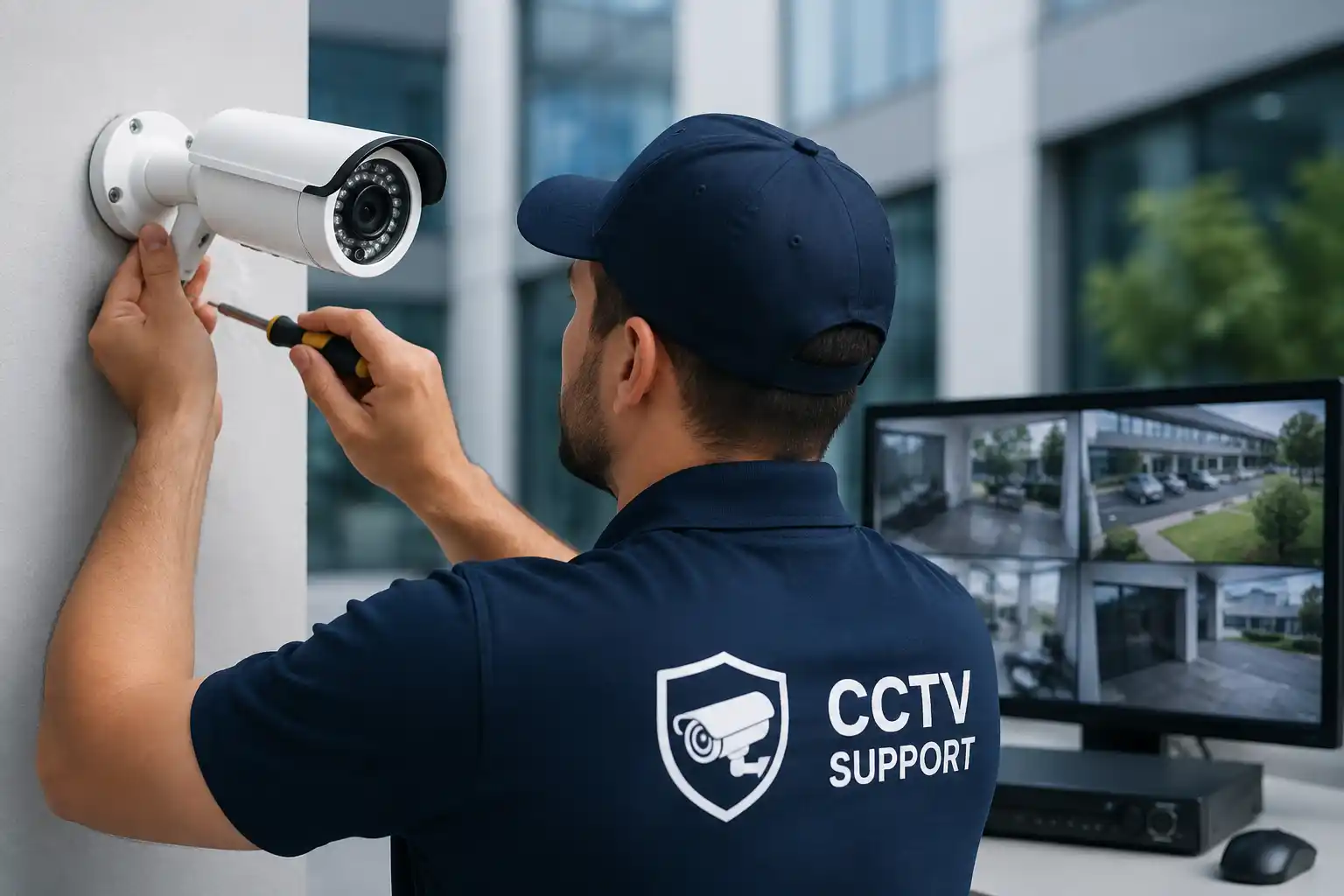
Configuration work should be based on the existing topology, approved access and a clear change plan rather than assumptions about how cameras, switches or recorders are connected.
Plan stable camera and recorder addresses without creating conflicts.
Check port roles, power delivery, uplinks and available capacity.
Separate surveillance traffic where the network design supports it.
Test recording, live view, playback and approved remote access.
What does CCTV network configuration involve?
CCTV network configuration is the work required to make network-connected cameras, PoE switches, network video recorders, viewing stations and authorised remote users communicate through a controlled IP network. It is mainly used when deploying IP cameras, connecting an NVR, changing switches or routers, separating camera traffic, adding new devices, correcting addressing problems or restoring dependable access after network changes. Businesses should consider it when cameras intermittently disappear, streams freeze, the recorder cannot discover devices, remote viewing fails, or a new surveillance project needs a structured network plan. Before work is confirmed, the customer should provide the site location, approximate camera and recorder count, existing network information, administrator availability, recent changes, required viewing locations and any known maintenance restrictions. Final scope remains dependent on assessment, access, platform compatibility, cabling, switch capacity, third-party services and the approved quotation.
What the service can cover
A CCTV network is a chain of dependencies. The camera needs suitable power and a working physical link. The switch must provide the correct port configuration and, where applicable, sufficient Power over Ethernet capacity. The camera and NVR must use addressing that allows the intended communication. Gateways and routes must make sense for the approved design. Firewall policies and remote-access methods must permit only the required traffic. The recorder must recognise compatible streams and preserve recordings to available storage. Time settings must remain consistent enough for incident review. A configuration service therefore looks at the path as a connected system rather than treating each camera as an isolated endpoint.
Depending on the confirmed scope, FourTeck assistance may include documenting the existing topology, identifying camera and recorder IP addresses, reviewing static and dynamic address use, checking subnet and gateway settings, tracing uplinks, validating switch port assignments, reviewing PoE load, assessing VLAN requirements, checking routing between approved network segments, reviewing firewall rules, examining NVR connectivity, testing live view and playback, validating authorised remote access, reviewing time synchronisation settings, identifying duplicate addressing and preparing practical network records for future support.
Configuration may also be part of a new installation, an office relocation, a recorder replacement, a network redesign or a camera expansion. In these cases the work begins with a requirements review rather than device-by-device changes. The number of cameras, expected stream settings, switch locations, uplink capacity, recorder placement, viewing points, remote users and future growth influence the design. A warehouse with cameras spread across several cabinets has different network requirements from a small office with one PoE switch and one recorder. A multi-branch business may also need to decide whether each site records locally, whether centralised viewing is needed, and which approved connections should cross firewalls or private links.
FourTeck does not assume that every problem is caused by the network. A camera that is unavailable may have a power fault, damaged cable, failed port, incorrect address, firmware issue, recorder compatibility problem, storage issue or account problem. The same visible symptom can come from different layers. The assessment therefore aims to isolate the failing layer before changes are made. This reduces unnecessary resets and helps protect other services that may share the same switches, firewall or cabling infrastructure.
Who may need CCTV network configuration?
Businesses planning new IP surveillance often need configuration support before cameras are commissioned. The work may also suit organisations inheriting an undocumented system, moving to a new office, adding cameras to an existing NVR, replacing network switches, changing an internet connection or firewall, or separating surveillance devices from user traffic.
It can be relevant to offices, retail shops, warehouses, clinics, schools, training centres, hospitality sites, restaurants, showrooms, property-management locations and multi-branch operations. The service is most useful where CCTV is network-connected and must coordinate with existing business infrastructure rather than operate as a completely isolated recording system.
When configuration becomes a business issue
A poorly understood camera network can make incident review difficult, create repeated support calls and complicate expansion. Offline cameras may leave expected viewpoints unavailable. Incorrect addressing can make devices appear and disappear. An overloaded or misconfigured link can affect live viewing. Uncontrolled remote access can create unnecessary exposure. Unclear records can turn a simple switch replacement into a risky change.
The goal is not to add complexity. It is to make the surveillance path understandable enough that authorised staff and support engineers can identify where each device sits, how it is powered, what network it belongs to, which recorder receives it, how it is viewed and what should be tested after a change.
Common signs that the CCTV network needs review
Cameras repeatedly go offline
Intermittent loss can involve power delivery, cabling, switch ports, addressing, uplinks, device health or recorder communication. The pattern and timing should be checked before a cause is assumed.
The recorder cannot discover a camera
Discovery can fail when devices sit on different networks, addresses are duplicated, a gateway is incorrect, a VLAN is misapplied or the camera and recorder require specific compatibility settings.
Live video freezes or loads slowly
Stream behaviour may be influenced by camera configuration, link quality, switch capacity, uplink congestion, recorder performance, viewing-client performance or wider network utilisation.
Remote viewing stopped after a network change
A new firewall, router, public address, ISP service or security policy can alter how authorised users reach the system. The remote-access method should be reviewed rather than broadly exposing camera interfaces.
Different cameras use conflicting addresses
Duplicate or undocumented addresses can make devices unstable and difficult to manage. A controlled addressing plan helps technicians know which address belongs to which camera and recorder interface.
No one knows which switch port serves which camera
Missing labels and port records slow troubleshooting. Documentation becomes especially important when several switches, cabinets, floors or buildings are involved.
These symptoms do not prove that the network is the only cause. A structured assessment compares what users observe with physical links, power status, switch information, addressing, recorder status and recent changes. The objective is to identify a defensible next action rather than make a broad configuration change that may disturb working cameras or unrelated business services.
Business impact when surveillance connectivity is left unresolved
The operational effect of a CCTV network problem depends on where the affected cameras are used and how important the recording is to the business. A camera at a secondary corridor may have a different priority from a camera covering a loading area, cash point, entrance or other operationally important location. When faults recur without documentation, teams may spend time restarting equipment without understanding why the problem returns.
Incomplete or unstable recording can make later incident review more difficult. If live viewing is unreliable, authorised staff may not be able to confirm what is happening at a remote part of the site when they need to. If remote access is configured without clear control, the business may create unnecessary exposure. If the surveillance network shares switching infrastructure with users, phones or wireless access points, an unmanaged change can also affect other systems.
A documented configuration reduces uncertainty during future maintenance. It gives the business a clearer basis for camera expansion, switch replacement, firewall changes and troubleshooting. Documentation does not remove the need for testing, maintenance or security review, but it makes the environment easier to assess because important relationships are recorded instead of being rediscovered every time a fault occurs.
Possible CCTV network configuration scope
Discovery and inventory
Identify cameras, NVRs, switches, network cabinets, firewall or router dependencies, viewing stations and remote-access requirements. Existing diagrams and address lists are reviewed when available.
IP addressing plan
Review address ranges, subnet masks, gateways, device naming and whether addresses should be reserved or statically managed according to the existing network design.
Switch and PoE review
Check switch capacity, port state, power delivery, uplinks and cabinet layout. Physical faults, insufficient PoE budget or damaged cabling may require separate corrective work.
VLAN and segmentation planning
Where appropriate, review whether surveillance traffic should use a separate network segment and which authorised systems require controlled communication across segments.
Firewall and remote-access review
Assess the intended viewing method, authorised users and relevant firewall dependencies. Avoid broad exposure of camera management interfaces when a more controlled method is available.
Recorder connectivity
Confirm that approved cameras can communicate with the recorder, that live view and recording behave as expected, and that network settings remain consistent after changes.
Time and management settings
Review time configuration, management access and basic administrative structure because accurate timestamps and controlled access are important for operational use.
Testing and records
Validate camera reachability, live view, playback, approved remote access and the final network path, then record important addresses, port roles and remaining dependencies.
Not every engagement includes every item above. The actual configuration scope depends on the existing CCTV platform, network equipment, physical access, current documentation, vendor compatibility, licensing, required business outcome and whether corrective cabling or hardware work is needed. FourTeck can use the assessment to separate configuration tasks from replacement, repair, cabling or third-party work so the quotation is easier to understand.
Service-fit matrix for common CCTV network situations
| Business situation | Relevant assistance | What must be confirmed |
|---|---|---|
| New IP cameras are being added to an existing NVR. | Address planning, switch-port review, PoE capacity check, recorder registration and testing. | Camera compatibility, recorder channel capacity, licensing where applicable, network capacity and physical cabling. |
| Cameras stopped working after a switch replacement. | Review port configuration, VLAN membership, uplinks, PoE delivery, addressing and recorder reachability. | Previous configuration, switch access, cable labels, camera locations and whether any topology changed during replacement. |
| Remote viewing no longer works after an internet or firewall change. | Review approved remote-access method, firewall dependencies, public connectivity and recorder settings. | Current firewall ownership, ISP changes, authorised viewers, security policy and vendor platform requirements. |
| A business wants CCTV separated from employee devices. | Segmentation design, VLAN planning, routing and controlled access between approved systems. | Managed switch capability, firewall or routing capability, current address scheme and which devices genuinely need access. |
| Several cameras are intermittent but others are stable. | Compare affected ports, power, cables, address behaviour and upstream links before changing wider settings. | Fault pattern, times, camera locations, recent work, access to switch information and physical inspection options. |
| A site is relocating and wants to reuse part of the CCTV system. | Current-state inventory, target network plan, addressing, switch and PoE review, recorder placement, testing and documentation. | New-site cabling, compatibility, equipment condition, access dates, installation scope and approved maintenance window. |
CCTV network configuration service information
| Service topic | CCTV network configuration for IP cameras, recorders and supporting business network infrastructure. |
|---|---|
| Main purpose | Organise and validate the network path used by cameras, NVRs and authorised viewers so the environment is easier to operate, troubleshoot and maintain. |
| Typical systems involved | IP cameras, PoE switches, managed switches, NVRs, routers, firewalls, viewing workstations, structured cabling and approved remote-access services. |
| Assessment method | Environment dependent. Assessment may combine configuration review, network testing, evidence collection, physical inspection and user or administrator input. |
| Remote support suitability | Suitable for many configuration and log-review tasks when secure authorised access and working connectivity are available. |
| On-site support suitability | May be required for cabling, port tracing, PoE testing, camera access, cabinet work, physical faults, installation and local coordination. |
| Customer access required | Administrative access to relevant systems may be required after authorisation. Credentials should be shared only through an approved secure method. |
| Customer information required | Site details, camera count, recorder details, network equipment, recent changes, current symptoms, existing diagrams, required viewing locations and business priorities. |
| Configuration support | Scope dependent. May include addressing, VLANs, switch-port configuration, routing dependencies, firewall rules, NVR connectivity and remote access review. |
| Testing and validation | May include reachability tests, live-view checks, recording and playback checks, approved remote viewing and confirmation that unrelated business services remain available. |
| Documentation and handover | Configuration notes, address records, device roles, port mappings, dependencies and outstanding recommendations may be documented according to the agreed scope. |
| Vendor coordination | May be required when recorder, camera, ISP, firewall, cloud-viewing or manufacturer-specific issues sit outside the local network configuration. |
| Service location | Dubai and UAE service coordination, subject to issue type, location, access, scheduling and approved scope. |
| Quotation requirement | The final commercial scope depends on the confirmed work, equipment condition, access, third-party dependencies and whether hardware or cabling changes are required. |
Remote configuration support versus on-site CCTV network work
When remote support may be suitable
Remote work can be efficient when the site has a working internet connection, secure authorised remote access is available and the suspected issue relates mainly to settings rather than physical hardware. Examples include reviewing addresses, checking recorder network settings, examining switch configuration, comparing VLAN membership, reviewing firewall dependencies, validating route information or testing an approved remote-viewing path.
A local contact may still be needed to confirm camera LEDs, restart a specific device when approved, identify a switch or verify what appears on a local monitor. Remote access does not make physical faults visible by itself, so FourTeck may recommend an on-site visit if the evidence points to cabling, PoE, connectors, camera hardware or local infrastructure.
When on-site assistance may be required
On-site work is usually more appropriate when engineers need to trace cables, inspect network cabinets, identify switch ports, test PoE delivery, access cameras physically, verify patching, replace a failed component, check multiple locations or commission new equipment. It may also be needed when the network is inaccessible remotely or when safe change validation requires staff to observe several parts of the system at the same time.
Attendance depends on the location, access arrangements, engineer scheduling, building rules, required tools, equipment availability and approved quotation. A remote assessment can sometimes clarify what should be prepared before the visit, reducing time spent rediscovering basic topology on site.
How a CCTV network assessment and configuration project can proceed
1. Define the required business outcome
The first question is what the business needs to achieve. That may be restoring missing cameras, adding new cameras, separating surveillance traffic, moving the recorder, enabling approved remote viewing, replacing a network switch, relocating a site or documenting an inherited system. The desired outcome changes the assessment because a fault investigation requires different evidence from a new deployment.
2. Identify the affected systems and users
FourTeck can map which cameras, recorders, switches, firewalls, viewing stations and remote users are involved. If only one camera is affected, the investigation may focus on that endpoint and its path. If an entire camera group fails, an uplink, VLAN, switch, recorder or power issue may deserve higher priority. The pattern helps narrow the work without assuming the cause.
3. Collect current-state evidence
Useful evidence can include a camera list, NVR model and network settings, switch list, existing address plan, screenshots of errors, network diagrams, recent change records, firewall information and notes about when the problem occurs. Access availability is also confirmed. Credentials should not be sent through public page forms or ordinary messages; they should be provided through an approved secure method after authorisation is established.
4. Review access, backups and change risk
Before changing managed switches, firewalls or recorders, it is important to understand how current settings can be recorded or backed up where the platform permits. Some changes can interrupt active streams or unrelated network traffic, so a suitable maintenance window may be required. The rollback approach depends on the equipment and access available. No configuration change should be treated as risk-free when the current environment is not fully understood.
5. Test the physical and logical path
The assessment can follow the path from camera to cable, switch port, VLAN, uplink, router or firewall where relevant, recorder and viewing client. Physical link state, PoE delivery, address settings, gateway information, reachability and recorder visibility may be checked. The exact tests depend on the equipment and whether the issue is remote, on site or part of a planned deployment.
6. Isolate the most likely technical layer
A camera that is not recording may still be reachable on the network, which points attention toward recorder configuration or stream compatibility. A camera that receives no power requires a different investigation. A camera reachable locally but not remotely suggests another set of dependencies. Separating these layers prevents one symptom from being mistaken for one universal cause.
7. Prepare the approved change plan
If corrective configuration is required, the planned change should state which device will be changed, which settings are affected, what services could be interrupted, what test confirms success and what fallback is available if the expected result is not achieved. For larger projects, work can be staged by switch, camera group, building area or site to reduce operational uncertainty.
8. Implement at a useful level of control
Configuration may involve assigning or correcting addresses, organising network segments, adjusting approved switch ports, defining permitted routing, updating recorder network settings or changing remote-access dependencies. The exact steps are platform dependent and should only be performed with customer authorisation and appropriate administrative access.
9. Validate from camera to viewer
Validation should go beyond a successful ping or a single live image. Where relevant, tests can include recorder registration, live view, continuous or event recording, playback, timestamp behaviour, approved local viewing, approved remote viewing and confirmation that unrelated business traffic remains functional. Any unresolved limitation should be recorded rather than hidden by a temporary workaround.
10. Document and hand over
The final record may include device addresses, network segments, switch-port roles, recorder connections, access dependencies, configuration changes, outstanding hardware concerns and recommended follow-up work. Documentation is especially valuable for future moves, expansions, firewall changes and fault investigations because it gives the next engineer a starting point instead of requiring the site to be rediscovered.
Planning a safe CCTV network configuration change
Configuration projects should begin with a current-state review. Camera networks often grow gradually: one camera is added to an unused port, a new switch is installed during an office expansion, a recorder is replaced, or remote viewing is adjusted after an internet change. Over time, the system can become difficult to understand because the original address list, switch labels or diagrams no longer match reality. The safest planning approach is to compare the documented design with the actual environment before standardising it.
Address planning should avoid conflicts and should fit the organisation’s existing network design. Some businesses use dedicated surveillance ranges; others place cameras within broader managed networks. The correct approach depends on available routing, switch capability, firewall policy, support model and the business requirement. FourTeck can help document the intended addresses and identify devices that do not match the plan. Where dynamic addressing is used, the relationship between reservations, leases and recorder expectations should be understood so cameras do not unexpectedly appear at different addresses.
Switch planning includes more than counting free ports. PoE cameras draw power from the switch when supported, so the total power budget and per-port capability matter. Uplinks need enough capacity for the traffic they carry. Managed switches may require the correct VLAN membership or trunk configuration. A camera can have a correct address and still fail to communicate if the switch places it in the wrong segment. Physical patching should also be documented so a future cable move does not silently place a camera into a different network.
Network segmentation can improve control and supportability when the infrastructure supports it. A dedicated CCTV segment can make it easier to identify surveillance traffic, limit unnecessary communication with user devices and define which management or recording systems are allowed to reach cameras. Segmentation is not useful if it is implemented without appropriate routing, firewall policy, device capability or documentation. The design must preserve the traffic paths that the recorder and authorised viewers genuinely need.
Firewall and remote-access changes require particular care. Remote viewing may depend on a vendor service, a VPN, controlled application access, specific outbound connectivity or other platform-defined requirements. The preferred method varies by system and business policy. FourTeck can review the current method and help identify the network dependencies, but vendor-specific services, subscriptions and cloud platform behaviour remain vendor dependent. Broadly exposing camera interfaces to the internet is not an acceptable substitute for proper remote-access planning.
Recorder placement and reachability also matter. The NVR may sit in the same network as cameras or may communicate across controlled network boundaries. If a recorder is moved to a different cabinet or site, routing, latency, bandwidth, firewall policies and storage responsibilities may change. A centralised viewing station adds another dependency. The design should therefore reflect where video is recorded, where it is viewed and which links are critical to those functions.
Finally, the change window should match the business impact. A small isolated correction might be performed with limited interruption, while a VLAN redesign or switch replacement can affect several camera groups at once. The work plan should identify expected interruption, test order, rollback considerations and who will confirm that the surveillance functions required by the business are working after the change. Timing and duration are scope dependent and should not be assumed before the environment is assessed.
Testing, validation and handover after configuration
A configuration is not complete simply because the changed device accepts its new settings. The result should be tested from the perspective of the business functions that depend on the network. Cameras expected to record should be visible to the NVR. Live view should open from approved local viewing points. Playback should retrieve recordings from the expected camera. Authorised remote viewers should use the intended access method. Time information should be reviewed where incident timing matters. Network management should remain available through the agreed administrative path.
Testing should also confirm that the change has not disrupted unrelated services. This is important when CCTV shares switches or uplinks with office users, IP phones, WiFi access points, servers or other devices. A configuration that restores one camera but breaks another VLAN is not a successful outcome. For larger changes, testing can be staged by device group so faults are identified before the next phase proceeds.
Handover should record what changed and what remains outside scope. If a camera is reachable but has an image-quality issue, that may require camera adjustment rather than network work. If a switch has insufficient PoE capacity, a hardware upgrade may be recommended separately. If a remote-viewing problem depends on a vendor subscription or ISP feature, FourTeck can document the dependency and coordinate technical information, but the third party may need to act.
Useful records can include camera names, locations, IP addresses, network segments, switch ports, recorder relationships, gateway settings, management dependencies and the date of major configuration changes. The exact documentation delivered depends on the engagement, but the principle is consistent: future maintenance should not rely entirely on memory or one individual technician.
Capability 1: clearer fault isolation
A documented network path makes troubleshooting more disciplined. Instead of asking only whether a camera works, engineers can ask whether it has power, whether the physical link is stable, whether the switch sees the endpoint, whether the address is correct, whether the device is in the intended segment, whether the recorder can reach it and whether the required stream is available.
This layered approach is valuable because multiple faults can look identical to the user. A black tile on a monitor does not reveal whether the problem is the camera, network, recorder, storage or viewing client. Clear fault isolation helps the business approve the right corrective action and reduces the chance of replacing working equipment without evidence.
Capability 2: controlled changes and expansion
Adding cameras changes more than the channel count. New devices consume switch ports, PoE power, network capacity, recorder resources and storage. They also need addresses and management records. If the site is already close to a capacity limit, a small expansion can expose hidden weaknesses.
FourTeck can review these dependencies before configuration changes are approved. That helps decision-makers distinguish between a straightforward camera addition and a wider infrastructure requirement. The same planning is useful during an office move, switch refresh or recorder upgrade because it shows which dependencies must be preserved while equipment changes.
Capability 3: more maintainable surveillance networking
Maintainability comes from consistency and records rather than hidden complexity. A sensible naming method, stable addressing plan, known switch ports, documented network segments and recorded access dependencies make future support easier. When a switch fails or a site is renovated, technicians have a better chance of restoring the intended topology without guessing.
Documentation still needs to be updated when the environment changes. It does not replace backups, testing or maintenance. However, it gives the business a controlled baseline that can be compared against new faults, expansion plans and security reviews.
Dependencies, access and customer inputs that can affect the work
CCTV network configuration sits between surveillance equipment and the wider IT environment, so access to only one system may not be enough. A camera may be managed through one interface, the switch through another, the NVR through a third and the firewall through a separate administrator. The business should identify who controls these systems before work starts. If an outsourced IT provider, CCTV vendor, ISP or building contractor owns part of the environment, coordination may be required.
Administrative access is often necessary for configuration changes. The customer should confirm that authorised access can be provided without publishing or casually sharing passwords. Credentials should be exchanged through a secure approved method after the engagement and identity are confirmed. Where access has been lost, recovery options depend on the platform, ownership evidence and vendor procedures. A reset may remove existing configuration, so it should not be treated as the automatic first step.
Existing documentation is useful even when it is incomplete. Old network diagrams, switch spreadsheets, camera lists, NVR screenshots, firewall notes and previous contractor handover documents can reduce discovery time. FourTeck can compare these records with the live environment and note where they differ. If no records exist, the assessment may require more tracing and on-site verification.
Physical dependencies matter as well. A camera may be mounted high, outside, above a false ceiling or in a restricted area. A switch may be in a locked cabinet. Building access, ladder requirements, ceiling access, working-area restrictions and local safety rules can affect on-site scope. Cabling faults or poor terminations may need physical repair outside the logical configuration work.
Vendor and licensing dependencies can change what is technically possible. Some cameras or recorders use proprietary discovery, stream, activation, cloud-viewing or licensing mechanisms. FourTeck can assess the local network and assist with configuration, but the vendor may control account recovery, firmware support, licensing or cloud service availability. The page therefore does not assume universal compatibility among cameras and recorders.
The customer should also confirm the priority of the affected areas and any permitted downtime. If the business relies on surveillance during operating hours, a staged change or maintenance window may be more appropriate than a broad reconfiguration. The final method depends on risk, access, equipment capability and the approved scope.
Risks, limitations and exclusions to confirm before configuration
Diagnosis depends on available evidence and access. A network test can show that a device is unreachable, but it may not by itself prove whether the camera, cable, port or power source has failed. Physical inspection may be necessary. Similarly, a camera that is reachable can still have a recording, image, storage or compatibility problem outside the network layer.
Configuration changes can create temporary interruption. VLAN, switch, firewall, gateway or recorder changes should be planned with backups or configuration records where available, a suitable maintenance window and a defined validation step. Rollback depends on the platform and whether the original settings are known. Legacy or unsupported equipment may have limited configuration or security options.
Hardware failures, replacement cameras, PoE switches, cabling repairs, storage drives, licences, subscriptions and manufacturer services are not assumed to be included in configuration labour. They may require a separate quotation or third-party action. Remote viewing can also depend on internet service, firewall ownership or vendor cloud services that FourTeck does not control.
A successful test confirms that the agreed functions worked at the time of validation; it does not guarantee future uptime or remove the need for maintenance. Security improvements reduce avoidable exposure but do not guarantee complete protection. Final commercial terms, service timing and included tasks depend on the approved quotation or service agreement.
Business environments where this service can be useful
Offices and professional workplaces
Office CCTV may share cabinets, switches and uplinks with user devices, WiFi and telephony. Configuration should preserve business connectivity while keeping camera addressing and access understandable.
Retail and showrooms
Retail environments may need dependable live view and recording around entrances, counters, stock areas and customer spaces. Network changes should consider operating hours and avoid unnecessary interruption to payment or business systems sharing infrastructure.
Warehouses and logistics sites
Large sites often distribute cameras across several network cabinets and long cable paths. Uplinks, PoE capacity, port documentation and cabinet mapping become important for fault isolation and future expansion.
Clinics, schools and training centres
These sites can have busy shared networks. Surveillance changes should be coordinated with operational requirements, authorised access and any internal privacy or governance rules that apply to the organisation.
Hospitality and property locations
Cameras may be distributed across floors, entrances, service areas and parking spaces. Clear addressing and switch records can reduce troubleshooting time when multiple physical areas are involved.
Multi-branch businesses
Branches may need consistent local recording, central viewing or controlled support access. Each site can have different ISP, firewall, network and equipment dependencies, so standardisation should be planned rather than assumed.
Operational, security and maintenance considerations
Surveillance networks benefit from clear ownership. The business should know who can administer cameras, who controls the NVR, who manages switches and firewalls, and who is authorised to view footage. Shared administrator accounts may be convenient during installation but can make later accountability difficult. Where the platform supports individual roles, access should be aligned with operational need and maintained when staff responsibilities change.
Management interfaces should not be exposed more broadly than necessary. Cameras and recorders are network devices and should be treated as part of the organisation’s technology environment. Security review may include changing default credentials, removing unused accounts, reviewing remote management, checking firmware support, controlling which networks can reach management interfaces and documenting who owns vendor cloud accounts. Exact options depend on the equipment.
Time configuration deserves attention because recordings are often reviewed in relation to a reported event. If cameras and recorders use inconsistent time settings, incident review can become confusing. The correct time source and time-zone configuration are platform dependent, but the environment should be checked for consistency after major network changes or device replacement.
Maintenance should include more than camera cleaning. Network-connected surveillance can be affected by failing switch ports, full PoE budgets, damaged patch leads, undocumented address changes, unsupported firmware, ageing recorders, storage faults and changed firewall policy. A preventive review can compare the live environment with documentation and identify devices that no longer fit the intended design.
Capacity should be reconsidered before expansion. More cameras can increase switch power demand, uplink traffic, recorder processing and storage requirements. Higher-resolution or higher-frame-rate streams can also increase load. FourTeck can help review the existing environment and identify whether the planned addition is likely to require network or recorder changes, but final capacity depends on the specific devices and configurations.
Change records are important. A switch replacement, firewall upgrade, ISP migration, office move or recorder replacement can all alter the surveillance network. Recording the before-and-after state helps later support teams understand why addresses, VLANs or access paths changed. Without that history, a later fault may be interpreted as random when it is actually connected to an earlier infrastructure change.
Regular testing should reflect the functions that matter to the organisation. A camera can appear online yet fail to retain footage correctly, while a recorder can store footage locally but fail to provide approved remote viewing. Periodic checks should therefore match the agreed business use. The frequency and included tasks depend on the maintenance scope or service agreement rather than being assumed as unlimited support.
Before you contact FourTeck about CCTV network configuration
Preparing a few details can make the first assessment more useful. You do not need a perfect network diagram, but the following information helps FourTeck understand whether the request is mainly configuration, troubleshooting, installation, cabling, hardware replacement or vendor coordination.
- The Dubai or UAE site location and a local contact person.
- The approximate number of cameras and whether they are all affected or only selected devices.
- The recorder type and any known model or platform details.
- The network switch, firewall or router details if known.
- The current symptom, including what users see and when it occurs.
- Any recent switch replacement, firewall change, ISP change, office move, camera addition or recorder change.
- Whether live view, recording, playback, local viewing or remote viewing is affected.
- Any existing IP address list, network diagram, camera schedule or switch-port record.
- Whether administrative access is available for the relevant camera, recorder, switch and firewall systems.
- Whether a secure remote-access method can be authorised for assessment.
- Whether physical camera, ceiling, cabinet or rack access is restricted.
- The business areas where surveillance is most operationally important.
- Any maintenance window or operating-hour restrictions.
- Whether another CCTV vendor, ISP, building contractor or IT provider manages part of the environment.
- The expected result, such as restoring cameras, adding devices, segmenting traffic, documenting the network or enabling approved remote viewing.
Do not send passwords through a public enquiry form. FourTeck can confirm an appropriate secure method for authorised credentials after the support or project scope is established.
Checklist for defining the quotation and engagement
- Confirm the exact service objective and expected operational result.
- Confirm the camera, recorder and network devices in scope.
- Confirm the number of sites, cabinets or network segments involved.
- Confirm whether remote assessment is possible before any visit.
- Confirm physical access requirements for cameras, racks and cabling.
- Confirm configuration backup or rollback options where relevant.
- Confirm whether switch, firewall or NVR changes are required.
- Confirm whether cabling repair or hardware replacement is separate.
- Confirm the testing and validation required after changes.
- Confirm documentation and handover expectations.
- Confirm third-party vendor, ISP or building coordination.
- Confirm the approved maintenance window and any exclusions.
These points help distinguish what is included in the configuration work from equipment supply, repairs, subscriptions, cabling, civil work or third-party activities that may need separate approval.
How FourTeck can assist with the CCTV network
FourTeck approaches CCTV network configuration as a connected infrastructure task. The service can begin by clarifying the reported problem or planned change, identifying the cameras and recorder involved, reviewing the network path and separating logical configuration work from physical, hardware or third-party issues. This gives the customer a clearer basis for deciding what should be corrected first.
Where secure remote access is available, FourTeck may be able to review configuration, gather evidence and narrow the likely scope before an on-site visit. Where physical inspection is required, the visit can focus on cabling, switch ports, PoE, camera access, cabinet layout and local testing. Some projects combine both methods: discovery and planning are performed remotely, while physical implementation and final testing are coordinated on site.
FourTeck can also coordinate with existing IT providers, CCTV vendors, ISPs or facility teams when the camera network depends on systems they manage. The purpose of coordination is to define who owns each required change and avoid one provider making assumptions about another provider’s configuration.
After assessment, FourTeck can prepare or confirm a quotation based on the actual work required. Contact the team through the FourTeck IT Services contact page with the site details, camera count, current issue or project objective, and any known network changes. The quotation should identify configuration tasks, physical work, testing, documentation and any exclusions that need separate handling.
Dubai and UAE service coordination
For CCTV network configuration in Dubai, the support method depends on whether the issue can be assessed through authorised remote access or requires physical work at the site. Remote assistance may be suitable for address reviews, switch and recorder configuration, firewall dependency checks and other settings-based tasks. An on-site visit may be recommended when engineers need to trace cabling, test PoE, inspect cabinets, reach camera positions, replace failed equipment or coordinate a larger installation.
Service timing depends on engineer availability, customer access, building rules, equipment availability, third-party providers and the confirmed work scope. Installation, configuration, migration and maintenance tasks should be listed clearly in the approved quotation. Where business operations make interruption difficult, the change plan can identify a suitable maintenance window and staged testing, but project duration should not be assumed until the environment is assessed.
Customers can review FourTeck’s broader business IT support approach, explore the IT services overview, or learn more about the company through the FourTeck about page before requesting a scoped assessment.
Coverage coordination across Dubai, Abu Dhabi, Sharjah and Ajman
FourTeck can coordinate CCTV network assessment, remote troubleshooting, planned on-site work, configuration, installation support and maintenance-related assistance for businesses in Dubai, Abu Dhabi, Sharjah and Ajman, depending on the confirmed scope. The appropriate service method depends on whether the work is primarily logical configuration or requires access to cameras, network cabinets, cabling and site infrastructure.
Scheduling and project planning can be affected by travel, building access, site operating hours, permit or facility requirements, equipment availability, external contractors and third-party providers. Multi-site organisations should identify which locations share the same network standards and which use different firewalls, ISPs, recorders or switch platforms. A consistent documentation approach can help compare sites without assuming that every branch has the same design.
Related FourTeck IT services
For camera faults, recorder issues, storage checks, physical inspection and preventive surveillance maintenance.
IP camera support
For camera discovery, address planning, connectivity, recorder registration and authorised viewing assistance.
Office network support
For switch, VLAN, routing, cabling and network-path issues that affect cameras and other connected business systems.
Firewall support
For controlled policy, routing and remote-access dependencies where surveillance traffic must cross a firewall.
Why businesses contact FourTeck for CCTV network work
A CCTV fault often sits between multiple technical responsibilities. The camera installer may focus on the camera, the network provider on the switch, the internet provider on connectivity and the facilities team on cabling. FourTeck can help bring these dependencies into one assessment so the business understands which layer is actually blocking the required outcome.
The emphasis is on a clear initial assessment, safe change planning, practical remote and on-site coordination, testing and documentation. This is useful for businesses that do not want configuration decisions to depend on guesswork or undocumented resets. It also helps when a project requires vendor coordination, because the findings can be presented in terms that show what has already been tested and what action is still needed from another provider.
FourTeck can support one-time troubleshooting, planned configuration changes, CCTV network expansion and wider infrastructure projects. The actual service is defined by the confirmed environment and quotation rather than by a fixed package. This keeps the engagement focused on the systems, locations, access requirements and risks that apply to the customer’s site.
Questions businesses commonly ask before requesting CCTV network configuration
Customers searching for CCTV network configuration are often trying to decide whether the problem belongs to the camera system, the office network or both. The answers below are designed to help a business prepare for assessment without assuming a cause before the environment is tested.
Can a CCTV camera be online but still fail to record?
Yes. Network reachability is only one part of the recording path. A camera may respond on the network while the NVR has an incorrect channel configuration, incompatible stream setting, authentication issue, storage problem or another recorder-side fault. The right assessment checks both reachability and the recording relationship. If the camera can be viewed directly but not through the NVR, that evidence helps narrow the investigation without proving a single cause.
Why do IP cameras keep changing address?
Address changes can occur when cameras receive dynamic addresses and the network has not been designed to preserve predictable device assignments. They can also appear to change when duplicate addresses, resets or undocumented configuration are involved. A review should identify how addresses are allocated today, what the recorder expects and whether a managed static or reserved plan is more suitable for the environment. The correct method depends on the existing DHCP, network and support design.
Should CCTV cameras use a separate VLAN?
A separate surveillance VLAN can be useful when the network infrastructure supports segmentation and the business wants clearer control over camera traffic. It can reduce unnecessary communication between cameras and user devices and make traffic easier to identify. However, segmentation also requires correct routing, firewall policy, switch configuration and documentation. It should not be introduced only because the word VLAN sounds more secure. The business outcome, existing design and device capability should be assessed first.
Can the NVR and cameras be on different network segments?
They can be in some designs if the required traffic is routable and permitted, but the practical answer depends on the recorder, camera platform, network topology and security policy. Some installations are simpler when recording devices are close to the camera network. Others intentionally use controlled inter-VLAN routing. FourTeck can review the required communication and confirm whether the existing switches and firewall can support the intended design without exposing more traffic than necessary.
Why do cameras work locally but not remotely?
If local viewing works, the camera-to-recorder path may be functioning while the remote-access path has a separate issue. The cause could involve firewall policy, ISP changes, public addressing, VPN configuration, vendor cloud service, application settings, user permissions or a changed recorder address. The assessment should identify which remote-viewing method is supposed to be used and test that specific path. Opening broad inbound access to cameras is not an appropriate shortcut.
Can CCTV network configuration be checked remotely?
Many logical configuration issues can be reviewed remotely when the site has stable internet and secure authorised access. Engineers may be able to inspect addresses, recorder settings, switch configuration and firewall dependencies. Remote support is less suitable when the problem involves damaged cabling, failed PoE, unknown patching, inaccessible devices or physical installation. A hybrid approach is common: remote discovery first, then an on-site visit focused on the physical items that still need verification.
When is an on-site CCTV network visit usually needed?
An on-site visit is usually needed when the work requires physical cable testing, camera access, switch-port tracing, cabinet inspection, PoE measurement, equipment replacement, new installation or verification of a fault that cannot be reproduced remotely. It may also be appropriate for larger systems where several cabinets and camera groups are involved. Site access, building rules and the confirmed scope affect scheduling, so the business should identify restricted areas and local contacts before the visit.
How can I tell whether the problem is the camera or the network?
The safest answer is to test the layers rather than guess. If a camera has no power or no physical link, that points toward the local power or cabling path. If the switch sees the device but it cannot be reached at the expected address, logical configuration may be involved. If the camera is reachable directly but unavailable on the NVR, recorder-side settings or compatibility may need review. The assessment combines these observations to isolate the likely layer.
What happens if the CCTV network shares the same switch as office users?
Sharing a switch is common in many business networks, but changes must account for every service using that infrastructure. A port, VLAN or uplink change intended for cameras could affect computers, phones, access points or servers if the switch is not documented. Before changing the switch, FourTeck can identify which ports and uplinks serve CCTV and which belong to other systems. Segmentation may be considered where appropriate, but it should be planned around the whole network rather than only the cameras.
How much bandwidth do CCTV cameras need?
There is no single bandwidth number that fits every camera. Traffic depends on resolution, frame rate, codec, scene activity, stream profile and the number of cameras crossing a particular link. The useful planning question is not only total camera bandwidth but where that traffic travels. A local camera-to-NVR flow may stay within one switch, while remote viewing or central recording can place more demand on uplinks or internet connections. Capacity should be calculated from the actual configuration rather than guessed from camera count alone.
What should we prepare before adding more cameras?
Prepare the current camera list, NVR capacity information, switch port and PoE availability, existing address range, expected camera locations, required retention goals, viewing requirements and any cabling limitations. Adding cameras can require more than free NVR channels because the network and storage also need capacity. If the current system is undocumented, FourTeck may first map the existing design so the expansion does not introduce duplicate addresses or overload a switch or uplink.
Is remote viewing the same as exposing the NVR to the internet?
No. Remote viewing can be provided through different approved methods depending on the platform and business security policy. These may involve a vendor service, VPN or other controlled connectivity. Direct internet exposure is not automatically required and may be undesirable. The correct method should be chosen after the system, firewall, accounts and user needs are understood. FourTeck can review the network dependencies but vendor-specific cloud services and subscriptions remain vendor dependent.
Should we repair the existing CCTV network or redesign it?
That decision depends on the condition and manageability of the current system. A small addressing error in an otherwise stable, documented network may need only corrective work. A site with repeated faults, unmanaged switches, unclear patching, mixed subnets, limited PoE and no reliable records may benefit from a more structured redesign. FourTeck can separate immediate restoration work from longer-term improvements so the business can prioritise based on operational need and budget rather than replacing everything by default.
What can affect the final CCTV network configuration quotation?
The quotation can be affected by camera count, number of sites, switch and firewall complexity, physical access, missing documentation, whether secure remote access is possible, the need for cabling or hardware replacement, vendor coordination, maintenance-window constraints, testing expectations and documentation requirements. A system with one switch and one NVR is different from a multi-building site with several cabinets and network boundaries. Assessment helps define the real effort before commercial terms are confirmed.
What should be documented after the work?
Useful documentation can include camera names and locations, addresses, network segments, switch ports, recorder relationships, gateway information, management access dependencies, important firewall or remote-access notes, the changes made and any outstanding recommendations. The level of detail should match the agreed scope. Documentation should also be maintained after future camera additions, switch changes or relocations so it remains an operational tool rather than an outdated project file.
Can one CCTV configuration be reused across several branches?
A standard can be useful, but branch environments are rarely identical. Each site may use a different internet service, firewall, recorder, address range, switch model, camera count or building layout. A repeatable template can define naming, documentation and general segmentation principles while allowing site-specific values. FourTeck can help compare branches and identify which parts should be standardised and which must remain dependent on the local environment.
When should a business contact FourTeck?
Contact FourTeck when a CCTV network problem is recurring, when cameras or remote viewing fail after infrastructure changes, when a new camera deployment needs coordinated network planning, when a site is moving, or when the existing system is difficult to support because addressing and switch records are unclear. Share the business impact, affected devices, recent changes, available access and desired outcome. From there, FourTeck can confirm whether remote assessment, an on-site visit, a configuration project or a wider CCTV and network review is the appropriate next step.
Frequently asked questions
What does FourTeck check during CCTV network configuration?
Depending on scope, FourTeck may review camera and NVR addresses, switch ports, PoE, VLANs, routing, firewall dependencies, remote-access methods, network documentation and the camera-to-recorder path. Physical cabling and hardware issues may require on-site inspection.
Can FourTeck configure an existing CCTV network?
Yes, existing environments can be assessed and adjusted where access, equipment condition and compatibility allow. The first task is usually to understand the current topology and avoid overwriting working settings without a record or rollback consideration.
Do we need to replace cameras before configuration?
Not necessarily. Replacement should be based on evidence such as hardware failure, unsupported equipment, incompatibility or capacity limits. Configuration work may resolve logical issues without changing cameras, while failed or unsuitable hardware can be quoted separately.
Can you configure PoE switches for cameras?
Switch configuration may be included when the managed switch is in scope and authorised access is available. Work can include port roles, VLAN membership and related settings, while physical PoE capacity and hardware condition must also be checked.
Can CCTV configuration affect other office systems?
It can when cameras share switches, uplinks, routers or firewalls with users, phones, servers or WiFi. This is why changes should be planned, documented and tested against both surveillance and unrelated business services.
Do you support remote CCTV viewing configuration?
FourTeck can review authorised remote-viewing requirements and network dependencies. The exact method depends on the camera or recorder platform, firewall, ISP, vendor services, account access and security policy.
Will configuration guarantee that cameras never go offline?
No. Correct configuration can remove known logical issues and improve maintainability, but future faults can still occur because of hardware, cabling, power, storage, ISP, firmware or other dependencies. Ongoing maintenance remains important.
Can FourTeck help after a firewall or ISP change?
Yes, the CCTV access path can be reviewed after network or internet changes. FourTeck can assess local addressing, routing and firewall dependencies and coordinate with the ISP or other provider when their action is required.
Is documentation included?
Documentation can be included according to the confirmed scope. It may cover device addresses, switch ports, network segments, recorder links, changes made and recommended follow-up items. Confirm the required level of detail in the quotation.
Do you provide CCTV network support outside Dubai?
FourTeck can coordinate services across the UAE, including Dubai, Abu Dhabi, Sharjah and Ajman, subject to the issue, location, access, scheduling and approved quotation. Some configuration tasks may be handled remotely.
Plan the next step for your CCTV network
If cameras are offline, remote viewing has failed, a new NVR or switch is being introduced, or the surveillance network needs clearer addressing and segmentation, FourTeck can review the environment and define the work required. Share the site location, affected devices, recent changes, available access and the result you need. The team can then confirm whether remote diagnosis, on-site inspection, configuration, cabling coordination or a wider infrastructure assessment should form part of the quotation.